
The idea of power is tempting and has always been a necessary intake for the upper class, higher castes, socially/biologically declared ‘male’ gender, and those capable of mastering the art of communication. It is a human emotion, but a cunning one, which inadvertently is a double-edged sword that can swing in two directions to slaughter both the victim and the perpetrator. After the #MeToo movement, the sphere of power grew fragile. Victims realized they could bring down dynasties, a truth that startled men who had long believed power was theirs alone.
It led to the fall of politicians, professors, actors, filmmakers, and many others who had used their positions to oppress and assault women, believing the powerless could never challenge the powerful. But it also becomes necessary to understand that power swings in two directions and can become tempting to anyone, irrespective of their class, caste, creed, or gender.
Anubhuti Kashyap’s recent directorial effort, “Accused,” hits that spot where power is both delicate and becomes a monster for both the sufferer and the tormentor. The film opens with a scene meant to establish the expertise of Dr. Geetika Sen (Konkona Sen Sharma). When a junior doctor in London fails to handle a surgery, Sen is called in to take charge. In that moment, Kashyap gives us the first glimpse of power as Sen, the senior doctor, assertively forces her authority over the junior through a typical bark.
The rise of an immigrant who is also a queer becomes very clear in the initial shots of the film, and how it is still questionable, even in the culturally and socially evolved nations, finds solid ground. As the story unfolds, we find that through an anonymous email to HR, Sen has been accused of sexual misconduct by one of her patients. This becomes the axis around which several layers of the film peel slowly, exposing the complex dynamics of power.
It becomes necessary to pay attention to what Kashyap tries to show through Geetika Sen and her personality. Meera (Prathibha Ranta), as Geetika’s fiancé, happens to be the submissive partner in their relationship who desires a wholesome life with a complete family. But she is also the sacrificing one in their relationship, while Sen keeps on garnering powerful positions in her workplace. Sen also does not want Meera to change her job, as it would disturb the stability and growth of her own profession – a trait of control.
At the same time, she tries to sustain the relationship with Meera through the comforts and assurances of luxury. Kashyap wisely shows that while on her verge towards claiming everything in a male-dominated area, power is capable of converting her, an oppressed into an oppressor, but with subtlety and the complexity mostly goes ignored or unnoticed, especially because of the prevalence of patriarchy.
Kashyap, while exploring Meera’s personality, shows us how a life without any purpose, which can shape our identity, becomes dull and often leads us slowly towards a void. Sen’s domination often mirrors the dynamic of a patriarch, but the director uses Meera to bring Sen back into her senses, even when she is not intending to do so.
In a particular shot where Geetika breaks a vase in anger over the consequences of the complaint against her, Kashyap shows Meera gathering the broken pieces of the vase. Through this close-up shot, the director is not showing Meera’s submissiveness. Rather, the former portrays the latter as someone who is preparing herself to gather her own broken bits, which have been broken by Meera’s blind ambitions and oppressive attitude.
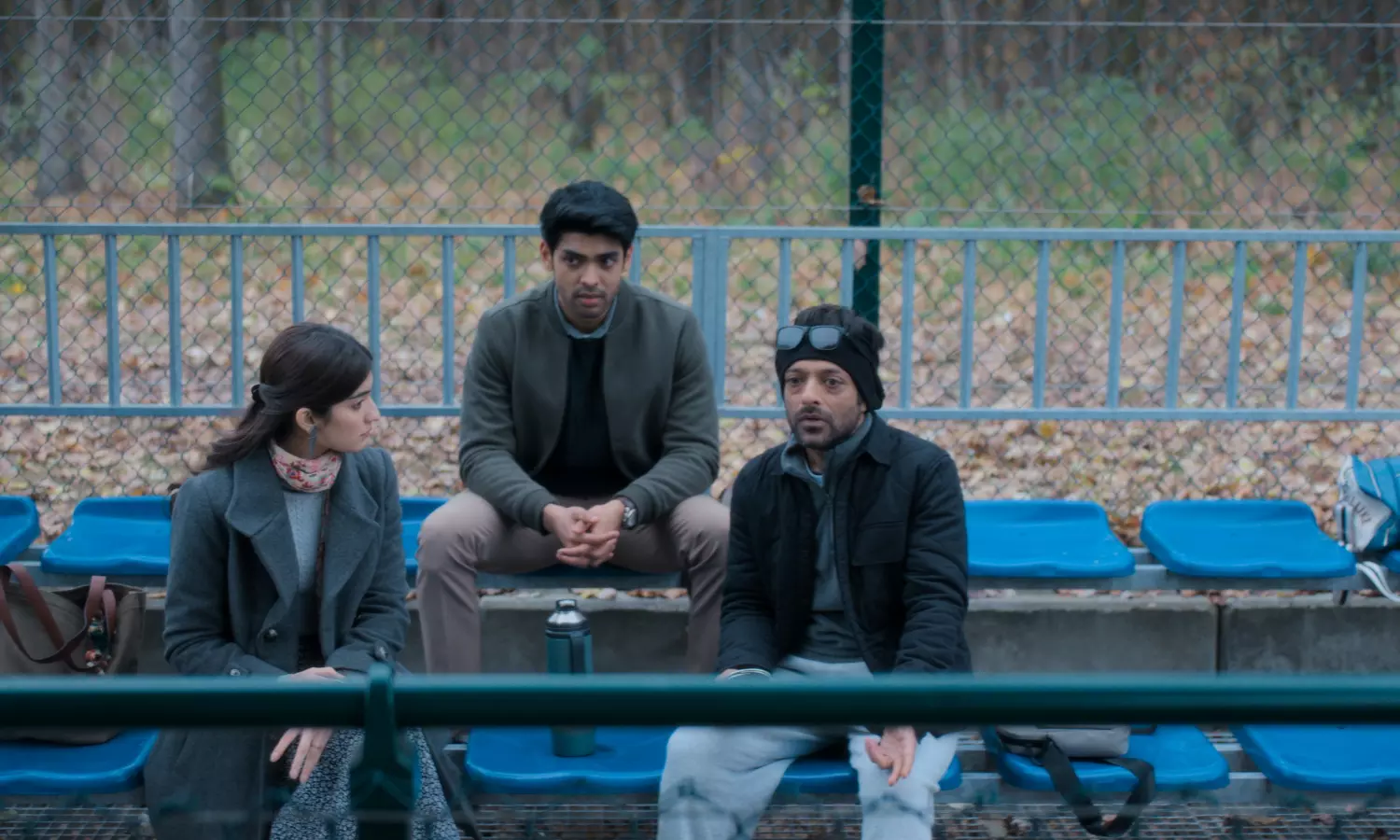
The enquiry process that has been carried out by Jaideep Bhargav (Mashhoor Amrohi), who is a renowned journalist, is where Kashyap vocalizes her rage against mansplaining every situation and also the masculinized portrayal of cases where a woman is found on the wrong side, even without any evidence. From cross-questioning to subverting a woman’s voice in difficult conditions, the enquiry hardly misses a beat.
Amrohi delivers a strong performance within his limited screentime, and even when he says that he has no preconceived notion, his body language and subdued smirk construct a strong pedestal for the audience to understand the complexity of a case where, in the presence of the #MeToo movement, a woman is being accused of sexual assault for her queer identity.
Psychological thrillers embedded in social drama are risky since they can either be preachy or tight, dragged, or well-edited. Anubhuti Kashyap keeps before the audience a narrative which is not an anti-MeToo one. It is, rather, supportive towards the movement but misses the mark when the plot becomes dragged, only to let the audience identify, for most of the time, women as the ‘wrong’ factor in this big equation of patriarchy. The close-up shots of Geetika walking on the footpath to show chaos felt unnecessary since the chaos has already been delivered through her dialogues.

Similarly, the maximum exploration of her lies and secrecy is driven more towards her personal life than her professional success and mistakes. It is an element of thrill that the director wanted to bring, but it distances the audience from absorbing the social and psychological plots running in parallel and makes the film a convoluted mixture of everything that does not ultimately shape into anything specific.
The development of Geetika’s character feels weak, as she is often sensationalized rather than portrayed on a humane level. Even in her final monologue, Konkona Sen Sharma’s skill remains underused, with the focus falling more on the dialogue than on the character she portrays. The flaws of a character who is dismissive and oppressive should not be corrected since it nullifies the objective of that character, which largely represents social flaws. Diminishing them repeatedly weakens the plot.
In this film, what the audience observes at first dissolves in the very next scene, as the axis lies more with the objective of the story than with the depth of the character. Similarly, the minimal exploration of the queer identity of both Meera and Geetika felt irritating since it cannot be just something that can fuel the accusation. It could have been explored more fully to figure out the dynamics of her queer nature in a male-dominated society, but it remained under the water.
From the perpetrators to the male actors, a woman-centric story can only find strength when the flesh of male characters in the story is peeled significantly. In this film, the underutilization of all the male actors weakens the plot that addresses power dynamics on a wholesome level. Kashyap’s intent can be understood, but when it comes to a story that needs to have a voice by itself, the absence of most characters feels like the missing letters of a very important word. The audience is taken to feel the sensation of a thriller, but it neither delivers the right thrill nor fully excels in preparing its own solid social commentaries, even in the presence of its many possibilities.
Anubhuti Kashyap’s “Accused” addresses several issues that have been taken less seriously by other filmmakers, but misses the right spot because the mess is way too much. The film, in an ideal world and in terms of solely watching, can do good work, but when it comes to the craft of the screenplay and editing, the film falls apart and loses meaning from the instant it becomes thrilling. It is like a cricket ball that connects well with the bat, goes in the right direction, reaches a good distance, only to find a fielder standing on the edge of a boundary who dismisses the shot, and changes the entire game.




![General Idi Amin Dada: A Self Portrait [1974] Review – A Strangely Funny and Disquieting Look at a Sociopathic Ruler](https://www.highonfilms.com/wp-content/uploads/2021/03/General-Idi-Amin-Dada-1974-768x432.jpg)