There is something quietly devastating about Asghar Farhadi’s “Everybody Knows” (Original title: Todos lo saben, 2018), and that devastation grows through recognition rather than shock. The story begins in celebration, in a small Spanish town filled with warmth, family chatter, and the movement of people who have known one another for years. When Laura returns from Argentina with her children for her sister’s wedding, the atmosphere carries comfort and familiarity. The camera observes faces with care, giving space to shared histories and long-standing relationships.
As the evening unfolds and Laura’s daughter disappears, the film shifts its focus from festivity to fracture. The central incident introduces tension, yet the true force of the narrative lies in how it exposes the delicate structure of trust within a family. The kidnapping becomes a moment that draws hidden tensions into the light. The film reveals how affection, pride, memory, and unresolved grievances coexist within even the most intimate circles.
When the central incident of “Everybody Knows” unfolds, the narrative tension it generates functions less as a conventional thriller device and more as a structural probe into the architecture of familial trust. The disappearance of Laura’s daughter interrupts a communal celebration, yet the true dramatic movement begins after the initial shock settles and the family is forced into prolonged proximity with one another. In this enclosed emotional space, trust becomes visible as a system rather than a feeling.
The factor of trust within the family emerges as something patiently constructed over years through stories retold at gatherings, through property passed from one generation to another, and through gestures of care that accumulate into a shared sense of belonging. The film illustrates this most vividly during the wedding sequence, where laughter, music, and interwoven conversations establish a living archive of memory that binds everyone together long before the crisis begins.
For instance, the bell tower scene, where the children climb playfully, and the adults remain below in affectionate supervision, captures a community that operates on instinctive confidence in one another, and that confidence has roots in history, in the land that once belonged collectively to Laura’s family and now belongs to Paco. It’s a transfer that at first appears practical yet carries within it layers of pride, gratitude, and quiet resentment, so that when the ransom demand forces the family to confront financial limitations, the earlier land sale returns as an emotional ledger in which past generosity and perceived loss resurface with renewed intensity.
Laura’s appeal to Paco unfolds within a web of shared history. Her plea draws its strength from years of intimacy, shared youth, and an unspoken understanding that certain bonds endure beyond marriage or distance. Paco’s willingness to step forward reflects a loyalty shaped as much by memory as by present urgency. The extended family meetings that follow reveal how each relative’s response is informed by personal recollections of fairness, sacrifice, and obligation. Trust, in this way, becomes visible as a fabric woven from countless prior moments.

As suspicions circulate and conversations grow heavier, the film reveals how fragile yet intricate this fabric remains, because every look, every hesitation, and every invocation of the past reminds the viewer that what holds this family together is a long accumulation of shared narratives, economic ties, and emotional commitments that continue to shape how they stand beside one another when confronted with fear. When a crisis strikes, these foundations undergo scrutiny. Each conversation tests an assumption that previously operated without question. Each pause in dialogue signals a recalibration of belief.
The kidnapping acts as a catalyst that accelerates processes already latent within the family structure. The event brings underlying hierarchies to the surface. Financial history, particularly the past sale of land from Laura’s family to Paco, acquires renewed significance. Property ownership in the film carries symbolic weight. Land represents heritage, continuity, and identity. When the possibility of a ransom payment enters the discussion, the question of who possesses liquidity and who bears the obligation becomes intertwined with older grievances. Economic exchanges from the past begin to shape present expectations. The film presents this intersection of money and memory with precision, showing how financial transactions within families rarely remain purely transactional. They accumulate emotional residue.
In the film, director Farhadi’s depiction of trust as something that grows over time through shared stories, obligations, and memories resonates with the way he explored responsibility in his earlier masterpiece “A Separation,” where moral weight is never vested in a single act but distributed across a web of relationships. This becomes clear when you recall how in “A Separation,” the choice to stay and care for an ailing father rather than pursue a new life abroad is simply a profoundly human negotiation of duty, love, and conscience.
That tension informs everything that comes next in the story because Nader’s insistence that he must remain responsible for the one who raised him transforms what might have been an ordinary domestic disagreement into an ethical crucible where every character’s sense of self and obligation is put under the microscope. Critics and Farhadi himself have noted that this film presents multiple perspectives so that viewers work out their own understanding of responsibility as they watch different desires and duties collide on screen.
In “Everybody Knows,” the subtle weight of Laura’s past decisions, the choice to live abroad, to pursue a life in Argentina, to leave behind certain threads of familial involvement, resonates throughout every interaction she has upon returning. Farhadi masterfully conveys that these choices are moral and emotional coordinates that determine the tenor of each gaze and gesture around her.
When the family convenes to discuss the disappearance of her daughter, every glance exchanged across the table is pregnant with memory, each pause between words charged with unsaid acknowledgments of shared history, and even the smallest movements, like Laura’s hand brushing against a glass, Paco’s brief hesitation before responding, echo accumulated trust, resentments, and reconciliations that have been painstakingly built over decades.
The handling of property, which initially appears a matter of practicality, becomes a symbol of generational negotiation: land previously owned by Laura’s family, now in Paco’s hands, embodies both material and emotional debt, a tangible record of loyalty, compromise, and occasional resentment, and when the crisis forces them to revisit these arrangements, it is as if the ledger of history writes itself across their faces, their measured words, their restrained anxieties.
Similarly, the community’s earlier shared moments of laughter, flirtation, and even minor conflicts now acquire retrospective significance. Each memory becomes a coordinate in understanding who may act in which way, who may withhold information, and who may act with unspoken altruism. Farhadi demonstrates that trust is never static, and that it is always relational, always cumulative, always a living document of the past brought into the urgency of the present.
In these moments, the film suggests that crisis illuminates what was already there, tracing the invisible lines of emotional accounting: the debts repaid through vigilance, the loyalty expressed through small gestures, the obligations silently carried, and the unspoken agreements that have held the family together long enough to navigate calamity. It is in the measured unfolding of these layers that the audience sees how deeply interwoven personal histories shape the collective response of a network of relationships, revealing a moral and emotional architecture that is intricate, delicate, and profoundly human.
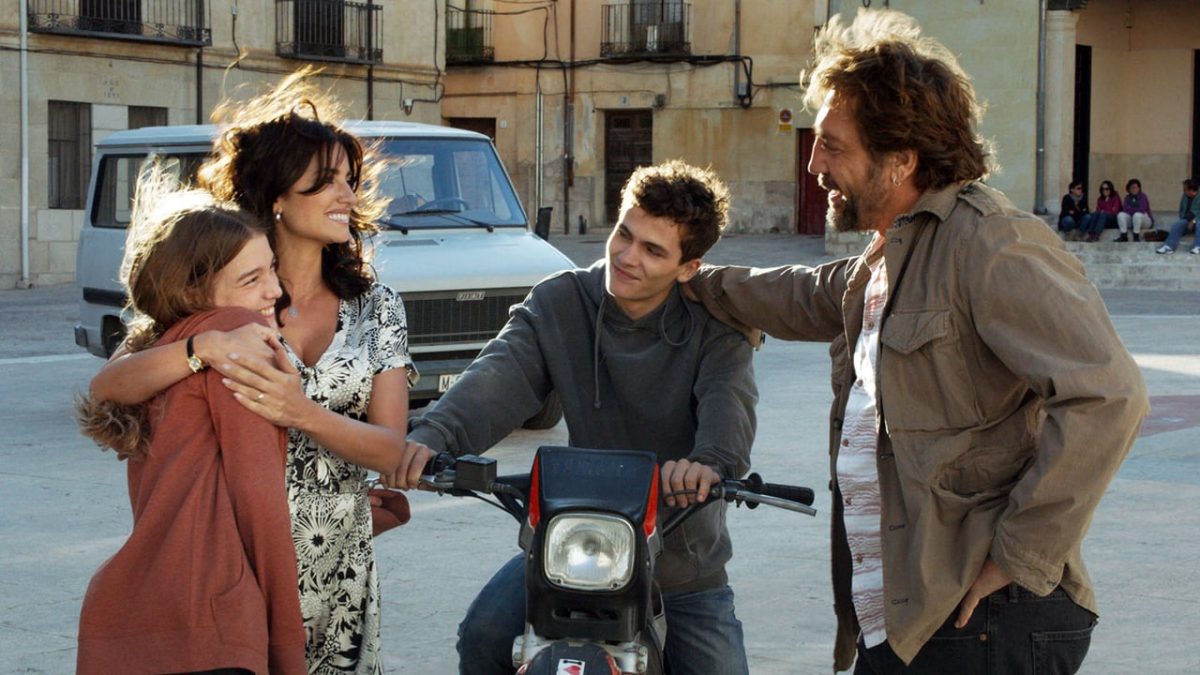
Farhadi meticulously constructs a world where the kidnapping of Laura’s daughter does far more than create immediate suspense. It functions as a prism through which the entire social, economic, and emotional ecosystem of the town is revealed. The film shows with astonishing clarity how every interaction, every shared memory, and every historically embedded relationship contributes to the way the family and community respond to crisis, so that the disappearance resonates not simply as a singular event but as the awakening of years of accumulated connections, obligations, and unspoken understandings.
The opening wedding sequence, with its music, dance, and laughter, establishes a rhythm of familiarity and trust, yet Farhadi subtly embeds traces of economic negotiation and social hierarchy, like the land transfers between Laura’s family and Paco, the old disputes between neighbors, the quiet observations of cousins and friends, so that when the child vanishes, all these previously latent dynamics surge to the surface.
The scenes, such as the family meetings in dimly lit interiors, where questions are asked, and answers are hesitated over, highlight how responsibility and loyalty are distributed unevenly across generations and how every action is interpreted through the lens of past behavior, class expectations, and communal knowledge.
Trust becomes a tangible measure in these exchanges, visible in gestures, glances, and pauses. Solidarity reveals itself as conditional, dependent on the remembered histories and moral calculus of each participant, so that Farhadi’s narrative transforms the kidnapping into an intricate study of human networks, showing how crises illuminate the emotional architecture that binds people together while also exposing the fragility and complexity inherent in that very interconnection.
“Everybody” Knows presents a masterful study of human networks, illustrating that the true tension of its narrative resides not in the immediacy of the kidnapping but in the intricate interplay of trust, obligation, and shared history that permeates every interaction. Laura’s return to her hometown for her sister’s wedding functions as a plot device and a lens through which the cumulative weight of familial and communal memory is examined.
The scenes of the wedding, where music, dance, and laughter intertwine with subtle social hierarchies, reveal moral and emotional indebtedness: land previously owned by Laura’s family and now in Paco’s hands carries unspoken histories, the casual remarks of relatives echo decades of loyalty and compromise, and the interplay of gazes, hesitations, and measured dialogue demonstrates how responsibility circulates across generations.
Farhadi constructs spaces that amplify these dynamics, with sunlit exteriors contrasting against interiors where decisions are debated, and relationships recalibrated, visually reinforcing how personal histories inform present obligations. The film’s deliberate pacing allows each choice, gesture, and unvoiced recollection to gain significance, suggesting that crises illuminate rather than create the architecture of trust. Within this framework, it becomes evident that the film privileges the quiet accumulation of shared experience, portraying emotional responsibility as inherently collective and inescapably entangled, leaving viewers to witness a network of human interdependence whose depth and resonance persist long after any single event resolves.