
“Peaky Blinders: The Immortal Man” (2026) exists in an interesting medium between television and film. It’s structured and paced like a traditional feature, and has the tonality of a standalone entity. Even in an era where most streaming shows look just as good as what is in cinemas, the first feature-length “Peaky Blinders” film has an affinity for the type of hype and aura that could only be accomplished in the theaters.
It is unquestionably an extended finale to the much-beloved show that wrapped up in 2022, and offers a more definitive conclusion to what was an ambiguous series finale. Given that Steven Knight is a storyteller with no shortage of projects on his plate, it makes sense that he would want to give a fitting end to the story of the Shelby family. While not all of it congeals, “Peaky Blinders: The Immortal Man” is a satisfying conclusion for those familiar with the story and makes the case for its chosen format.
The notion of returning to a popular drama show has grown more popular in recent years. A historical example like the ascension of the “Star Trek” series cast to the cinematic installments is quite rare, as it’s not often that audiences will buy into seeing characters that’ve already been adjusted to seeing on the small screen.
Even “Serenity,” the follow-up to the cult hit sci-fi show “Firefly,” was used to conclude a story that wasn’t completed when the show was cancelled. The danger of returning was that a “Peaky Blinders” film would feel indistinguishable from a two-part episode, but “The Immortal Man” makes a smart choice about its change of setting.
Set six years after the end of the show, “The Immortal Man” picks up with Thomas Shelby (Cillian Murphy) after he has gone into hiding and left control of the family enterprises to his sister, Ada Thorne (Sophie Rundle). Tommy has been reticent to be seen as he copes with a personal tragedy, but he’s called back into action when the fascist Beckett (Tim Roth) makes a plan to introduce counterfeit money into the European economy to cripple its market, setting the stage for the Nazis to win World War II.
Beckett’s plot involves spreading his new form of capital through British gangsters, and he makes his first offer to Tommy’s son, Duke (Barry Keoghan), who has taken control of the Peaky Blinders. While Tommy has not remained in contact with his heir, he understands the importance of returning to the fold to settle family business.
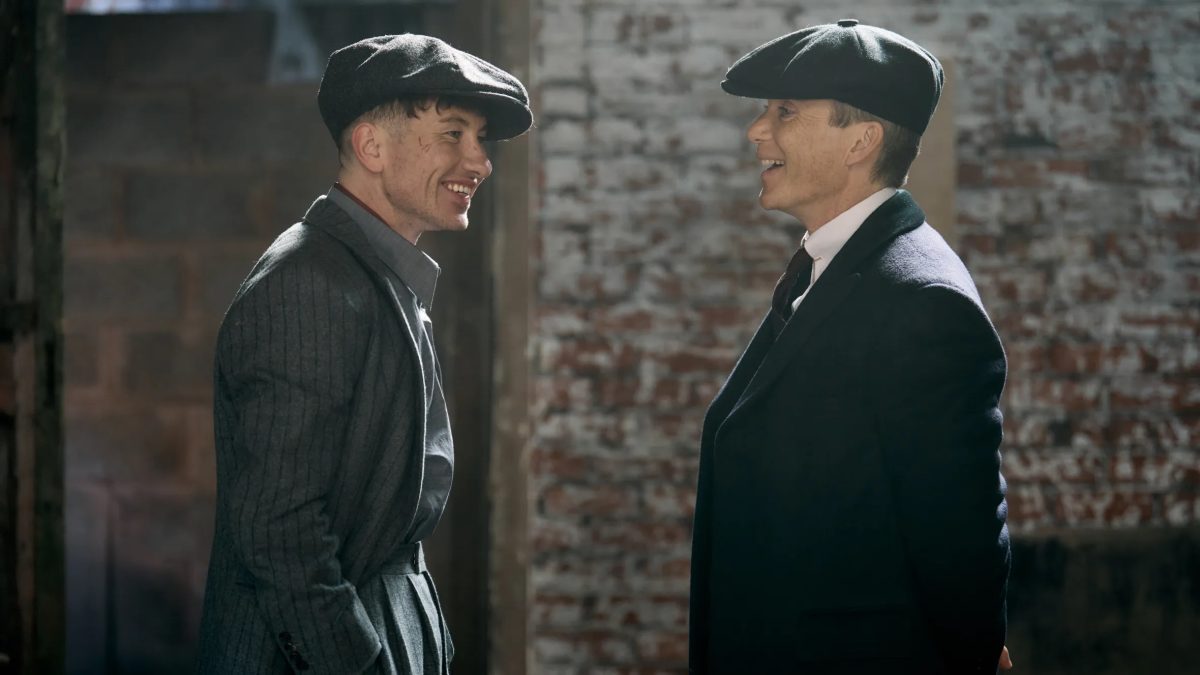
The potential collapse of England under a German invasion is as good a reason as any to draw Tommy out of hiding, even after the insular path he took in the show’s conclusion. Tommy’s initial decision was based on his belief that he would only attract danger, but he’s now put in a position in which his family is in need of guidance.
“The Immortal Man” isn’t really an ensemble film, and the storylines dedicated to the supporting characters are fairly lacking. However, it’s a perfect next step for Tommy, as Murphy brings a new complexity to the character as he deals with repurposed feelings of guilt. For Tommy, a complete rejuvenation would be impossible because of the countless painful memories that come with remembering the past.
Also Check: 10 Ways Cillian Murphy Brought the Irresistible Thomas Shelby to Life
Keoghan adds a unique flavor to the ensemble because he’s not that dissimilar from the brash, temperamental man that Tommy was in the show’s early days. The difference is that Tommy was also a veteran who had seen the evils that fascism had wrought on the world and had learned to rely on a family that could deny his worst impulses.
Duke has no such impulses, even if his heart is pure in the same way his father’s is. The dynamic between the characters is interesting because there is no coddling, and Tommy is only willing to treat Duke as a fellow man. If Duke’s more erratic behavior is a result of his informal upbringing, Tommy’s bleak worldview is his response to his own personal failings. Their relationship is thankfully one that is based on action, as Knight spends little time needlessly digging up the past.
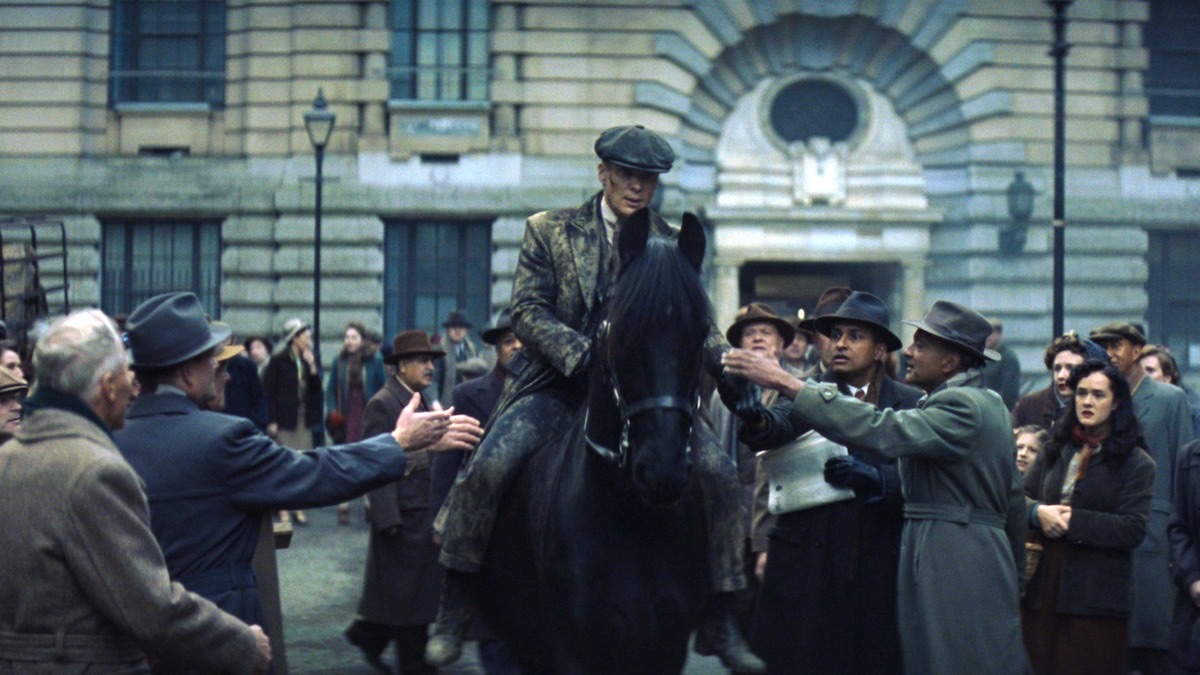
The more pensive, methodical introduction to “The Immortal Man” serves as a perfect stage for Murphy to deliver an internalized performance, which is so beautifully contained that the film’s explosive moments are even more impactful. As has become the case with most of Knight’s work, the formalistic recreation of 20th-century England is modernized with an electric soundtrack and stylized approach to motion, which gives a nice pulpy feel to material that could feel pedantic.
The finale is just as action-packed as any of the best moments from the show, but it also does not overstep its boundaries. The scale of the setpieces isn’t necessarily any bigger, but they do have more importance because the fate of Europe hangs in the balance. That’s not to say that Tommy has had his edges sanded off, as he is still an anti-hero, but it’s consistent with his character that he would see an oppressive German regime as bad for the family business.
Less fluid is the introduction of Kaulo (Rebecca Ferguson), a mysterious woman from Tommy’s past who plots to manipulate him. Ferguson succeeds in making grand acting choices that serve as a sharp contrast to Murphy’s minimalism, but the backstory for the character is tied to obscure callbacks from the show that also confusingly rewrite its history. Comparatively, Roth’s role is simply to be a detestable, nasty antagonist who revels in his own villainy, and few actors are quite as good at being absolutely despicable.
“Peaky Blinders: The Immortal Man” builds off the groundwork of the show to launch a thrilling father-son drama set within the confines of a World War II adventure in the vein of “The Dirty Dozen” or “The Great Escape.” There aren’t many legitimate surprises, but “Peaky Blinders” has always worked because it drew out the visceral fanfare in a story of Shakespearean qualities. Even though there is at least one sequel series in the works, “Peaky Blinders: The Immortal Man” is a fulfilling sendoff for Murphy’s twelve-year span as one of television’s greatest gangsters.



![Toofan Mail [2022] ‘WFF’ Review: An Excellent Leading Performance Anchors this DIY Emergency-era Period Drama](https://www.highonfilms.com/wp-content/uploads/2022/03/Toofan-Mail-8-Down-2022-1-768x432.jpg)

![The Drop In [2017]: ‘TIFF’ Review](https://www.highonfilms.com/wp-content/uploads/2017/09/HBBKBK-768x512.png)
![Sivapuranam [2015] MUBI Review – A strange isolated world of a loner](https://www.highonfilms.com/wp-content/uploads/2020/05/The-Strange-Case-of-Shiva-Sivapuranam-2015-Review-768x432.jpg)
![The World to Come [2021]: ‘Sundance’ Review – A poetic telling of forbidden love marred by a lack of focus](https://www.highonfilms.com/wp-content/uploads/2021/02/The-World-to-Come-2021-Movie-768x432.jpg)