There is a particular kind of political thriller that trusts its audience enough to make them work. “The Report,” written and directed by Scott Z. Burns, is emphatically that kind of film. It does not simplify. It does not condense a decade of institutional failure and moral catastrophe into a tidy narrative with a clear villain and a satisfying resolution, but rather inside the complexity of one of the most damning government investigations in modern American history, and asks you to follow it closely, carefully, and without the comfort of easy conclusions.
The fact that it does all of this while remaining genuinely compelling cinema is a testament both to Burns as a filmmaker and to Adam Driver, who delivers a performance of such sustained, unglamorous commitment that it deserves to be spoken of alongside the finest work of his filmography.
The film tells the story of Daniel J. Jones, the Senate Intelligence Committee staffer who spent years leading the investigation into the CIA’s post-9/11 detention and interrogation program. It’s a program defined by the use of what the agency called enhanced interrogation techniques and what the rest of the world, with considerably more accuracy, called torture. The investigation produced a report of staggering scope, over six thousand pages of documented findings that concluded the program was not only morally indefensible but operationally useless.
It was a complete and utter failure that produced no meaningful intelligence while causing incalculable human suffering and lasting damage to America’s standing in the world. The report also documented, in granular and damning detail, the degree to which the CIA actively misled Congress, the White House, and the American public about what the program involved and what it had produced. It is one of the most significant acts of institutional accountability in recent American history, and it was buried, classified, and fought over for years by the very people it implicated.
Burns understands that this story’s power lies not in its dramatic peaks but in its accumulation. “The Report” is a film about process, about the grinding, unglamorous, psychologically costly work of assembling truth from a mountain of classified documents inside a secure basement room with no windows. Jones spent years in that room.
The film makes you feel the weight of those years—the way they narrow a person, how institutional obstruction erodes even the most committed investigator, and how the gap between what you know to be true and what you can prove to a political system that would rather remain ignorant becomes a form of sustained psychological violence. This is difficult material to make cinematic, and Burns does it with a structural intelligence and a tonal confidence that mark him as a filmmaker operating at the top of his craft.
The true story at the heart of the film is one of the most confusing and morally labyrinthine in recent American political history, and Burns deserves real credit for rendering it navigable without ever making it feel simple. The web of institutional actors, the competing agendas of the CIA, the Senate, the White House, the contractors who designed the program, the lawyers who provided its legal cover, could easily become impenetrable in lesser hands.
Burns moves through it with clarity and precision, using the mechanics of the investigation itself as a narrative engine, letting the audience piece together the horror of what happened in the same sequence that Jones pieced it together, which gives the revelations a cumulative weight that a more conventional dramatic structure would have dissipated. You understand not just what was done but how it was hidden, rationalized, and defended by people who knew better and chose otherwise. That understanding is the film’s most important achievement.
Also Read: 10 Best Adam Driver Movies You Must See
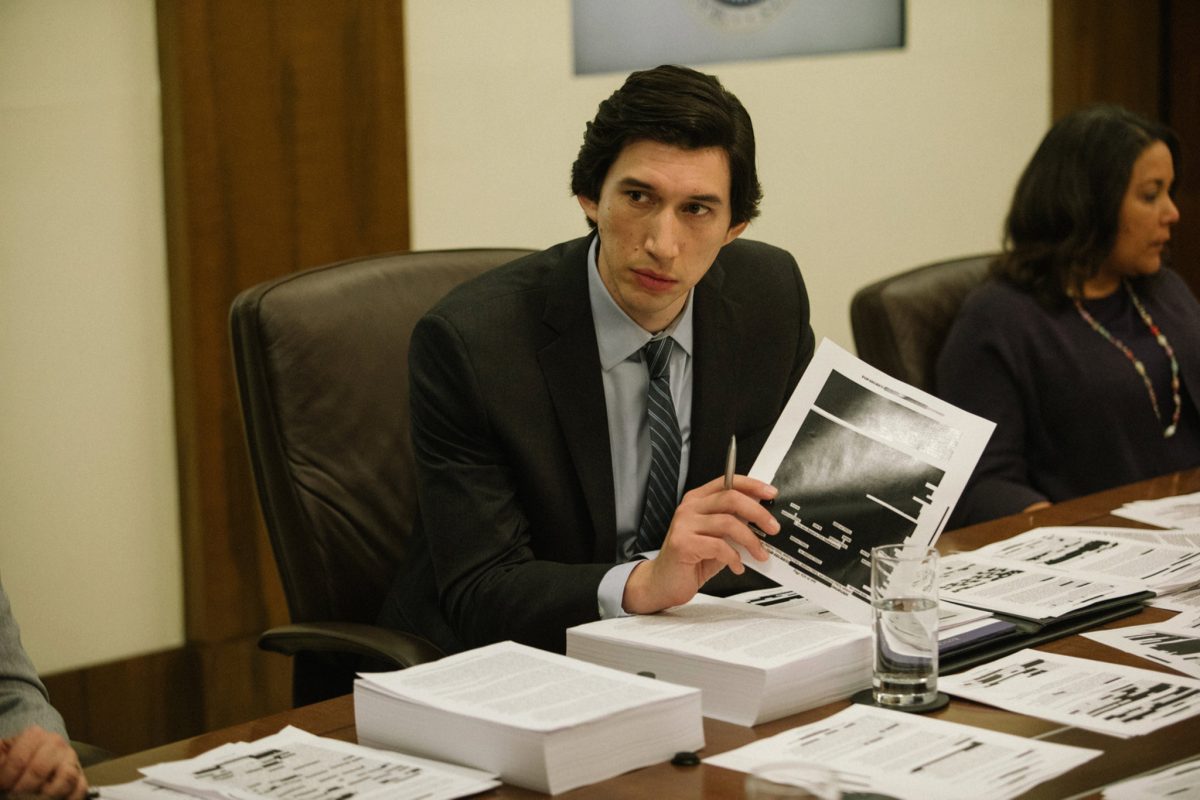
None of it would work without Driver. His performance as Jones is one of the great underappreciated pieces of screen acting in recent American cinema, a portrait of a certain kind of moral stubbornness that American culture celebrates in the abstract and tends to find inconvenient in practice.
Jones is not a complicated character in the way that antiheroes or morally compromised protagonists are complicated. He is a man who believes that the truth matters, that accountability matters, and that his job is to produce the former in service of the latter, regardless of the political cost to anyone, including himself.
In lesser hands, this could become sanctimony, the righteous civil servant as cinematic saint. Adam Driver never lets it go there. He plays Jones’s conviction as something exhausting rather than ennobling, something that costs him daily and that he pays for without complaint because complaint would require him to acknowledge that he is doing something exceptional rather than simply doing his job. It is a performance of remarkable discipline, and its emotional payoff, when it finally arrives, lands with a force that the film has earned through patience and restraint.
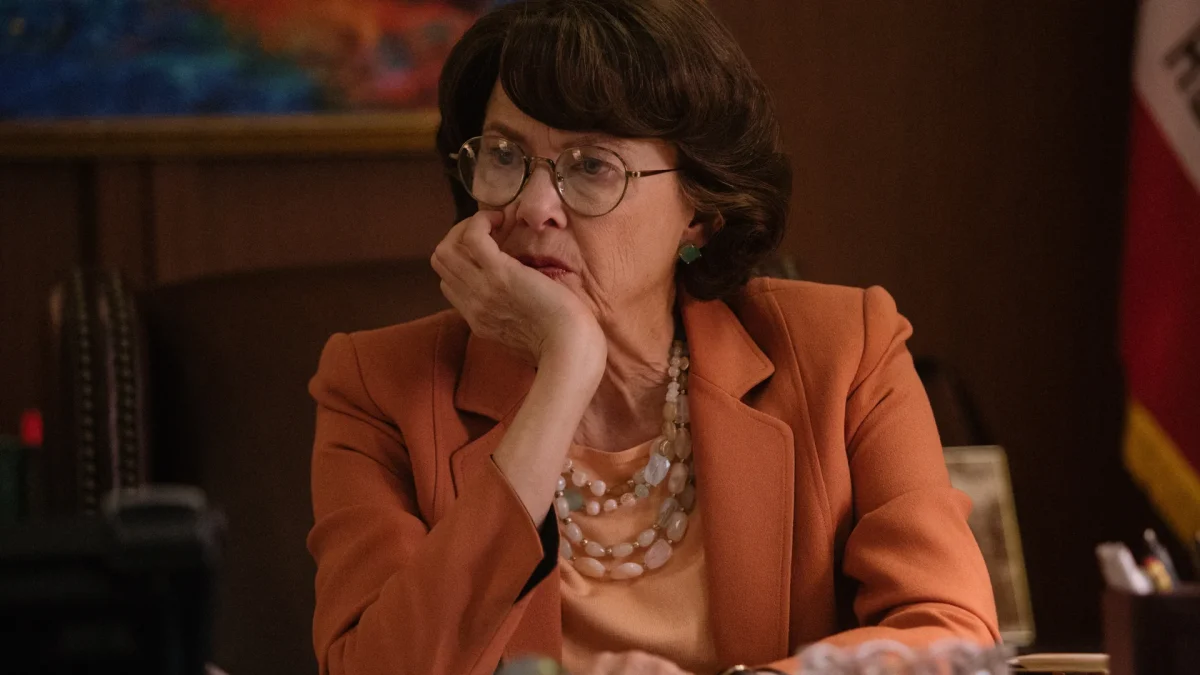
The supporting cast operates in Driver’s considerable wake without embarrassing themselves. Annette Bening as Senator Dianne Feinstein brings her customary intelligence and authority to a role that requires her to embody the particular pragmatism of someone who has spent decades operating at the intersection of principle and political reality.
Jon Hamm, Ted Levine, and Michael C. Hall fill out the institutional landscape with the kind of convincing specificity that grounds the film in recognizable human behavior rather than political abstraction. These are not monsters, the film insists. They are functionaries, careerists, true believers, and self-protectors, which is in many ways more disturbing than monstrousness would be.
What elevates “The Report” above the competent political thriller it might have been is its willingness to take seriously the historical and cultural significance of what it is documenting. The torture program it investigates was not an aberration produced by a handful of bad actors operating outside the system. It was a product of the system, sanctioned at the highest levels, defended by the legal architecture of the state, and protected afterward by the same institutional instincts that had enabled it in the first place.
The film understands that its story is not really about Daniel Jones or even about the CIA. It is about what happens to institutions, to countries, to the stories nations tell themselves about who they are, when fear is allowed to override the frameworks that exist precisely for moments when fear is most acute. That is a story with no expiration date, and Burns tells it with the seriousness it deserves.
“The Report” is available to stream and remains one of the most important American political films of the last decade. It went largely unseen on its release, swallowed by the algorithm of the platform that distributed it, which is one of the more depressing ironies, given that its subject is the systematic suppression of inconvenient truth. Adam Driver’s performance alone justifies the two hours. The questions the film raises about accountability, institutional memory, and the gap between what democracies do and what they tell themselves they do deserve far more of your time than that. See it with the attention it deserves. Then think about why more people haven’t.




![A Spike Lee Joint: Summer of Sam [1999]](https://www.highonfilms.com/wp-content/uploads/2018/06/Summer_OF_SAM-768x432.jpg)