Few movies in cinema history feel as emotionally demanding and spiritually immersive as Andrei Tarkovsky’s “Andrei Rublev” (Original title: Andrey Rublyov, 1966). I will admit, it took me a handful of tries before I was finally able to sit down and watch it all the way through. It’s not a film that meets the viewer halfway. This film demands patience. It demands focus. But when I finally committed to watching it, I was blown away exactly as I had expected to be. Directed by the visionary filmmaker Tarkovsky, this 1966 masterpiece is primarily a historical drama about a medieval icon painter. But because it’s Tarkovsky, it is a lot more than that.
The film explores art, suffering, faith, violence, and the responsibility of the artist during times of uncertainty and darkness. Tarkovsky approaches history not as a conventional narrative, but as something closer to a spiritual experience. The result is a movie that feels timeless, grounded in the harsh realities of medieval Russia, while simultaneously floating above it like some kind of dream.
At the very beginning of the film, we witness a strangely poetic and almost surreal moment when a man attempts to fly using a simple hot air balloon. The camera rises with him, lifting above the earth as he drifts through the sky. It is an image of pure freedom that feels almost miraculous in this muddy, oppressive world that Tarkovsky shows us. Watching this scene, I immediately thought of the floating dream sequence from the director’s feature-film debut “Ivan’s Childhood” (1962).
Tarkovsky often used images of flight to represent freedom. He liked showing the human spirit escaping the brutality of reality. The act of rising into the sky becomes symbolic of ascension. But in Tarkovsky’s work, these moments of ascension are always temporary. Gravity eventually pulls the characters back down to earth.
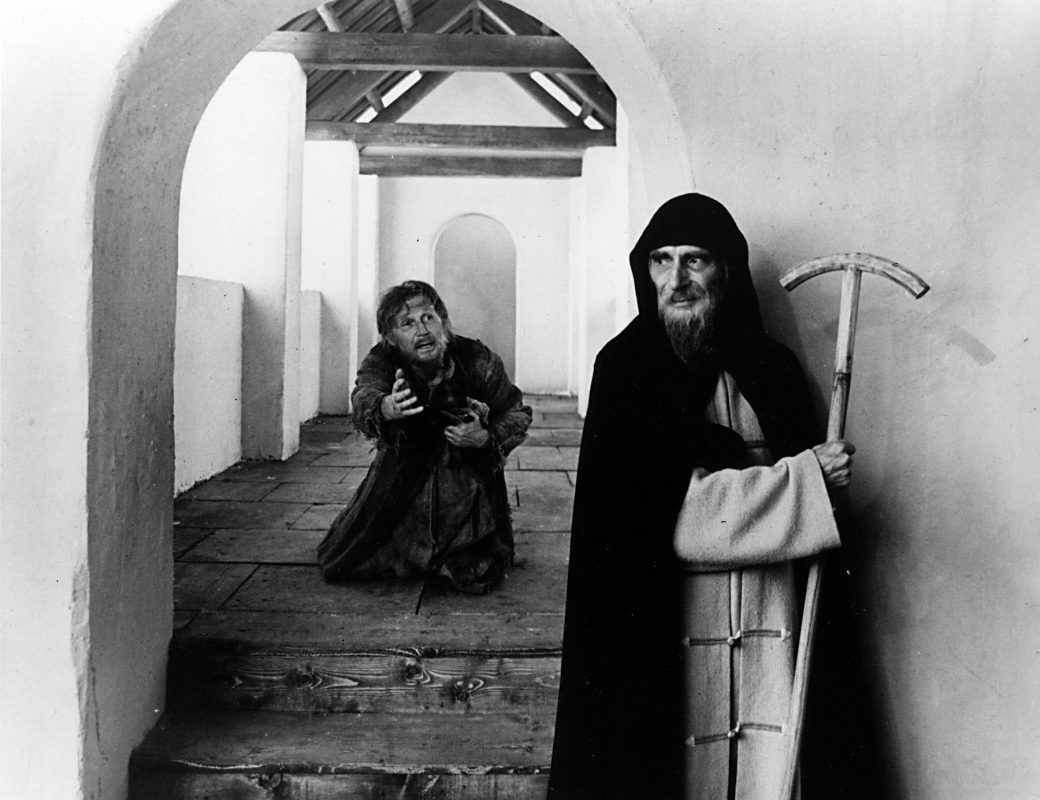
This tension between transcendence and suffering becomes one of the central themes of “Andrei Rublev.” Tarkovsky is a visual master. I am a big fan of the way Tarkovsky uses cinematography to explore his environments. His depiction of medieval Russia is not romanticized. It is muddy, chaotic, and violent. The villages are filled with fear, political instability, and religious anxiety. The people are constantly subjected to cruelty and destruction, and the land itself feels harsh and unforgiving.
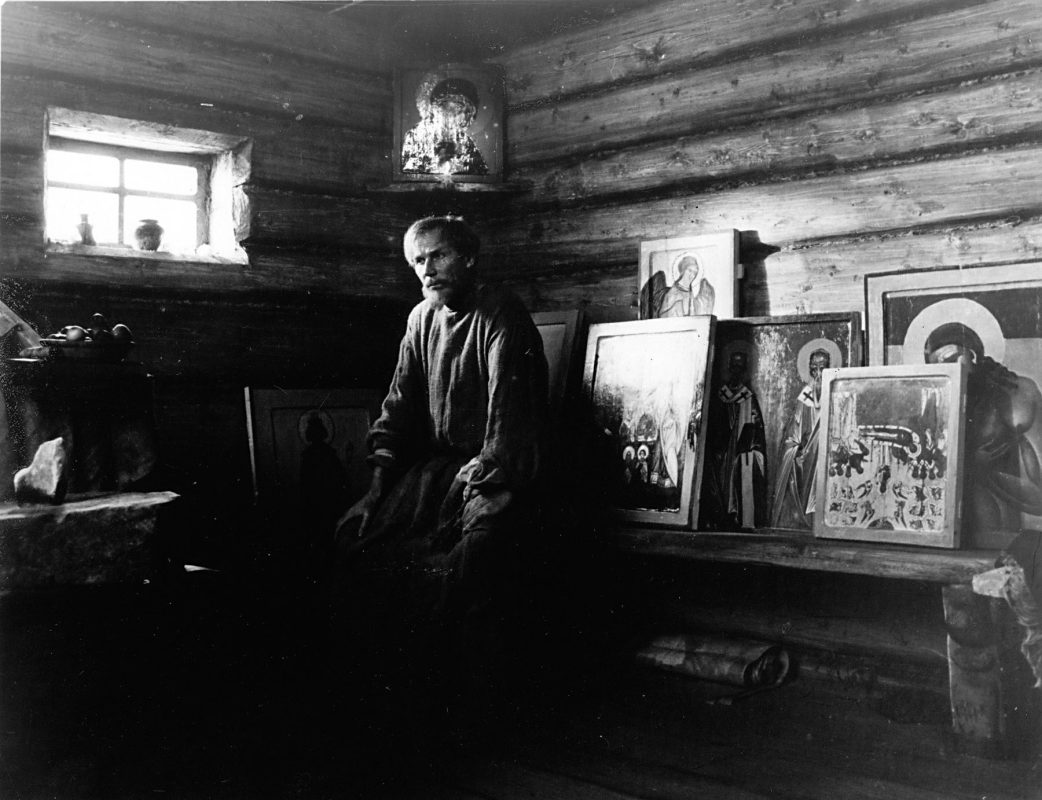
Within this world exists Andrei Rublev, a monk whose role is to paint religious icons meant to inspire spiritual devotion. But the harsh environment surrounding him raises a fundamental question: how can beauty exist in a world filled with violence? This question ultimately leads to one of the most powerful narrative decisions in the entire film: Rublev’s vow of silence.
After witnessing acts of violence and moral devastation, Andrei Rublev refuses to paint and stops speaking entirely. This vow of silence is not simply a plot device; it becomes the emotional center of the film. Andrei Rublev’s silence feels like the silence of an artist who no longer believes that his work can do any good in the world. A work that is being suppressed, manipulated, and twisted without his authority. He would rather stop creating than be misunderstood. This moment also speaks to a deeper philosophical question: what responsibility does an artist have during times of suffering?
Also Read: 15 Great Movies to Watch on a Rainy Day
By choosing silence, he rejects the idea that art should simply exist for decoration while people are suffering around him. His silence becomes a form of moral protest. Words often fail in this world. Religious leaders preach morality while violence continues unchecked. Political rulers speak about order while chaos spreads across the land. In that context, Rublev’s refusal to speak also becomes a rejection of emptiness. Silence becomes more honest than speech.
Watching this movie, as a Russian American director growing up in New York City, gives this film a personal resonance for me. When I was a kid, wanting to become a filmmaker, discovering Tarkovsky felt like I was meeting my creative mentor. For a while, I had struggled with finding my voice. That influence becomes even more surreal when you think about the passage of time. Tarkovsky struggled throughout his career with censorship and artistic limitations in the Soviet Union.
Many of his films were suppressed or heavily controlled by the state. Yet decades later, his work lives on and continues to inspire. I couldn’t help but feel like I made it when I saw that my feature “Dragon” (2024) was on the same streaming service, Plex, as “Ivan’s Childhood.” After everything I experienced, going from someone who had aspired to be like my favorite directors to showing my work in the same spaces feels like a happy ending.
The final moments of “Andrei Rublev” are among the most breathtaking in cinema history. After nearly three hours of stark black and white cinematography, the film suddenly shifts into color. The screen fills with close-up images of Rublev’s actual icon paintings. The colors are almost shocking after the monochrome world we have just experienced. Throughout the film, we are privy to suffering, doubt, violence, cruelty, despair, and a struggle with spirituality. But in the final sequence, we finally see the art that emerged from those experiences. The icons represent the triumph of creativity and faith over despair.
For me, this moment feels like Tarkovsky’s ultimate statement about the purpose of art. The artist may suffer. The world may be chaotic and cruel. But through that struggle, something transcendent can still be created. The beauty of these icons suggests that art can outlast the suffering that produced it while acting as a remnant of time. Even when the world feels dark and uncertain, the act of creating something meaningful still matters.




![The Elder One (Moothon) [2019]: ‘MAMI’ Review – A constructed drama that escapes challenges but stays relevant](https://www.highonfilms.com/wp-content/uploads/2019/11/The-Elder-One-Moothon-768x432.jpg)