I remember the first time I ever heard of the Red Hot Chili Peppers. It was on MTV—I want to say the early 2000s—when the video for “Californication” had just premiered. I was immediately hooked by the groovy melodies. Anthony Kiedis’ distinct vocals, which felt like something entirely its own in a sea of voices that often blended, and to some extent, I was kind of mesmerized by the state-of-the-art PS1 video game-style graphics. Seriously, whether you like the song (or the band, for that matter), you have to admit the music video was sick—it’s the kind that sticks with you almost instantly.
Years went by, and I grew to like the band. I wouldn’t call myself their biggest fan, but “Dani California” and “Give It Away” were very much part of my childhood, each paired with music videos that helped cement those memories. The more I think about it, the more I realize they have a real knack for working with directors who come up with memorable MVs that not only elevate the music but also inspire others to create their own, sometimes funnier versions of them (and yes, I’m absolutely thinking of Weird Al).
Now, if it hasn’t become clear, my experience with the band has always been fairly surface-level, which is why this Netflix documentary, “The Rise of the Red Hot Chili Peppers: Our Brother, Hillel,” felt so intriguing. Instead of taking a broad approach, it focuses on a specific era—an early chapter that, for someone like me, was largely unexplored. That alone suggested something a bit more personal. At the same time, being a Netflix documentary, it felt like a bit of a coin toss. They’ve delivered some great work—especially in the true-crime space, with a few even earning Oscar attention—but just as often, their output settles into something more average, with many of them mostly landing in 3 stars for me.
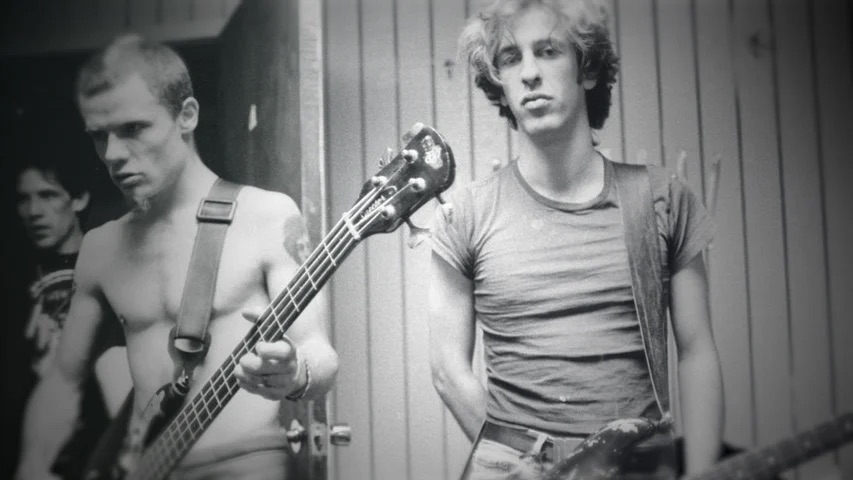
“The Rise of the Red Hot Chili Peppers: Our Brother, Hillel,” works both as a behind-the-scenes look at the formation of the band we know today and as a tribute to their former guitar player, Hillel Slovak, not just as a musician, but as a foundational presence in the group. A friendship that went as far as their school years, especially as Anthony Kiedis and Flea arrived in Los Angeles from dysfunctional families, trying to find their footing in this new concrete jungle. In Flea’s case, that included a father who was a former drug dealer who looked for a bright and new future as an actor, as many people in LA do.
Like many bands, their story starts with smaller groups and school performances, where authority figures weren’t always supportive—proving that those rebellious music video tropes done by many rock bands at that time weren’t entirely exaggerated. Eventually, through a mix of chance encounters and shared creative energy, the trio came together to form what would become RHCP.
Along the way, the film doesn’t shy away from the messier parts of that journey: the conflicts, the highs, and the heavy presence of drugs. There’s an undeniable irony in hearing band members reflect on those struggles now, especially considering how deeply immersed they all were in that lifestyle at one point. But at the same time, it makes sense — who better to speak on overcoming those demons than people who’ve actually lived through them?
Speaking of its content, if you’re a diehard fan, there may not be much here you don’t already know. Even coming in with a more casual understanding, I was aware of some of their struggles with addiction. Still, the documentary works in a different way—it’s less about revealing new information and more about spending time with these stories. It feels like revisiting something familiar, like a movie you’ve seen before but still enjoy returning to.
There’s a reflective quality to it, as Kiedis and Flea look back on a chaotic period that feels both distant and oddly close. The film doesn’t shy away from darker moments, acknowledging and sometimes even regretting that time, though it occasionally feels like it’s more eager to return to the lighter memories—which, to be fair, is understandable. One thing that stood out was how, once we reach (spoiler alert) Hillel Slovak’s death, everything tied to John Frusciante’s era feels largely brushed aside, with the film devoting what amounts to roughly the last ten minutes to it.
It’s an interesting choice, but it does seem to align with the documentary’s focus on their earlier years—especially considering how John Frusciante’s era still feels relatively fresh in many of our minds. Another cool tidbit I picked up: I had no idea Cliff Martinez — now better known for his collaborations with Nicolas Winding Refn — was once a drummer for Red Hot Chili Peppers. That was a pretty great, and honestly, unexpected surprise.
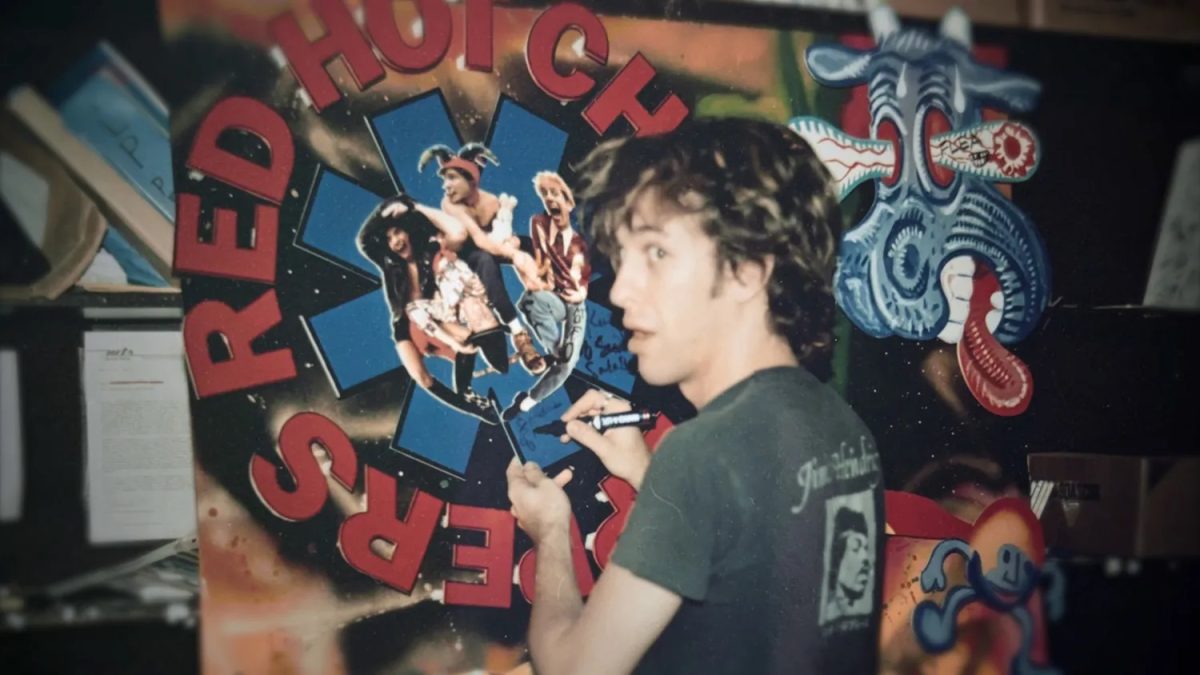
From a presentation standpoint, director Ben Feldman does a solid job injecting (no pun intended) energy into the film through dynamic editing, ensuring that the talking-head format rarely feels static or dull — a common pitfall for this kind of documentary. He pulls this off by blending archival footage, song inserts, and bursts of vibrant animation, all of which keep the visuals engaging.
As a result, the 90+ minute runtime moves at a steady, easy pace. Even when the documentary revisits familiar ground, it generally finds ways to keep things from feeling overly repetitive. That said, there are a few brief stretches — particularly in the middle and early on — where the momentum dips slightly, and the film loses a bit of its grip.
All in all, unless you truly dislike the band—or buy into the long-running joke about their music being used as some kind of interrogation tactic—this probably won’t change your mind. But if you’re a fan or simply interested in music history, it’s an easy recommendation. It may not be as deep or revelatory as it could have been, but it’s still an engaging look at a formative chapter in the band’s story.



![Visaranai [2016]: A Riveting and Meaningful Cinema](https://www.highonfilms.com/wp-content/uploads/2016/02/Visaranai-1.jpg)