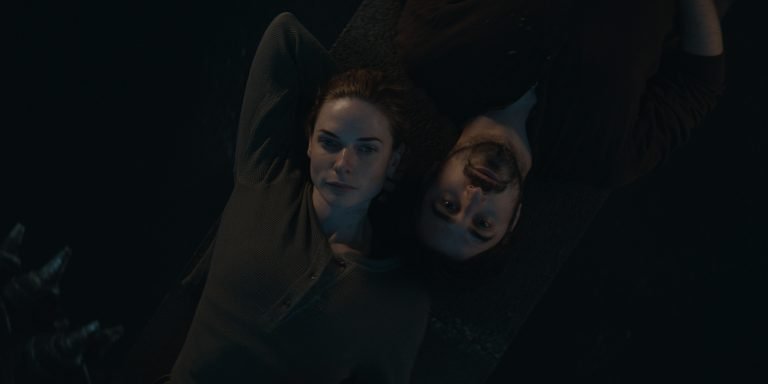
At first glance, “Eko” (2025) feels like a mystery about a missing man hiding in a forest. A man hunted by enemies, by the law, by his own past. But the deeper you go, the film begins to shift. It is not about disappearance. It is about control. Control that starts quietly and disguises itself as protection. And control over time becomes a prison. Kuriachan may be missing. But he is never absent. Because he lives on, in the dogs, in the forest, and most disturbingly, in the people he once controlled.
Spoilers Ahead
Eko (2025) Plot Summary & Movie Synopsis:
Why Does Mohan Pottan Come Looking for Kuriachan?
Mohan Pottan does not arrive in the forest as a savior. He comes with history. With anger and unfinished business. Kuriachan was once his friend. That word matters. Because what follows is betrayal. Mohan believes that Kuriachan framed him for a crime he did not commit. That betrayal cost him years of his life. Prison does not just take away time.
It changes how a person sees the world. It sharpens resentment, builds a quiet need for closure. So when Mohan hears that Kuriachan is missing, he does not see a mystery. He sees an opportunity. His search is not just about finding a man. It is about reclaiming dignity. About confronting the past. But the forest does not welcome him. It watches him.
The dogs become the first sign that something is wrong. They are not wild. They are disciplined, organized, and almost unnatural in their behavior. Mohan reads this as proof. Kuriachan must be alive. Somewhere close and still pulling the strings. What he does not realize is that he is already inside a system he does not understand. And in this system, assumptions can kill.
Why Does Mlaathi Refuse to Leave the House?
Mlaathi Chettathi appears fragile at first. Sick. Withdrawn. Almost disconnected from reality. Her son comes to take her away. To remove her from the decay. From whatever is left of Kuriachan’s world. But she refuses. This refusal is not a weakness. It is a choice. Because the house is not just a place. It is her ground of control. To leave would mean giving that up.
Mlaathi’s past begins to reveal why she clings to this space so tightly. Back in Malaysia, she lived a different life. A life that was taken from her through deception. Kuriachan did not just bring her to India. He uprooted her identity. He rewrote her reality and told her that her husband was dead. That she had no one left. That he was her only option. This is not love. This is manipulation, and for years, she lived within that constructed truth. So now, when she sits inside that house, refusing to leave, it is not fear that keeps her there. It is power. For the first time, she is the one deciding the boundaries.
Who Is Really Controlling the Dogs?
The dogs are the film’s most haunting presence. They move like a collective force: Silent, alert, and obedient. Everyone assumes they belong to Kuriachan. It makes sense. He trained them. Raised them. Built their instincts. Mohan believes they are still responding to him. That somewhere in the forest, Kuriachan is issuing commands. This belief shapes every decision.
But the truth is simpler. And far more unsettling. The dogs are not following Kuriachan. They are following Mlaathi. This revelation changes everything. Because it means that the system of control has shifted. There are clues. Small ones. Easy to miss. The dogs respond instantly to Mlaathi’s signals. They allow entry when she permits it.
They attack when she decides. Peeyoos recalls how they trapped him when she was not around. Not because they were guarding Kuriachan. But because they were waiting for her command. Even Mohan’s death is not an accident. It is orchestrated. The dogs push him off the cliff. But the decision is not theirs. It is hers. What the world sees as loyalty to a master is, in truth, obedience to a new one.
Is Kuriachan Really Hiding?
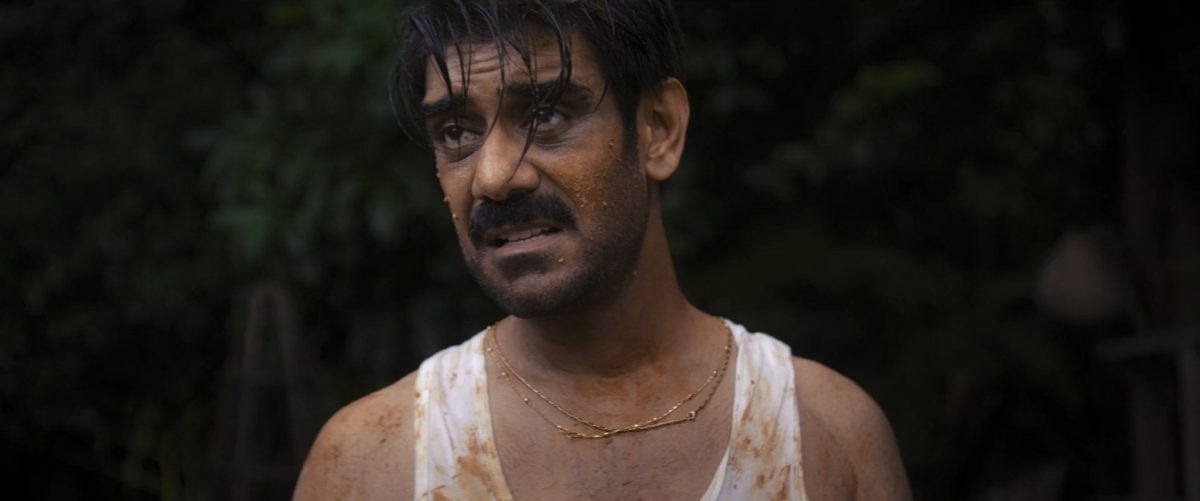
For most of the film, Kuriachan exists as a rumor. A man in hiding, a criminal evading justice. There are stories about a cave. About a hidden place where he can survive. It sounds plausible. But something does not add up. Kuriachan has never stayed hidden this long before. His patterns suggest movement.
So why now? The answer begins to form when the Navy man starts connecting the dots. He sees what others miss. If Kuriachan is alive, then he is not just hiding. He is being kept hidden. This is where the film quietly shifts its perspective. Kuriachan is not the hunter anymore. He is the trapped one.
Eko (2025) Movie Ending Explained:
Why Does Mlaathi Keep Kuriachan Alive Instead of Killing Him?
Revenge, in “Eko,” is not loud. It is patient. When Mlaathi learns the truth about her past, everything breaks. Her first husband was not dead. He was framed and destroyed by Kuriachan. Her entire life in India is built on a lie. This realization does not lead to immediate violence. It leads to something colder. When Kuriachan decides to go into hiding, she already knows where he will go: the cave
She does not stop him. She lets him walk into it. And then she closes the world around him. The dogs become the walls of his prison. They do not let him leave. They ensure he stays inside. But she does not starve him. She feeds him, just enough to survive. Because death would be easy. What she wants is suffering. She wants him to feel what she felt — isolation and helplessness.
The knowledge that freedom exists, but is out of reach. Every day becomes a reminder. Every moment becomes punishment. She watches him through binoculars without ever needing to step outside. Control, for her, is no longer about dominance. It is about balance. Keeping him alive, but never letting him live.
Who is Peeyoos?
Peeyoos is introduced as a caretaker. Quiet. Efficient. Almost invisible. But invisibility, in this film, is often a disguise. The truth is that Peeyoos is not who he claims to be. He is Manikandan, Kuriachan’s most loyal man. Raised by him and shaped by him. He is conditioned to obey without question. If the dogs are trained to follow Mlaathi, Manikandan is the human equivalent of Kuriachan’s control.
He does not hesitate. His search for Kuriachan is not emotional. It is mechanical. Find the master. Eliminate obstacles. This leads to a trail of violence. Subtle at first. Then increasingly brutal. He tries to kill the Navy man by sabotaging his car. He misleads the undercover officers, leading them to their deaths in the forest. Each act is calculated because, for him, morality is irrelevant. Only loyalty matters.
Why Doesn’t Manikandan Kill Mlaathi?
When Manikandan realizes that Mlaathi is the one controlling the dogs, the situation changes. For the first time, he is not in control. He understands that she is the key. The only person who knows where Kuriachan is. Killing her would mean losing that information forever. But there is another layer – the dogs. They are always present. Watching. Waiting.
If he makes a move against her, they will kill him instantly. This creates a rare moment of hesitation in a character who otherwise does not hesitate. He is trapped, just like Kuriachan. The irony is precise. Kuriachan controlled Manikandan. Mlaathi controls the dogs, and now, both systems collide. Manikandan cannot move forward. He cannot move back. He can only wait, and waiting in this film is another form of imprisonment.
By the end of “Eko,” the mystery of Kuriachan is no longer the central question. Because the answer is clear. He might be alive or dead. But survival is not freedom. He is trapped in a space designed by the very logic he once used on others. Mlaathi does not escape her past. She recreates it. But this time, she is the one in control. Manikandan does not break his loyalty.
He becomes a victim of it. The dogs do not choose sides. They simply follow commands. That is the film’s most disturbing idea. That control, once created, does not disappear. It transfers. From one person to another. From one system to the next. Until no one is truly free. In the end, “Eko” is not asking where Kuriachan is. It is asking something far more uncomfortable. When power changes hands, does anything really change? Or do we just become better versions of the same cage? Because sometimes, the difference between a master and a prisoner is only a command away.
Eko (2025) Movie Themes Analysed:
When Control Outlives the Controller
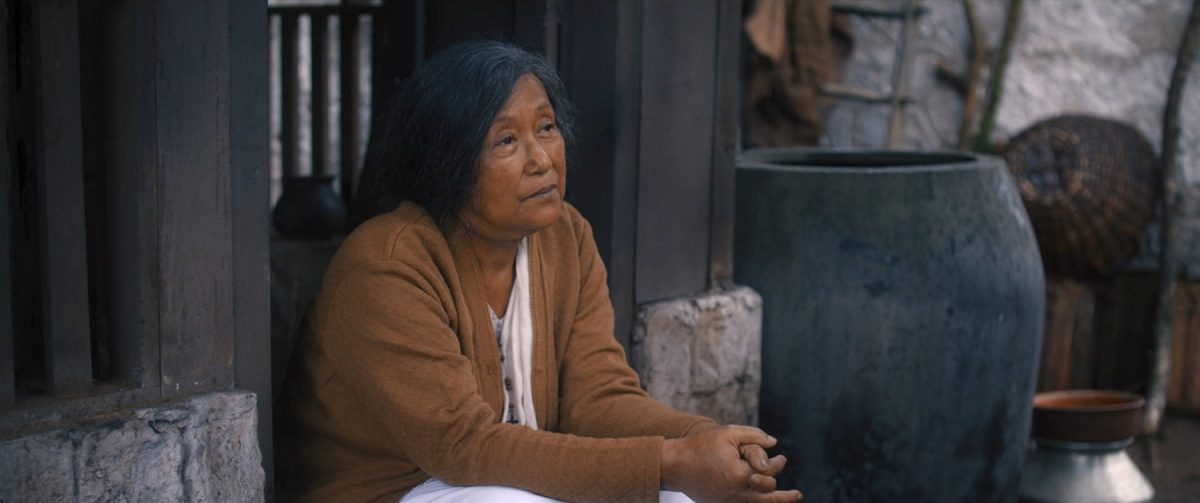
At its core, “Eko” is not a mystery about a missing man. It is a study of control, how it is created, how it is transferred, and how it refuses to die even when the person who built it disappears. The film begins with the assumption that Kuriachan is still in control. But as the narrative unfolds, this assumption collapses. Control has shifted. And that shift becomes the film’s central idea: power does not vanish; it finds a new owner. Mlaathi is the epitome of this change. From being the victim of manipulation, she now becomes the mastermind of the same manipulation that once sought to hold her captive.
Kuriachan had sought to uproot her life, redefine her reality, and hold her existence at bay, both physically and emotionally. Yet, once she finds out the truth, she does not try to destroy the system; rather, she seeks to inherit it. She seeks to control the dogs, the space, and most important of all, the life of Kuriachan.
From this, one of the most disturbing aspects of the movie is revealed: the cycle of abuse. Mlaathi does not wish to break the cycle of abuse, but rather mirrors it. The only difference between her and the oppressor is the direction of the abuse, not the method of the abuse. The oppressed have become the oppressor, not based on the abuse, but based on the need for balance within the scale of justice. However, in doing so, she has become the same system that once oppressed her.
The role of the dogs is a very interesting metaphor in this context. They are not inherently bad animals. They are conditioned and programmed. Taught to obey. Be it Kuriachan or Mlaathi, they will obey authority without question. This is a larger idea that is reflected within this film: systems of control are not based on violence, but rather conditioning. Once conditioning is established, violence is not necessary.
Manikandan’s character extends this idea into human behavior. He is not just loyal to Kuriachan; he is shaped by him. His actions are not driven by personal morality but by embedded instruction. Even when Kuriachan is absent, Manikandan continues to operate as an extension of his will. This suggests that control, when deeply internalized, does not require the presence of the controller.
Another central theme in “Eko” is the illusion of freedom. Kuriachan is alive. He has access to food. There is nothing physically stopping him from surviving. Yet, he is not free. The cave becomes a psychological prison, reinforced by the constant presence of the dogs. His punishment is not death; it is awareness. The awareness that escape exists, but is denied.
This same illusion applies to Mlaathi. While she appears to hold power, she remains confined to the house. Her revenge ties her to the very place of her suffering. In controlling Kuriachan, she also traps herself within the same system. Ultimately, “Eko” presents a bleak but honest reflection on power. It suggests that control is not inherently tied to individuals but to structures. And when those structures are left intact, they do not disappear; they evolve. The film leaves us with an uncomfortable question: when we take control from those who hurt us, are we truly free? Or are we simply continuing the story from the other side?