
‘Jimmy & The Demons’ takes us through a brief chapter in an artist’s life when he was struggling with his creative pursuit due to the woes of ageing. It offers a closer look into his daily life, hoping to explore his spiritual beliefs, existential conflicts, and artistic struggles. Along with recorded footage, director Cindy Meehl introduces archival details from his formative years as an artist. It features sweet and frequently soaring musical notes that inevitably give it all a sentimental sheen. That’s why the film doesn’t stray further from the usual structure of similar projects. Yet, those limitations feel immaterial when the subject of the documentary is an absolute joy to listen to and learn from.
James Grashow, an American sculptor, had been working with cardboard and papier-mâché installations for many decades. So, Meehl’s film serves partially as a retrospective of his artistic life, while mainly as an attempt to understand his creative process. She captures moments from the twilight years of his life, when he received a big commission to work on an installation—an ambitious undertaking for an artist, regardless of their age. It cuts a little deeper through the layers she reveals into his interiority, some of which address a haunting worry rooted in his familial past.
At the time of the recording, Grashow was in his late seventies, stepping into his eighties. He lost some of his closest relatives when they were around that age, which leaves him fighting an internal battle, even if his demeanour may not make it seem so. He works with the level of investment of someone in the early stages of their artistic pursuit. There’s a charming innocence to his curiosity and his ability to be marveled by something beautiful. You can notice it on his face when he looks at a group of figures he carved out of cardboard to fit into a larger model of an architectural structure.
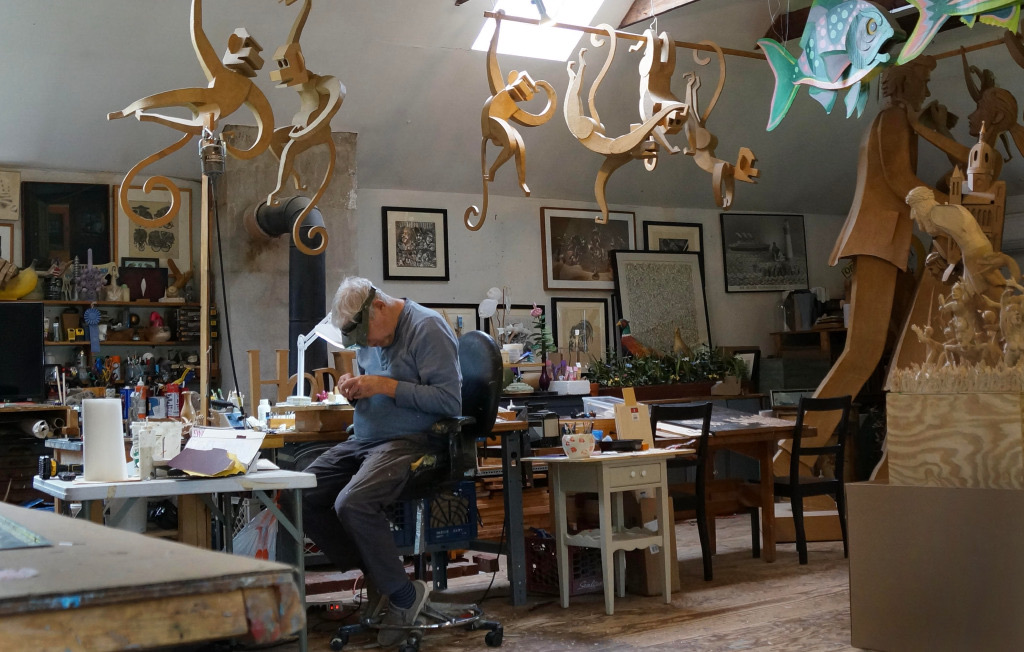
You can also catch a glimpse when he sees a string going through different parts of a cardboard model and embraces his friend, who helped him with that task. The utter delight on his face at seeing something seemingly small or inconsequential makes us contemplate how we often overlook some of our small wins, which are vital for a fulfilling life. It also reveals an endearing side of this revered artist, which his wife, Guzzy Grashow, also acknowledges, as she sees two big hearts he drew in the snow on their lawn to celebrate their lovely bond. “Cutest man alive,” she proclaims.
At other times, she appears as his creative partner, while revealing more about the man she fell in love with. She recounts the story of how they first met and her first impression of him. Later on, she recalls him being occupied with thoughts of death and mortality in his youth, unlike her. “She totally screwed me and made me happy,” he says in jest, while unwittingly revealing her value in his life since their first encounter. Yet, while seemingly cheerful, these moments often have a bluer undercurrent, which goes in line with the film’s core theme.
As the title suggests, the film is about Jimmy and his demons, meant to inform how his darker side translates into his work while exploring its emotional roots. Grashow speaks about his academic struggles as a child, which made him feel inferior to his peers and his siblings. Making art is the only thing I ever could do,” he says, as black and white photos of his teenage life glide on the screen.

In those moments, he says every word, overwhelmed by those memories, hinting at the enormous value art holds in his life, to cope with his darker thoughts and isolation. It inadvertently makes you wonder how kids growing up these days deal with their psychological struggles, if the art is infected and surveilled by institutional forces, and is reduced to watered-down regurgitations of human creativity. That would starve off generations to come of a creative outlet to deal with their emotional troubles.
That makes Meehl’s film as stimulating as it is evocative. She portrays the emotion through unrestrained, often prolonged snippets from the couple’s regular life. It may be something as simple as him being absorbed in his work, carrying a cardboard model on his arms, or singing an old song when surrounded by his family. Those moments lend a warmhearted tone to the narration, sometimes undercut by harsher truths about his life beyond the creative details of his recent work.
However, Meehl’s film isn’t a vastly insightful look into his artistic life, his inspirations, or how his worldview influenced his career. While most of the film offers a look into his skill-intensive process, it becomes a personal, albeit not comprehensive, look into his artistic pursuits. Even the brief glimpses into his past installations don’t dwell on the intricacies of his work, beyond some rudimentary details about their nature and the practical challenges while working on his latest project. Yet, what separates Meehl’s film from similar projects is her ability to get closer to her subject’s emotional truth through everyday moments.




![Pokémon Detective Pikachu [2019] Review: An Endearing Mess](https://www.highonfilms.com/wp-content/uploads/2019/06/Pokémon-Detective-Pikachu-768x432.jpg)
![Blood Money [2021] Zee5 Review: Lack of Depth renders the otherwise Intriguing film quite Average](https://www.highonfilms.com/wp-content/uploads/2021/12/Blood-Money-2021-Zee5-768x381.jpg)
