Jérôme le Maire’s “The Price of the Sun” talks about the cost of great surges that development ostensibly entails. What are the compromises pushed explicitly, even as a façade is maintained of transparent benefits for all? It’s not a level playing field as a foray into the complex battle between Moroccan authorities and the Aït community.
An energy plant that the Moroccan authorities are devising in the middle of a desert seeks to extirpate undesirable communities. This is a difficult, demanding proposition, inherently inhuman, and striving to chop out the most vulnerable in the guise of development. What use is it when it comes at such a steep, barbaric cost?
Maire plunges right into the centre of the raging debates around who gets to reap and taste the so-called bounties of a developed nation. The indigenous communities bear the biggest burden and are effectively struck out. Who will the energy plant actually benefit? There’s a lot of projection and pretence. But does it ever amount to anything? These questions ripple beyond the scope of this film, this particular context. The reverberations are galvanising, all-encompassing. People are pushed off their land. They are seen as disposable, those that can be done away with in the brazen quest for development.
Can there be salvaging when the natural resources are traded for capitalist expansion and destruction? An entire way of life is blown off course. The tribe is increasingly confronted with its annihilation. Can there ever be a release from its cycle of misery? The sheep has nothing to graze on. The land keeps slipping away. But who will take stock of the rapid, ensuing changes?
It’s passed off as necessary, an inviolable part of progress. Nevertheless, it’s skewed, exclusionary, and dehumanising. The film grills into the split. It repeatedly asks, who bears the onus? The answer hits back in glaring, cruel proportions. It’s always the impoverished and marginalised who will be slammed with the burden. They must face the cost, holding up the crushing burden.
The film forces a hard, direct reckoning. The ecology, development discourse, and native way of life are more entwined than bulldozing companies would like to admit. Narratives are conveniently shifted and manipulated to suit projects that erode the dignity of civilization. Where’s accountability? Where’s justice?
Can there be a solution which seems so utterly hopeless and elusive? The film poses gruelling questions that appear disconsolate. Can justice be found? Increasingly, hope seems lost, forsaken. One may pursue it only to be constantly disappointed, squandered. There are big, overwhelming reasons that yank the community into further disrepair and waste.
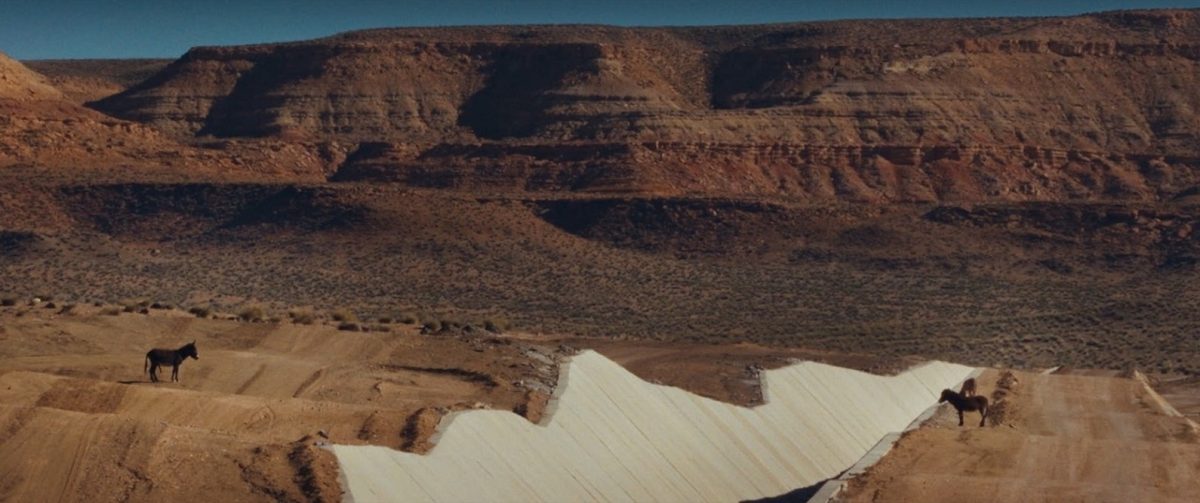
Questions of accessibility and exclusion emerge with brutal precision. When green initiatives are forged, who does development favour? The lines are clearly divided. The political situation is more fraught. Citizenship is turned into a bitter joke. Communities are cut off from having their most basic needs being met. “The Price of the Sun” gives primacy to the tribe. They treat us like vagrant foreigners, the community says of the authorities.
Meanwhile, the project workers quibble about the endeavours, the cost it entails. When someone wonders about the displacements, another insists on the money inflow into the region, the employment that will be generated. But is the project actually delivering on such a promise? The disillusionment hovers thick and deep over the fate of the region. Social class is a predominating angle slanting viciously into the debate. The chasms are deep and inescapable. It’s violent and disturbing. Can there be any salve? It’s a brutal world the film is negotiating, caught asunder between various modes of surrender and retaliation.
Displacement is a constant threat. The government tries to cover up with fake, insincere reassurances of rehabilitation. This uprooting of the most vulnerable populations in the name of modernising projects is a universal nightmare. In India, there have been legendary protests against dams and mining projects. Yet, those stints proceeded, leading to forced dispossession of scores and scores of inhabitants. Land was just arbitrarily taken away to feed the interests of corporations.
“The Price of the Sun” keeps circling, interrogating at what cost progress arrives. Can it even be called development when it razes right through people? When evacuation does happen, the resettlement settling into shape, is it at all satisfying? The film answers it in ways that aren’t shocking but a caustic reaffirmation of a broken world. Yet, it’s not despair the film closes with, but an assertion to fight back and challenge the status quo.