“No Place To Be Single” (2026) instantly shoots into the endlessly expanding pantheon of romantic dramedies. It’s one of those films that keep being steadily churned out even when no one is quite asking or desiring. You want a certain degree of lightness, romantic tension to flare through setups that have become as uninspired and routine as ever. Just putting attractive leads doesn’t always cut it.
The film makes the cardinal foolish act of mangling this understanding. There are gorgeous people aplenty filing in and out of the scenes, but most seem like a bunch of deer caught in the headlights. Laura Chiossone’s film gets as redundant and unremarkable as it is possible, which it achieves with incredible velocity. You’d be amused by such brazen confidence with which it orchestrates a dull string of events.
No Place To Be Single (2026) Plot Summary & Movie Synopsis:
The film drops us in the quaint Tuscan town of Belverde. The scene is set for ample romance. It’s introduced as a place where love is always in the air, and people are constantly falling for each other. Romance is hard to resist. Elisa (Mathilde Gioli), however, rejects love. She’s not someone who wouldn’t just readily surrender to love but actively resists it. She doesn’t find love a welcome proposition.
The roots of her aversion will be revealed gradually, tied to her past relationship that panned out pretty terribly. The film kicks into motion with the death of a Count, whose property must now change hands. His charismatic heirs, Michele (Cristiano Caccamo) and Carlo (Sebastiano Pigazzi), stand to inherit the land. There are rumblings of uneasy speculation as to the future of the land, how it can change in perspective, how things may shift now on. The men are his nephews. They are distant heirs, but they are the ones who will be able to take possession of the land’s destiny as desired and determined by the Count.
When the two pop into the picture, things are taken for a spin. Elisa and her family try to impress on the men that a sale of the property should be opposed. The land cannot be so easily squandered. Elisa and her family live and work on the land, cultivating grapes and olives. Their lives hinge on the land. They cannot even imagine their lives without it.
Elisa’s mother and her sister, Giada, try to foist on her the need to hook up with a local. But she resists. The secret to her resistance is deeply connected to how she has been raising her teenage daughter, Linda. There’s a lot of anger and anguish and strife that she has endured, which she cannot afford to weather again. So, she lets amorous relationships go, divesting her of the emotional strain such episodes can bring.
What Hope Does Elisa Nurse have for Michele?
Elisa attempts to impress on Michele her grand plans of improving the land, bringing a makeover that can do good. However, their relationship is slated for a twist. They have known each other since childhood, having played together. Time has kept them apart for a while. But the memories of intimacy remain and are furthermore strengthened and buoyed.
Carlo falls for Giada, who has been going out with a local married man. But the latter, too, feels a change of heart and grows tender for Carlo. Of course, misunderstandings do creep up as they will in a romantic film like this. The scuffle over hearts and expectations leads to a tussle. There’s a lot of spite but also ample generosity, a belief in people being able to supersede their weaknesses and fragilities. People can move towards better times. There can be hopes for greater times, joy that can be sought out and realised well ahead of time.
As you’d expect, things start growing romantic between Elisa and Michele. There are flutters of desire, which initially both try to repress and attempt to turn away from admitting. There’s an impulse not to confront the true shape of their feelings for each other. They go on dates with others, but of course, their gaze keeps darting only to each other. It doesn’t take much for the façade to melt.
In another thread, Linda’s dilemma with shedding her virginity, a typical teenage quandary, occupies the frame. She’s self-flagellating and relentless on herself. Much of this has to do with her never getting to know her father. You hope for some tension, hostility, and discord to feel propulsive and take the narrative forward. What happens, on the other hand, is a slovenly mess of ill-timed motivations, character reversals, and decision-driven transformations that struggle to make any sense. There’s a lack of basic understanding as to how characters will react to each other’s dilemma and quandary.
Such collisions incite a spate of intense emotions, but what we get is a tepid slew of events that barely propel any intrigue. It’s a mishmash of incoherence, lazily pasted storylines that stumble. There’s a fumbling surplus of narrative threads that jostle to make sense. Yet, you also sense how staggeringly ill-equipped the film is to mount a single, moving scene. The property deal hovers over the entire film.
How Does The Conflict Between Elisa and Michele Spark?
Characters clash and spar over it. That becomes the film’s locus, the point that drives the romance and arguments, the position where the road forks into various paths and people diverge. The lovers must recognise and reconcile with their distinct polarities. One is privileged, the other not. But neither should be slighted, rather seen for what each is and brings to the table. Nor should judgment barge into the equation.
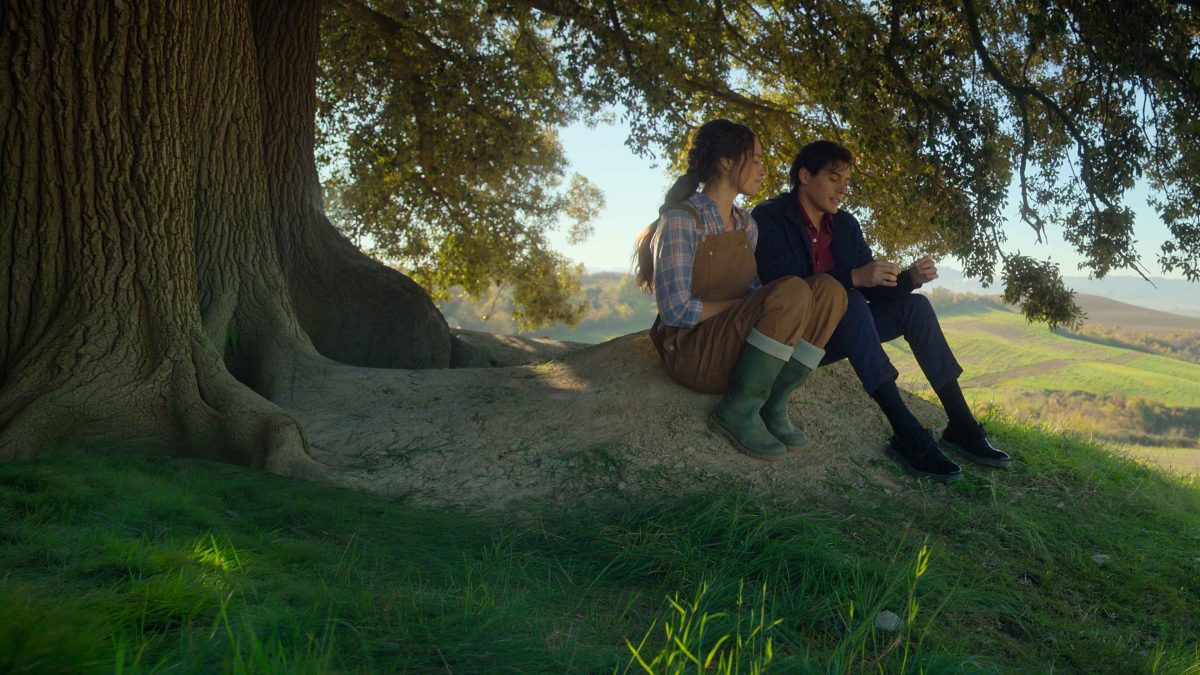
For a good time, Elisa resists her attraction towards Michele. She’s concerned for the estate’s future. Its sale will have devastating consequences for her family. They work on it. It’s their home. Should the sale come to pass, they’ll lose everything, all that they have built with sweat, tears, and teeming passion. You cannot just wilfully discard it all. Elisa confronts this predicament.
There’s so much to lose, wrestle with it, and admit that a lot of things have gone spectacularly wrong. Can one still latch onto hope and push for change? The circumstances may have changed with the Count’s death, but that doesn’t negate the reprieve the estate has been for Elisa’s family. It’s on its account that the family has held on and survived. It has given them sustenance and allowed their survival. If Michele sells, it’d take away everything they have carefully honed and nurtured with all their might.
Just the night after Michele and Elisa sleep together, the former tells her he’s planning to sell the land. She, who has already intuited this, also asserts she has made plans to foil his scheme. Her sister would have convinced his brother not to be party to the sale. Carlo has been persuaded, but he changes his opinion when he gets to know that Giada has been going out with the olive guy. He thinks she has no loyalties.
No Place To Be Single (2026) Movie Ending Explained:
Does Michele Sell The Land?
This isn’t a film, though, where difficulties wallow for too long. They will lift inevitably. Elisa confesses that Linda is actually the Count’s granddaughter. Her father was the dead brother of Michele and Carlo, whom both idolised. But this revered man didn’t want anything to do with Linda. Elisa wanted to shield her daughter from the knowledge of her father’s abandonment and hence constructed a false version of events to assuage her. In this alternate version, Linda’s father loved her, but fate had other plans.
The climax is nothing less than a grand, starkly unpersuasive contrivance. After a revealing conversation with Elisa’s mother that darts by too quickly to leave any impact, Michele changes his mind. Carlo, too, again grows tender and loving toward Giada. All misunderstandings are scrubbed out.
When prospective buyers land on the scene, Michele announces he’ll not be selling. He has other plans now. The question of sale is cast out. Of course, the film ends with the three pairs of lovers reconciling, including Linda’s with her partner, whom she had been confused about. It’s a perfectly happy ending. The future of the land is stable and secure. Elisa is content in her relationship and with her livelihood. Everything neatly falls into place.
No Place To Be Single (2026) Movie Review:
Where’s the raging, pulsing desire? Where’s the heartbreaking confusion, the vulnerability? Essential to a romance is heat. There’s not a sliver of it, except what Caccamo can bring just by dint of his irresistible looks. Neither he nor Gioli is aided by the patently silly script that lethargically goes through the motions of a thwarted romance. Business, livelihood, and reality threaten to prop up in between.
The problem is that here the central romance itself feels thinly etched. There’s not a lot of care, nuance, and attention that’s been devoted to writing the leads. The interest whips more towards the confused teenagers, the younger generation caught in the crosshairs of their parents’ assertions, secrets, and lies. To preserve and sharpen their identity becomes a challenging ask, which gets more intense increasingly.
It’s a complicated negotiation, which the film tries to assimilate in half-measures. It doesn’t always land, but this attempt is more admirable than how the central romance pans out. The latter is just resolutely bland, uninvolving, despite the best efforts of the actors. When the script itself presents conflicts so muddled and uncommitted, the most sincere actors cannot quite salvage it. It’s a losing game.
This is the issue with the film. There’s a shallowness that creeps up and takes up centre stage in spite of the heroic gestures of the actors. The sale of the property tries to generate tussle and drama, but even that peters out long before things come to a head. It’s like one of those most embarrassingly banal plot points whose fallout evades the comprehension of the makers themselves. The property sale is thrust in every time the narrative whirs out of focus. Whenever the narrative struggles to find a direction, a purpose, some vitality, the sale is cranked back in to infuse urgency and stakes.
You wonder why the makers and cast couldn’t have at least ensured some conviction and plausibility in this overriding thread. It’s what kicks the engine into motion and brings the lovers into proximity. However, this is what conveniently gets shunted and disposed of. The arbitrariness with which this is set off is ridiculous and nonsensical. It’s the kind of reckless writing flaw that has the ability to drown an entire film. This is what transpires. Ultimately, the film sinks into inconsistencies and contrivances, too beset with failure to strike any potent place from which romance and possibility can emerge.



![Night Stalker: The Hunt for a Serial Killer [2021] Netflix Review – A Fairly Engaging Series with an Algorithmic Treatment](https://www.highonfilms.com/wp-content/uploads/2021/01/Night-Stalker-2021-768x512.jpg)