Set in rural India, Kartavya (2026) is a political drama that explores caste discrimination, blind faith, corruption, honor killings, and the dangerous influence of powerful religious figures over vulnerable communities. The film follows SHO Pawan, an honest police officer trying to protect a journalist investigating a respected godman accused of exploiting minors. At the same time, he is forced to confront the violent social rules of his own village after his younger brother enters an intercaste marriage. Through Pawan’s struggle, Kartavya examines how deeply hatred, mob mentality, and social conditioning are rooted within society, especially in places where tradition holds more power than justice or humanity.
Spoilers Ahead
Kartavya (2026) Plot Summary & Movie Synopsis:
What is Netflix’s Kartavya starring Saif Ali Khan really about?
The story begins when a journalist arrives in the village of Jhamli to investigate Anand Shri, a powerful and respected godman. Anand Shri runs an ashram that is accused of exploiting minors. As the journalist digs deeper into the matter, she slowly realizes that Anand Shri’s influence goes far beyond religion. He has strong political support, social power, and complete control over vulnerable children trapped inside his system. The more she learns, the more dangerous the situation becomes.
We then meet SHO Pawan Malik, who is given the responsibility of protecting the journalist during her investigation. Pawan is an honest police officer who genuinely wants to do the right thing. However, things take a dark turn when the journalist is murdered by Harpal, a 16-year-old boy living under Anand Shri’s control. Later, Harpal confesses that he killed the journalist because he was promised freedom from the abuse and exploitation inside the ashram. His confession changes the direction of the case completely. Pawan realizes that Harpal is not simply a criminal but also a victim of a cruel system that has manipulated him from a very young age.
Pawan tries to protect Harpal and rescue him from Anand Shri’s influence, but the system around him is too corrupt and too powerful. Anand Shri’s network reaches into every corner of the village, making it nearly impossible for anyone to stand against him. At the same time, Pawan is also dealing with a deeply personal crisis at home. His younger brother, Deepak, has run away and married Preeti, a woman from another caste. In Jhamli, intercaste marriage is treated like a crime. The village panchayat believes that such relationships destroy social order and dishonor the community. According to their beliefs, the only acceptable punishment for such a marriage is death.
Who betrays Pawan and what happens to Deepak?
Pawan now finds himself trapped between two battles. One involves exposing Anand Shri and protecting Harpal. The other involves saving his own brother and sister-in-law from the violent rage of the village. As the story moves forward, Pawan slowly realizes that the people closest to him are secretly working against him. One of them is his father, Harihar and the other is his colleague Ashok. At first, Ashok appears to be helping Deepak and Preeti by hiding them after their marriage. It seems like an act of kindness and support, however, the truth is far more disturbing. Ashok secretly reveals the couple’s location to Harihar and the panchayat. He does this knowing fully well that the village elders intend to kill them for violating caste rules.
Ashok’s betrayal does not stop there. He is also involved with Anand Shri and indirectly contributes to Harpal’s death. Once Harpal becomes dangerous to the corrupt network because he knows too much, the people protecting Anand Shri make sure he is eliminated before he can expose the truth. We then see that Anand Shri’s right-hand man, Nirmal, reveals everything to Pawan. He tells him that Ashok has been betraying him all along. This information completely breaks Pawan emotionally. He realizes that the people he trusted most have helped destroy innocent lives while pretending to stand beside him.
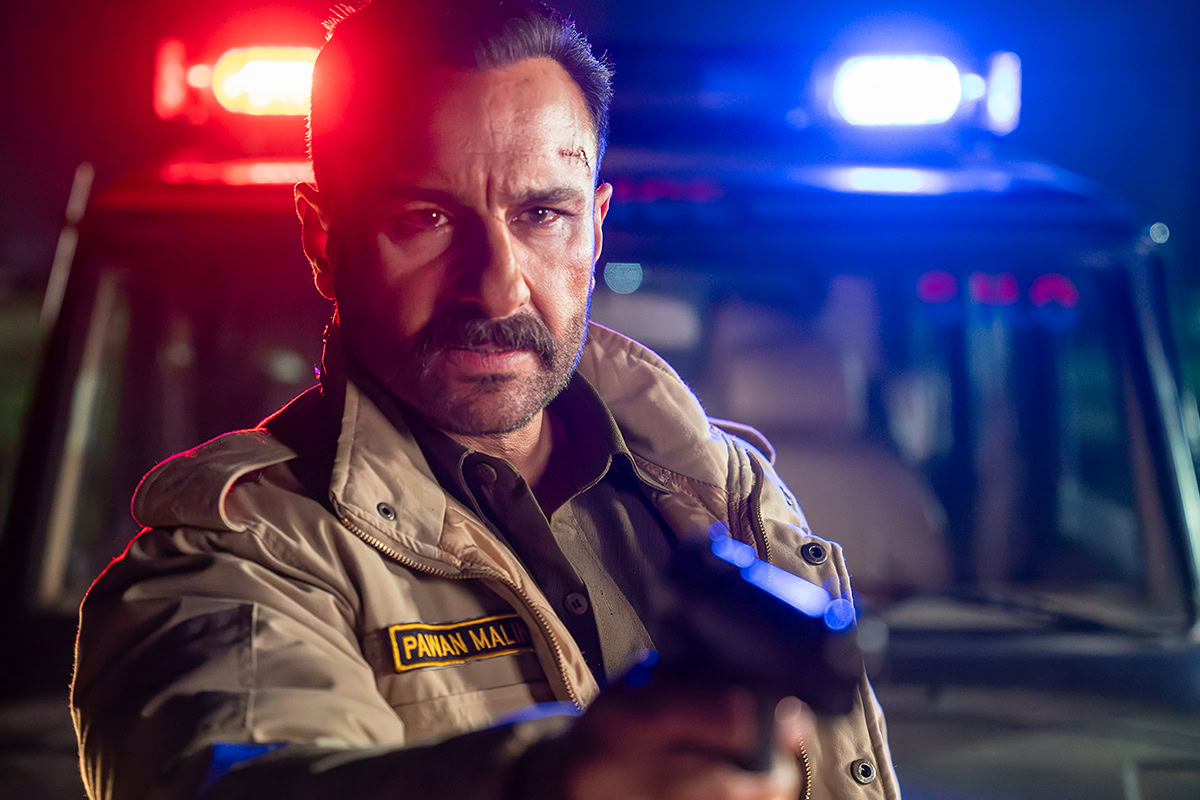
Filled with anger and grief, Pawan decides to take revenge. He no longer believes that the law or the system can deliver justice. He plans a violent confrontation by arranging a meeting between Ashok and Nirmal. Before Ashok arrives, Pawan kills Nirmal. Then Ashok reaches the location and finally confesses everything. He admits that he revealed Deepak and Preeti’s hiding place. He also reveals that Pawan’s father, Harihar, personally killed Deepak by slitting his throat.
Kartavya (2026) Movie Ending Explained:
Why does Pawan kill his father?
The confession pushes Pawan beyond his limit. He kills Ashok and later reports the murders to his superior officer, Keshav, as an act of self-defence. After this, Pawan goes home and takes his father to a field for a final confrontation. The tension between them reaches its breaking point as we see Pawan can no longer accept what his father has done in the name of tradition and honor. The confrontation ends with Pawan shooting Harihar dead.
The ending of the movie Kartavya (2026) shows that Pawan has killed four people despite being a police officer sworn to uphold the law. The irony is painful because the man who tried to stop violence eventually becomes consumed by it himself. Finally, in the end of Kartavya, Pawan returns home to his wife Varsha and their son. We see him reflecting on everything that has happened and questioning what it truly means to perform one’s duty.
What does the ending of Kartavya really mean?
Sadly, he realizes that he ended up doing the exact same thing he was fighting against. The people around him believed in killing others if they refused to follow certain rules or social expectations. In the end, Pawan also kills people because he believes they deserve punishment. It turns out that Anand Shri is alive and still powerful even after everything that happened, and the larger system continues to exist. The caste hierarchy still controls the village, where mob mentality still dominates people’s thinking and blind devotion to authority figures continues without question.
One of the most disturbing examples of this is Pawan’s own son. Harihar used to take the child to panchayat meetings, where hateful slogans and violent ideas were openly discussed. The boy quickly learns and repeats those same ideas without understanding them fully. In a way, the film uses this to show how children absorb hatred and prejudice from the environment around them before they are old enough to think independently. In the end, we are left with moral questions with no definitive answers. Were Pawan’s actions justified? Was violence the only possible response? Could anything have changed if he had followed the law instead of revenge?