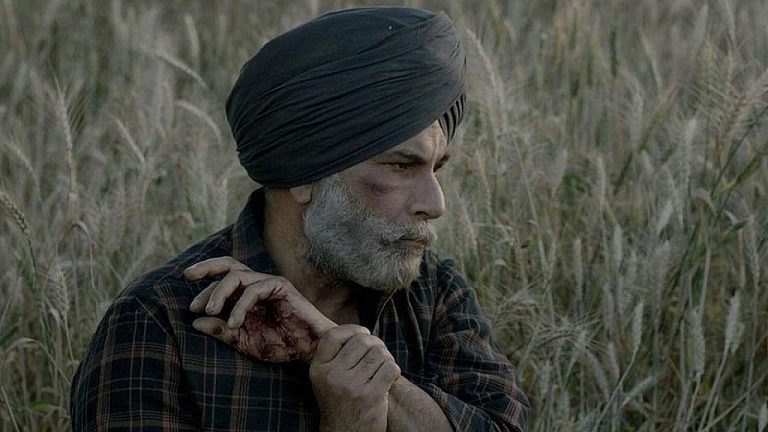
The Assamese murder mystery film “Antoraal” (“Hidden Truth of Society”) was released on May 22 and has been the talk of the town as one of the most discussed regional films of the year. Written and directed by Swaroop Dutta, the film features veteran actor Arun Hazarika, widely remembered for his role in the “Junbai” series, alongside Mriganka Baruah, Gitartha Baruah, and Sanjay Agarwal in important roles. Despite not receiving extensive theatrical bookings across Assam, the film has steadily gained appreciation from audiences who have managed to watch it, particularly in Upper Assam.
One of the most remarkable aspects of “Antoraal” is its strong connection with Dibrugarh. The film has been shot entirely in the district, and a large section of the cast and supporting actors also belong to the region. This local identity has created a special bond between the film and its audience. Viewers have appreciated the effort to tell a compelling story while remaining deeply rooted in the social and cultural landscape of Assam.
The narrative revolves around Rajdeep Gogoi, an ambitious businessman whose ultimate dream is to enter politics and become an MLA. Driven by his desire for power, influence, and social status, he gradually distances himself from the people closest to him. His relationship with his parents weakens, emotional gaps emerge within his marriage, and he becomes increasingly detached from his daughter. This growing emotional distance forms the central theme of the film. The “antaral” or hidden gap is not merely physical separation but a psychological and moral divide that slowly erodes the foundation of family life.
While the film functions as a murder mystery on the surface, it simultaneously explores deeper social questions. It examines how the pursuit of wealth, status, and political ambition can lead individuals away from the values that truly matter. Through its characters and events, the film subtly communicates that family happiness, emotional bonds, and personal integrity are often sacrificed in the race for success. The moral lessons are never delivered through direct preaching but emerge naturally from the progression of the story.
A major strength of “Antoraal” is the way it combines social commentary with suspense. The mystery unfolds gradually, keeping audiences engaged while revealing uncomfortable truths about human relationships and contemporary society. Many viewers have specifically praised the climax, which delivers the answers in a satisfying manner while maintaining the emotional core of the narrative. For a suspense film, an effective ending is often the deciding factor, and “Antoraal” succeeds in this crucial area.
The performances have also received widespread appreciation. Mriganka Baruah, who is a medical doctor in real life, has impressed audiences with his portrayal of a police officer. His performance feels natural and convincing, proving that strong acting is not limited to established stars. In fact, one of the pleasant surprises of the film is that several relatively unfamiliar faces manage to leave a stronger impression than some of the more recognised names in the industry. Their sincerity and commitment add authenticity to the story.
Many supporting actors are first-time performers, yet they handle their roles with confidence. Although certain technical limitations associated with the Assamese film industry remain visible, the performances help overcome many of these shortcomings. The film demonstrates that strong storytelling and committed acting can often compensate for budgetary and technical constraints.
An interesting reaction came from Professor Kandarpa Deka, former Vice-Chancellor of Dibrugarh University, who watched the film on the first day, first show at Galleria Hall in Dibrugarh. According to him, many contemporary Assamese films struggle to maintain audience engagement throughout their runtime. “Antoraal,” however, succeeds in holding viewers’ attention from beginning to end. He also observed that cinema should not be confined solely to entertainment but should serve as a medium for reflecting social realities and encouraging meaningful discussion. This observation captures the essence of the film’s appeal.
The movie has also evoked nostalgia among older viewers who were reminded of classic Assamese suspense films. Many appreciated the fact that the film focuses on storytelling rather than relying excessively on spectacle. The atmosphere, mystery, and gradual unfolding of secrets bring back memories of an era when suspense narratives occupied an important place in regional cinema.
Beyond its commercial performance, “Antoraal” represents something significant for Assamese cinema. It demonstrates that independent regional productions can still attract audiences when they are built upon strong local stories and relatable themes. The film’s positive reception offers encouragement to filmmakers who wish to explore meaningful narratives grounded in Assamese society rather than merely following mainstream trends.
Even though seemingly an underdog film, “Antoraal” stands out as a suspense thriller that successfully combines mystery, social commentary, and emotional depth. With its engaging narrative, memorable performances, and thought-provoking themes, the film has established itself as one of the notable Assamese releases of the year. More importantly, it serves as a reminder that regional cinema can remain relevant and impactful when it tells stories that resonate with the lived experiences of its audience.

![Cosmic Candy [2020]: ‘Fantasia’ Review: An interesting character study that loses its impact too quick](https://www.highonfilms.com/wp-content/uploads/2020/09/Cosmic-Candy-Movie-Review-highonfilms-featured-768x322.jpg)
![Kadaseela Biriyani [2021] Review : An Outlandish Revenge Drama Taking a Wide Look at Violence](https://www.highonfilms.com/wp-content/uploads/2021/12/Kadaseela-Biriyani-1-768x384.jpg)