In 2005, one of the most renowned directors of South Korean cinema, Kim Jee-woon, released a film that was also screened out of competition at the Cannes Film Festival. Empire included this work in its list “20 Greatest Gangster Movies You’ve Never Seen (*Probably)”. We are talking about “A Bittersweet Life” (Original title: Dalkomhan insaeng) — perhaps one of the best South Korean films you must see, combining excessive cruelty, an abundance of blood, and a heart-wrenching love story.
The film tells the story of Kim Sun-woo (Lee Byung-hun), a lonely and loyal subordinate of gang leader Kang (Kim Yeong-cheol). He is given what seems to be a simple task by his boss: to keep an eye on Kang’s mistress, whom he suspects of being unfaithful. Hee-soo (Shin Min-a) does indeed have a lover, which Sun-woo soon discovers. However, he keeps this information to himself, having become fascinated by the young woman. Enraged by his subordinate’s silence, Kang decides to teach him a brutal lesson. In response, Kim chooses the path of revenge.
This gripping story is one of Kim Jee-woon’s masterpieces — a blend of action and drama filled with stylized fights, ruthless vengeance, and, at the same time, an unobtrusive love story between Kim Sun-woo and Hee-soo. The depiction of violence will appeal to a wide range of viewers, from fans of classic action films to the most demanding audiences.
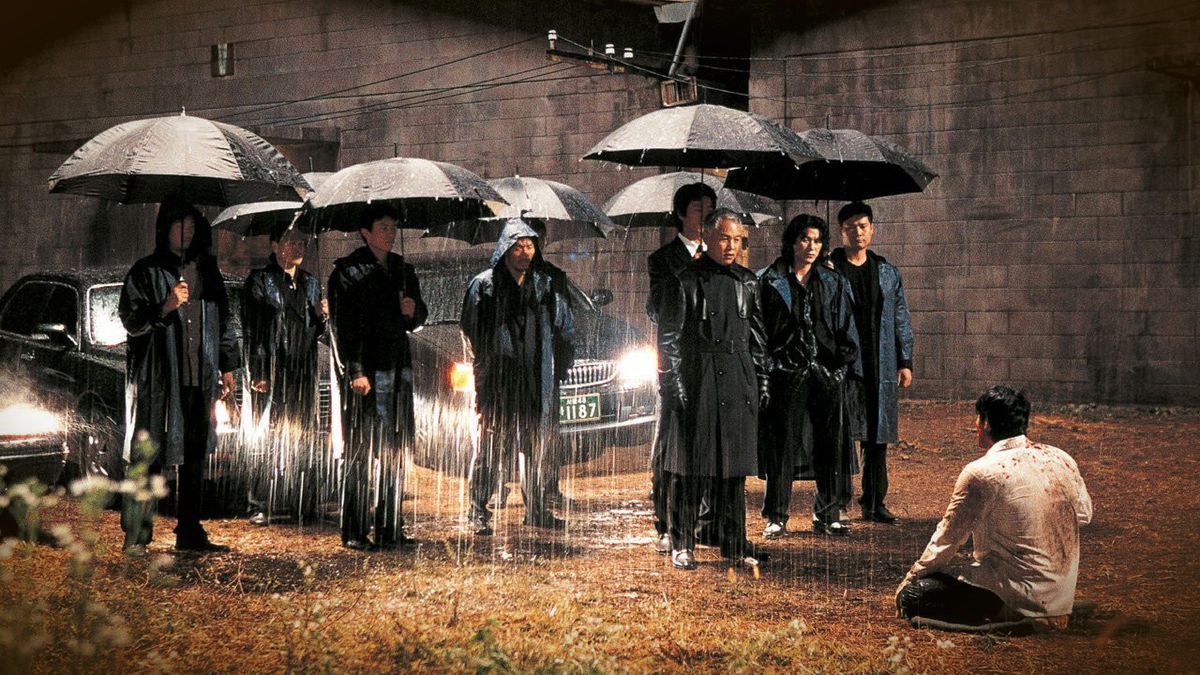
There is no shortage of cruelty in the film; just look at the massacre between Kim and the gang members. This sequence becomes the epitome of brutality: watching one man take on an entire mafia group using fire or his bare hands is both mesmerizing and hypnotic, especially when accompanied by the film’s rhythmic soundtrack.
Despite being packed with combat scenes, the film also leaves room for tenderness. One of the most memorable moments occurs when Kim listens to Hee-soo playing the cello. It is as if something clicks inside him, and he falls in love for the first time in his life. For the protagonist, the girl becomes a forbidden fruit: she belongs to his boss, and any connection with her would spell disaster for his career and his life.
Kim’s inner duality lies at the heart of the film. He is torn between loyalty to Kang, whom he has served for seven years, and his growing feelings for Hee-soo. Realizing that a future with her is impossible, Kim chooses to protect her by hiding the truth about her affair from his boss. His cold mind and desire to love clash within him, creating an internal struggle. He fights his boss and his subordinates while wrestling with his own self.
The cool-headed and disciplined protagonist encounters love for the first time, and this experience ultimately leads to his downfall. He is fascinating precisely because of his emotional restraint, which sets him apart from the rest of the gang. His sharp intellect, composure, and fearlessness make him both compelling and terrifying.
Also Read: The 10 Best Korean Movies on Prime Video
Kim and Hee-soo share only a handful of scenes, whether it is lunch at a shopping mall or her music recital. Yet the scarcity of their encounters does not diminish the depth of his feelings, which become evident from the moment they first meet. A striking example is the scene near the end of the film, when Hee-soo receives an expensive lamp she had mentioned only once. This gesture reveals Kim’s attentiveness and his tragic, unspoken affection.
The ending is intense, satisfying, and heartbreaking. There is no “happily ever after” here. Instead, Kim faces his inevitable death. This is what makes the film truly beautiful. Although the number of bullets in his body would have killed him long before, he continues to fight, turning the finale into one of the most powerful endings in South Korean cinema. The nightclub hall is littered with corpses — including Kim’s boss — soaked in blood and shell casings. New gang members arrive one after another, until one of them finally kills the protagonist.
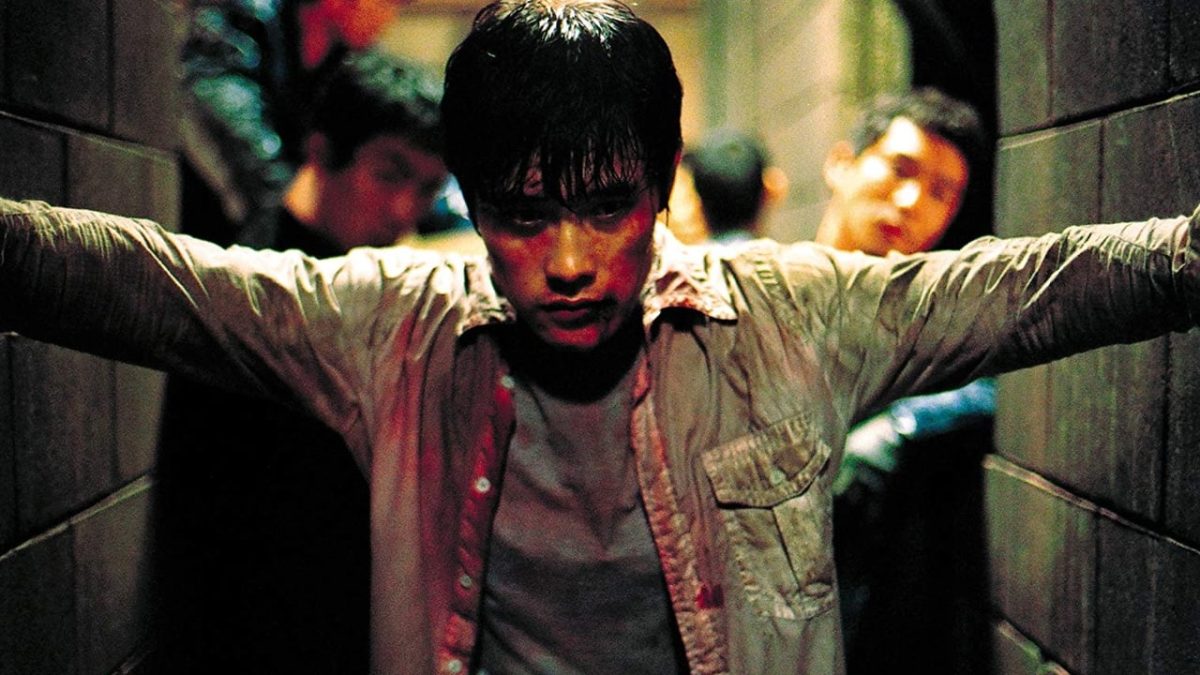
Kim seems to know that he is heading toward death, and perhaps even desires it. After falling in love for the first time, even if that love is unrequited, his sense of purpose disappears. Had he survived, he would have been condemned to a life of longing for a woman he could never have. In his solitary world, emotional attachment would only bring further suffering.
Lee Byung-hun’s performance deserves special praise. The actor received a Golden Globe nomination this year for “No Other Choice.” He masterfully transforms into a man driven by justice and revenge, unafraid to face death and determined to see his path through to the end. Kim Jee-woon’s directorial skill is evident in the film’s striking cinematography, complex characters, and constant sense of intrigue. Until the very last moment, the audience wonders whether Kim will survive, as his ingenuity repeatedly suggests the possibility of escape.
Five years later, in 2010, Kim Jee-woon made “I Saw the Devil,” once again teaming up with Lee Byung-hun, and once again exploring the theme of revenge. The director once more indulges the viewer in extreme cruelty, this time embodied in the figure of a serial killer.
“A Bittersweet Life” carries an unexpected tenderness beneath its violence, capable of moving the viewer even as it plunges into crime and action. Its brutality places it in the same orbit as Park Chan-wook’s films, yet its emotional weight and quiet sensitivity give it a character of its own.