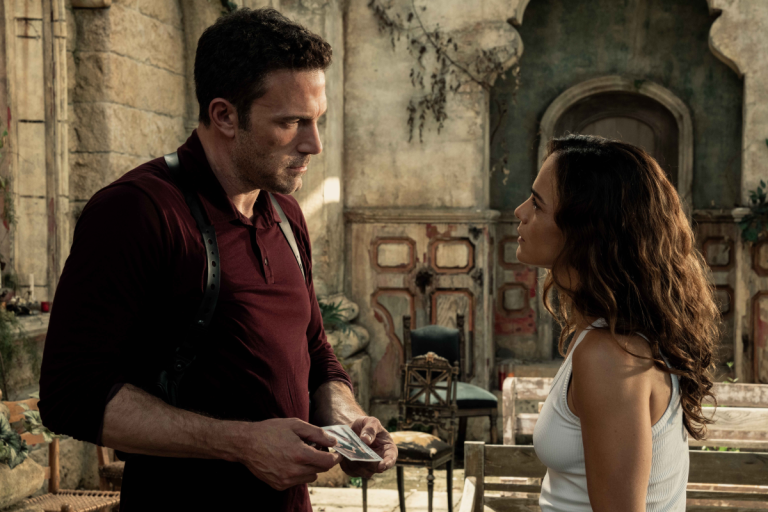
Spinoffs are tricky things. To pull one off successfully, they have to gesture toward a larger mythology while carving out a voice sharp enough to justify their own existence. Yet, there cannot be a dissonance so jarring it snaps you out and thrusts too many new shifts. Co-created with Ira Parker, “A Knight of the Seven Kingdoms” works as a charming, brave departure from the ugly orchestrations, murders, manipulations, and endless power games synonymous with “Game of Thrones” and “House of the Dragon.” There’s a moving simplicity here, pulling you on a tide. Inevitably, the silver-haired, dragon-riding Targaryens surface.
They are far more intricately connected than early assumptions. You do glimpse skeins of politics that tow the primary characters into fixed slots. However, George R.R. Martin and Parker opt for fresh angles. Retreating in magnitude and scale, this sparkles with assured novelty of tone and scope. It might annoy and distance viewers dashing for replicated impulses, though a latter joust is just as eye-splittingly visceral. Bloodiness isn’t entirely forsaken.
But this show has a different register and tempo altogether. Martin’s Tales of “Dunk and Egg” novellas are the engine for “A Knight of the Seven Kingdoms.” Parker weaponizes the smaller canvas, a gently compressed backdrop, sitting with the smallfolk. This show writes slight diversions into its very kernel. “A Knight of the Seven Kingdoms” asks how you dream and ascend, without going too far or high. Class and kinship fling their way in, impeding the endeavours of Dunk and Egg.
Also Read: Swords Too Have Blunt Sides: A Critical Essay On The Portrayal And Acceptance Of Antagonists In ‘Game Of Thrones’
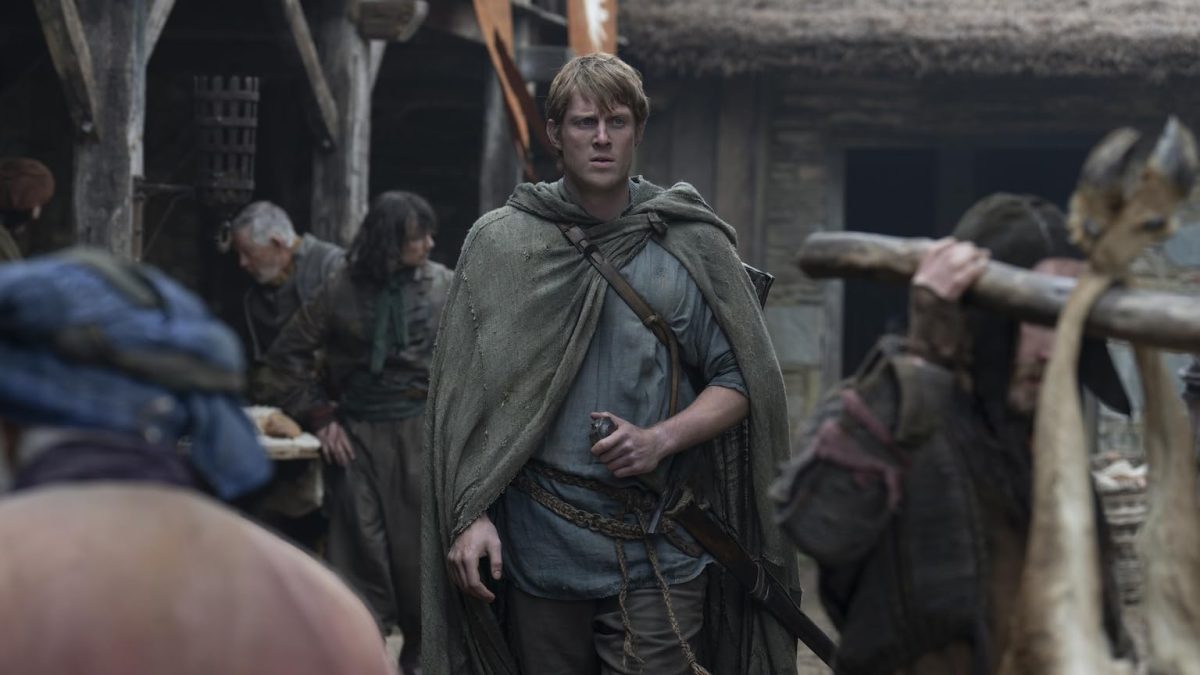
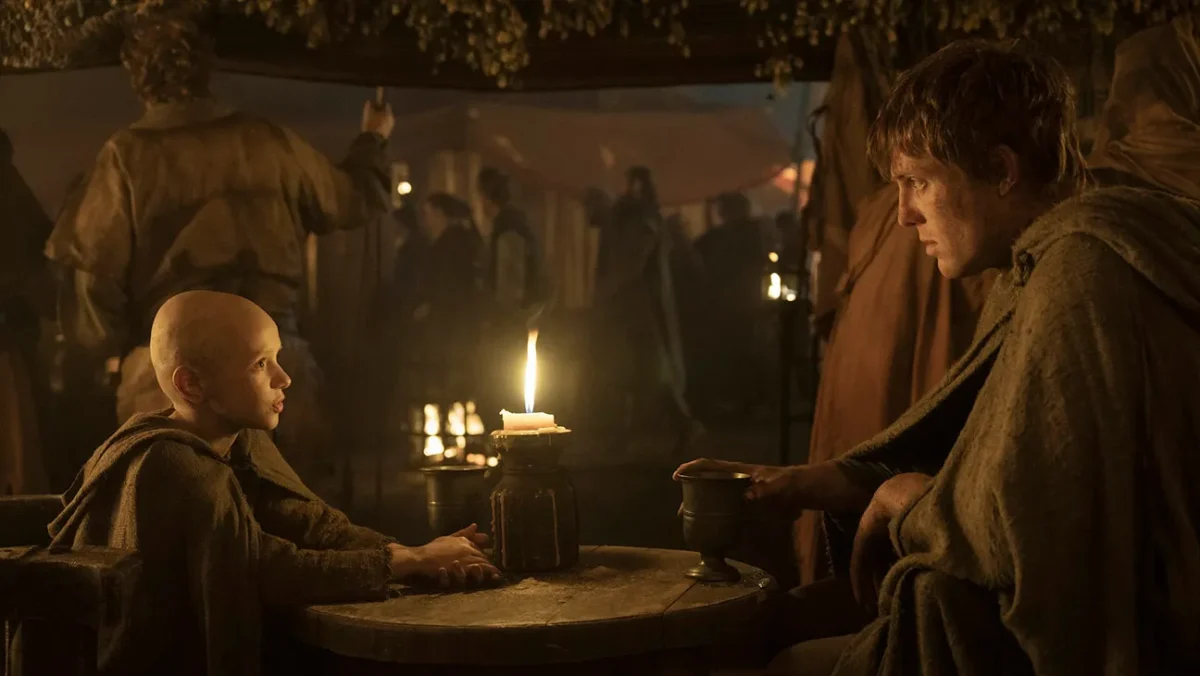
The knight-squire duo of Ser Duncan “Dunk” The Tall (Peter Claffey) and Egg (Dexter Sol Ansell) capture your heart instantly. Dunk trained under Ser Arlan, whose death sent him trying his luck in a tourney and cementing his reputation. The young Egg presses himself forth for squiring with Dunk. The latter evades, but Egg is persistent and tenacious. When confronted with such resolve, Dunk eventually buckles. Resourceful and flexible, Egg quickly demonstrates he’s worldly wise, far beyond his years. The bald-headed boy doesn’t share Dunk’s bumbling naivete. This season initiates the unlikely pair of heroes crossing the breadth of Westeros. They are inclined toward bigger pursuits.
“A Knight of the Seven Kingdoms” abjures the franchise staples of sex and gore. It veers away from textural familiarity into terrain that’s warm, rooted, and disarming. Of course, violence erupts and corrupts the blue-eyed Dunk. This is a humbler, pared-down entry in George R.R. Martin’s ever-expanding “A Song of Ice and Fire” canon. Its modesty harnesses wonder and delight, dangling small rewards that are every bit tender and compassionate.
Expansiveness isn’t the natural recourse. The action is clipped to just a few days while also being loose-limbed. A shape of promise kicks off the plot, muting into direr rites of passage. An early exchange distils its spirit. An innkeeper admonishes a beady-eyed knight eager for tourneys. After all, no joust ever changed the price of eggs.
Visual gags flow through, especially scatological. Dunk confesses his impulse to endlessly agonise. Lyonel Baratheon (a brightly teasing, rip-roaring Daniel Ings) chides him for slouching: “Be tall”. Ings is such a barn-stormer; he lifts entire craggy scenes. Baratheon’s party trooper energy pops off gloriously in an early bit where he pushes Dunk for a dance. It’s hot, very queer, and a total blast, a reminder that the show can electrify beneath mild manners. Yes, the show tends to be mostly placid, but it can be propulsive in equal measure, like when jousting time does barge in.
It’s this command over tone that distinguishes the show from a standard crop of overzealous spinoffs. It dares to chart its own course, buzzing with freshness. Dunk’s journey shows ideals and reality in sharp collision. It’s a carefully wrought arc of disillusionment, a movement towards accepting life beyond fables and fanciful homilies. Dunk re-negotiates honour and nobility, both of which he has long sought. A lord must back him. This alone can ensure him a slot in the tourney lists.
Hence, Dunk has all these ideas in his head, which slowly crack apart as impossibly deluded. Dunk begins from a place of heightened optimism. He’s witnessed casual violence as a teenager, yet his perspective hasn’t been wholly blighted. His moral centre is steadily intact, despite the veritable onslaught he’s been privy to. This hasn’t deterred him, thrown askew his belief systems. He’s propelled by complete faith in justice. The blunt fact that princes and lords have their own vicious will, steamrolling over the commoners, drives itself painfully. Once in a while, Dan Romer’s soft strains appease the sequences.
Related: Game of Thrones vs. House of the Dragon: Comparing the Iconic Fantasy Series
Egg works as a tempering force, guiding Dunk to reflect on what he’s really up against. It’s not all doomed and cynical, though. There are leavening patches of sincerity and magnanimity, things that mollify the bleakness that surrounds Westeros. Dunk does meet a few good men, heroes in royalty, who reassure him that the upright can still go forth and win.
Baelor Targaryen (Bertie Carvel) is such a symbol, propping up Dunk with hope and moral conviction. He’s someone who’d fight against his own family defending the just. The show keeps gently asking what constitutes true valour and chivalry. Can it be innate or accrued through fine lineage? Claffey is lovely, nailing a perfect balance of sweetness, awkwardness, and firm principles. His hapless expressions are a comic treasure. Ansell’s tartness nicely bounces off him. As Dunk grudgingly and tentatively lets Egg into a bond of mentorship and friendship, its radiant warmth suffuses lushly lensed verdure.
With Dunk snaking from Flea Bottom to the chambers of power, Westeros comes alive as a site of unchecked discovery. People can make their lives anew. The edges of a world don’t seem rigid but permeable to how Dunk navigates. He can’t factor in treachery when he is a man of such impeccable intent. He’s stunned at his merit-based appeals being snubbed. His forging a destiny isn’t as pristine as his initial folly impresses. There’s so much prejudice, undisguised hostility, and class-inflected resistance fomenting lies to tear him down.
Claffey sculpts a simpleton’s gradual hardening of defences. Surpassing slow-burning veneers, “A Knight of the Seven Kingdoms” satisfyingly trots ahead. The storytelling is neat and contained whilst retaining traces and cheeky winks at larger histories. Egg’s future arrives in a shocking premonition. Present characters aren’t subtracted into silos but unfurl within knowledge and anticipation around the canon. Overall, “A Knight of the Seven Kingdoms” recasts those who’d pass as supporting players with centrality and compelling force.