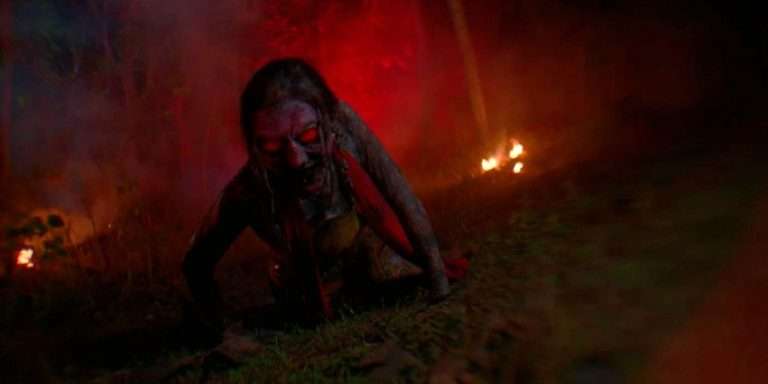
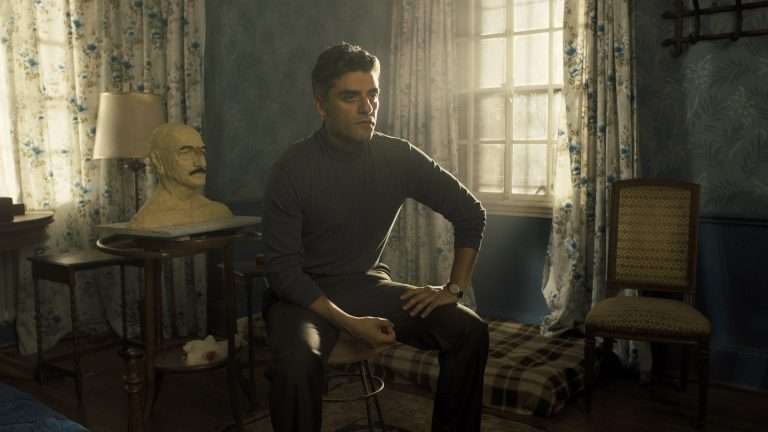
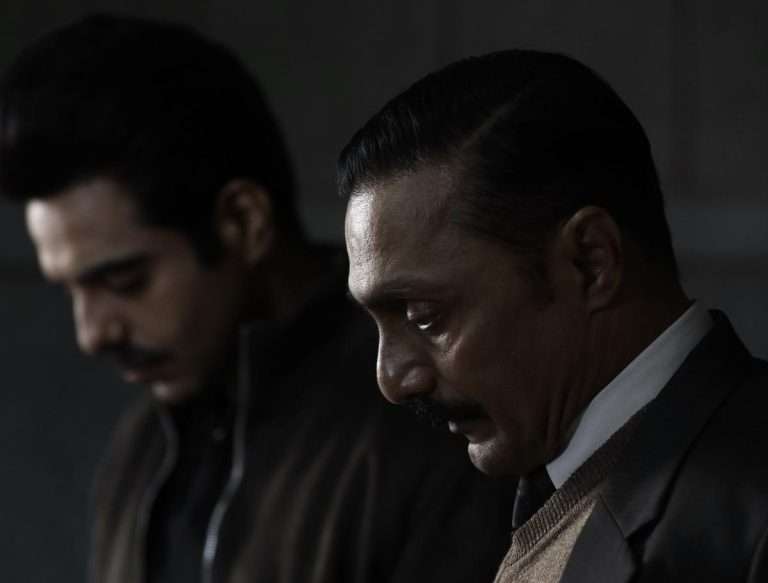
Philippe Grandrieux’s “A New Life” (Original title: La vie nouvelle, 2002) is a rare film that resists every attempt to classify it. Visually, it operates like a waking nightmare. From the opening shot of people standing together in a field, it becomes a cinematic descent that pushes viewers into a world of constant sensory disorientation. For that reason, this film has divided audiences for more than two decades.
Some dismiss “A New Life” as pretentious, while others hail it as a visceral masterpiece that challenges the limits of cinematic experience. I am in the latter camp. To watch this movie is to be plunged into a world where human desire collapses into brutality and where the promise of “a new life” becomes an illusion. In Grandrieux’s hands, cinema becomes less a narrative than an encounter with the darkest corners of the human psyche.
The minimal plot concerns Seymour, an American exploring an unnamed Eastern European city, whose fixation on a woman named Mélania becomes an all-consuming obsession. Mélania is not simply a mysterious romantic figure; she is also a woman trapped in a system of exploitation, controlled by a trafficker who treats her as a commodity. Seymour’s attraction to her is presented not as love, nor even lust in any ordinary sense, but as a distorted force, something ultimately destructive.
What makes the narrative so unsettling is that Grandrieux refuses to explain Seymour’s motivations. There are no backstories, no tidy emotional frameworks, no reassuring narrative structures that allow us to empathize easily with the characters. The film deliberately withholds the kinds of information that would make the story feel conventional. As a result, characters appear less like individual personalities and more like embodiments of primal impulses.
Grandrieux’s filmmaking approach ensures that this world feels constantly unstable. The cinematography is like a weapon, wielded against the audience’s senses. Scenes drift in and out of focus, bodies are obscured continuously by darkness, and the camera often moves, as if struggling to maintain its grip on this world.
The visual style creates a sense of disorientation that mirrors the characters’ psychological states, and it is very effective. Instead of clearly framed images, we see fragments, flickers of faces, silhouettes swallowed by shadows, sudden bursts of harsh light. It becomes impossible to settle into a comfortable rhythm. You are denied the distance usually afforded to viewers. Instead, you are pulled into the immediacy of sensation, forced to experience the instability and degradation that the characters themselves endure.
The film’s sound design functions similarly. Grandrieux often ignores dialogue entirely, allowing ambient noise, electric hums, and muffled breathing to dominate the auditory experience. Speech, when it does occur, is usually minimal, muttered, or barely intelligible. This lack of dialogue is not an oversight but a deliberate artistic decision that amplifies the film’s raw atmosphere.
By stripping away dialogue, the film creates a world where communication has broken down completely. The characters express themselves through movement and proximity rather than through words. This choice deepens the sense of alienation and makes the rare moments of speech feel haunting, as if language itself were a fragile thing struggling to survive in an environment hostile to its meaning.
This dynamic leads to one of the film’s central thematic tensions. In Grandrieux’s world, desire is not inspiring but corrosive; it eats away at identity. Every attempt at connection in the film becomes a form of violence, either physical or psychological. Even the moments that might appear intimate are filmed with such discomfort that they feel unsettling. There is nothing tender in “A New Life.” Everything is tinged with a sense of dread or despair. Grandrieux seems to argue that in a world governed by exploitation, true intimacy is impossible. Only transaction, coercion, and trauma remain.
Yet for all this bleakness, the film is undeniably beautiful in its own way. Its images, though distorted, possess a strange, dreamlike quality – night scenes shimmer with an eerie glimmer. There are harsh lights carving people into abstract shapes, and shadows stretch across landscapes like ghosts. Grandrieux’s mastery of atmosphere is complete. He is a total auteur who creates a visual language that transcends narrative and speaks directly to the subconscious. The film often feels like wandering through someone else’s nightmare. The aesthetics do not romanticize suffering. They heighten the viewer’s sensory awareness of human vulnerability.
Some argue that this film’s depiction of violence lacks moral grounding, that it presents suffering without context. Others see its refusal to explain itself as a weakness rather than a strength. These criticisms are understandable. The film does not make itself easy to defend. Yet to reduce it to provocation would be to overlook its deeper intentions. Grandrieux is interested in exploring the extremes of human experience. His cinema aims to bypass conventional interpretation and reach directly into the viewer’s sensory core.
Whether one finds this approach valuable or exploitative depends greatly on one’s tolerance for discomfort and ambiguity. I have respect for any filmmaker who attempts to use cinema to tap into an innate understanding of the human experience. Ultimately, “A New Life” is not a narrative to follow but a psychological terrain to navigate.
It challenges viewers to confront the darker sides of desire, the fragility of human identity, and the ease with which empathy collapses in environments that are shaped by violence and power. By denying comfort, the film forces a confrontation with uncomfortable truths. It may leave viewers unsettled, even disturbed, but its images linger long after the credits end.