In the beloved, mega-hit role-playing game “Disco Elysium,” Wild Pines ambassador Joyce Messier makes an intriguing observation about late-stage capitalism. “Capital has the ability to subsume all critiques into itself. Even those who would critique capital end up reinforcing it instead,” Joyce muses while lounging on her expensive boat.
Joyce is right, of course. Even the most earnest critiques of capitalism inevitably become a part of the system, turning any and all negative commentary into self-parody that ultimately pulls in profit via exploitation. It is a broken system that only favors the ultra-rich and deepens the divide between various strata of the working classes.
Every facet of existence becomes aspirational or a marker for personal worth. As for the exploitative vultures at the top of the food chain, they take glee in subsuming critique, making a mockery of the real suffering that the rest of the world endures day in and day out. Such is the core thesis of “Beef,” whose second season tackles a rivalry of a different nature.
Season 1 explored the beef between Danny (Steven Yeun) and Amy (Ali Wong), whose contrapuntal identities culminated in a tale of escalating revenge and mirrored acceptance. While the first season serves us a delicious meal, season 2 is a rich, layered buffet that exposes the mask worn by capital — a mask that hides how brutal and scathing humans can be.
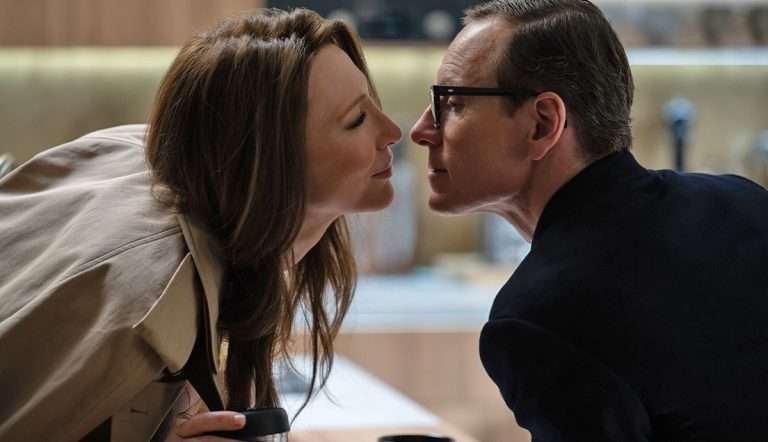
Josh (Oscar Isaac) and Lindsay (Carey Mulligan) are affluent. Josh is the general manager at the Monte Vista Point country club, the place to be for the ultra-rich who like to play golf and lounge together in swanky steam rooms. But Josh and Lindsay aren’t satisfied with their current lifestyle, as their shared dream of opening a lavish bed-and-breakfast remains unfulfilled amid their strained relationship.
We are also introduced to a younger couple who work at the same country club — Ashley (Cailee Spaeny) and Austin (Charles Melton) — who seem deeply in love and intend to marry soon. The younger couple ends up witnessing Josh and Lindsay’s violent fight that escalates to a physical level, where dishes are shattered amid screaming matches, and the duo seems agitated enough to potentially hurt one another. Ashley ends up recording this fight, effectively inaugurating the beef that will only escalate from here on.
This isn’t an “eat-the-rich” story: a phrase whose urgency has been stripped away and subsumed by capital over the years. “Beef” explores the messy, desperate measures we are willing to take to thrive within the capitalist model. It mimics the ethos of Park Chan-wook’s “No Other Choice,” where the protagonist turns to increasingly ludicrous crimes to shield himself from the indignity of a lifestyle that doesn’t match his social class.
For Ashley and Austin, their plans to blackmail Josh and Lindsay begin with righteous justification. Ashley doesn’t have health insurance, the lack of which could be fatal to her well-being. Surely, negotiating a higher pay and a better lifestyle isn’t a moral failing, given how affluent and out of touch the rich are? “Beef” doesn’t make the answer to this equation simple or easy.
Trust is a fickle thing in a world that rewards backstabbing. Relationships between loving couples break down as they aim to stay ahead of the rat race. Ashley and Austin’s naive view of love is shattered as soon as they begin climbing the social ladder. Their sureshot aspiration of having a child together starts feeling more absurd amid the desire to covet as much as possible while they’re struggling to live a decent life. Morality soon becomes an afterthought for both of them, as they’re willing to do anything to belong to a social class that will grant them more than comfort.
Josh’s managerial position still slots him into the working class, despite his high social standing in comparison to an employee like Ashley. Josh has connections he can rely on, but these aren’t built on trust or loyalty — they’re transactions with diminishing returns in a world that deems him replaceable.
Then there’s also Chairwoman Park (Youn Yuh-jung), the billionaire pulling the strings of power and prestige, who emerges as the greatest threat to our characters. Park’s self-aware assessment of capitalism isn’t too far removed from Joyce Messier’s quote, as she understands that the system only works because humans are self-serving by nature. This helps her justify every crime committed in the name of survival, and “Beef” doesn’t delude us with an “eat-the-rich” story that ends with retribution.
Season 2 of “Beef” is significantly different than its predecessor. It has grander stakes and is as universal as intimate in its handling of hopes, dreams, and vulnerabilities. There’s meaty complexity to every character, but Isaac and Mulligan bring Josh and Lindsay to life with electrifying intensity.
“Beef” is entertaining from start to finish, but these two actors serve up an entrée, main course, and dessert with their symbiotic performances. Everything else is an indulgent excess that rounds up the experience of a show that understands that human beings cannot be one-note or pitch-perfect in a world that demands that we wear many masks.