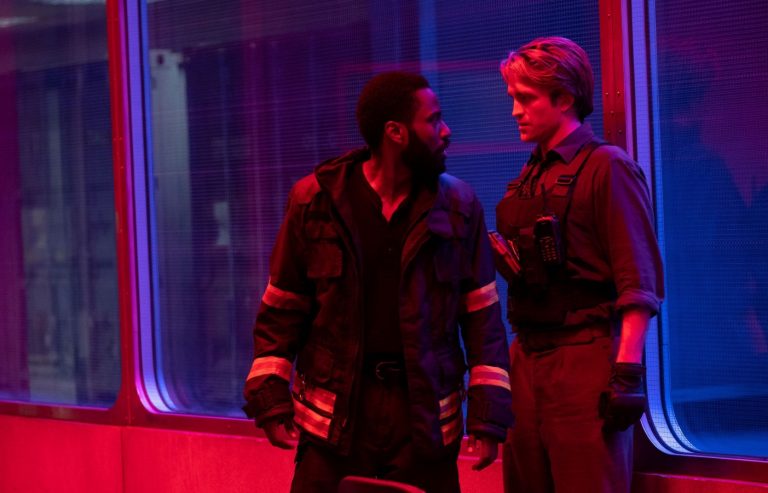
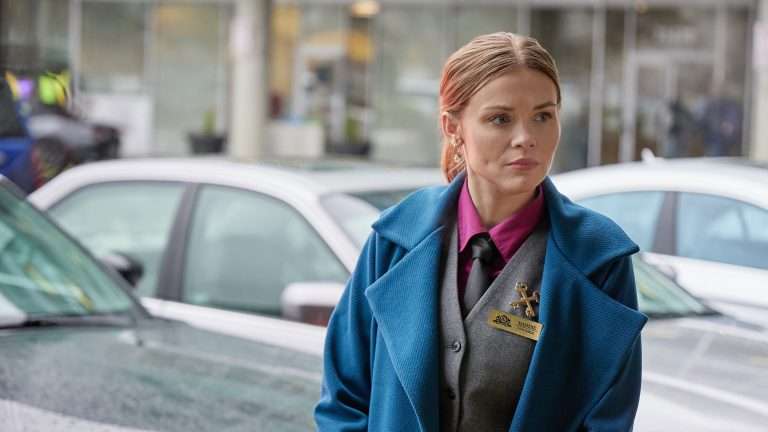
Now more than ever, it would seem as though the need to laugh has taken on an importance beyond measure. As the world continually flushes itself further and further down the drain, and those on the forefront of studio filmmaking seem adamant on destroying the very art that lights our souls and fills their pockets, sometimes we just need to take a step back and acknowledge the absurdity of it all.
2025 has proven to be a particularly vital year for making us laugh while the surrounding world wants us all to sweat and bleed, and as studio and arthouse comedies alike begin to take a firmer stand against the anonymity of the streaming void, it felt only right to give them one more chance to make us chuckle.
Unlike our usual rankings, though, we’d like to try something a bit different here. The typical implication of one of our rankings is that we’re ranking these films purely in order of our perception of them as a complete package, but for a list such as this—in a year when so many films found themselves effortlessly blending genres together—we’d like to rank our favourite comedies based on the heights of their comedic value.
So while some films (those more inclined towards mixing the laughs with the adrenaline) may rank lower here, they may still shine brightest overall. But today, the yucks reign supreme, and those that made us laugh hardest deserve the crown in the mould of the fool’s cap.
10. The Wedding Banquet

With big shoes to fill as the remake of one of Ang Lee’s more quietly celebrated films, Andrew Ahn took a decidedly tender approach to his own version of “The Wedding Banquet” in 2025, emphasizing the synergy between the romance and the comedy rather than letting either element fully take the reins over the other. There are, in any case, many laughs to be had in the antics of a pair of same-sex couples going to such great lengths to deceive their parents in the name of love, and Ahn’s quartet of fiery lovebirds charge up that comedic stamina from start to finish.
Han Gi-chan, Lily Gladstone, Bowen Yang, and Kelly Marie Tran combine their complementary strengths—Gladstone’s grounded dramatic heft contrasts effectively against Yang’s more sketch comedy-oriented vigour—to find the beating heart that lies at the centre of “The Wedding Banquet,” all while only letting up on the laughs when they risk interfering with Ahn’s more subdued romantic leanings. Though not the most laugh-out-loud offering of the year, there’s certainly a consistency to Ahn’s expression of love that we could afford to see more often, especially in an age of increasingly disposable romcoms dropped into the aether of streaming search bars.
Related to Best Comedy Movies of 2025: The 15 Best A24 Comedy Movies
9. A Useful Ghost
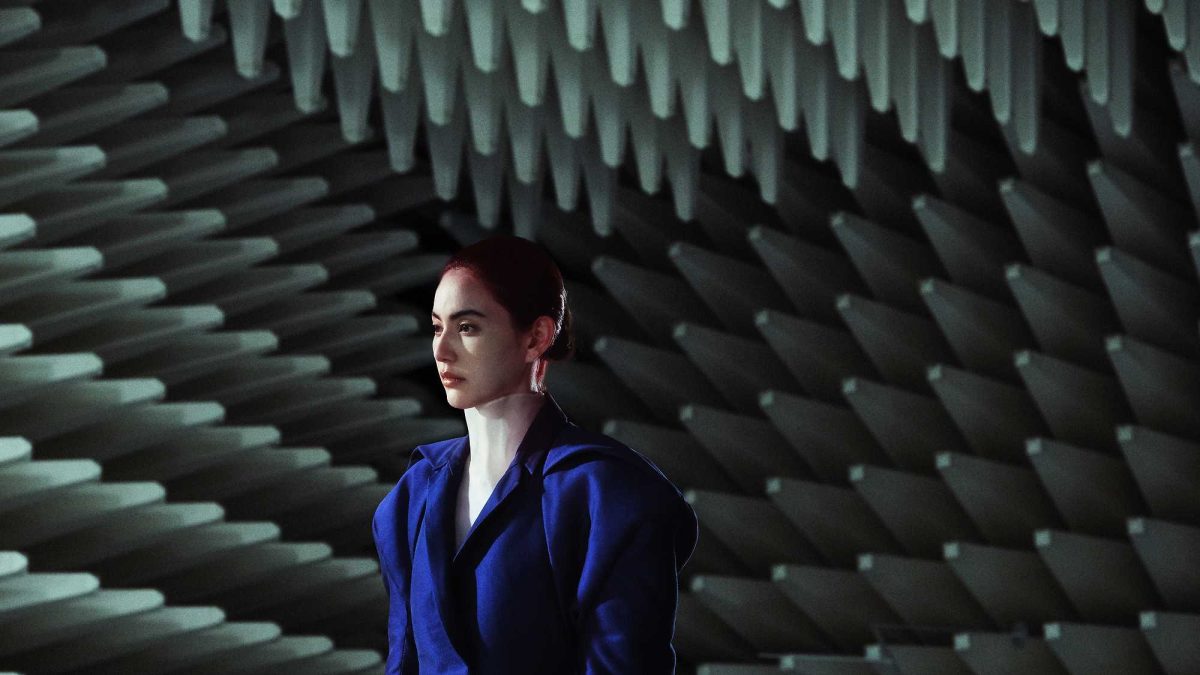
As far as tone is concerned, Thai cinema is basically in a universe all its own, which comes to be especially apparent in most of the country’s humorous exports. In his directorial debut, Ratchapoom Boonbunchachoke carved out his space within this unique tonal habitat with “A Useful Ghost,” a film whose particular grasp on the ever-present theme of reincarnation takes on a uniquely colourful perspective (and a film whose victory in the Cannes Critics’ Week sidebar may give its reputation an air of self-seriousness that Boonbunchachoke would gladly subvert with a goofy smile).
In any other film, the very notion of a loved one being reincarnated as a household appliance would be the funniest thing about it, but Boonbunchachoke ups the ante by treating the basis of his love story not as a point of wonderment, but rather one of annoyance. It’s this pervading sincerity toward its central dilemma—and the unexpected prejudices woven through it—that anchors “A Useful Ghost,” even when the film lacks the stamina to fully explore its premise. In the end, love proves it can be found in the most unlikely places, even through the ribbed tubes of a vacuum cleaner.
8. Wake Up Dead Man

A major reason why Rian Johnson’s “Knives Out” series has managed to capture viewer attention in an age where murder mysteries have pretty much gone the way of the Tasmanian tiger—Kenneth Branagh’s intermittently fascinating but ultimately pedestrian Agatha Christie revivals basically solidify this fossilization—is because Johnson has found, in the formula of unravelling convoluted murder plots, ample opportunity to take the piss while simultaneously showing genuine reverence for the rollercoaster journey that comes with trying to untangle the ever-knotted yarn. “Wake Up Dead Man” may ultimately prove to be the weakest of its trilogy due to Johnson’s least involved ensemble cast, but man, does he still have the juice to keep us chuckling.
It helps that at least one addition to his ensemble, 2025 MVP Josh O’Connor, proves to be easily the best casting choice across the entire trilogy save for its central figure, and “Wake Up Dead Man” wastes no time combining the shared bumbling competence of O’Connor and series anchor Daniel Craig to foster the most energized chemistry of the entire series, further enhanced by the admitted impossibility of solving this particular case. When logic is then thrown to the wind by a man who sees every mystery as a chance to yank the curtains and expose the impossible, Johnson’s laughs come rolling along in heavenly measure.
More Related to Rian Johnson’s Movies: Every Rian Johnson Film Ranked Worst To Best
7. The Love That Remains
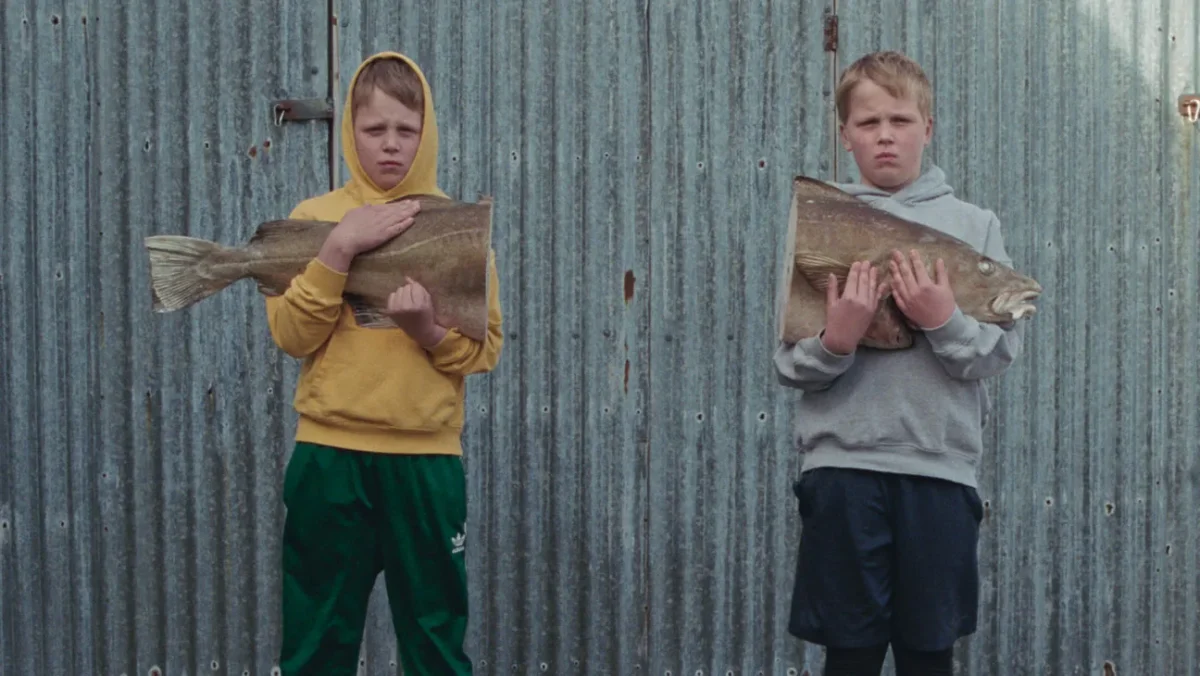
This is where we really start to stretch the definition of “comedy” for the sake of a more holistic view of what can make a film funny, for Hlynur Pálmason’s Icelandic family odyssey is decidedly more dramatic in its grander view of a year in the life of a clan experiencing the rupture of divorce. The longer “The Love That Remains” goes on, however, the more Pálmason’s surreal touches to the isolation of farm life begin to manifest in one of the most dryly amusing tonal balancing acts in cinema this year.
Even without accounting for how adorably funny a simple shot of family pooch Panda can be whenever Pálmason decides to bless the frame with such an image, “The Love That Remains” perfectly distills the sense of slow descent into madness that comes with both the solitude of rural life and the more cutting solitude that comes with the increasing realization that you may truly have to start going at it alone, without the supporting bedrock of the partner who’s been there since the beginning. And if Pálmason feels the need to hammer that point home with a dream sequence involving a giant murderous chicken, then so be it!
6. A Poet
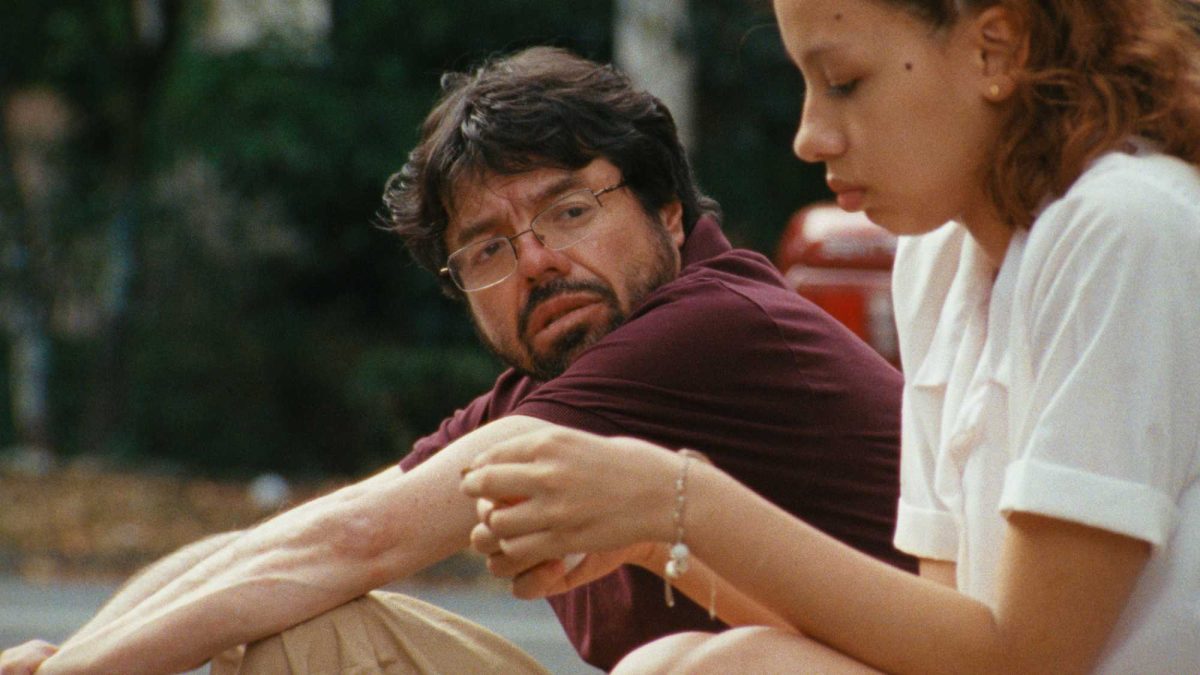
Another film that finds its humor in the abyss of pathos, Simón Mesa Soto’s “A Poet” conveys its uphill battle to control your most unintentionally vicious laughs right from the title. Until you become an undeniable success in the field, it’s tough to tell those in front of you that you’re a career poet without a flurry of suppressed laughter to follow. Soto’s second feature builds on the difficulty to garner sympathy under such circumstances by doubling down to make his central figure as dubious a protagonist as such a film could possibly handle.
Ubeimar Rios is, in that regard, the perfect conduit for “A Poet” to roll out laughter and winces in equal measure, as both his unique physicality—appearing as though in a constant attempt to shrink into himself before bursting forth with an alcohol-induced diatribe about the worth of poetic integrity—and explosive passion center the freneticism that Soto harnesses for his audience’s most vigorous hollering. Something of a South American, lyrical counterpoint to Owen Kline’s “Funny Pages,” “A Poet” seeks in the self-aware grasp of its own occasional detestability an invitation for viewers to cackle at the depths to which ego will drive us, only to abandon us to fend for ourselves.
5. One Battle After Another
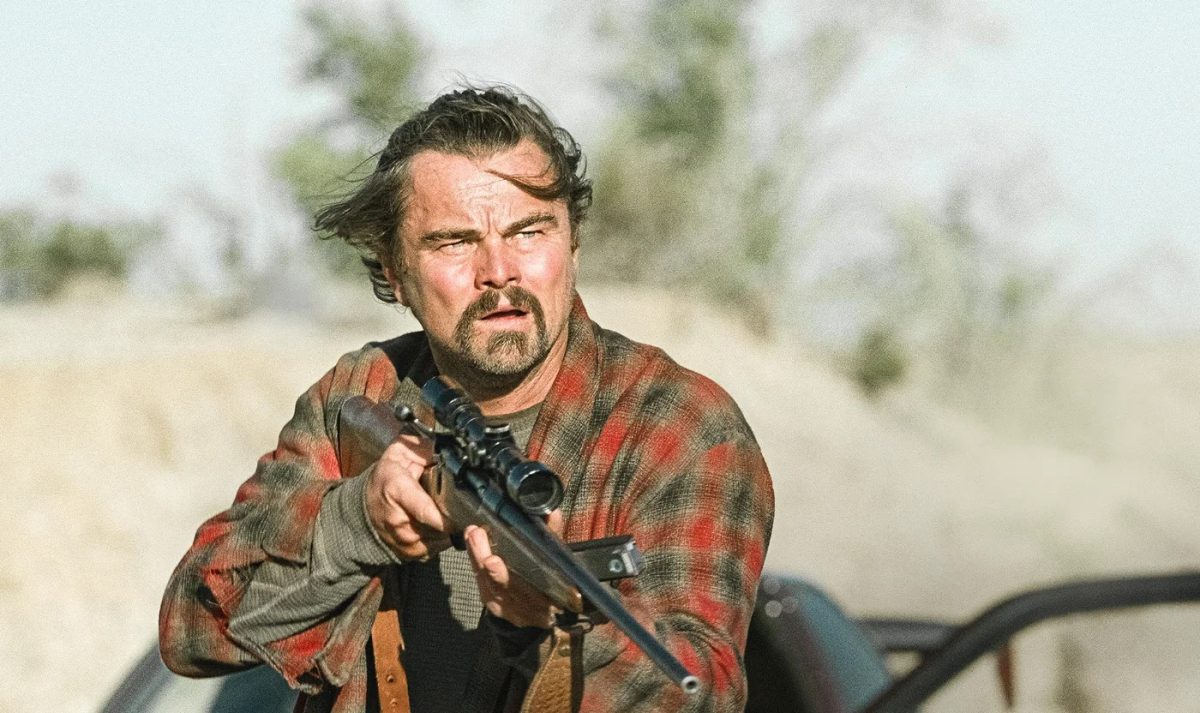
We won’t sit here and pretend that “One Battle After Another” is not, from an overall qualitative perspective, easily the best film to appear on this list. Judging by its rather high placement here, Paul Thomas Anderson’s monster hit also showed itself to be fairly adept in its grasp of comedy as a revolutionary tool. And while other films further along may have shown a more primary urge to make us laugh until our sides split open, Anderson’s controlled yet freewheeling vision of the incremental fights we face to make the world around us survivable is probably more emblematic of where we are as a species than any other film here.
Featuring Leonardo DiCaprio at the height of his powers (i.e., in purest “DumbCaprio” mode), “One Battle After Another” carries us through the many exhaustive faces of defiance against right-wing militancy to show where half the battle is won, the second one decides how much they’re willing to commit, and how much they’re willing to fight for. Oftentimes, that means confronting the horrors of parental responsibility with a reinvigorated drive to set down the bong and pick up the rifle, as the next generation sees their first major battle as the one where they have to make up for lost time when their indolent guardians left revolutionary vigour behind a cloud of weed smoke.
Related to Best Comedy Movies of 2025: All Paul Thomas Anderson Movies Ranked
4. Splitsville

As we firmly enter the final, “Unambiguously a Comedy” stretch of our list, it would be fitting enough to usher in this last section with another film that makes a concerted effort to match its comedic energy with a laser-focused attention to craft. Enter Michael Angelo Covino’s “Splitsville,” which finds the dynamic writer-actor-director once again teaming with his comedic partner in crime, Kyle Marvin, to test the bounds of friendship with a firm understanding of how a precise hand behind the camera can make a well-thought-out joke land with an impact that will leave craters in the concrete.
Exploring the messiness of polygamy once theory turns into practice, “Splitsville” finds Covino and Marvin once again probing the amicable insecurities they first teased apart in “The Climb.” This time, though, they push their structure to new, fluid heights, staging each set-piece with such precise attention to space that you barely have time to appreciate the planning behind a fistfight that snakes through the narrow halls of a lake house. The synergy that Covino and Marvin harness from one another holds enough voltage to short-circuit an entire city, but in “Splitsville,” that energy is content to be applied in service of short-circuiting these boys’ own sense of self-worth, all in the name of a solid gag.
3. The Naked Gun
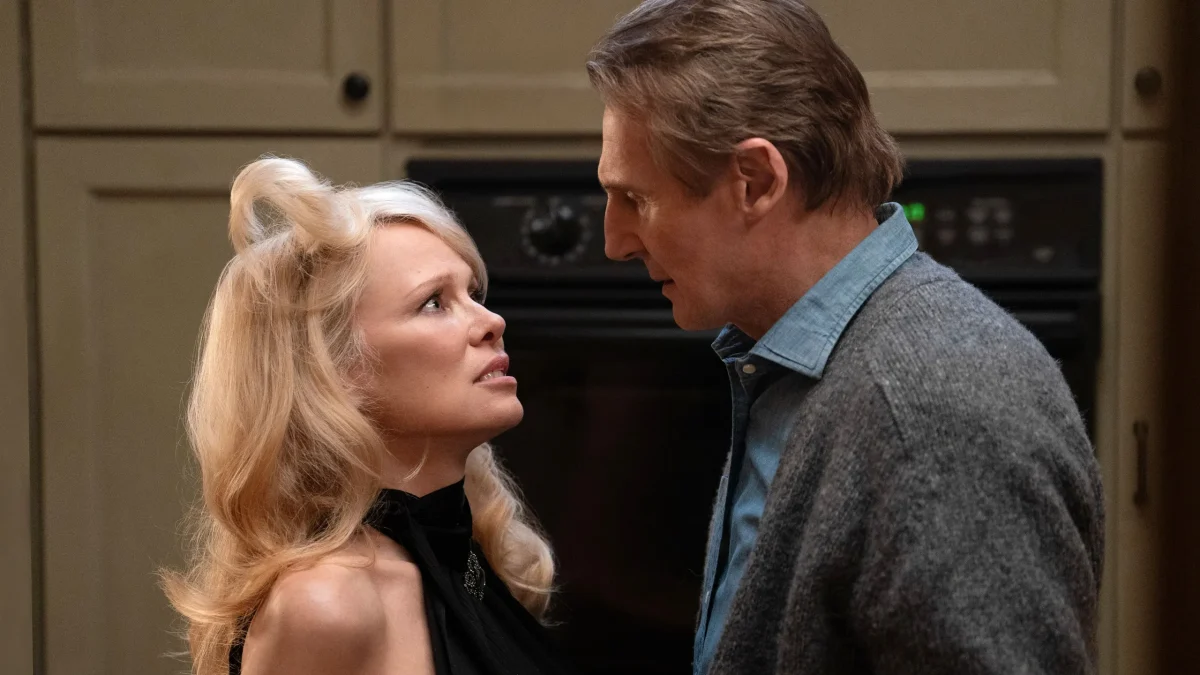
Must an effective comedy always be so considered, though? Is it not enough, sometimes, to turn the dial all the way up on the stupid factor and just revel in every ounce of unapologetic inanity that comes to be thrown at the wall with all the force of a classic banana peel pratfall? Such essential queries of existential magnitude are posed by “The Naked Gun,” which revives one of the most beloved spoof sagas with an appropriately silly (and, in many ways, frankly superior) iteration of completely accidental police competence in a world that’s growing increasingly—and justifiably—skeptical of the force’s societal value.
Lonely Island alum Akiva Schaffer squeezes every ounce of stupidity out of this premise to show that, in fact, there is quite a bit of consideration that goes into something so outwardly absurd. Comedy doesn’t suddenly lose its necessity for calculated setups and effective timing just because the premise of a gag is “Liam Neeson ate a few bad chili dogs,” and “The Naked Gun” runs with that careful balance of nonsensical genius right through to its ridiculous climax. Neeson’s own commitment to the bit, it bears mentioning, is just as thorough and, consequently, the most essential piece holding this idiotic masterclass together by a thread.
2. Nirvanna the Band the Show the Movie
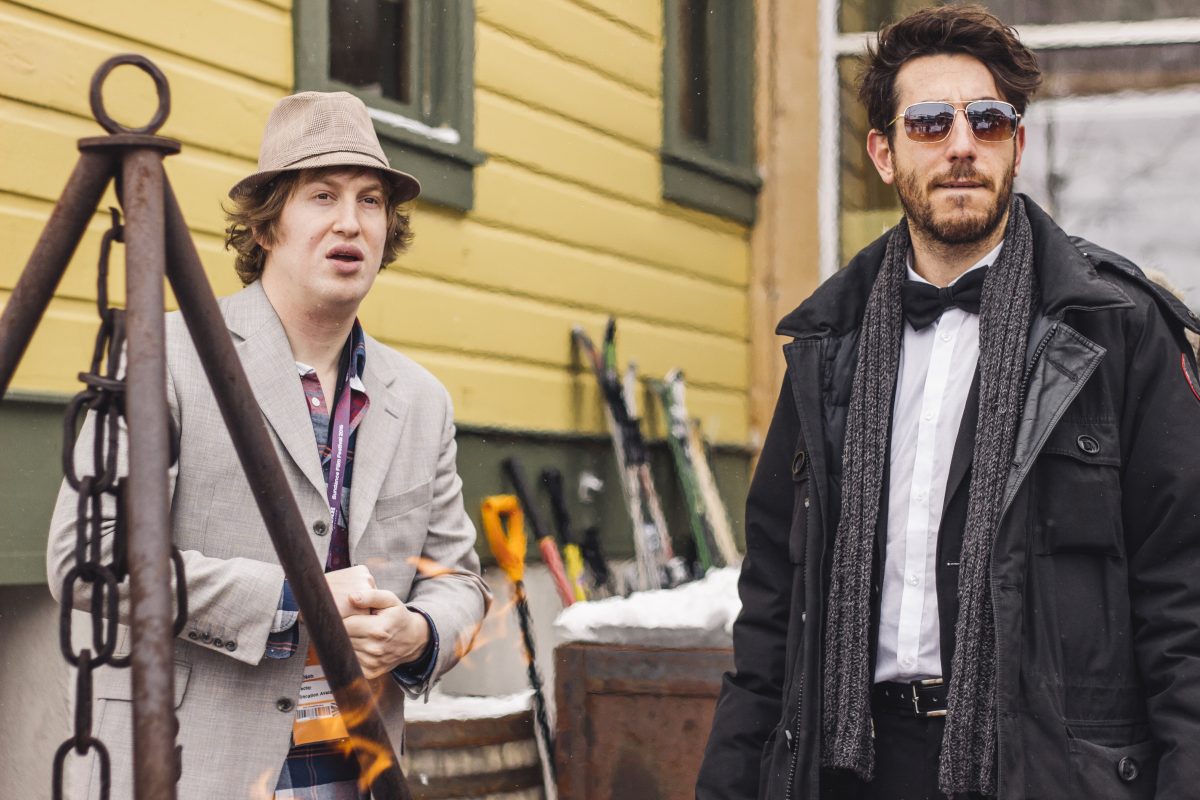
You don’t necessarily have to have seen Matt Johnson and Jay McCarroll’s “Nirvanna the Band the Show”—in either its web series or Viceland TV show forms—to get an immeasurable kick out of the absolutely gonzo experience that is “Nirvanna the Band the Show the Movie.” Of course, a moderate familiarity with the unique mockumentary style of this quasi-surreal Canadian comedy premise will go a long way in enhancing your experience, but even on its own terms, Johnson’s film manages to dig up laughs in corners of Toronto life you’ve never considered to have even a modicum of comedic potential.
A program whose premise has always itself been half the joke—how does this fictional music duo come up with the most convoluted way to secure a gig they could easily just set up with a few phone calls?—Johnson’s film takes this idea to its most absurd extremes with a scrappy energy that never comes across as cheap, but rather stays true to the ethos of endurance that has propelled this series for nearly two decades.
“Nirvanna the Band the Show the Movie” never comes to be as redundant as its title. On the contrary, Johnson and McCarrol’s camaraderie proves so addictively senseless that you’ll be liable to want that third season of the show—you know, the one whose incomplete status was the literal impetus for this film’s making as a proof-of-concept for this duo’s staying power.
Related to Best Comedy Movies of 2025: The 15 Best A24 Comedy Movies
1. Friendship
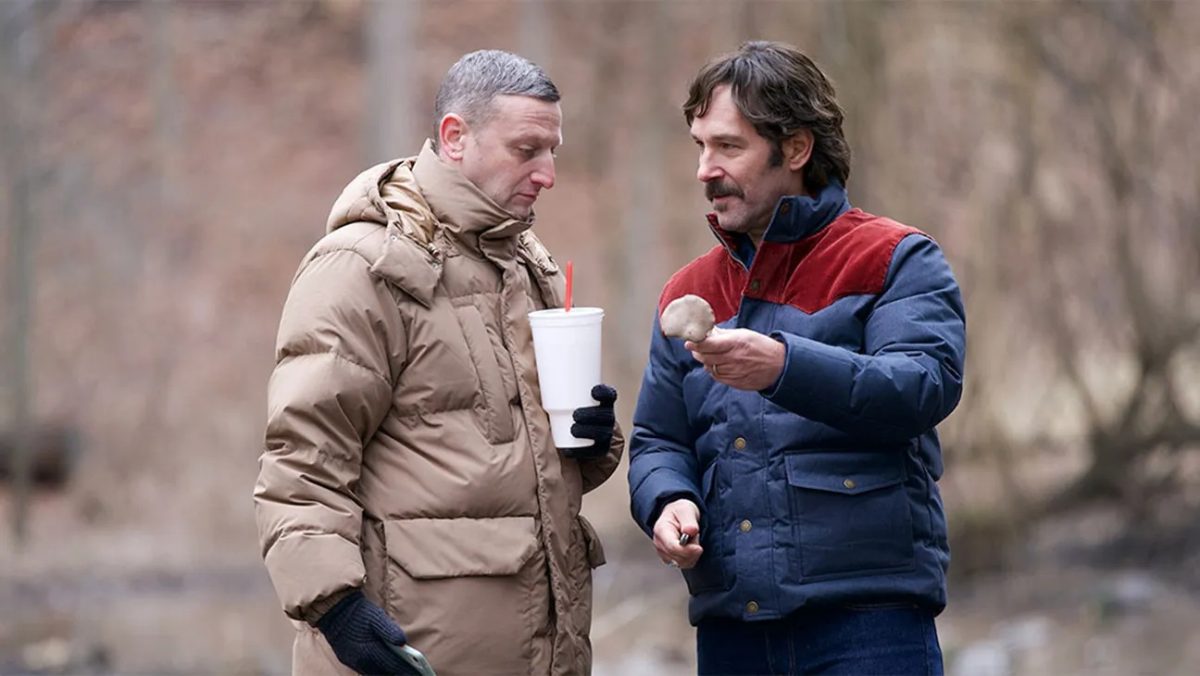
It’s always a massive gamble to rest a comedy feature on the shoulders of a comedian whose style has been primarily—almost entirely, in fact—honed in the entirely different mediums of television and sketch comedy, where matters of timing and cohesion run in a completely different race to the more streamlined necessities of a full film. That is, of course, unless the comedian in question is Tim Robinson, whose now-famous style of awkwardly abrasive humour has become a mainstay in attempting to make sense of the absurdity of the social media age, and has come to solidify him as an essential voice of modern cringe comedy.
Andrew DeYoung’s “Friendship” makes surprisingly versatile use of Robinson’s shtick, as the comedian’s forceful social ineptitude is doled out in bits and pieces across a narrative that finds only the best pockets to unleash its star’s most unhinged escapades. What makes Robinson such an alluring force for jokes—and what subsequently makes “Friendship” such an unavoidably essential comedy for our day—is the fact that the world around him makes as little sense to him as his reactions do to those who find themselves in his way.
DeYoung gives his lead the space to explore those confusing realities, and has the good sense to hold tight when those reactions start to bubble over and spill all across the table. Here’s hoping that soon enough, we’ll be saying, “There’s a new Robinson out that’s supposed to be N U T S !”