In the evolving landscape of Indian cinema, Fahadh Faasil stands as a singular figure. An actor who defies conventional paradigms of stardom, he doesn’t light up the screen with swagger, nor does he bend characters to fit a larger-than-life persona. Instead, he embraces the craft of disappearance, vanishing into his roles, often unsettlingly so. His performances don’t announce themselves with dramatic flourishes; they creep in slowly, revealing layers of contradiction, silence, and unsettling realism.
Emerging from the New Wave of Malayalam cinema in the early 2010s, Fahadh Faasil has cultivated a body of work defined not by flamboyant transformation but by a finely tuned sensitivity to psychological nuance and moral ambiguity. Whether he’s playing a petty thief, a disturbed loner, a revolutionary, a charming manipulator, a husband on the edge, or a morally ambiguous everyman, his performances are often layered, intense, and subtly crafted. He stands in a class of his own as one of the most acclaimed and versatile actors in contemporary Indian cinema, treating each character as a psychological terrain to inhabit, not perform.
Fahadh’s performances are groundbreaking as he has the ability to inhabit characters that are often socially marginal, emotionally fractured, or ethically compromised. Though it spans from romantic misfits to Machiavellian schemers, he neither romanticises nor vilifies them, but instead renders their contradictions with an almost anthropological attention to detail. His face, often impassive, becomes a site of subtle inflections, where silence speaks louder than dialogue, and stillness carries the weight of suppressed desire, guilt, or disorientation.
He brings to Malayalam cinema (and increasingly to Indian cinema at large) a sensibility that’s deeply modern, often existential, and always emotionally honest. In many ways, he exemplifies a post-method mode of acting: deeply embodied, yet devoid of theatricality; intellectually rigorous, yet emotionally immediate. Watching Fahadh is to watch someone who listens more than he speaks, who holds back more than he emotes, and yet, in that restraint, lies a hurricane of feeling.
This list examines ten of Fahadh’s most compelling performances, selected not for their commercial impact but for the depth and complexity they bring to the cinematic form. These roles offer insight into the actor’s evolving repertoire and his negotiation of masculinity, vulnerability, and performative identity. Each entry is an instance of character work that challenges the binaries of heroism and villainy, presence and absence, performance and authenticity. In tracing these roles, the list seeks not only to appreciate Fahadh’s range but also to articulate the specific ethos of acting he has come to represent in contemporary South Indian cinema.
Here are the 10 best performances of Fahadh Faasil. Happy reading!
10. Solomon // Amen (2013)
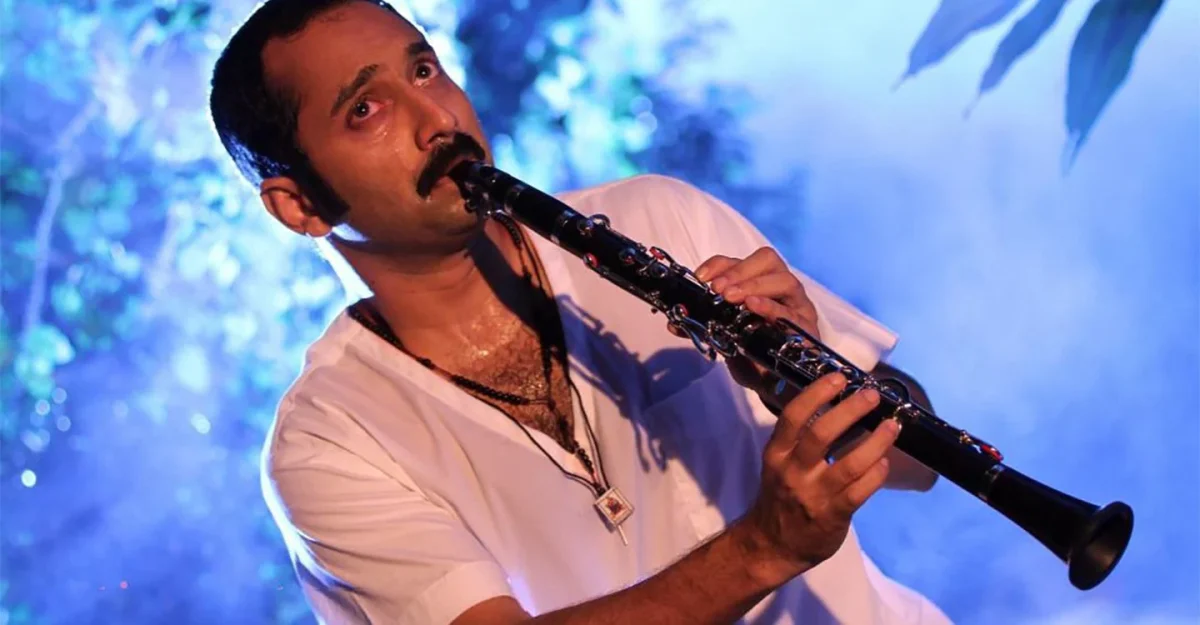
In Amen, Fahadh plays Solomon, a shy yet talented clarinetist and church assistant whose life revolves around music. Haunted by his father’s death and burdened by performance anxiety, Solomon struggles to assert himself both emotionally and socially. His destiny becomes intertwined with his love for Shoshanna (Swathi Reddy), a woman from a wealthier family whose parents strongly oppose their relationship.
Directed by Lijo Jose Pellissery, Solomon is depicted as a reserved “loser” struggling to express his feelings for Shoshanna and comes alive at the end of the movie during the climactic band competition. Fahadh approaches Solomon as a man perpetually diminished by institutional power and romantic inadequacy. His bodily modesty renders Solomon almost invisible within the village ecosystem, mirroring his marginal status within both the Church and the social order.
In a film that frequently bursts into surreal, fairytale-like excess, Fahadh remains the still centre, grounding Lijo’s flamboyant vision in human vulnerability. Solomon is not a character who is articulate in his emotions, but when it surfaces, a faint sadness lingers even in moments of joy.
Through Solomon, Fahadh reimagines masculinity as humility and faith as persistence rather than power. His romance with Shoshanna is tender rather than passionate, marked by emotional sincerity. He transforms what could have been a passive character into a quietly radical presence, making Amen not merely a satire of religious institutions but a compassionate meditation on belief, sustained by love and music.
9. Michael // ‘Artist’ (2013)
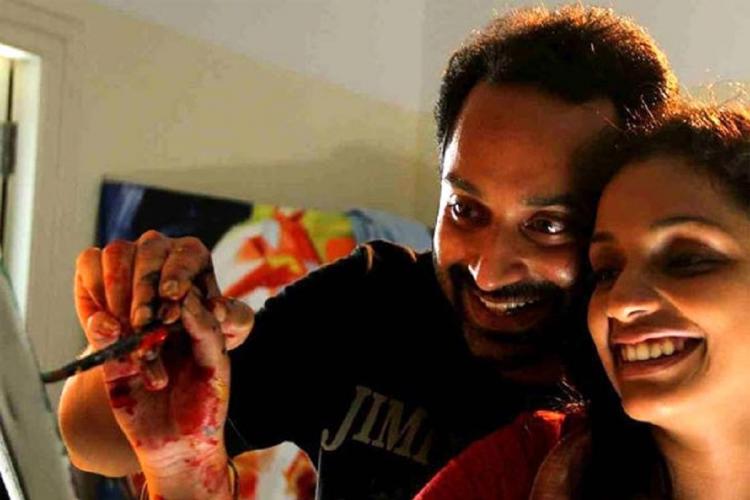
In Shyamaprasad’s Artist, Fahadh Faasil plays Michael, an uncompromising painter consumed by his art, who loses his eyesight midway through life. One of his most demanding character studies, Fahadh readily grasps the contradictions of an artist who is relentlessly pursuing perfection, torn between passion and practicality.
He is stubborn, self-absorbed, and even manipulative, yet beneath that, he captures the fragile vulnerability of a man terrified of irrelevance. Fahadh further enriches the role by foregrounding the artist’s ego, showing how genius and cruelty often exist in the same breath. His Michael is a man undone as much by his own pride as by circumstance, and the performance insists on this ambivalence rather than resolving it.
Fahadh projects his unique ability to balance Michael’s brilliance with his flaws. He doesn’t soften the character to win sympathy; instead, he exposes the raw selfishness and insecurities that make him both difficult and deeply human. His subtle shifts in body language after Michael’s blindness reveal an actor working in minute, almost invisible details.
His articulation of blindness is through delicate recalibrations – the hesitancy in his movement, the careful spatial awareness, the way his face “listens” to the world, and the subtle strain between intimacy and dependence. Fahadh’s Michael is not designed to be “liked”; he is designed to be understood. His ability to hold contradictions together makes Artist one of Fahadh’s finest explorations of a deeply flawed but unforgettable man.
Do Check Out: 15 Great Malayalam Movies on Prime Video
8. Pastor Joshua Carlton // ‘Trance’ (2020)
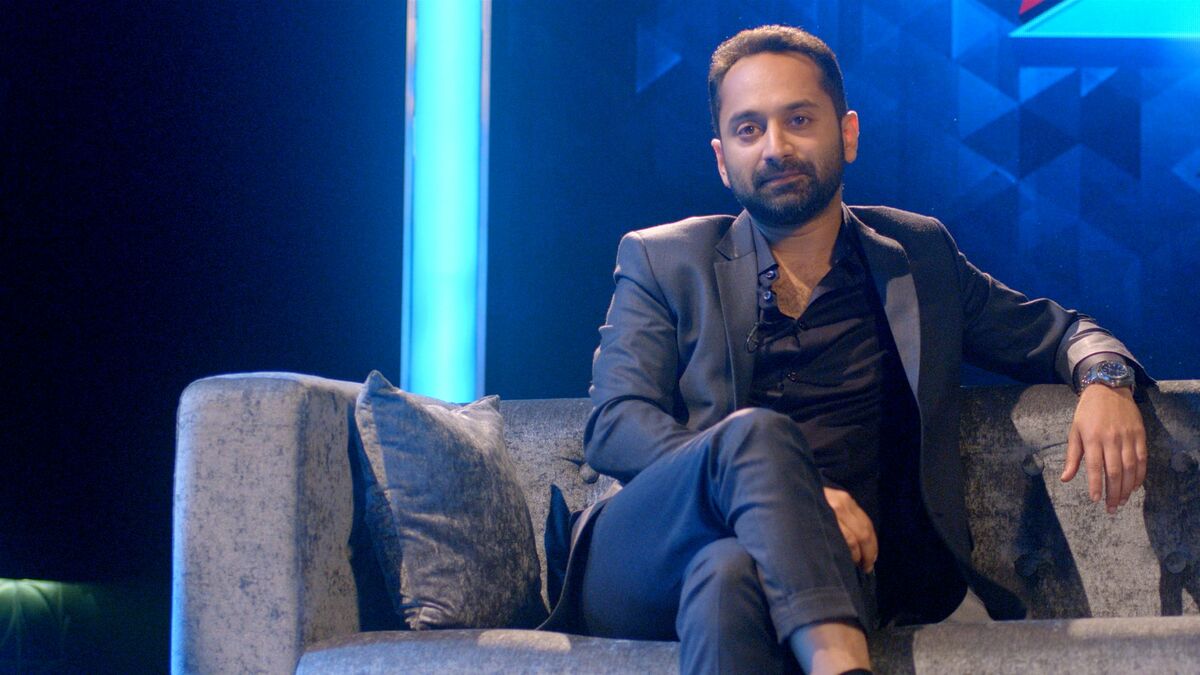
In Anwar Rasheed’s Trance, Fahadh Faasil puts forth a performance that is not only physically demanding but also profoundly psychologically taxing. He shoulders a dual identity that exposes the mechanics of manufactured faith and performative spirituality. As Viju Prasad, a motivational speaker drifting between desperation and idealism, and later as Pastor Joshua Carlton, a constructed televangelical icon, Fahadh charts the transformation of a fractured individual into a commodified symbol of belief. The performance operates at the intersection of charisma and collapse, revealing how faith becomes spectacle in a media-saturated world.
Fahadh’s portrayal of Viju is marked by vulnerability and restlessness. His body is loose, uncertain, and unanchored, mirroring a man in search of purpose and recognition. When he becomes Joshua Carlton, he becomes an entirely different person: the posture straightens, gestures become expansive, and the voice acquires a measured authority. Yet Fahadh carefully retains traces of Viju beneath, allowing cracks to surface in moments of emotional isolation and exhaustion. This duality prevents the character from becoming a mere satire of religious fraud.
In Trance, Fahadh’s performance is theatrical because his character demands it. His excess is calibrated rather than indulgent, most visible in sermons staged as mass performances and emotional crescendos designed for manipulation. Fahadh’s Joshua is fully aware of the role he plays, and this self-awareness infuses the character with a disturbing ambiguity in which belief and deceit collapse into one another.
The film’s critique of organised religion is anchored in Fahadh’s embodiment of spiritual burnout. As Joshua’s empire expands, Fahadh allows fatigue, paranoia, and dissociation to erode the constructed persona. His breakdowns are not explosive but hollow, suggesting a man emptied by his own act. Fahadh does not merely play a preacher; he stages belief itself as a fragile, performative enterprise.
7. Harikrishnan // ‘North 24 Katham’ (2013)
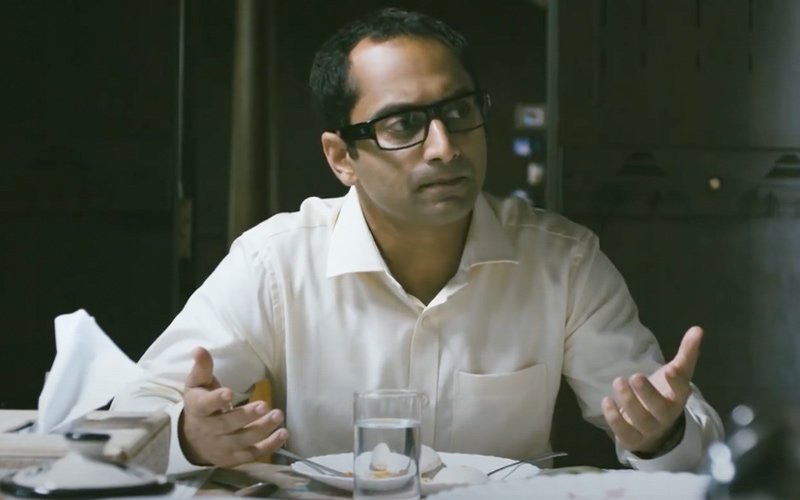
North 24 Kaatham stands as Fahadh’s most formally disciplined performance, portraying an IT professional whose obsessive-compulsive disorder governs both his body and his worldview. Directed by Anil Radhakrishnan Menon, the film follows Harikrishnan, an OCD-afflicted software architect, whose rigid, insulated life is upended during a statewide strike, forcing him to accompany strangers – Gopalan (Nedumudi Venu), a politician, and a social worker Narayani (Swathi Reddy) – on a chaotic road trip to Kozhikode.
As the journey progresses, Harikrishnan begins to acknowledge realities he has long ignored, bringing incremental disruptions into the character’s physical and emotional aspects. The journey transforms him from an isolated geek into a more empathetic person through shared adventures and unexpected human connections. Fahadh captures this transition beautifully, allowing a softened gaze and gentle shifts in demeanour to signal the slow dismantling of Harikrishnan’s carefully constructed shell.
Fahadh undertakes a naturalistic approach, evident in his subtle expressions, the way he avoids eye contact, and his use of specific mannerisms to bring the complex character to life without overacting. His posture is upright to the point of stiffness, his movements economical and rehearsed, and his speech clipped and functional. The actor externalises OCD through behavioural repetition – ritualised handwashing, an aversion to touch, and a compulsive need for cleanliness that doubles as emotional insulation.
Even at his most unlikable, the character is never ridiculed. Instead, Fahadh invites us to observe the fragile negotiations between control and compassion, order and empathy. The final act, where Harikrishnan confronts his own privilege and emotional detachment, is played with understated grace rather than dramatic release.
6. Rasool // ‘Annayum Rasoolum’ (2013)
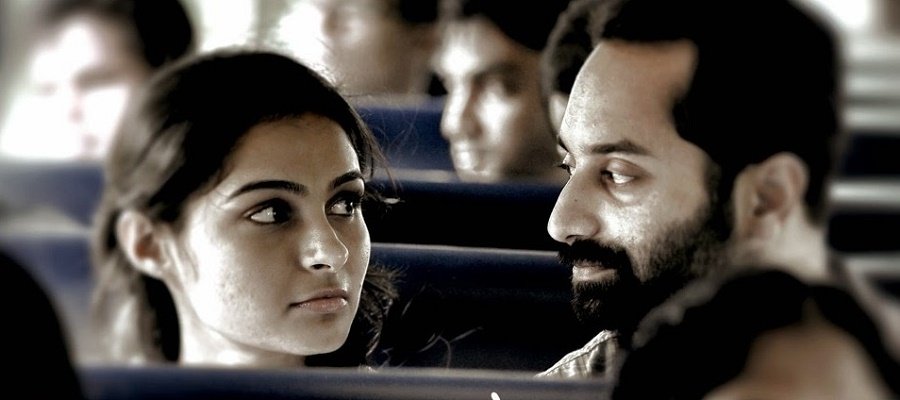
In Annayum Rasoolum, Rajeev Ravi reveals a never-before-seen romantic dimension of Fahadh Faasil, one who speaks largely through his eyes. Steeped in melancholy, it is a performance in which Fahadh plays Rasool, a man whose emotional life unfolds almost entirely in silence.
Set against the textured realism of Kochi’s working-class landscape, the film follows the interfaith romance between Rasool, a Muslim taxi driver, and Anna, a Latin Christian salesgirl from Kerala’s Vypin islands. Their relationship faces intense opposition from conservative families, ultimately leading to tragic consequences. Rasool is not written as a romantic hero but as a figure shaped by class, labour, and religious difference, conditions that render desire tentative and love profoundly vulnerable.
Fahadh’s intense gaze and subtle expressions of infatuation speak volumes, showing his passion and deep longing, contrasting with Andrea Jeremiah’s (Anna) shy, hesitant glances, making their unspoken connection powerful despite minimal dialogue. The romance builds through stolen glances and silent looks, where the eyes do the talking more than words. His eyes carry exhaustion as much as desire, signalling a life where emotional fulfillment is always deferred.
Fahadh’s performance understands romance as a fragile negotiation, where intimacy is repeatedly interrupted by the weight of religious identity and familial expectation. Even moments of joy are shadowed by inevitability, and Fahadh allows that knowledge to sit quietly within the character. What makes Rasool especially affecting is Fahadh’s refusal to sentimentalise suffering. In Rasool, Fahadh Faasil creates a personality of profound humility, one that treats love not as spectacle but as an aching persistence, etched into the body and carried quietly through everyday life.
Also Read: 10 Best Malayalam Movies on Netflix
5. Panachel Joji // ‘Joji’ (2021)
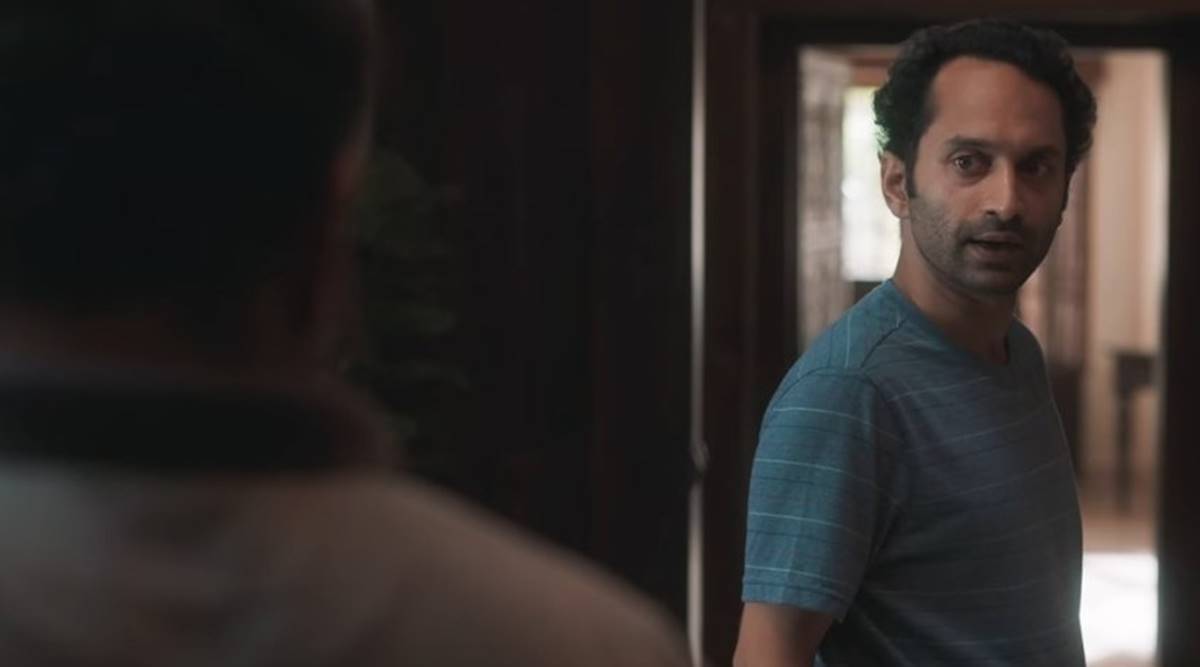
Fahadh Faasil steps into a contemporary reimagining of Shakespeare’s Macbeth in Dileesh Pothan’s Joji. The film becomes, through Fahadh’s performance, an anatomy of suppressed desire, a study in unchecked ambition and alienation, and an unabashed examination of the psychology of violence. Joji transposes the tragic arc of moral corrosion into a contemporary Syrian Christian household in rural Kerala.
As Panachel Joji, the youngest son of a domineering patriarch, Fahadh steps into the shoes of an economically dependent, emotionally disregarded, and socially emasculated man who has been diminished by his own family structure. There is a deafening stillness to this terrifying and guarded villain, who observes, calculates, and internalises humiliation until it curdles into quiet resentment. Drawing resonant parallels with K. G. George’s Irakal, the film shows Joji’s psychopathic psyche, perpetually constrained, playing mind games of power in pursuit of dark, self-serving motives.
His physical stature, marked by slumped posture, tentative gestures, and nervous pacing, reveals a constrained mind ready to explode. Even when he smiles, the expression feels fragile, as though stretched over an unhealed wound. Fahadh frames Joji’s emotional world not through dialogue but through microscopic gradations of behaviour, where a twitch, a glance, or the slight tightening of his jaw conveys volumes about his inner disquiet. His portrayal of moral disintegration is chilling yet understated; it registers as a psychological implosion rather than a dramatic explosion.
When Joji begins to orchestrate his father’s demise, the murder unfolds without theatricality, and so does the guilt that follows. His face becomes a battleground of guilt and justification, terror and denial. In Joji, Fahadh redefines villainy as vulnerability. His performance is not about corruption by power but by inadequacy, a man whose hunger to be seen consumes him entirely. It is an extraordinary portrait of quiet evil, and one that consolidates Faasil’s place as the foremost interpreter of the modern, fractured male psyche in Indian cinema.
4. Shammi // ‘Kumbalangi Nights’ (2019)

In Madhu C. Narayanan’s Kumbalangi Nights, Fahadh Faasil played the role of Shammi, the antagonist, a controlling, narcissistic patriarch with a distorted sense of masculinity and self-worth, who epitomised his character through the famous line, “Shami hero aada hero”. Fahadh constructs Shammi not as a conventional villain but as a meticulously controlled embodiment of toxic masculinity.
At first glance, Shammi appears charming, articulate, and socially respectable, a man who speaks the language of progress while embodying its most corrosive contradictions. Fahadh’s performance thrives in this dissonance, revealing how violence often hides behind civility, and domination masquerades as care. His menacing presence is never overt; it is conveyed through his posture, gaze, and voice modulation.
His exaggerated politeness, his obsessive grooming, and his compulsive need for order are not quirks but mechanisms of control. Fahadh uses these traits to externalise an interior pathology, one rooted in entitlement and fragile masculinity. Even moments of tenderness are tinged with uneasiness and suggest that affection, for Shammi, is inseparable from possession.
As Shammi’s authority is challenged, the actor subtly recalibrates the character’s physicality – his smile hardens, his body stiffens, and his voice grows clipped. These incremental shifts map the psychological collapse of a man whose self-worth is predicated on domination. Violence, when it arrives, feels inevitable rather than shocking, the logical endpoint of an identity built on control. Fahadh does not psychologize Shammi to elicit sympathy.
Instead, he presents him as socially legible and recognisable, even familiar. This refusal to soften the character makes the performance profoundly disturbing. Shammi is not a monster outside society; he is its by-product. Fahadh Faasil transforms Shammi into a chilling reminder of how deeply violence can be normalised, aestheticised, and quietly sustained within everyday life.
3. Ranga // ‘Aavesham’ (2024)

Jithu Madhavan’s Aavesham is and continues to be Fahadh’s most flamboyant and performatively charged roles to date, an audacious departure from his usual repertoire of repressed and morally ambivalent men. As Ranjith Gangadharan alias Ranga, a hyper-stylised Bengaluru gangster who befriends a trio of engineering students, Fahadh fuses manic energy with meticulous craft, transforming what could have been a caricature into a study in performative charisma and psychological volatility.
Ranga’s swagger, combined with his outlandish clothes, gold chains, and unpredictable mood swings, initially appears to place him within the exaggerated comic universe of mainstream Malayalam cinema. Yet Fahadh’s genius lies in how he locates vulnerability within absurdity. Beneath the theatrics, Ranga is revealed to be a man performing his own myth, desperately sustaining a version of himself that oscillates between affection and menace, paternal warmth and psychotic rage. His laughter, at once disarming and unnerving, becomes the emotional register through which his contradictions play out.
His absolute control over tonal shifts lends the role a distinct freshness and vitality. He moves between comedy and cruelty with seamless precision, collapsing the boundary between parody and pathos. His physicality, elastic and almost dancer-like, makes Ranga both grotesque and magnetic. In the film’s second half, when violence erupts, Fahadh subtly alters rhythm and cadence, allowing the persona to crack and reveal a lonely man beneath the excess.
Aavesham thus becomes a commentary on masculinity as performance, and Fahadh’s Ranga embodies that notion with anarchic brilliance. He acts not to represent reality but to theatricalise it, framing a character who is simultaneously self-aware and self-destructive. In a career defined by restraint, Aavesham is Fahadh’s joyous act of unrestrained play, an experiment in chaos that paradoxically reveals his supreme composure as an actor.
Related Read: 10 Best Malayalam Movies of 2024
2. Prasad // ‘Thondimuthalam Driksakshiyam’ (2017)
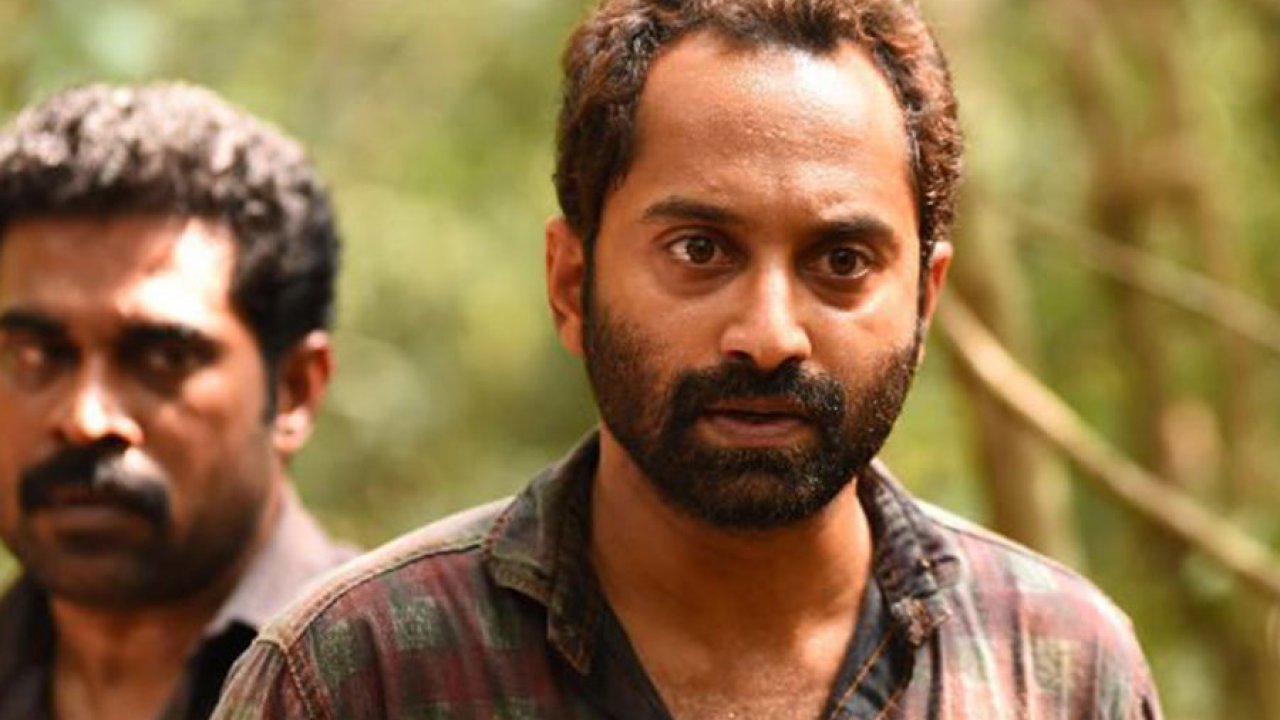
In Thondimuthalum Driksakshiyum, Fahadh Faasil achieves a rare feat in crafting one of the most masterfully ambiguous characters in Indian cinema, a nameless thief whose moral compass is as slippery as his words. Directed by Dileesh Pothan, the film shatters the binaries of good and evil, instead locating its drama in the interstices of truth and perception. Fahadh’s performance is a masterclass in deception, vulnerability, and unexpected empathy.
Fahadh’s thief persona, Prasad, is arrested for allegedly stealing a gold chain on a crowded bus, but from the moment he enters the frame, his body language and tone make it clear that he is far more complex than a petty criminal. With sunken eyes, a gaunt frame, and a voice that veers between nervous defensiveness and calculated charm, he unsettles both the characters around him and the viewer’s expectations. His performance thrives in stillness and silence, often seated in the police station, radiating unease and intelligence.
The most remarkable aspect is how Fahadh turns passivity into presence. He is often watched, interrogated, and suspected, but never reduced. Through subtle shifts in gaze, posture, and micro-expression, he performs the act of lying with such disarming sincerity that the audience is left oscillating between suspicion and sympathy. His line deliveries, never raised nor hurried, create a rhythm of tension that holds the narrative together.
Fahadh’s thief is not a vehicle for redemption or punishment but a reflection of the ethical murkiness that defines the film’s world. His final confession is not delivered with melodrama, but with quiet inevitability, deepening the film’s philosophical inquiry into justice and truth. In refusing to define his character, Fahadh elevates him. He doesn’t act the thief; he inhabits the uncertainty of who the thief might be, allowing the performance to remain, like truth itself, elusive.
1. Mahesh Bhavana // Maheshinte Praathikaaram (2016)
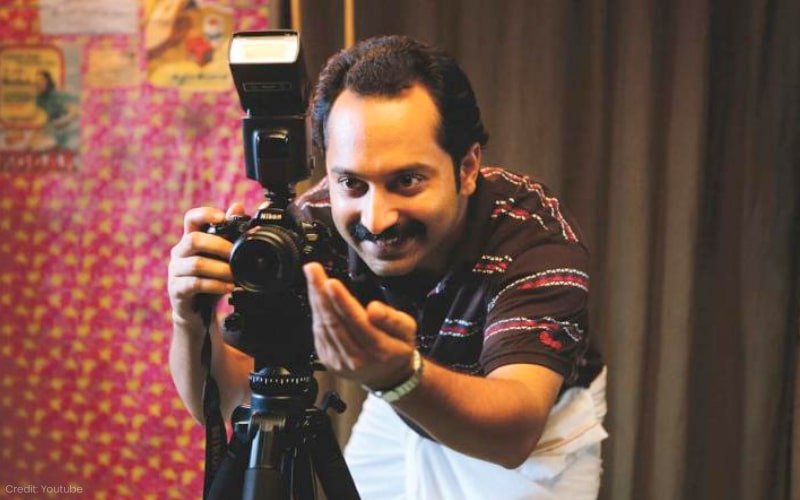
In yet another Dileesh Pothan film, Maheshinte Prathikaaram, Fahadh Faasil delivers a performance of quiet brilliance, portraying Mahesh Bhavana, a small-town studio photographer who leads an uneventful life, content with his work, his friendships, and his long-term relationship. Running his father’s modest photography studio, Mahesh is charming, occasionally naive, and wholly decent. His sense of self is quietly dependent on routine and reputation.
When he is publicly beaten and humiliated while trying to mediate a street fight, something fractures within him. What begins as a modest narrative of personal insult slowly evolves into a subtle exploration of masculinity, wounded pride, and emotional resilience. Eschewing rustic slapstick, punchlines, and exaggerated body language, Fahadh’s Mahesh is defined by effortless and remarkable naturalism, an everyman whose emotional world is as richly layered as the highland landscape of Idukki he inhabits.
As the “broken everyman,” Mahesh is not driven by grand ambition or cinematic vengeance, but by a desire to restore his dignity in a community where public perception is intimately tied to personal identity. The film traces Mahesh’s vow not to wear slippers until he has avenged the insult, an act that is both absurd and symbolic. This personal vow becomes the axis around which the film pivots, and Fahadh’s performance grounds this shift in subtle psychological realism.
Fahadh’s strength lies in the micro-expressions, the flickers of shame, the awkward silences, and the hesitant physicality that render Mahesh profoundly human. Fahadh’s portrayal leans into the quotidian rhythms of Mahesh’s world, capturing the character’s ordinariness with deep empathy. He offers a portrait of male vulnerability that is both culturally grounded and universally resonant, a performance that finds power in the unspoken and strength in the mundane.
Under Dileesh Pothan’s direction, Fahadh’s performance becomes the film’s emotional backbone, one that subverts genre and redefines cinematic realism. By the film’s end, Mahesh’s triumph isn’t about physical revenge, but about reclaiming composure. Few actors could carry that off without theatricality. Fahadh does so with the lightness of breath, as though he were never acting at all.
Special Mention
Cyril C. Mathew // ’22 Female Kottayam’ (2012)
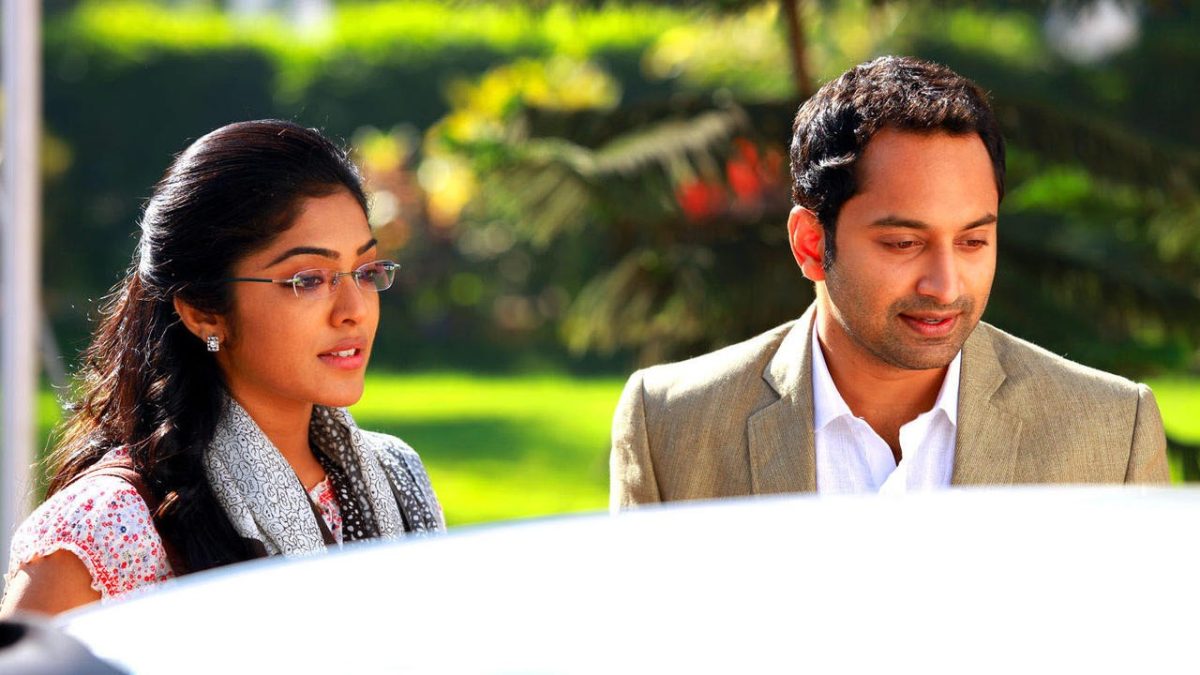
One of the most chilling antagonists in contemporary Malayalam cinema is Fahadh Faasil’s Cyril C. Mathew in 22 Female Kottayam, a figure who unsettlingly doubles as a “good shepherd,” masking his predatory violence beneath the guise of care and charm. Directed by Aashiq Abu, the film depicts how Tessa (Rima Kallingal) is by her lover, Cyril, and subsequently sexually assaulted by his employer. The film’s rape-revenge framework gains its disturbing potency precisely because Fahadh refuses to play Cyril as a conventional villain.
Instead, he appears as an ordinary, attractive, aspirational man, making the violence feel systemic rather than aberrational. As Cyril, Fahadh adopts a soft-spoken, almost tender vocal register, deploying affection as a weapon. His smiles are easy, his body language relaxed, his touch seemingly reassuring. This deliberate normalcy is what renders the character terrifying. His cosmopolitan style, polished English, confidence of entitlement and professional ambition operate as cultural camouflage, masking a predatory masculinity that thrives within urban modernity.
Fahadh’s performance is chilling precisely because of its emotional flatness. There is no visible rage or frenzy, only control. His face remains disturbingly unreadable, reinforcing the film’s critique of sexual violence as an act of domination rather than desire. As Cyril plots Tessa’s betrayal and disappearance, Fahadh leans into cold efficiency, portraying cruelty as procedural and bureaucratic. He neither seeks redemption nor offers psychological justification for his actions. Cyril is not traumatised or remorseful; he is frighteningly functional.
Fahadh ensures that the character’s self-interest remains intact. In the latter half, as power shifts and vengeance unfolds, Fahadh subtly allows panic and disorientation to seep into Cyril’s composure, exposing the fragility beneath masculine arrogance. His Cyril C. Mathew stands as a damning portrait of modern, educated misogyny, one that implicates social structures as much as individual pathology, and secures the performance’s lasting cultural and political resonance.
Aloshy // Iyobinte Pusthakam (2014)
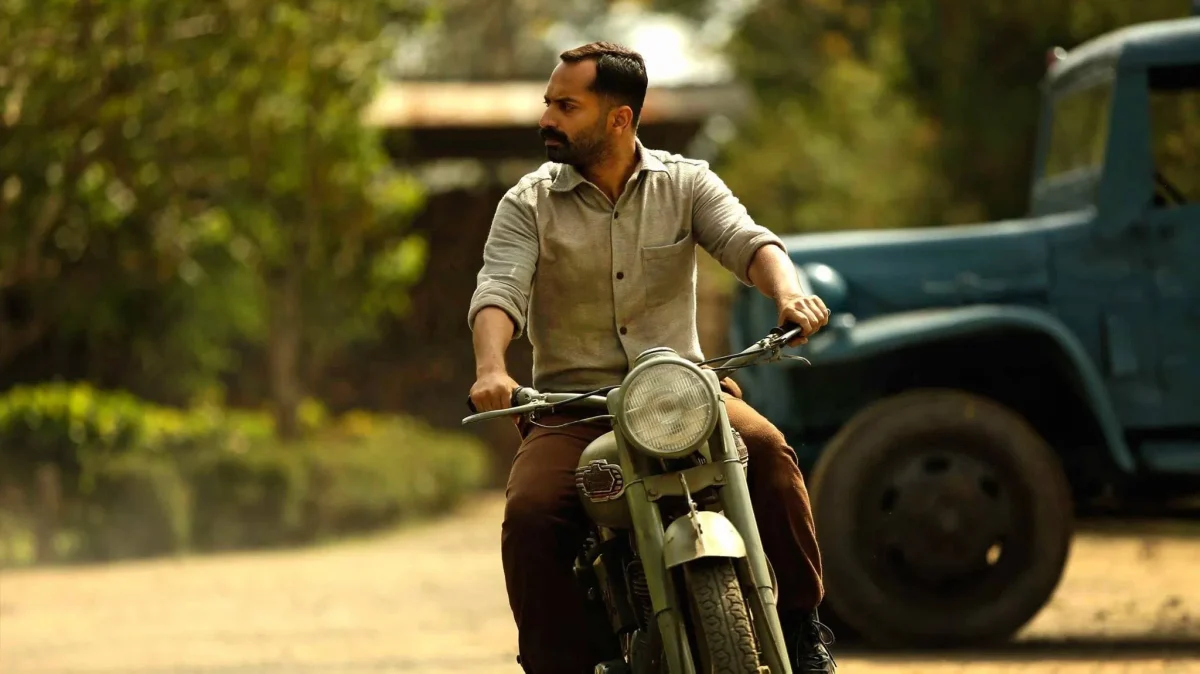
Fahadh Faasil’s performance in Iyobinte Pusthakam (2014) is markedly different in register from his urban psychological portraits. Here, he embraces physicality and moral rupture to get into the character of Aloshy, a man caught between inheritance and conscience. Directed by Amal Neerad, the film is structured as a violent family chronicle set against the mist-laden high ranges of Kerala.
Aloshy is written as a reluctant heir to violence, a son who returns from the British army bearing discipline but not dominion. Positioned uneasily between brothers conspiring against their father and his childhood love, Martha, who plays a pivotal role in the unfolding drama, Aloshy occupies a moral middle ground. He is framed as ethically alert yet emotionally wounded, first a witness to cruelty before he is compelled to become its adversary.
Fahadh carries confidence like a shield, and his corporeal intelligence is visible in his physique and actions. His body bears the residue of military training – upright posture, controlled gestures – yet this discipline slowly fractures as familial violence escalates. Rage, when it arrives, is not explosive but coiled, released only when ethical thresholds are crossed.
Fahadh treats violence as a consequence rather than spectacle, making Aloshy’s eventual retaliation feel inevitable rather than triumphant. Unlike Fahadh’s later inward-looking characters, Aloshy’s conflicts are externalised. Aloshy emerges not as a mythic saviour but as a man shaped by history, burdened by bloodlines, and compelled to choose between complicity and resistance.
Arjun // Chaappa Kurishu (2011)

Chaappa Kurishu is the film in which Fahadh Faasil found his rhythm. It was a forward-looking performance; it anticipates many of the thematic concerns that would later come to define his career. Directed by Sameer Thahir, the film stages a moral thriller around the circulation of a mobile phone, but through Fahadh’s portrayal of Arjun, it becomes a sharp critique of class privilege, technological surveillance, and emotional vacancy in urban India.
The film narrates the intersecting lives of Arjun, a wealthy corporate executive, and Ansari (Vineeth Sreenivasan), a supermarket worker, whose trajectories collide after Arjun loses his mobile phone. The device, containing explicit recordings of Arjun’s affair with his secretary, falls into Ansari’s hands, setting off a chain of blackmail and escalating violence.
Fahadh constructs Arjun through affective minimalism; his sense of entitlement is so thoroughly normalised that it rarely registers as overt aggression. His speech is clipped, his tone casually dismissive, and his gaze often vacant, suggesting a man for whom other people exist primarily as instruments. What makes the performance disturbing is its ordinariness: Arjun’s cruelty does not stem from rage or desperation but from an unexamined belief in his right to dominate.
As the narrative progresses and his control is threatened, Fahadh introduces subtle shifts: irritation turns into paranoia, and confidence hardens into defensiveness. Yet this loss of control never leads to remorse. It is fear of exposure, not moral reckoning. Arjun is not a monstrous exception but a social symptom, an early and incisive portrait of urban privilege weaponised through surveillance.




![Man & Wife [2022]: ‘NYIFF’ Review – A Compelling Short About Identity and Institutionalism](https://www.highonfilms.com/wp-content/uploads/2022/05/Man-and-Wife-2022-768x528.jpg)