The beauty of friendship is inexplicable. To always have friends who stand by you is indeed a blessing. “Close” (2022) is one such film that begins with the tender, almost amorous bond between two boys, Léo and Rémi. But what happens when one wants to drift away from the other, without closure? Is there anything more painful than that feeling? Maybe I will never have an answer to this.
Directed by Lukas Dhont and co-written by Dhont and Angelo Tijssens, “Close” is a 2022 coming-of-age drama film. Dhont and Tijssens reteamed after their first feature film, “Girl” (2018). Starring Eden Dambrine, Gustav De Waele, Émilie Dequenne, and Regina Drucker, the film centers on two teenage boys whose close friendship is shattered when classmates discover their intimacy. What starts as a pleasant film quickly takes an unexpected turn.
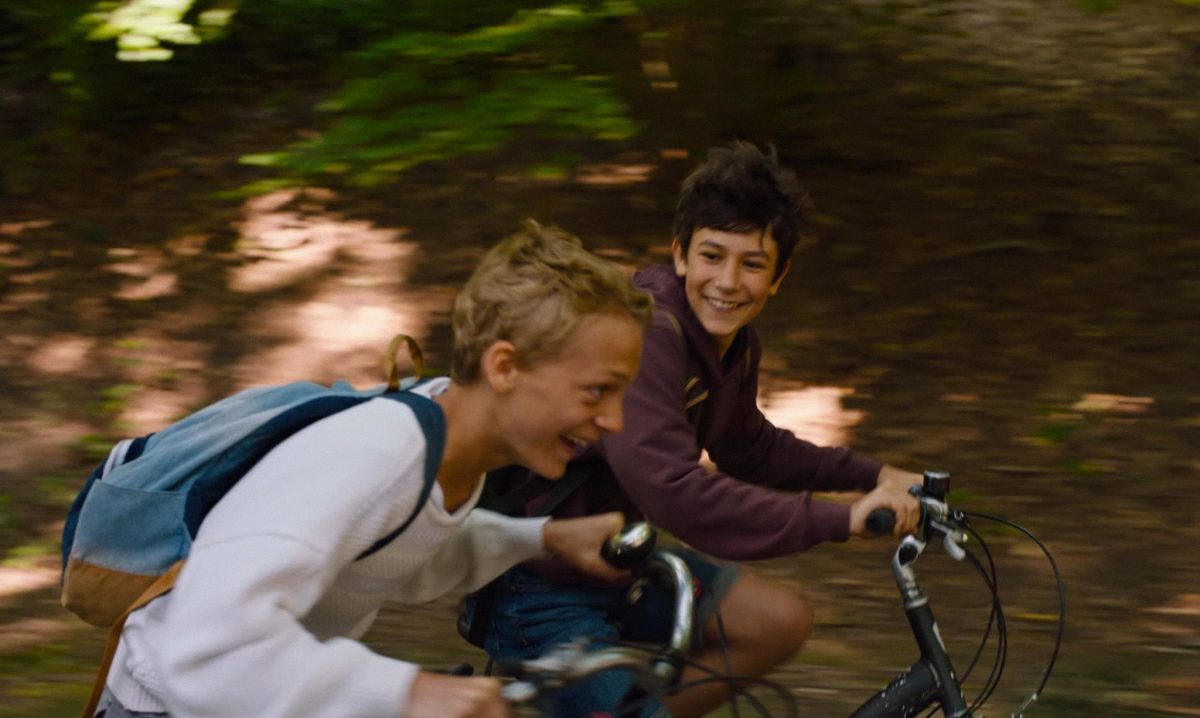
At first, “Close” unfolds gently, almost quietly, inviting us into the everyday world of Léo and Rémi, their laughter, routines, and unspoken understanding. There is nothing extraordinary about their bond, and that is precisely what makes it feel so real. They are seen running around together. Lemi’s parents are very close to Leo, who treats him like their own.
One of the gentlest moments in the film, and one that captures the depth of Léo and Rémi’s closeness while subtly hinting at Rémi’s inner turmoil, occurs during the scene where Rémi struggles to fall asleep. He softly admits, “It’s my brain, it never stops.” The line is simple, yet deeply revealing. It gestures toward an early, quiet form of emotional distress, one that is easy to overlook, especially in someone so young. Is it relatable? Undeniably so. Rémi becomes a mirror for many of us, because do we ever truly stop thinking? We replay moments, dwell on feelings, and return to the same thoughts until they weigh heavily on us. The film captures this restlessness, of mine and of every single one!
In this moment of vulnerability, Léo responds not with solutions but with presence. He tells Rémi a story, offering comfort in the simplest way he knows. Rémi eventually falls asleep, soothed by the reassurance of being heard and not left alone. The scene quietly reinforces how their bond functions as a refuge, one built on care, attentiveness, and unspoken understanding.
However, this simplicity is gradually unsettled. The film shifts from warmth to discomfort, not through dramatic events, but through subtle changes in behaviour and silence. This silence was unbearable for Remi, the change of behaviour from his ‘person that felt like home’ made him kill himself.
What follows is Léo’s gradual confrontation with guilt, through a series of heartbreaking moments. It was rather shocking to know that it was Eden Dambrine’s (Leo) debut performance. His performance was restrained, deeply affecting, and marked by a maturity far beyond his years. By grounding its tragedy in the mundanity of friendship, “Close” makes its impact far more devastating, leaving a deep ache within our hearts.
There are many details left unwritten by me in this summary, as “Close” is a film that demands to be watched and felt rather than reduced to a mere recounting of its plot. Beyond its emotional impact, another significant aspect of the film is its use of colour. Visual composition plays a central role in how I engage with cinema, particularly in films where colour operates as a structural element rather than mere decoration.
Directors such as Wong Kar-wai and Wes Anderson exemplify this approach, using carefully controlled palettes to shape mood and interiority. Close achieves a comparable effect through its rich yet restrained tones, allowing colour to function as an integral component of its emotional and narrative architecture.
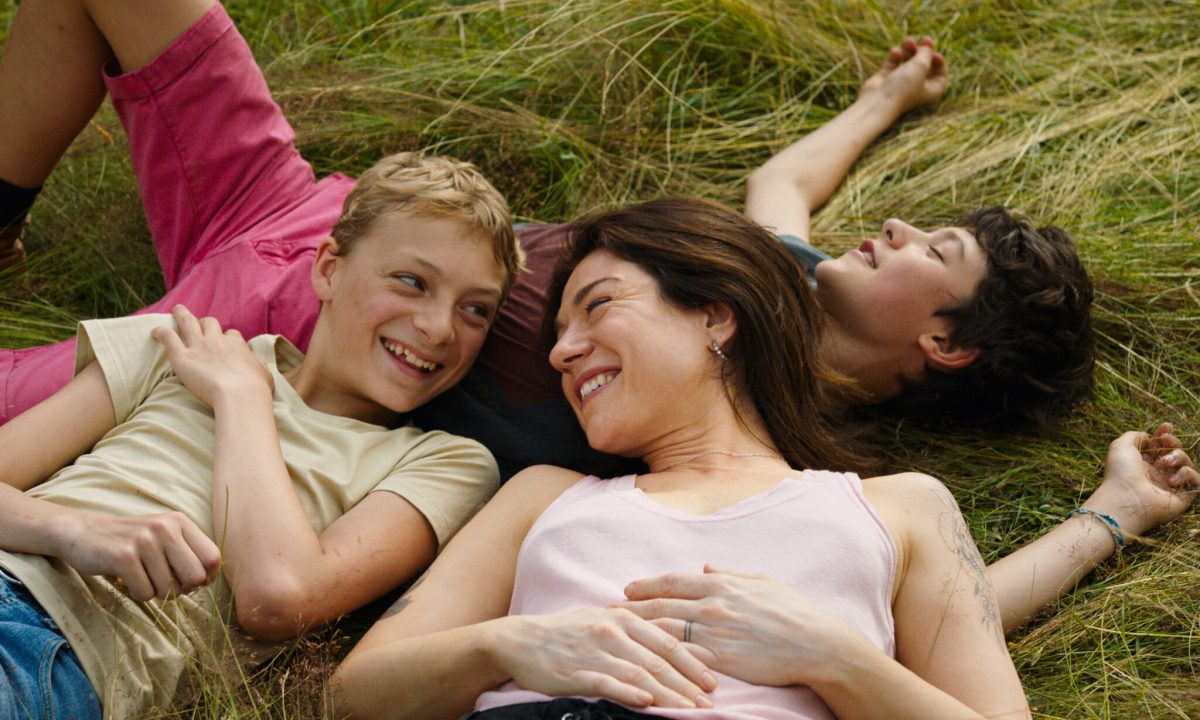
The movie is fully set in the picturesque rural Belgium. Léo’s family helps run agricultural work at a flower farm, a space where both Léo and Rémi often play together. The cinematography of the countryside that is marked by open fields, natural light, and the vivid colours of blooming flowers, establishes a slower rhythm and a wider emotional context. The vibrancy of the setting evokes warmth, freedom, and innocence, standing in stark contrast to the quiet agonies that begin to surface within the narrative.
This visual tenderness is further intensified through the use of close-ups, particularly of Léo and Rémi’s faces. The camera lingers on their expressions, allowing moments of silence to carry emotional weight. Subtle shifts like the averted eyes, tightened lips, unshed and shed tears, all become central to the storytelling.
No wonder the movie grabbed awards in plenty, like the Grand Prix (and a 10-minute standing ovation there!). More than its awards and critical recognition, the film’s nuanced portrayal of adolescence and emerging sexuality stands out as its most compelling achievement. Dhont approaches these themes with restraint and sensitivity, allowing emotional honesty to emerge without exaggeration or sentimentality.
Also Related: 10 Unconventional Coming-of-Age Movies Worth Exploring
Leo and Rémi were never presented as conventionally masculine, nor did they attempt to perform masculinity as it is socially expected. We see them play together, rest their heads on each other’s shoulders, comfort one another, and, most importantly, exist in a state of constant closeness. Their bond is tender, expressive, and emotionally open, qualities that society often mislabels as “feminine.” When boys display softness or vulnerability, they are quickly categorized as weak, feminine, or queer, as an assumption that is not only reductive but deeply harmful.
In “Close,” Léo does not pull away from Rémi because he stops loving him. He pulls away because their intimacy becomes visible. In one scene, a group of girls asks Leo whether he and Remi are a couple. Remi remains silent, while Leo reacts with visible discomfort and offense. The moment their closeness is noticed, questioned, and labelled by their peers, it is transformed from something natural into something suspicious. The classroom, once a neutral space, turns into a site of surveillance where affection is policed and masculinity is enforced.
This is where hegemonic masculinity comes into play, not through direct violence, but through observation and judgment. A certain way ‘men’ should be! The societal gaze reshapes Léo’s behavior, forcing him to distance himself in order to conform. Masculinity becomes a cage: boys are permitted companionship, but denied intimacy. Emotional closeness is allowed only until it threatens the rigid boundaries of what masculinity is supposed to look like.
I often wonder why certain men do not cry. Why do they not show affection or be ‘soft’, as we call it? Why are they often scared of conforming to a certain type, that is, often being masculine and devoid of affection? But this questioning leads the film into a devastating turn, where the pressure to conform goes too far. We begin to notice repeated moments in which Léo deliberately avoids Rémi, which are the small acts at first, but painfully visible.
He no longer waits for him, no longer seeks him out. Rémi is alone in figuring out how to deal with this distance without Léo. Throughout the story, we witness several scenes of Rémi crying quietly, locking himself behind a door after a fight with Léo, and a number of other examples that show how hard this withdrawal has affected Rémi.
The breaking point arrives when Léo fails to wait for Rémi at school, something he had always done before. What might appear insignificant to an outsider becomes monumental for Rémi. The resulting confrontation marks the final rupture in their relationship, after which they stop speaking altogether. The silence that follows is heavy, filled with everything that remains unspoken, unresolved, and unrepaired.
Rémi is consistently portrayed as soft-spoken, sensitive, and emotionally expressive. He cries openly, feels deeply, and struggles to contain the pain of being pushed away. In a world shaped by hegemonic masculinity, such vulnerability is not accommodated, but it is isolated. Unable to reconcile the loss of Léo’s closeness or find language for his grief, Rémi’s pain becomes internalized. The film does not frame his death as a single moment of despair, but as the culmination of sustained emotional abandonment and unspoken suffering.
What follows is not merely a tragedy. It unfolds as a quiet indictment. “Close” forces us to confront how dangerous rigid ideas of masculinity can be, not only for those who are pushed to conform, like Léo, but for those who are left behind, like Rémi. This is the kind of weight I find myself carrying long after a film is over.
I have always been drawn to films that move us internally, films that linger long after they end, making it impossible not to think about them. I am biased toward stories that make us feel deeply, that sit with us in silence and refuse to be easily shaken off. “Close” is one such film. It is the kind of film that made me want to write. The kind that stirs something familiar and unspoken. It made me return to a thought I tell myself time and again: maybe we all need someone who can quiet the noise inside our minds.
Isn’t that what we are all searching for, in one way or another?