
Jorge Thielen Armand’s third feature, “Death Has No Master,” is charged with poison. It has the energy of a viper waiting to strike. It catches this tense state with a sharp eye. We are meant to be rattled a bit, pushed to the edge of our discomfort. The opening sequence fuses horror and death in a dreamy, disturbing fugue. Whether it’s a real memory or an imaginary shard is a question left suspended. It can be a historical projection as well, given how Venezuela’s blood-drenched colonial history smears the film. Premiering in the Directors’ Fortnight strand at the Cannes Film Festival, “Death Has No Master” is shot through with a heart of darkness.
Asia Argento essays Caro, whose return home to Venezuela underpins the narrative tension. Grim undercurrents can be spotted from the very beginning. Caro’s car is halted by the authorities. A search is conducted. She’s let off, but the seeds of fear are sown in the tone. The ominous score by Vittorio Giampietro sustains a nerve-jangling disquiet throughout. Caro had moved to Italy with her mother in her childhood. Her father, whose death sparks her return to sort out her inheritance, drank himself to ruin. This picture emerges in due time. “This country brings back bad memories,” she quietly tells her driver, warily scanning the surroundings.
Jorge Thielen Armand is formidable at cranking up high atmospherics. Violence seeps through every pore of his vision, leaking into the way the past and present are entangled. Nothing is exempt from a brutal history of colonialist brute force. The country may be insisting on making progress, but the ghosts still linger. The past is only a dormant, hovering force, biding its time before it can unleash its ugly, entitled vortex.
In fact, the heroine reflects those impulses that are said to have no longer any place in this newfangled land. Measures are being taken as a course correction. Caro is told again and again that the ways of the country have shifted. Her expectations will be met with brutal rejection. Caro weathers these warnings without batting an eye. She has built an inflexible front that won’t just collapse because this is a country with different systems. She’s determined to wrest what she believes is rightfully hers. Caro is prepared to go all out, unflinchingly and daringly. Her father’s cacao plantation promises a fortune. But it’s pressed on Caro early on that she’d be lucky if she could even extract half of its value.
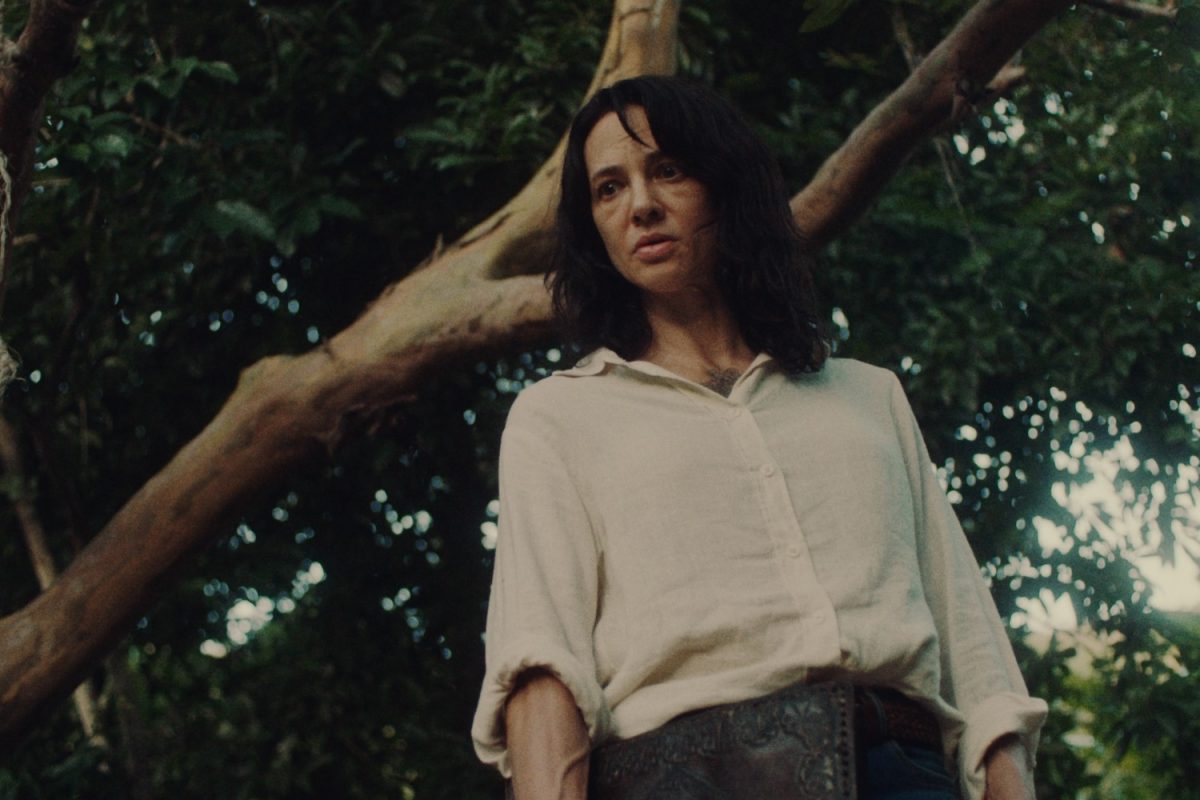
Quickly, her self-assurance reveals itself as no less than old-school arrogance bred in the mould of the elite. She belonged to the oppressor class, accustomed to throwing their weight around. Now, the indication is she cannot really carry on such behaviour, inflict that violence. The power has been snatched. Even when she walks into her father’s mansion, she lands immediately on unsteady ground. The right to the terrain is no longer in her hands. It has been taken over by the caretaker, Sonia (Dogreika Tovar), the brood of squatters she is enabling. Sonia is a familiar face. She looked after Caro’s father. She’s a remnant of the old times.
But Sonia also has a young son now, Maiko (Yermain Sequera). There’s another man who hangs around. Sonia denies him being Maiko’s father. Caro initially indulges the arrangement even as she spares no time to make her grievances heard. But swiftly, her frustration with having to part with some of her inherited land for strangers’ lodges viscerally, unshakably.
Soon, she will have none of this, lashing at Sonia, ordering her to leave the premises. But Sonia isn’t one to budge from her place. She demands her foothold over the house. Instead, she questions Caro’s claim. She underlines that it was she who looked after the father, ensuring the house remained functional. Where was Caro? She can’t just spring after all these years and threaten to seize it all. In a particularly cutting line, Sonia sneers at Caro that all she lacks is a whip. Caro has popped up with all the bearings of a despot.
Sonia is a single mother who has no other shelter. She has also amassed local goodwill. The cops put things in perspective for Caro, reminding her that Sonia is loved and will be protected if Caro tries to attack and usurp. The law will favour Sonia. It’s emphasised to Caro that her abandoning the property effectively diminishes her right to it. The cops basically tell her off.
Argento fumes, summoning a ferocity that portends to tear down everything. Armand intersperses and fractures the narrative that otherwise stays fixated on her perspective with grisly visions. The film is shrouded in menace, dark and disturbing visions. There are no cues as to their interpellations. They judder in and go away, unbeckoned.
We are dropped in this cesspool where there’s an emotional denudation. Things are stripped to their barest, most vicious. Vulnerability is shredded, replaced by an attitude of hostility and confrontation. Finally, “Death Has No Master” trades its simmering noxiousness for a full-scale skirmish. As the bloodbath erupts, the film becomes a bit blunted, but it doesn’t rob it of its nasty personality.




![Shazam! [2019] Review: Say The Word This Weekend!](https://www.highonfilms.com/wp-content/uploads/2019/04/Shazam_HOF-768x384.jpg)

![The Two Popes [2019] Netflix Review: A Beautiful Character Study](https://www.highonfilms.com/wp-content/uploads/2019/06/The-Two-Popes-768x433.jpg)