
“Don’t Interrupt While We Dance” (2025) is a film that at first seems to move with an almost unassuming lightness, as though it is merely observing fragments of everyday life without insisting on their meaning. Yet this apparent simplicity gradually unfolds into a far more complex engagement with the politics of attention, intimacy, and presence. What initially appears casual begins to reveal itself as deeply deliberate, especially in the way the film privileges silence over speech and hesitation over resolution. The most significant human experiences often take place in spaces that remain unarticulated or even unnoticed within dominant narrative forms.
In this sense, the film can be understood as quietly resisting the demand for immediacy that structures much of contemporary storytelling, where emotions are expected to be declared, and conflicts to be resolved. This refusal is aesthetico-political, because it challenges the very frameworks through which value is assigned to experience, asking what it means to take seriously those interactions that do not culminate in spectacle or definitive transformation.
“Don’t Interrupt While We Dance” opens itself into something far more expansive. What initially feels like a film about a group of friends sharing time gradually begins to hold within it the weight of how that time is permitted, interrupted, and policed. This shift arrives as a continuation of the same world, only now seen under a different light.
The film situates its characters, six queer and trans friends, within an evening that is almost deliberately ordinary. It was a birthday gathering filled with movement between rooms, fragments of conversation, bodies resting, flirting, cooking, and existing without explanation. It is important how the film lets this stretch, because it insists that this mundanity is essential, that joy does not always need to justify itself through struggle. The idea of being together can exist without immediately being framed as resistance.
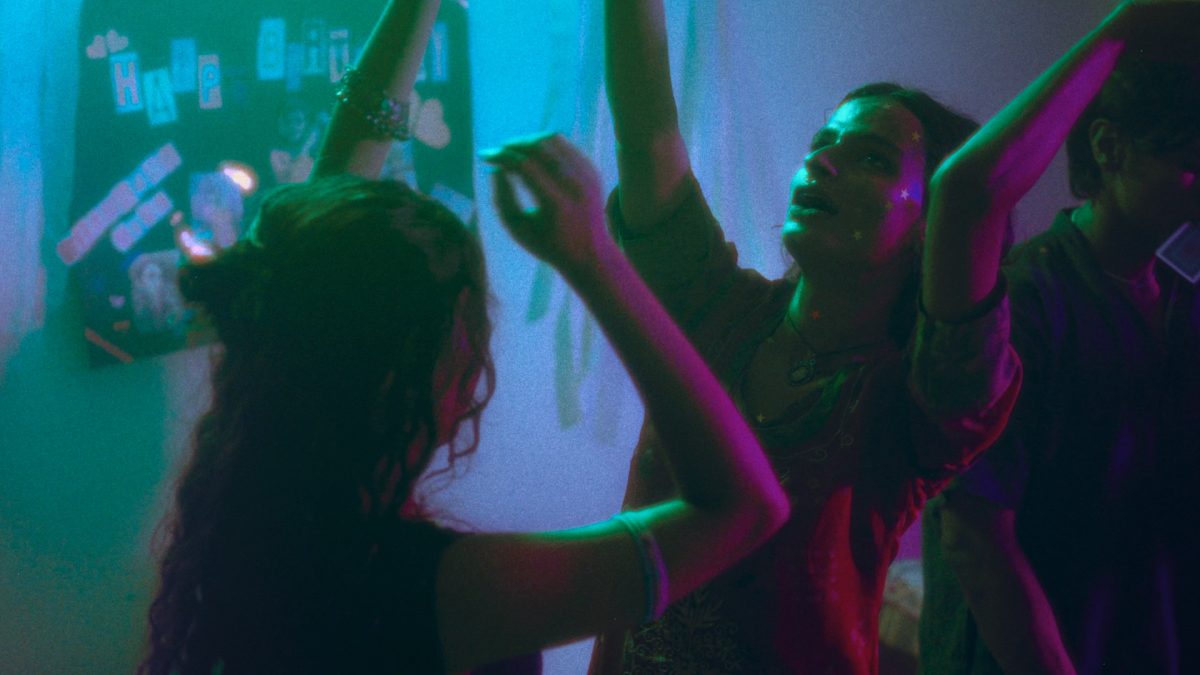
Yet, precisely within this space of ease, the film begins to reveal the structures that surround it, as presences that can enter at any moment. When the police arrive, the interruption feels like an extension of a reality that was always already there, waiting just outside the frame. The violence that follows is staged as procedure, as something carried out through questions, through suspicion, and the firm insistence that these bodies must be accounted for, explained, and returned.
It is here that the film’s attention shifts toward the institutional, as something enacted through people, through officers who speak, who look, who decide, through the language they use to define what is acceptable and what must be corrected. Within this, a character like Safia begins to hold a particular kind of presence, because her responses seem to gather the tension of the situation without needing to overstate it. In the police station sequence, where identities are questioned and relationships are reframed under suspicion, Safia’s stillness and her refusal to collapse into explanation become as significant as any act of speech.
So, we can see how institutions reorganise them through processes of documentation, interrogation, and the assumption that legitimacy must be proven. It places them in continuity, suggesting that the right to dance, to gather, to exist without interruption is never separate from the conditions that allow or disallow it.
The film portrays the fragile balance between presence and permission. The idea of “queer joy” that it gestures toward is treated as something that coexists with it and insists on its own space even within constraint. This becomes evident in the way we see an alternative continuation of what might have unfolded if the interruption had not occurred as a parallel truth, one that exists alongside the lived one, equally real in its possibility.
When Safia points the gun at the police, the director does something very precise. It holds the act in a kind of suspended intensity where power itself feels unstable. What’s striking is how the gesture emerges from everything that has already been built, like the interruption, the scrutiny, the quiet reordering of bodies in the room. When Safia raises the gun, the space shifts again, but this time not through institutional authority alone, rather through a reversal that is momentary, fragile, and deeply aware of its own limits.
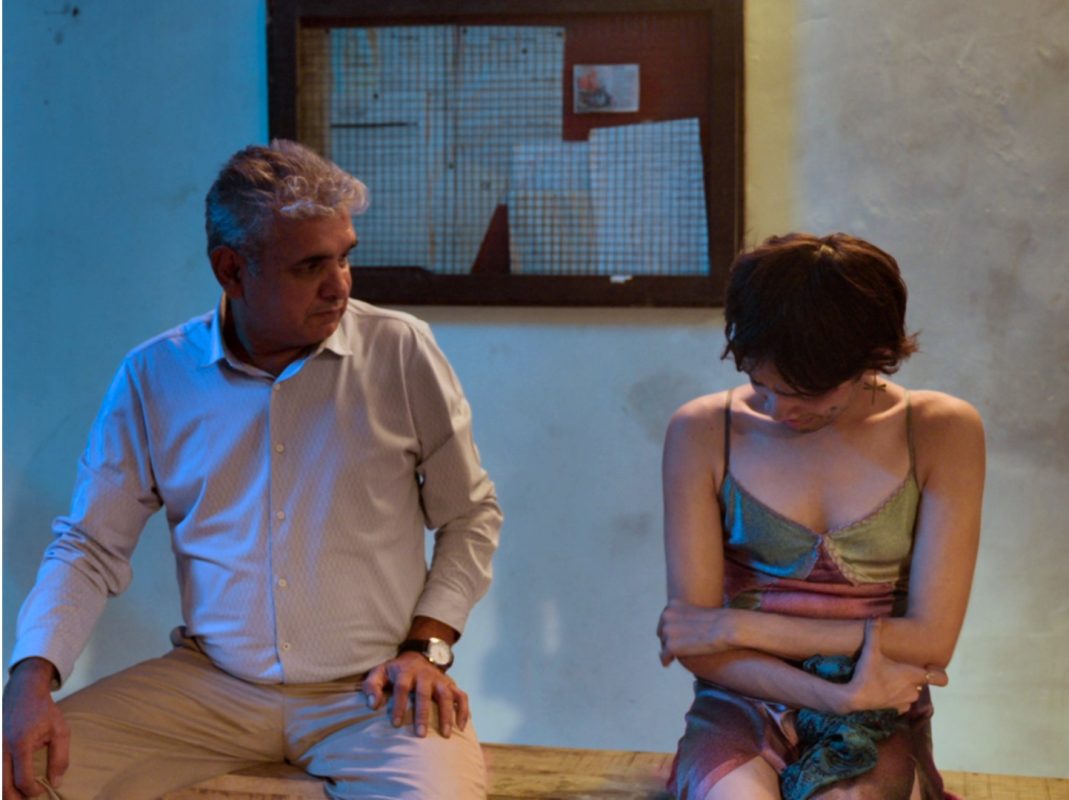
Safia, in that instant, is framed as someone whose stance carries both assertion and vulnerability at once, because the act of pointing the gun does not erase the structures that have already entered the space; it only briefly unsettles them. There is an almost imperceptible flicker, where her control feels real, and the police are made to pause, to recalculate.
It is within that pause that the film locates something crucial: the idea that authority is performed, negotiated, and at times disrupted. Yet the scene never allows this to settle into triumph. Instead, it holds onto the uncertainty of what such a gesture can actually do, how long it can last, and what it risks. The others in the room do not react with dramatic escalation either. Their stillness continues, but it is a different stillness now, one that carries a shared awareness of what is at stake, as if the entire group exists within a thin line between reclaiming space and being forced out of it again.
There is a sense that cinema here is actively rethinking how the marginalised lives are allowed to appear, moving away from the need to centre suffering as the primary narrative and instead redistributing attention toward moments of leisure, desire, and even frivolity. Yet without ever losing sight of the structures that seek to contain them, the institutional moves through the personal, shaping how people gather, how they are seen, and how they are interrupted. The refusal to separate these registers allows it to hold a deeply political charge without becoming declarative.
We move through conversations that feel incomplete, interactions that don’t resolve neatly, and moments that seem to drift rather than build. And, it begins to reflect a reality that is far closer to lived experience than to constructed narrative. There is a recurring sense that people here are not always saying what they mean, because the idea articulation itself feels insufficient.



![The Drop In [2017]: ‘TIFF’ Review](https://www.highonfilms.com/wp-content/uploads/2017/09/HBBKBK-768x512.png)
![Woman at War (Kona fer í stríð) [2019] Review: Intelligent. Funny. Urgent.](https://www.highonfilms.com/wp-content/uploads/2020/01/woman-at-war-768x432.jpg)
![Wind River [2017] – A Simple Mystery Thriller Incorporated with Fine Emotional Terrain](https://www.highonfilms.com/wp-content/uploads/2017/10/wr-cover-768x490.jpg)
![The Batman [2022] Review: A Delightfully Relentless Crime-Noir Saga Like No Other](https://www.highonfilms.com/wp-content/uploads/2022/03/The-Batman-2022-1-768x543.jpg)