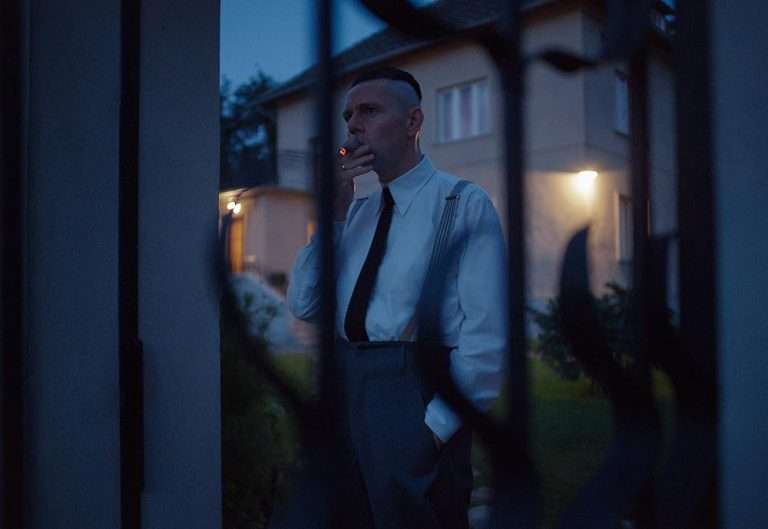
“Don’t Interrupt While We Dance” is a quiet yet striking independent short film directed by Anureet Watta, emerging from contemporary queer artistic practices in India. Centred on the figure of Noori, the film unfolds through movement rather than dialogue, tracing an intimate space where identity is expressed as gesture, rhythm, and embodied presence. Watta’s work resists conventional narrative exposition, instead allowing the body to become a site of continuity and interruption, where moments of stillness and motion carry layered emotional and political weight.
Drawing from performance, poetry, and visual minimalism, the film situates itself within a broader discourse on gender, visibility, and autonomy, particularly in the context of shifting legal and institutional frameworks such as the Transgender Persons (Protection of Rights) Act, 2019, and its subsequent amendments.
The film sustains an atmosphere of fragility and persistence, foregrounding the tensions between lived experience and systems that seek to define and contain it. Circulating primarily within independent and festival circuits, the film has garnered attention for its restrained yet evocative approach, positioning Watta as a distinctive voice in contemporary queer cinema.
Your film seems to treat movement, especially dance, as something that resists interruption, almost as if identity exists in duration rather than in fixed moments. Do you see this continuity as a form of resistance against systems that demand identity to be paused, verified, and categorised?
Anureet – Dancing is one of the most frivolous activities and also the most primal. The geometry of bodies falling in coordination with each other, the hands that overlap, and a tune that is carried – I have been a sucker for these fantastical pleasures. It is rare to see trans bodies that are unrestrained. There have been too many films that revolve around the oppression of trans people, but one must realise this oppression exists because of the world that lies outside. The space of chaos at the police station, frothing with anger and punctuated by rage, exists as a response to the structures of power.
We could be sharing a laugh with our friends, but we are instead caught up battling for our rights on the street. And this mundanity is resistance. It exists in wasted time, in the continuum of not fearing when life would run out, and that’s where dancing lies. If this time is promised, then we may resort to dancing.
Movement has to do much with the body, and in a world trying to erase our beings, to not only take up space, but then use it for joy, for pleasure, for moments that hold only us and not the watcher is important. If we are always moving, from shape to shape, from glee to glee, it becomes tougher to point at where we go wrong – and thus even tougher to categorize, verify, and hold true forever.
Ushh – For as long as I can remember, I have felt watched. Almost like the panopticon. Moving through the world normally is manageable, not because it’s gentle but because it’s mere practice. You repeat and repeat and get proficient in it. But being watched while dancing is something I have always been uncomfortable with. Not because I am bad at it. But because I despise the idea of each inch of movement being registered by the watcher.
When Anureet shared the script, I was uncomfortable with the idea of dancing through the film. I still agreed, because some part of me wants to be seen, not watched. That distinction matters. For me, the resistance in the film is internal before it is anything else. This is what happens when trans bodies are not seen as human. You start carrying the weight of not being seen as you are. You carry it in your spine. I carry it with me always.
Sarthak – The movement and the dance reject rigidity, especially at times when the state demands Trans bodies to be monitored, surveilled, and defined in fixed categories. It is not only the characters that embody this idea of rejecting fixity, but also the camera that moves through the house; flowing from Noori’s newfound haven (her room) to Neil and Estha dancing and falling and dancing again and, finally, to Safia and Rasika making chai in the kitchen.
The camera partakes in the dance and the little rituals that all the characters share, such as the cake scene or the ‘could-be-could-be-not’ ending, where Safia makes chai for everyone- the camera becomes an active participant in this dancing, not as a voyeur, piercing through each character, but as a gentle observer.
If legal and institutional frameworks attempt to “recognise” identity through stable categories, your film seems to operate in a space that is fluid, affective, and unresolved. Do you perceive cinema as a space that can hold what the language of law cannot?
Ushh – Language becomes insufficient at times or gets lost in translation. I think art in general holds the power to convey what language cannot. Cinema and music, particularly when they come out of lived experience. Law asks you to be legible, but also doesn’t hold that space for you when you try. It needs a category and a document where your existence is verified and confirmed. What it cannot hold is everything that exists between those moments.
The fluidity of living, of being a human. Cinema can sit inside that without needing a conclusion. This film is about resistance, but it is also about dancing with your friends to music that makes you dance. It holds people like me and me in a frame together without asking for permission to exist. A legal document about my identity or a state that refuses to see not just queer and trans people but all minorities could never do that. It would ask us to prove it, as if living it is not sufficient.
Sarthak – Queer-Trans identities, currently, are either homogenised under Western constructs of being or are forcefully assimilated into majoritarian Hindutva ideologies through homonationalist agendas. To avoid this slippery slope, especially in the context of the barbaric Trans Bill, these identities must exist outside these paradigms- a third space perhaps, which adheres to the fluidity and ‘non-determinateness’ of queerness. Cinema, or any kind of artistic practice, becomes a mode of resistance where identities emerge not through dogmatic ideologies or neocolonial constructs, but from lived experiences, shared narratives, and community.
Anureet – Safia (the oldest) and Noori (the youngest) formed mirror characters for me. Of course, luckily, the casting was such that the two also resemble each other, but more so, I was keen to explore how the years and the lives we lead transform us. They make us more unresolved the more we know. And that is perhaps the truth of queerness, it only exists outside definition, the moment we get closer to boxing it, it shows us its tricks.
On one hand, Noori relishes the small pleasures; on the other, Safia is all too familiar with the deceptions of safety. Noori dreams of things outside the door, and Safia protects the things that brew in their house. Even in the police station, while Noori is aghast, confused, and scared, Safia has done this before. For Safia to pick up the gun is the last straw – various characters within the film bargain with the law and institutions through calling for empathy, through legal language, through politeness, and through frankness, but clearly these things did not work out so well – not in the film or in the country.
The first shot in the police station is the friends in a line-up, almost like a specimen, because the state views us as all the same – to be compared, contrasted, and categorized. But we see this film through the eyes of our friends, and they could not be more different! At no point in the film do the characters speak out loud about their identities in the medical-statistical terms that the power may demand. They only speak of the ways they transgress. I don’t think the job of cinema as a medium is to settle, that may be the job of courts and the law. Our job is always to expand the definition of true, to push against the barricades, and for that, we must embrace the fact that there may be no limit at all.
The moment of interruption in the film doesn’t just feel external; it almost feels inevitable, like something built into the structure of the world the character inhabits. Were you thinking of interruption as an event, or as a condition that queer and trans bodies are always already negotiating?
Sarthak – Interruption is almost natural when it comes to being queer and/or trans. However, the interruption has nothing to do with how we view the world, since that agency of defining one’s reality has historically been denied to the queer-trans community. But it has everything to do with how the world views us. It is not how we are and how interruption has to be inevitable for queer and/or trans people, but rather how the world ticks like a time bomb, deciding when to explode and who to eliminate. Alas, our dancing continues to move through time without interruptions, only the changing music.
Anureet – To be always prepared for an interruption is a sad way to be, but it is very true. It makes you always on the lookout; even moments of rest are interrupted by the thought of the many ways this may be snatched from us. The film is structured in a way that nothing is wrong – they kiss, and nothing is wrong, they dance, and nothing goes wrong, they make tea, and nothing goes wrong. This indulgence is not often seen in cinema, after all, it is about ‘the inciting incident’. And while I was advised against it often, to get to the point, I did want to relish the moments, to waste time.
The film is as much a film without the interruption. Queer-trans stories don’t have to be about the many ways the world may betray us. It was important for this film to hold space and time for moments that lie outside of the grasp of the world. And the interruption is then not the centre of the film; it is what derails the film. It is where everything goes wrong. But for that to happen, it meant allocating time to what would happen if everything was right before!
Ushh – It is a permanent state, not an event. It is joyful, hopeless, and full of rage and uncertainty and hope all at once. It holds all the contradictions, and that is the only honest way to describe it. As per what the interruption is actually interrupting, I don’t know. And I think not knowing is the point. When interruption is a condition rather than an event, it doesn’t need a clear target. It just arrives. It always does.
Noori’s dance felt less like a performance and more like a state of being. How did you approach directing the body here? Was it choreographed, or did you allow for improvisation to preserve that sense of lived immediacy?
Sarthak – The visual language of the film was based around fluidity, at least the parts where we see this group of friends in their habitat. Anureet’s approach towards this film emphasised the characters to be free- to perform not necessarily as ‘characters’ but to embody their own lived experiences. Therefore, Noori’s dance, just like the others, was not choreographed but evoked within that moment as an act of rebellion and emancipation.
Anureet – For a film centred around dancing, this was the hardest part for us as a team. We shot the film at my house, where we were also cooped up and living together for a week. Since a lot of the cast and crew were doing this for the first time, I conducted workshops for three days, going from the basics of what acting is to what this film became over that week. As queer trans people, to free our bodies is the hardest thing – we have always been under constant spectatorship and voyeurism, and every evening, we practiced dancing.
We would play all sorts of music and dance as a cast and crew, to relieve tension, to step into the film we were making. And this is also a film where everyone bought themselves in it, they saw themselves, and they also demanded the film to see them – the set design, the costume, the dance, the music, everything is influenced by each member on set. And this would not be the same film had even one person been different. The actors brought their own inhibitions and charisma, and they danced in a way that blurred the lines of the characters they played and the people that they were.
Noori, played by Yani Pratyan, is not a dancer – I’ve spent many drunken nights with her now to know this. But it was important for her to dance, in a way that celebrated the life she had at 18, and she dreams of having ahead. And to make room for this multiplicity, we shot that scene over 3 hours, unchoreographed, taking in and capturing the moments as they come. We shuffled retro Bollywood songs, electro pop, softer melodies, and item numbers, and this dance sequence was made on the editing table.
It was like picking moments for a mosaic, and the jagged edges of each did not fit perfectly, but when you watch it now, it all makes sense. As time progressed, bodies emoted and opened, they became tired, and then they leaned on each other. And new relationships were made between characters as they danced, and new states of being were unearthed.
As an independent film, your work operates within a more intimate circuit of circulation and viewership. Do you see this space as offering greater freedom in representing trans experiences, and how do you imagine expanding its reach without compromising that sensitivity?
Sarthak – The film will remain sensitive irrespective of what viewership it receives because of how much it resembles the current circumstances pertaining to the Trans community. However, the purpose of this film is to emerge beyond echo chambers and initiate broader conversations around gender, sexuality, and identity, especially in regions where such ideas do not break out as easily as they do in queer, urban spaces.
Anureet – This film is owned by the community, and this community is ever-growing. Our first screening at Rainbow Lit Fest was just this – showing it to the very people who supported us along the way. Even now, as we are organizing 98 community screenings across the country, we are excited to show this film outside of the elite closed spaces of film festivals. I am a filmmaker, and the blueprint for the ‘distribution’ is via these routes, which are within the powerful rooms of the film world.
I would like to really see this journey pan out in a communal way of making and showing films; a film cannot lose sensitivity by being seen. The sensitivity comes with making sure everyone gets to see it. It has much greater freedom because there are no rules, but also because there are no structures and support systems for this ambitious journey. We are making spaces as we go, and it’s tiring and rewarding.
View this post on Instagram
And I am still looking for ideas, I am looking for references, of filmmakers who did this. Because ultimately, this film, and like every other, belongs to the people. My people. And now, in light of the law, things seem even more bleak. Personally, as a trans filmmaker, I am unsure. I do hope this is not the last film I get to make.
While many narratives around marginalised identities often move toward a resolved or even hopeful closure, lived realities frequently remain far more precarious and unresolved. Your film, however, resists offering that sense of completion and instead foregrounds solidarity as a moment of strength. In the context of contemporary legal frameworks that seek to organise and stabilise identity, how do you think about this tension between cinematic hope and the more difficult, often unresolved trajectories that structure lived experience?
Anureet – I believe the trend of a large part of mainstream queer film is extractive and derivative, rather than based on any lived experience of authenticity. By calling these films ‘queer films’, the makers often centre it to the ‘limiting condition’ of being queer rather than seeing it instead as a way of seeing the world. In the pursuit of creating and extracting jagged meanings, we lose sight of what is in front of us.
We are on the lookout for metaphors to save us in ways the government won’t. We create mysteries and speculations, and never trust the ordinary. This wonderment complicates what is simple. We are queer and spectacular, otherwise we do not exist. And then we dig up barren lands of our heart, looking for meanings and metaphors that may not have been buried. The overemphasis on an origin story complicates the selfishness of individual lives. It anchors us to the very beginning, so we never stray too far. It holds no place for our greatly flawed personhood, because it has only accounted for us to be ideas.
I think the end of the film is where it steps back into the real world. And a person watching this plethora of queer films – they often ended as soon as the queerness became an acceptable condition. But how was I to follow the script then as an individual? The screenplay had run its course. The film had allocated time – there was the inspirational struggle, the dredging hours in front of a mirror, the tinnitus of standing at various suicide points, and I had watched minute by minute and tear by tear.
We need to imagine – because that is the job of fiction. If the government does not recognize us, we won’t perish. We won’t disappear from the face of this rotten earth. We will continue to exist, yes? And this is where hope steps in. Cinema has been the pandering of dreams, and we mustn’t forget. We can exist and thrive and be glorious, without having to overcome. We can dance even while we fight this battle in the present continuous tense. It is not like people stop living until all of their issues are addressed, yes? And we must allocate time as filmmakers for that, not just the fighting, but also the living that we do.
Ushh – The lived experience of a marginalised person doesn’t have any resolution. You keep living. Sometimes things get better, but that’s all. There are too many institutions monitoring you, and you have to perform well everywhere. You have to be a good child, something your parents can flaunt. An employee who goes above and beyond. A friend who always shows up. A kind, gentle, sophisticated, cultured, well-dressed, eloquent human being, if you want to matter and be seen as an equal.
I don’t have any problem playing all these performances. To be honest, that is what I have done all my life, and I still continue to do even after the film ends, because that is the ask. The performance ends, and living starts when the world changes, but it refuses to change. So you do whatever helps you get through the day and pay your rent and feed yourself. The film doesn’t resolve because there is nothing to resolve. Solidarity is not an ending. It is just one thing that helps you get through.
Sarthak- The tension that the film primarily deals with is the one pertaining to agency that is constantly shifting from the friends in their home, going through their day, to the police, and Noori’s father eventually returned to Safia in the form of the gun. The visual language amplifies this tension by moving from fluid and intimate shots of the characters to more static and rigid camera angles when the friends are taken to the police station.
The final scene of the film seems to exist in an alternative reality where no interruptions have occurred, and the friends dance together in a circle like the women in Henri Matisse’s La Danse. The ending is what all the dancing is for- the possibility that it brings and why it is worth fighting for.
What drew you to make a film like this, especially through independent and crowd-funded means in such a challenging economic climate? I imagine that process comes with its own set of constraints, so what sustained your commitment to telling this story?
Anureet – I wanted to make this film; I was very stubborn about it. Many liberal-queer-progressive producers told me it’s too radical. Too political. Not subtle in its anger. Indulgent in its joy. In the stock market of independent films, radicalness is also contained within boundaries. And thus, after a year and a half of looking for institutional, organizational support, I decided to crowdfund the film.
It was tough; we have still not met the goal, and I am in debt. It was heartwarming to see people donate 50, 100, 200, and 500 rupees. So far, 210 people have contributed to our campaign, and it’s lovely to see and grateful to have this support. When the institutions leave you, you exist ungovernably, and this is what this film and this life may be about.
9. Under the Transgender Persons (Protection of Rights) Amendment Act, 2026, the separation between ‘self-perceived gender identity’ and what is legally recognised creates a tension between lived identity and institutional validation. At the same time, debates around self-identification often get framed through anxieties about legitimacy. Where do you position yourself within this tension? And how does your cinema respond to the idea that identity must be verified to be considered ‘real’?
Ushh – The person I am in the film is not how I am in real life. As a transperson, your exterior, how much you pass as cis, determines whether you’re going to be safe. I do not seek cisness, so I have to be on guard all the time, even if I just want to be. But the nonchalance, the carefreeness of how Neil comes across, is something maybe I aspire to be. It came out naturally in the film because some part of me wants to live like that. Carefree.
The idea that identity must be verified to be considered real doesn’t make any sense to me. When you feel something, and you’re sure of it, that should be enough. It’s almost like when you’re heartbroken, you are heartbroken. How do you prove that to someone? Or when you know that cooking brings you joy, you know it. No one asks you to demonstrate it before they believe you. I just want to live without it becoming a national debate. I don’t think I am asking for a lot.



![Louis Armstrong’s Black & Blues [2022] Documentary Explained](https://www.highonfilms.com/wp-content/uploads/2022/11/Louis_Armstrong_Photo_0105-768x432.jpg)