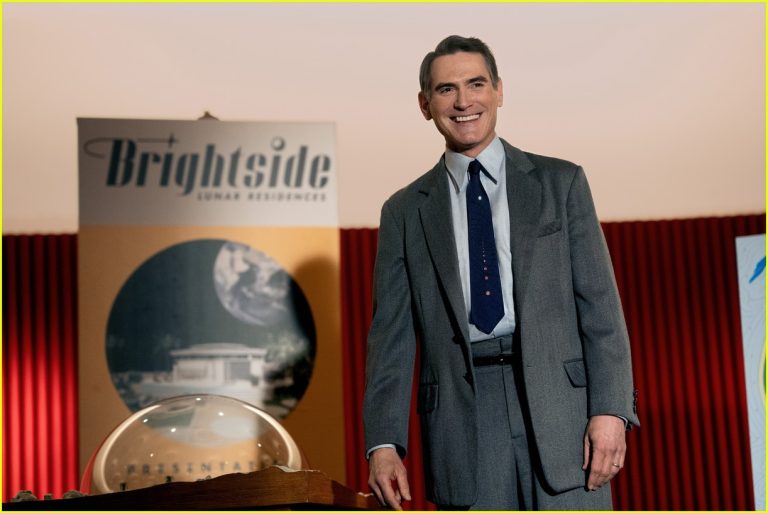
There’s an unnerving detachment in the style of storytelling adopted in “Lord of War.” The film does not beat you over the head emotionally, even if the events portrayed on screen are horrific. Instead, everything happens in an almost dispassionate fashion as if what occurs in the film is the reality of our world and what Orlov has simply learned to adapt himself to. The unnerving part about this is just how easily it is possible to see the reasoning behind what he does. Not necessarily to be convinced by it, but to comprehend it well enough that it is no longer foreign.
Spoilers Ahead
Lord of War (2005) Plot Summary & Movie Synopsis:
What Changes in Yuri After the Brighton Beach Shootout?
The beginning of Yuri’s existence takes place in a rather mundane world. He works in the family restaurant at Brighton Beach. However, despite the feeling of familiarity, this does not feel like his world at all. The shootings involving Russian gangsters are shocking to watch, but they are not the most memorable part of the experience. What lingers is the realization behind it. Guns are not just instruments of chaos. They are part of a system where demand never fades. That idea settles into him in a quiet way, almost like a question he cannot ignore.
Instead of reacting with fear, Yuri starts thinking about how those weapons reached the people using them. Someone had to supply them and make that exchange possible. The more he thinks about it, the more it begins to feel like an opportunity rather than a warning. His first deal, involving a Uzi acquired through a contact, is not smooth or confident. There is hesitation in him, and a sense that he is stepping into something he does not fully understand yet. Still, when it works, it gives him proof that this path is real.
Vitaly, his younger brother, reacts differently. He does not see the same clarity in the situation. There is discomfort in him, something instinctive that resists the direction Yuri is moving toward. Even so, Yuri convinces him to join, not through pressure but through a kind of reasoning that sounds convincing if you focus only on the surface. That is how Yuri’s journey begins, not with a dramatic decision, but with a thought that slowly turns into action.
How Do Yuri and Vitaly Expand Their Business During the War?
This marks his entrance into something greater than what he could have ever expected. The setting might be chaotic, but in the eyes of Yuri, there exists some sort of order amidst this chaos. There is an absence of something, which he fills up himself by stepping right into it. Yuri begins to understand how to survive in this world without making much noise. He learns how to communicate with buyers, how to deal with risks, and, most importantly, learn to keep his distance from everything else after getting the job done. It is very important for him, and it becomes the key element to move on ahead with no doubts whatsoever.
Vitaly never develops that same distance. He participates in the deals, but there is always something unsettled in him. The consequences of what they are doing do not stay abstract for him. They feel closer, more immediate, and harder to ignore. At the same time, Yuri’s activities begin to attract attention from Interpol.
Jack Valentine steps into the story as someone who refuses to treat this like just another case. There is a directness to him that makes him different from the others Yuri has encountered. He cannot be persuaded, and he does not lose focus. Yuri is aware of this, but he does not slow down. At this stage, the rewards feel too significant to step away from, and the risks, while present, do not seem immediate enough to force a change.
Why Does Vitaly’s Addiction Change the Direction of Their Lives?
This scenario adds yet another element of risk to their activities. Instead of being paid in dollars, they are given cocaine. This new dynamic throws things off-balance in ways that Yuri has not thought about. Gradually, Vitaly becomes addicted. But now, his emotions – which made him so reluctant to engage in their illegal activities – make him easier to seduce by these drugs.
The drugs allow him to escape from the burden of everything that he has been seeing and doing. Yuri handles the issue very pragmatically. He sends Vitaly to a rehabilitation center; he believes this to be a matter to be controlled and managed. The question he does not ask himself – and perhaps even tries to avoid asking himself – is the reason why they got to that point.
At the same time, Yuri’s own life takes a new turn. He meets Ava Fontaine, a girl whom he had secretly lusted after all his life. The relationship advances very fast, fueled in part by his newfound power. They build a life together, one that appears stable and successful from the outside. Their son, Nikolai, becomes part of that image of normalcy. Yet even within that stability, there is a quiet tension, because the foundation of Yuri’s success remains hidden from Ava.
How Does the Fall of the Soviet Union Open New Doors for Yuri?
This event opens up new opportunities that affect the size of Yuri’s enterprise. What was once confined becomes vast within a matter of time. These weapons, which were once regulated by one organization, became widely available and mostly ungoverned. Yuri makes his way to Ukraine, where he meets his uncle, Dmitri. His uncle is instrumental in helping him access these weapons stores.
Through his uncle, Yuri enters a whole new level of supply chain and turns his enterprise into a more efficient one. This period marks a shift in how Yuri operates. The deals are no longer small or uncertain. They are structured, consistent, and far-reaching. He becomes more confident, more assured in his role within this system. At the same time, competition begins to intensify.
Simeon Weisz emerges as a rival, creating tension that eventually leads to Dmitri’s death in a car bombing. The loss of Dmitri is not just personal. It disrupts a key part of Yuri’s network. Instead of pulling back, Yuri pushes forward. He expands into Africa, moving into regions where conflict is ongoing, and demand remains constant.
Why Does Yuri Continue Working With André Baptiste Despite What He Sees?
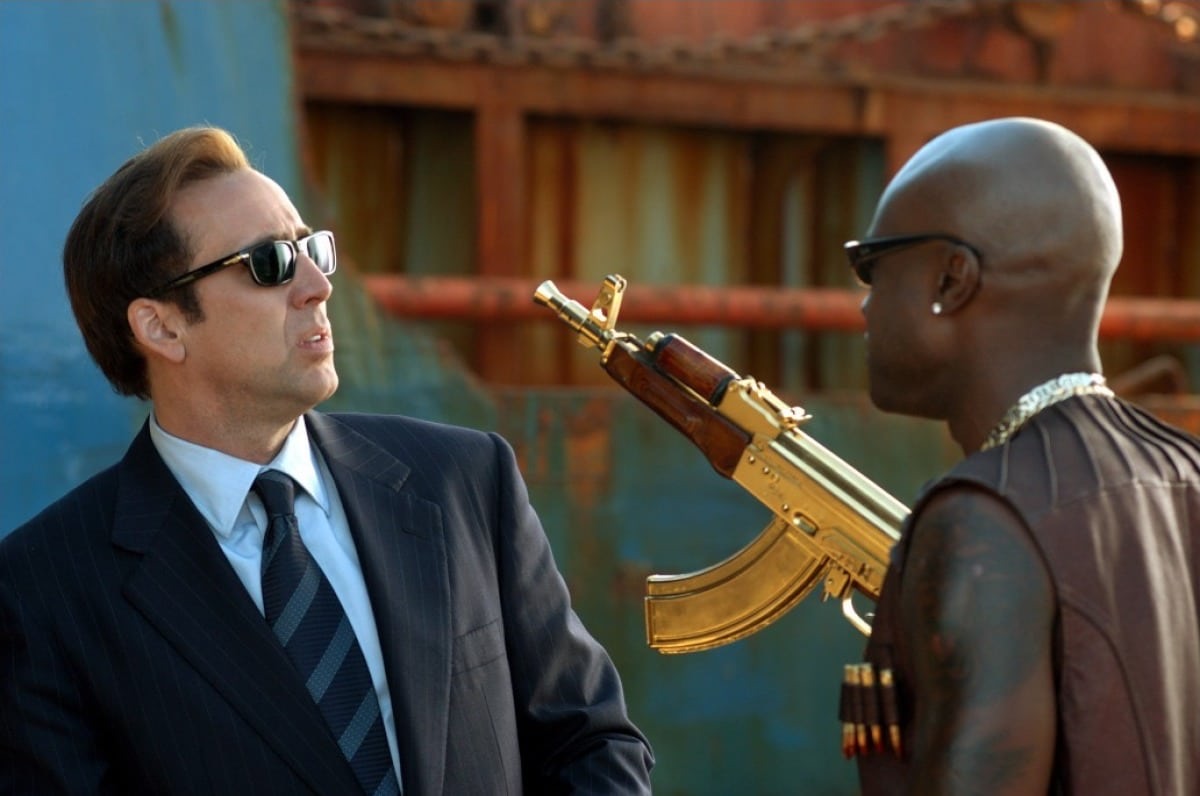
André Baptiste represents a different level of brutality. There is no attempt to hide what he does or to frame it in any acceptable way. His actions are direct, and the consequences are visible in the people around him, especially in the use of child soldiers. When Baptiste offers Yuri the chance to execute Simeon Weisz, the situation becomes more personal than anything Yuri has faced before. For a brief moment, there is hesitation, a pause that suggests he has reached a boundary he did not expect. That pause does not last. Baptiste forces the action, placing the gun in Yuri’s hand and pulling the trigger himself.
In that moment, Yuri is no longer just facilitating violence from a distance. He is part of it directly and undeniably. Even after this, Yuri does not walk away. The reasons he gives himself shift slightly, but they continue to serve the same purpose. He convinces himself that stepping back would not change the larger system, that someone else would take his place, and that survival depends on continuing. It is not that he is unaware of what is happening around him. It is that he chooses to keep moving despite that awareness.
Why Does Ava Start Seeing the Truth About Yuri?
At last, Jack Valentine finds Ava, which makes all the difference for her relationship with Yuri. Until that time, Yuri was able to keep his professional activities separate from personal ones. She thought of him as a man who achieved success in business, but had no idea about his dealings with weapons. In fact, when Yuri met her, he tried to tell her half-truths.
He tried to make it fit their life together, to be compatible with it in some way. For some time, he tries to turn over a new leaf, to operate in the sphere of legitimate business, timber and oil trading. But the desire to change is rather ephemeral, as there always lies restlessness somewhere deep down. Thus, when Baptiste came back with an offer about trading in blood diamonds, Yuri did not resist. Ava’s suspicion leads her to follow him, and what she discovers removes any illusion that might have remained. The reality of his work becomes undeniable, and from that point, the distance between them is no longer something Yuri can control.
Lord of War (2005) Movie Ending Explained:
What Happens During the Final Deal in Africa With Vitaly?
The final deal brings Yuri and Vitaly back together, but the dynamic between them has changed. Vitaly is no longer just hesitant. There is a visible weight in him, something unresolved that continues to surface. When they arrive in Africa, the situation quickly becomes intense. Violence is not hidden or distant. It is immediate, happening in front of them in a way that cannot be ignored or explained away.
Vitaly witnesses the killing of a woman and a child by the militia aligned with Baptiste. That moment breaks through whatever restraint he had been holding onto. He turns to Yuri, asking him to stop the deal, to step away before it becomes something they cannot come back from.
Yuri refuses, and his reasoning reflects how far he has moved from the person he once was. He believes that their actions are part of a larger system that will continue regardless of what they choose to do. From his perspective, stepping back would only put them in danger without changing the outcome. Vitaly cannot accept that.
His response is immediate and emotional, driven by a need to interrupt what is about to happen. He takes grenades and destroys a truck full of weapons, an act that disrupts the deal but also escalates the situation beyond control. In doing so, he kills Baptiste’s son, which leads to a swift and violent retaliation. Vitaly is shot and killed in front of Yuri. Yuri survives, not because he avoids the situation, but because he stays within its logic. He completes the deal, accepting payment even as the consequences of that moment settle around him.
Why is Yuri Arrested and Then Released So Easily?
After returning, Yuri attempts to manage the aftermath in the same way he has handled previous situations. He arranges for the removal of evidence and tries to control the narrative around Vitaly’s death. This time, a small detail disrupts that control. A bullet remains in Vitaly’s body, and it is discovered by U.S. customs officials.
That single oversight leads to Yuri’s arrest. Jack Valentine finally has the opportunity he has been working toward. There is enough evidence to move forward with a case that could end Yuri’s operations permanently. Yuri, however, remains composed. He explains to Valentine that his release is not just possible, but inevitable. His reasoning reveals something larger than his individual actions.
He has operated in ways that align with the interests of powerful governments, supplying weapons where it serves broader strategic goals. When a high-ranking official arrives and orders his release, it confirms what Yuri had already understood. The system he is part of does not function on simple ideas of justice. It allows for exceptions when those exceptions are useful. Valentine recognizes this, even if he does not accept it. His pursuit of Yuri reaches a point where it can no longer continue in the way he intended.
What Does the Ending Say About Yuri and the World He Operates In?
By the end of the film, Yuri returns to the same business he had built, continuing in a way that suggests very little has changed in his approach. What has changed exists more in the personal spaces of his life, where the consequences have settled in ways that cannot be reversed. Vitaly’s absence is not just about loss, but about what he represented.
He was the part of Yuri’s world that still questioned things, that still reacted with discomfort when faced with the reality of their actions. Without him, that tension is gone. Ava’s departure closes off another part of Yuri’s life, one that had been built on a version of himself that was never fully true. Their son grows up away from him, removed from the environment Yuri created, which adds a quiet distance that lingers beyond the events of the story.
What remains is Yuri’s place within a system that continues to function as it always has. The final note about the world’s largest arms suppliers being the same countries that hold power in the United Nations does not feel like a twist. It feels more like a clarification, something that had been present throughout the film but is only stated directly at the end.
Yuri is not an outlier in that system. He fits into it, understands it, and benefits from it in ways that make his individual actions feel smaller than they actually are. That is what makes the ending sit the way it does. It does not offer resolution in the usual sense. It leaves you with the sense that nothing has really stopped, and that the structures allowing Yuri to exist are still firmly in place, continuing in ways that are far larger than any single person involved.



![The Endless Trench [2019] Netflix Review – An Incredible Drama on the Living Ghosts of Francoist Spain](https://www.highonfilms.com/wp-content/uploads/2020/04/The-Endless-Trench-2019-768x433.jpg)