Filmmaking can be considered inherently autobiographical, since it allows artists to present their individual perspective, even when the stories are not based on their lives. This can be traced even in films by great filmmakers like Martin Scorsese, who has explored aspects of faith and redemption throughout his filmography.
In the mid-1970s, he took it a step further with “Italianamerican,” a documentary that delves deeper into his family history. It shows his parents reflecting on their pasts as Italian immigrants in the United States. Scorsese gave them a free rein to speak as passionately and openly as they wanted about their cultural pasts. That’s why the film goes beyond merely being a collection of factual details.
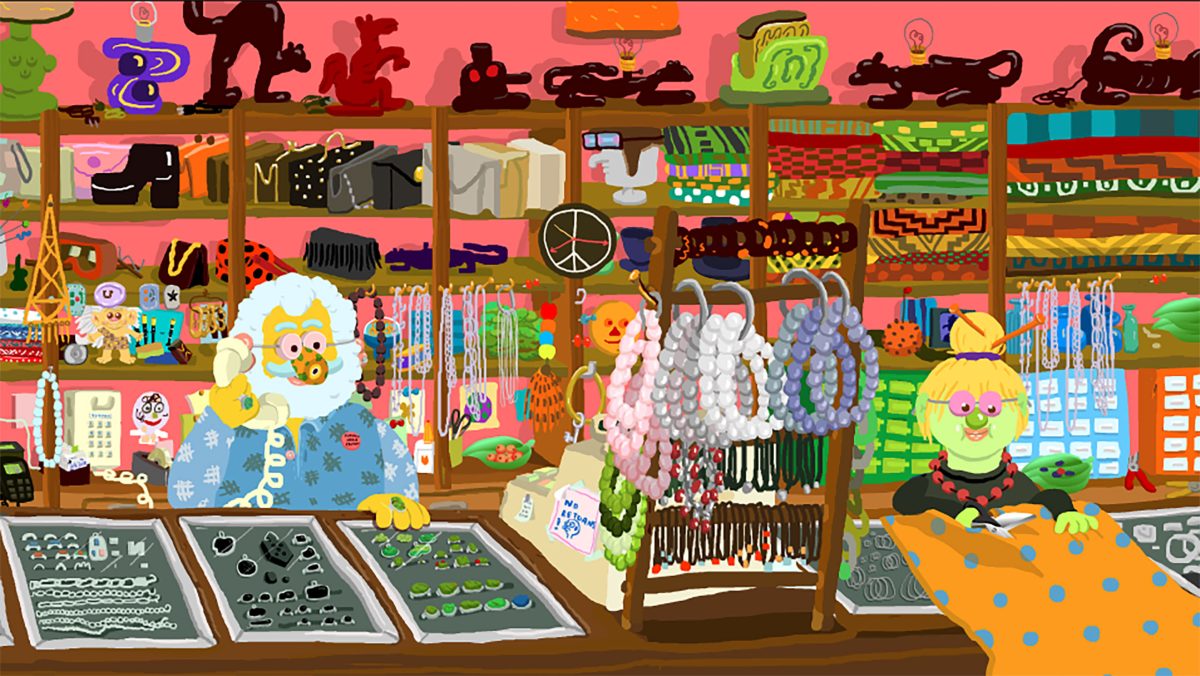
You can almost trace some of Scorsese’s mannerisms and speech patterns in his parents through the way they tell their stories. Something similar is true about “Endless Cookie,” an animated documentary Pete and Seth Scriver made about their own lives. Seth previously co-directed “Asphalt Watches,” an animated film that revealed his gonzo style, faithful to the eccentricity of its characters and his observations. “Endless Cookie” trades in a similar lane in terms of its animation style, where people have bodies shaped like anything from a turnip to a sandwich. In this case, even a nose looks like a balloon, rubbery and inflatable.
These details could have been weird for the sake of absurdity. The Scrivers don’t let that happen. They make these minor details part of their overall narrative, where a cookie is a person as well as a metaphor for their past, and a balloon is not simply a funny thing to replace a nose with but a way to express someone’s emotional state. That way, they keep this distinct animation style closely tied to their story. The reason it reminded me of Scorsese’s film is its storytelling approach, which lets its characters take a free rein over the narration.

Also Check: The 30 Best Films of 2024
It doesn’t matter whether their stories are directly connected to the central narrative. Pete’s family members often interject in Seth’s conversation with Pete, but the film retains those interjections even when they break the flow of the recording. As a result, it becomes a scattershot portrait of the Scriver family with bits about their pasts and the present in Canada.
That’s hardly a flaw in this case, since those interjections reveal their unfiltered personalities and offer an intimate look into their family dynamic. So, despite the audible or visible chaos and a resulting disorientation, “Endless Cookie” is surprisingly warm and cozy. As a viewer, you feel like you’re invited to a family gathering to listen to their musings and occasional bickering.
While charming and bizarre in its own special way, “Endless Cookie” is also political, as it touches on issues related to the step-brothers’ ethnic identities. As they reminisce about their upbringing in Downtown Toronto’s Kensington Market, they explore the different treatment people receive based on their racial differences. The film highlights the damning number of incarcerations that the First Nation community members face, despite making up only a small portion of the Canadian population. While doing so, it uses colorful, imaginative episodes to present a strong bond between the step-brothers and all their charismatic family members.
The discussion between Seth and Pete unfolds in the latter’s present residence in a remote community in Northern Manitoba. Although focused on their shared history, it doesn’t stay confined to its factual details. It offers the same attention to its seemingly trivial information as to its evidently political. We hear a shocking story about one of Pete’s relatives who was taken away by the authorities for several years without notifying his legal guardians. Then, within a few moments, we hear about an everyday situation: their granny asking Pete to buy some groceries and garbage bags on a whim, without worrying whether he is busy or not.
More Recommendations: 10 Great Animated Short Films You Can Watch Right Now
We witness their quirks, quips, and reveries as vividly as their cultural realities. So, even a video game in their life can serve as a form of catharsis against the violence inflicted on the community. Yet, it’s all contained well in this effortlessly and infectiously charming film. By winding and unwinding memories, the film also offers a window into the messiness of a creative process, which can feel like a grueling Sisyphean battle against yourself.
Another thing that really grabs you is the film’s boundless empathy toward its characters. There’s an adorable moment between Seth and one of Pete’s children that captures it perfectly. In that scene, Seth starts taking pictures of something that the kid built, only to be told he shouldn’t do so without permission. Seth respects the kid’s wishes and apologizes even if the kid was joking. The film treats every character, no matter how absurd or silly their story might seem, with equal respect.
Overall, “Endless Cookie” shines because it strikes an intricate balance between the tender, the chaotic, and the political without losing touch with its deeply personal tale about two oddball brothers.




![Léa & I Netflix [2019] Review: Yearning For the Alternatives and a Better Life](https://www.highonfilms.com/wp-content/uploads/2019/08/MV5BMjE4YzY2N2QtYzg0NS00NTZjLTg2ZTQtZDIyZWFhOGI4Yzg5XkEyXkFqcGdeQXVyMjUxMTY3ODM@._V1_QL50_-768x432.jpg)