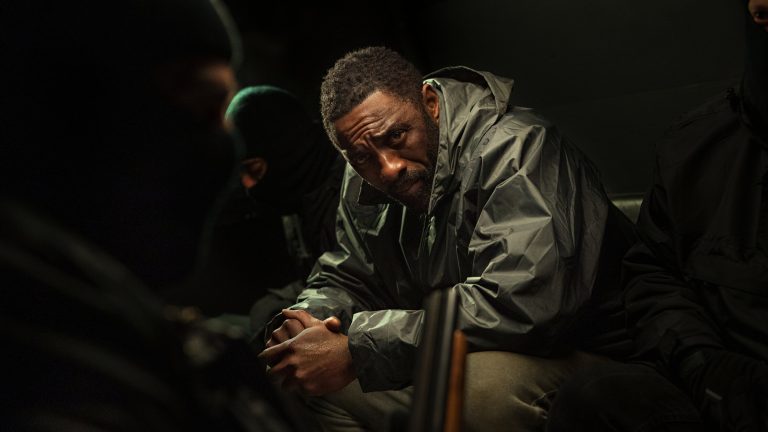
Noah Baumbach’s “Jay Kelly” (2025) ends in a way that feels both cathartic and quietly disorienting. As the long-awaited tribute for the titular movie star (George Clooney) draws near in Tuscany, Italy, the people orbiting Jay seem to unravel. The turbulent train ride, literal and emotional, spirals into a series of confrontations: a fraught exchange with his father, an uneasy call with his daughter, and a heated argument with his manager, Ron Sukenick (Adam Sandler). All of it builds toward an ending that’s striking, strange, and ultimately leaves the audience wrestling with more questions than answers.
SPOILERS AHEAD
Jay Kelly (2025) Plot Summary & Movie Synopsis:
“Jay Kelly” opens on a bustling movie set where the titular character is shooting the final scenes of a movie titled “Eight Men From Now.” Jay is introduced as a bona fide superstar whose career still commands excitement. His team buzzes with energy because he is set to headline a major project by the Louis brothers, a move that could push his fame even further.
Meanwhile, his personal life appears steady. His daughter, Daisy Kelly (Grace Edwards), is preparing to leave for college, and Jay seems to accept this transition with a calm sense of pride. For a brief moment, the film paints the portrait of a man who believes his life is positioned exactly where it should be.
How is Jay’s Real Life?
However, that sense of control quickly dissolves when Jay learns that Peter Schneider (Jim Broadbent), the director who gave him his breakthrough, has died. The news hits him with a sudden emotional force, pushing him into a space of regret and self-reflection. Then, the film moves into a flashback, showing Jay’s last significant conversation with Peter. The director had hoped to collaborate with him one more time, six months before his passing. Jay, overwhelmed by the demands of his own superstardom, turned down the offer. Now, standing in the present, he feels the full weight of the choice he made.
Who is Tim?
At Peter’s memorial, Jay reunites with Timothy Galligan (Billy Crudup), an old friend from acting school. Their initial interaction has the warmth of two people rediscovering a shared past. They revisit old memories and allow themselves a moment of nostalgia. Although the scene begins with this gentleness, the tone slowly shifts.
Tim’s buried frustrations surface, and he confronts Jay with accusations that have clearly festered over the years. The argument escalates until it becomes physical, leaving Jay shaken. The incident becomes a turning point that propels him to leave for France, where Daisy will be attending a jazz festival. He fears that she is slipping out of his everyday life, and he wants to see her before distance settles in for good.
Why does Jay go to Italy?
His team joins him on the trip, even though they are troubled by the news of the fight and want Jay to address it. The tension within the group grows as they board a train to Italy. During the journey, Jay drifts between conversations with fans, awkward exchanges with his team, and fleeting moments of connection with Daisy. Each encounter reminds him of how his life has been shaped by the people around him and how fame has complicated nearly all of those relationships.
Eventually, Jay declares that he wants to attend his tribute in Tuscany, an event he had previously refused to attend. However, Ron has already passed the honor to another actor, Ben Alcock (Patrick Wilson). As they inch closer to the event, relationships begin to strain. The tribute gradually transforms from a celebration into something more fractured, reflecting the instability that has been building throughout the film.
By the time the tribute arrives, the film positions Jay at a crossroads where memory, ego, and identity collide. The sequence that follows becomes the film’s boldest creative decision, culminating in a cathartic yet enigmatic conclusion that heightens the emotional complexity of everything that came before.
Jay Kelly (2025) Movie Ending:
Why does Jay see His Daughters on the Screen?
The final tribute scene in “Jay Kelly” crystallizes the film’s central idea: the distance that Jay’s fame has created between himself and the people he once loved. When the highlight reel plays, the audience in the hall reacts to the glamour and nostalgia of Jay’s long career. Ron is overwhelmed, the crowd is moved, and the montage celebrates everything the world admires about Jay. However, the tribute affects Jay in a very different way. For him, the reel represents the cost of the persona he built. Every image on the screen reminds him of someone he drifted away from while chasing a career.
Earlier in the film, Jay tries to gather everyone close to him for this tribute. He reaches out to Daisy, Jessica, his father, and even the strangers and casual acquaintances he meets on the train. He wants them present as witnesses to the night that summarizes his life. Although he extends invitations, he gradually realizes that he has already lost most of them long before the event.
The film reinforces this through several flashbacks. In one scene, Jessica brings Jay to a therapist and asks the therapist to read a letter she wrote as a child. Jay interrupts before the letter can be finished because he cannot tolerate a conversation that does not revolve around him. The moment reflects a larger pattern in his life. Jessica grew up without him. Daisy barely received his time or attention. His relationships with partners collapsed because he never created room for anything beyond his own momentum.

Also Read: Jay Kelly (2025) ‘NYFF’ Movie Review: The Mirror Cracks in Hollywood’s Face – Noah Baumbach’s Latest is about the Fragility of Fame
The widening gap between Jay and his family becomes undeniable when his father decides not to attend the tribute. Jay immediately calls Jessica and attempts to persuade her, claiming his career was only a temporary detour from their relationship. Jessica responds with finality when she says that she intends to have a good life without him. That statement leaves Jay without the illusion that reconciliation will come easily. And, by the time he arrives at the tribute, he has no one left except the two daughters he spent years ignoring.
When the highlight reel fades and the screen turns to white, Jay sees both Daisy and Jessica standing before him. The vision represents what he wishes his life had held. He imagines his daughters performing a small play for him, something he never attended as a father.
Throughout the film, Jay literally steps into memories, whether it’s taking Timothy’s role or recalling his time on set with Daphne. He explains to Ron that his memories feel like a movie in which he is acting and observing at the same time. The final vision completes that internal film. He places himself beside his daughters as the father he never managed to be, and he smiles at the version of life that slipped away from him.
When he looks directly into the camera and asks, “Can I do it again? I’d like another one,” the line becomes a plea for a life rewritten. In another life, he imagines becoming a better father, a more present partner, a more attentive son, and ultimately a better man who did not sacrifice every meaningful connection in the pursuit of stardom.
Why does Jay’s Family not Attend His Tribute?
The absence of Jay’s family at his tribute forms one of the most painful layers of “Jay Kelly,” and the film builds toward this emotional collapse through a series of events that steadily isolate him. Jay boards the train to Italy with a simple hope that he will have Daisy by his side at the tribute. He imagines that sharing this moment with her will repair their relationship or at least create one memory she will look back on fondly.
However, Daisy chooses to attend a horse race with her boyfriend instead. Her decision reflects years of disappointment, during which Jay’s presence never lived up to his promises. The tribute, from her perspective, is another grand gesture centered around his career rather than their relationship.
The situation with Jay’s father unfolds similarly. Jay invites him, assuming that a tribute honoring his achievements naturally deserves his father’s admiration. His father arrives in Italy, yet his reason for coming has nothing to do with Jay. He wants to meet Daisy and spend time with his granddaughter, and once that does not happen, his desire to stay evaporates. His absence from the tribute reveals a quiet truth that the film emphasizes: Jay’s father longed for a son he could sit with, talk to, and share a beer with. The Hollywood version of Jay never allowed space for that simplicity.
As Jay processes these disappointments, he reaches out to Jessica, hoping she will attend. However, she distances herself immediately. Their conversation shows how deeply neglected she felt growing up. She does not consider the tribute essential, and her only request is for Jay to sign an autograph for her son’s teacher. The request feels transactional because their relationship has become exactly that. Jessica no longer expects an emotional connection from him, and the tribute holds no meaning for her.
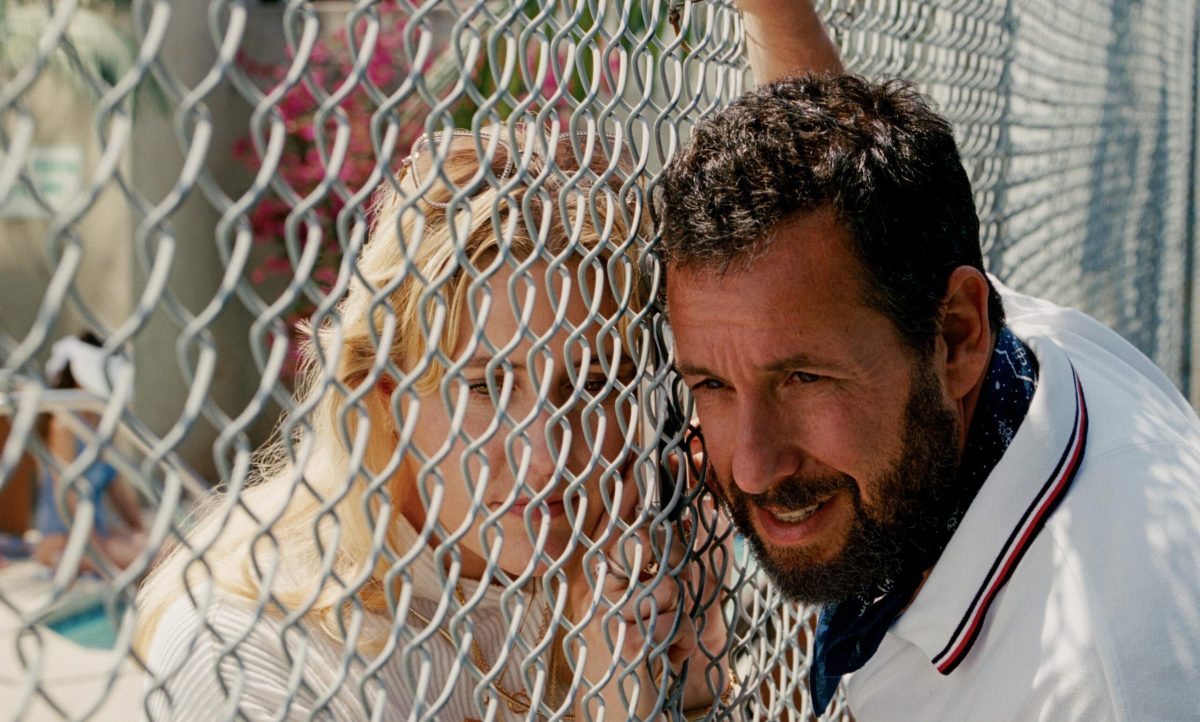
Also Read: The 8 Best Adam Sandler Movies
Jay even comes close to losing Ron, his manager and closest companion, after a heated argument in which Jay reduces him to someone who takes fifteen percent of his income. Ron responds with a harsh but honest truth. He explains that Jay is trying to convince him to attend because he is the only person remaining. Ron’s frustration comes from years of witnessing Jay repeat the same cycles of self-centeredness, yet he has stayed because he sees the fractured, vulnerable man behind the celebrity.
Throughout his thirty-five-year career, Jay believed his stardom mattered just as much to the people who loved him as it did to the rest of the world. The film reveals how misguided that assumption is. His family never wanted the superstar Jay. They wanted Jay the father, Jay the son, and Jay the man who made time for them. The tribute becomes a symbol of everything that took him away from them. It celebrates the persona that replaced the person. In the end, Jay is surrounded only by Ron, who loves him despite his flaws, and by the audience, who still adores the version of Jay on screen. Everyone else has already mourned the version of him they lost long ago.
Will Jay do the Louis Brothers Movie?
The question of whether Jay will go ahead with the Louis Brothers movie lingers after the final act of “Jay Kelly,” and the film deliberately leaves this moment in a state of uncertainty. Early on, the project represents another monumental opportunity for Jay. The Louis Brothers are introduced as an iconic directing duo, and joining their next film would cement Jay’s status for another generation. His team treats the offer like a major victory, and Jay initially accepts it as the natural progression of his career.
Everything shifts when the fight with Timothy Galligan erupts. The altercation is sudden and chaotic, and Jay breaks Tim’s nose during the argument. This event threatens to tarnish his public image. Alan, a key figure in Jay’s team, works anxiously behind the scenes to contain the fallout. Only near the end of the film does Alan call Ron with an update.
He explains that they have uncovered an old drug-peddling case from the nineties involving Tim. This scandal is substantial enough to overshadow the fight, and Jay is effectively cleared of the controversy. Ron reassures him that he can begin shooting the Louis Brothers film on Monday without any consequences.
However, by the time Jay receives this news, he is no longer the man who boarded the train with professional commitments on his mind. The journey has shifted him emotionally. He spends time with strangers who make him feel loved, and he finds unexpected fulfillment when he stops a thief on the train, briefly becoming a “hero” in real life. These moments reveal how distant he has become from the simple, human experiences outside his industry. They also highlight how much he has missed while maintaining the machine of his career.
As the trip progresses, Jay grows increasingly detached from the expectations placed upon him. He also behaves impulsively, especially toward Ron. In one moment, he lashes out, treating Ron cruelly, dismissing his significance, and pushing him away. Ron is one of the few people who has remained loyal to Jay despite his self-absorption, and losing him serves as another reminder of how fractured Jay’s relationships have become. By the time the tribute begins, Jay has already alienated almost everyone he assumed would be there for him.

Must Check Out: 10 Best Films of George Clooney According to Rotten Tomatoes
Given everything he has experienced, it becomes difficult to imagine Jay willingly returning to the rigid demands of the Louis Brothers project. The film suggests that he reaches a point where the career he once valued so fiercely no longer feels like his priority. His introspection deepens, especially as he confronts how much he has lost over the last thirty-five years.
The path ahead appears less focused on professional resurgence and more connected to emotional repair. The final moments imply that Jay is ready to reconsider his place in the world. Instead of diving back into another blockbuster, he may attempt to rebuild relationships with Daisy, reconnect with Jessica, and mend his bond with Ron. The Louis Brothers movie stands waiting, yet Jay finally seems more interested in reclaiming the life he abandoned long before the spotlight ever dimmed.
Will Ron Leave Jay?
Whether Ron will ultimately leave Jay is one of the most emotionally complex threads in “Jay Kelly,” and the film handles their relationship with a mix of affection, frustration, and unresolved tension. Ron sees Jay almost as family, and his loyalty stretches far beyond professional duty. Throughout the film, Ron repeatedly sacrifices his own personal life to support Jay. His family is dealing with serious challenges. His son is struggling with anxiety and physical injuries, and his wife is left to handle everything alone while Ron travels with Jay. Despite this, Jay never pauses to acknowledge the weight Ron is carrying.
The breaking point arrives during their heated confrontation before the tribute. Ron expects Jay to consider him a friend or at least someone who genuinely cares for him. Instead, Jay dismisses him harshly, labeling him as someone who is only there for the money. The comment cuts deeply because it contradicts everything Ron has poured into their relationship. He has stood by Jay for decades, cleaned up countless messes, and held the emotional burden of keeping Jay grounded. Hearing Jay reduce him to a percentage on a paycheck shakes Ron in a way nothing else has.
This moment becomes even more painful in light of another scene involving Ben Alcock. Ron manages Ben alongside Jay, yet Ben leaves Ron because he senses that Ron prioritizes Jay. Ron loses one client for being too devoted to another. When Jay finally pushes him away, it feels like the ground beneath Ron shifts completely. He has no professional reward and no emotional validation, yet he continues carrying Jay’s baggage.
As the tribute approaches, Jay tries to mend their dynamic by asking Ron to join him. Ron responds with a calm but clear refusal. He explains that he has reassessed their relationship and can no longer work with him. His tone reflects exhaustion rather than anger. He has given too much and received too little for too long. However, his affection for Jay remains. The only reason he attends the tribute is that his love for Jay has always been genuine. He has watched Jay rise, stumble, and unravel over the years, and he believes he should be present for such a defining moment in Jay’s life.
When the highlight reel plays, Ron breaks down completely. His sobbing reveals how much he still cares, yet his heartbreak is undeniable. Jay’s lack of awareness, the emotional labor of years, and the sacrifices Ron made for their partnership weigh heavily on him. The film leaves their relationship unresolved, which mirrors the complexity of real connections strained by imbalance.
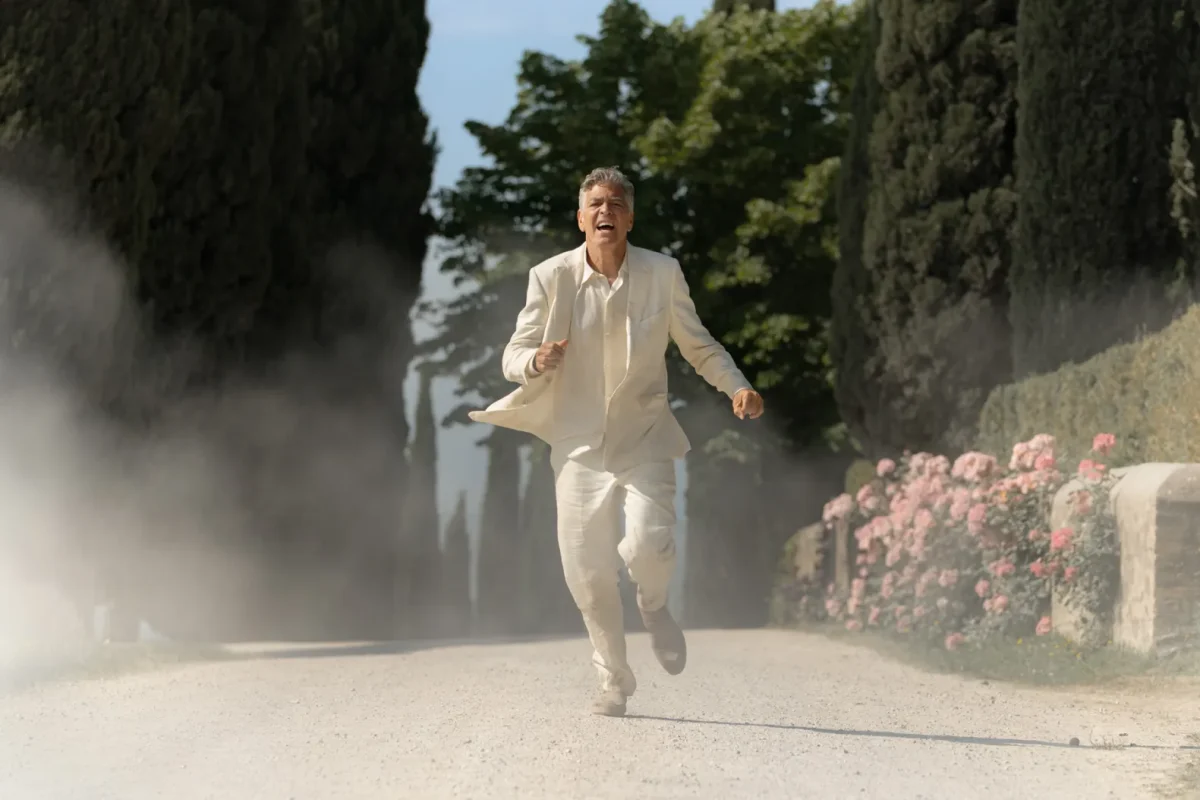
Jay’s introspection toward the end suggests that their friendship may survive even if their working relationship does not. Ron may still be in Jay’s life, although perhaps finally on terms that protect his own well-being.
Jay Kelly (2025) Movie Themes Analyzed:
The Hollowness of Superstardom
One of the most striking themes in “Jay Kelly” is the profound emptiness that accompanies superstardom. The film consistently peels back the layers of celebrity culture to reveal a man whose entire identity is built around applause, screen presence, and cultural relevance. Instead of elevating him, this fame has hollowed him out. The story refuses to show Jay as a larger-than-life icon. Instead, it exposes him as an emotionally stunted person who has spent decades confusing admiration for genuine affection.
Throughout the film, we witness Jay’s inability to treat the people in his life with honesty, care, or presence. His past with Timothy Galligan exemplifies this flaw. Jay snatched an opportunity that belonged to Timothy, and this single act of ambition derailed Tim’s trajectory. Although Jay carries the guilt silently, he never addresses the hurt he caused.
His relationship with Peter Schneider reveals a similar pattern. Peter was the man who believed in him, gave him his break, and treated him like a son. Jay distanced himself once fame arrived, and by the time he regretted it, Peter was gone. Peter’s death serves as one of the earliest reminders that Jay has spent a lifetime accumulating professional glory while abandoning the people who built him up.
His personal relationships are even more damaged. Jay has never been a reliable father to Jessica or Daisy. Jessica grew up without emotional consistency from him, and Daisy rarely experienced moments of genuine affection. His marriages deteriorated for the same reasons. Jay never learned how to give his time or be vulnerable. His father also appears in the narrative with a quiet ache. He wants a simple relationship with his son, yet Jay never found room for him in the world he created.
Despite all this, Jay continues to be adored by the public. This contrast is the film’s most cutting commentary. The audience sees only the superstar who has shaped cinematic memory for decades. They cheer, cry, and celebrate him, unaware of the emotional wreckage behind the scenes. Jay absorbs their admiration because it is all he has left, yet it no longer nourishes him. Every cheer lands with a sense of irony. The tribute sequence embodies this disconnect perfectly. The crowd is overcome with emotion, and Ron sobs uncontrollably. Jay, however, experiences an internal collapse. He realizes that applause cannot replace the people he has lost.
The film uses this contrast to highlight how celebrity culture erases accountability. Superstardom grants Jay a shield. People forgive him, overlook his flaws, and define him by the characters he plays rather than the person he is. “Jay Kelly” ultimately argues that fame can disguise a hollow interior, yet it cannot heal it. Jay is still celebrated, but the applause echoes around a man who has nothing left except the myth he spent his life performing.