Cinema often carries an assumption that purity without friction appears sentimental. Audiences sometimes demand edges, roughness, and conflict to validate emotional responses. However, certain works remain untouched by those expectations. They operate with a gentleness so sincere that any cynicism dissolves on contact. “Key of Genius” fits that space effortlessly. Adapted from “In The Key of Genius: The Extraordinary Life of Derek Paravicini,” and written by Daniel Persitz and Devon Kliger with contributions from David Seidler, the short film serves as a tender salute to the greats of piano music while remaining grounded in the real life of its young prodigy.
The short film resists the pursuit of heavy thematic excavation. Its pleasure lies in simplicity. The storytelling begins in 1985 at Linden Lodge School for the Blind in London, where Adam Ockelford (Gavin Stenhouse) is practising piano in a quiet room. The tranquillity breaks when Derek Paravicini (Cannon Wood), a blind autistic child with an unfiltered curiosity, enters. Adam recognises something unusual in this first meeting.
Derek’s social behaviour feels unpredictable around adults, and he often appears impulsive. The film refuses to paint this as a flaw. His autism shapes these behaviours, placing boundaries on conventional interaction while freeing the part of him that relates to music with extraordinary clarity. Adam notices this instinctively.
When Adam decides to take Derek under his wing for a lesson, the short film shifts gently into its core purpose. The narrative grows from that single decision. The lessons are intimate, uncomplicated, and designed around discovery rather than discipline. Derek moves between pieces with a fluency impossible to miss, gliding from Mozart’s “Turkish March” to Beethoven’s “Adagio Cantabile” with a confidence that belongs to pure musical intelligence. His hands respond to rhythm as if guided by instinct alone.
The filmmakers handle these moments with emotional restraint. The story avoids injecting grand speeches or tear-jerking revelations. Instead, the relationship is formed through patience. Adam studies Derek’s responses, trying to understand the language behind his touch. Derek mirrors this effort by leaning into Adam’s instructions, even if his attention darts around the space. This dynamic becomes the real heartbeat of the film.
The story reaches its gentle peak in the scene where Adam places his hands over Derek’s. There is no verbal exchange carrying the weight of the moment. The conversation happens entirely through sound, touch, and rhythm. Derek learns structure while Adam encounters a form of talent he has never engaged with before. Their shared silence turns into something deeply musical. The film positions this connection as Derek’s turning point. A child once dismissed as difficult begins to reveal abilities shaped for brilliance, and Adam steps into the role of guide with a humility that makes the moment even warmer.
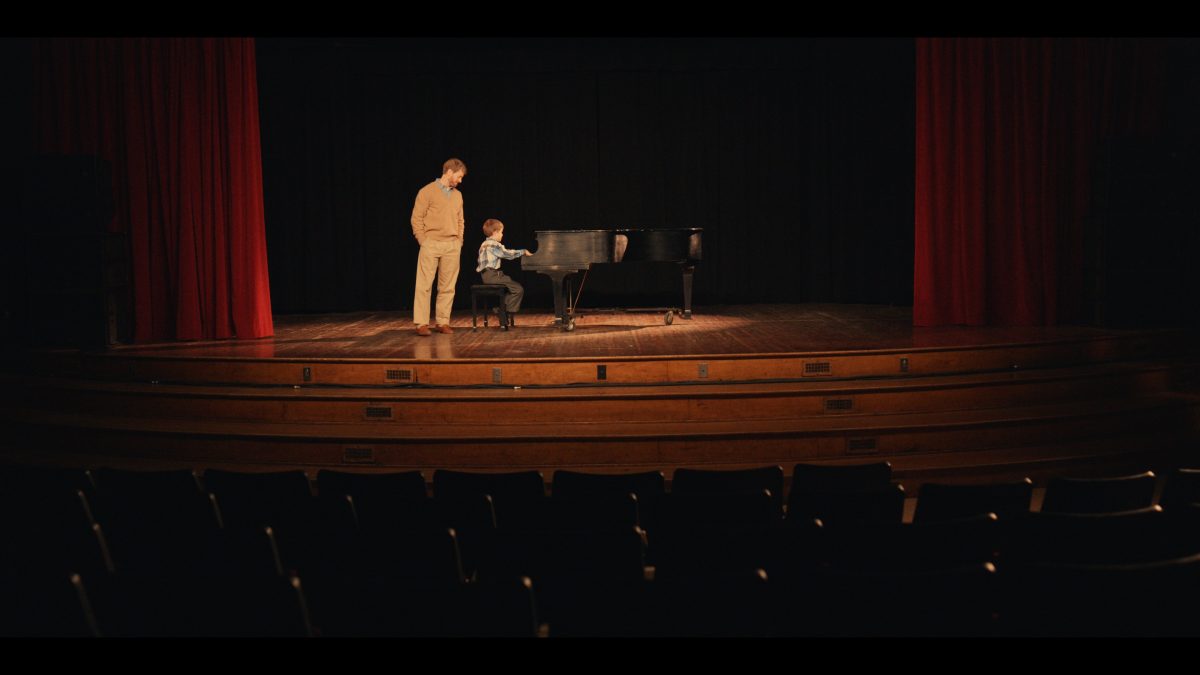
Once this bond is set, the short film offers a reassuring sense of direction. Derek has discovered someone who can reach him without forcing conformity, and Adam has discovered a student who will transform his life. The optimism emerges without manipulation. The final sequence of the short film reinforces this mood with a series of pictures of the real Adam and Derek performing together over the years. Their rapport, built across decades, confirms the sincerity behind the dramatization.
The film restricts itself to two essential characters, keeping focus tight. Derek’s mother, Mary Ann Paravicini (Lauren Samuels), appears only briefly. Her presence, though minimal, has emotional significance. She watches her son evolve into someone she had never envisioned. The child she struggled to enrol in school now stands on the edge of a lifelong journey, supported by a mentor who sees him in a way few others ever have.
Persitz’s direction suggests clear potential for a larger cinematic canvas. News of a feature-length film entering production in Spring 2026 feels encouraging. Derek’s life contains the ingredients for a rich musical drama, and the short film’s tone already shows respect for the subtleties of his experiences. A feature expansion could explore the breadth of Derek’s musical development, the evolution of his bond with Adam, and the emotional challenges that shaped his path. The existing material offers a natural progression from an intimate short film to a full journey meant for theatres, concert halls, and larger emotional spaces.
For now, what makes “Key of Genius” linger is the absolute sincerity with which it treats its subject. The film never portrays Derek as an object of pity or an exhibit of exceptionalism. Instead, he is depicted as a child who interprets the world in a way that bypasses social conventions and dives straight into the heart of sound.
The purity of that portrayal avoids cynicism entirely. If the upcoming feature retains the same sensitivity and restraint, it has the potential to become a truly immersive musical biography. The short film already proves that the material holds depth, charm, and emotional resonance without relying on conflict. “Key of Genius” celebrates a bond built through sound, patience, and a shared instinct for music, and that is more than enough to leave the viewer with a feeling of genuine warmth.