Geneviève Dulude-de Celles is an emotionally intuitive filmmaker, capable of mining layers of the unspoken in a complex, fraught journey. Her latest, “Nina Roza,” uncovers the aches one pushes away, reading through denials and unresolved grief. Threaded into this is the space art gets, how its representational function aligns with or is ruptured by life’s skewed demands.
The film revisits and appraises a life-turning journey, jostling with its fallout. There are emotional consequences to be reckoned with, grief that still seeps through the skin. Mihail (Galin Stoev) thinks he has shut out the ghosts of his past, but they demand he listen, shifting under his reserve upon his homecoming. Loss haunts him, refusing to let him off unless he confronts it.
An art consultant in Montreal, Mihail has assembled a life that is shorn of his Bulgarian roots. He judges his daughter for teaching her child even the language that he has forsaken. He sees it as impractical, a reinstating of things he has struggled to shake off in the migration to a better life cushioned with bigger opportunities.
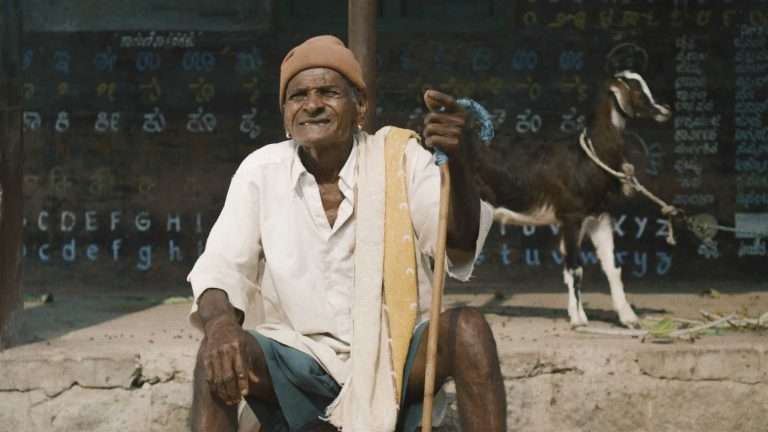
When there are rumours of an eight-year-old Bulgarian child painter, Nina, claiming media attention, Mihail is pressured by curators to travel and check how much of the professed genius is real or fabricated. He’s initially dissuading, disinterested, and reluctant to go back home, where he hasn’t been in decades. As he says later, he ran away from Bulgaria to save himself.
The return dredges up everything that’s been buried or stashed low. It’s a flash trigger, unleashing memories of his wife, on whose death he left the country. Dulude-De Celles rekindles the wounds, and the unresolved soul carries way beyond recognition. Stoev’s performance is a quiet marvel, tracing conflicts and dilemmas with immeasurable power and clarity.
He’s the rare kind of actor, the finer delineations of whose work slowly unravel with wrenching nuance. He infuses Mihail with the grace of gradually baring his soul. The film rests on the actor who can draw deep mourning and dilemma from silence. There’s the question of whether Mihail made the right choice. Leaving one’s land is a fraught process anyway, riddled with guilt, reservation, and abiding anguish. How long can one run away from the past?
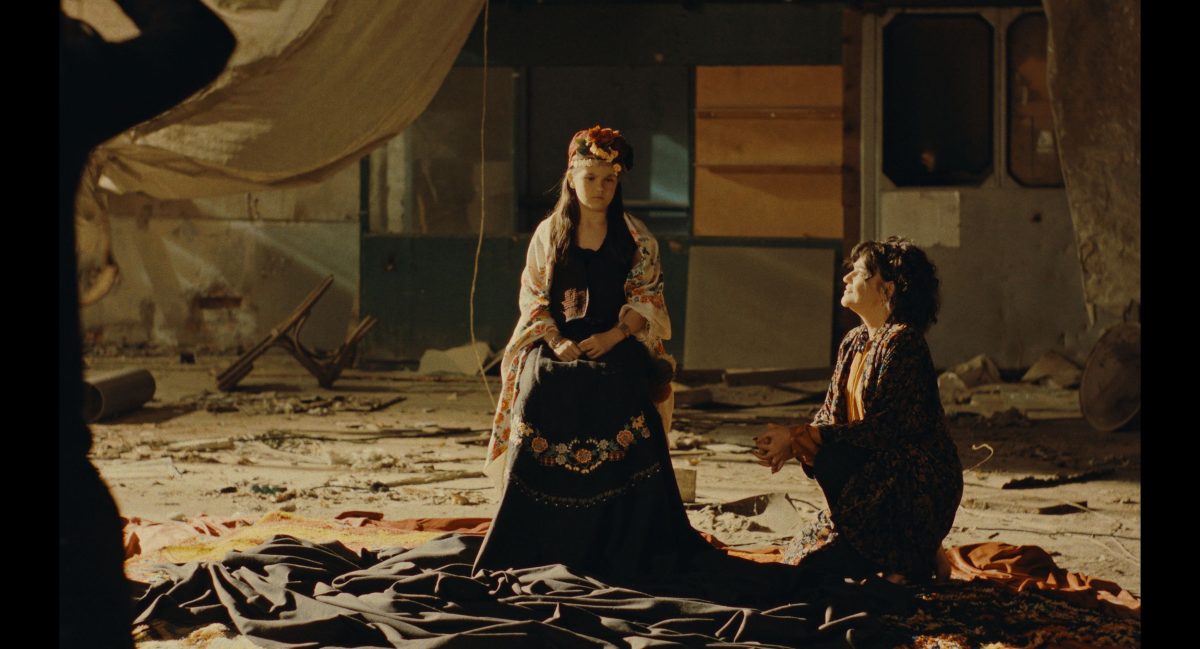
The encounter with Nina sharpens the quandary he himself had faced and thought he’d buried. Unlike him, she wants to stay in Bulgaria, resisting the efforts of a curator who plans to fly her and her mother to Italy to enhance a thriving career. Mihail, too, had been in such a position. Damien Keyeux’s edit plumbs great emotion in supple moves between the past and present. The former bubbles up unbidden. There’s intercutting between Nina and Rosa/Roza, his daughter, who was the same age as her when the father-daughter duo moved out, as faces merge and dissolve into one.
Stoev embodies the immense weight of this confrontation, the turning point when one is forced to deal with their mirror and all the decisions gather in force. The situation also compels Mihail to go knocking at his home, capping in an awkward, tense family dinner with his sister clearly displeased with his return. She lashes at his entitlement, his assumption that he can just disappear from their lives and resurface recklessly. But as the hurt gives way, the affection still lingers.
“Nina Roza” isn’t wholly able to corral and condense all its threads into a cohesive thing of sustained effectiveness. There are patches and stretches that feel inchoate and taper off midway. Critiques of a capitalist marketplace extricating an artist from their soil and placing them elsewhere for flourishing, while possibly stunting them, sweep up occasionally but don’t amount to anything quite strong.
It’s summoned mostly vis-à-vis Mihail’s own artistic and individual crisis. It helps that the twins, Sofia and Ekaterina Stanina, playing Nina, give solid, integral support, widening the emotional canvas, broadening the perspective on how artistic growth can be negotiated, especially from a marginal site.
The film speaks to the commodification of art, how it can be bent from a place of expression into something specifically for capital and sanitised, aestheticized curiosity. Nina is young but is emphatic and clear in her relationship to her art, how she wants it to be received. In this, there are vital lessons she imparts to Mihail, the courage to own her art in the exact way she seeks, without it being appropriated and vanquishing joy in the pursuit of cultural legitimacy. “Nina Roza” is candid and evocative in the tussle of identity between disparate cultures, losses in the transfer, and anxieties incumbent in relocation. This is a visually articulate work that mines these tensions with elegant control.