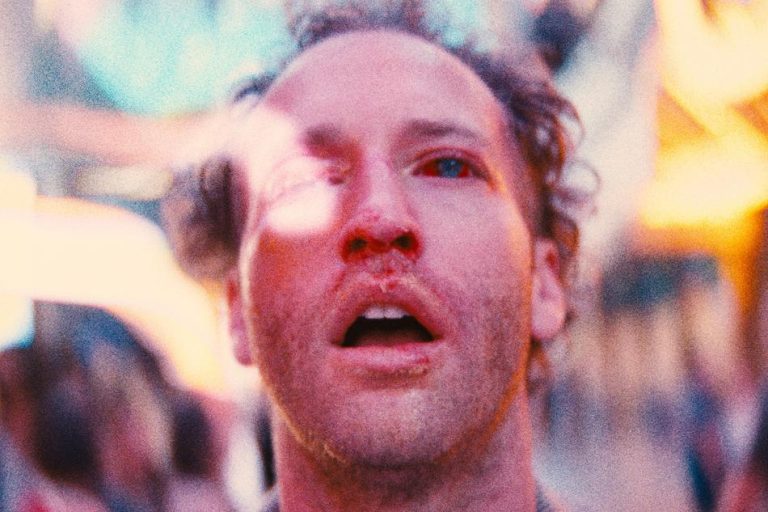
In the 1970s, many writers and filmmakers found a footing through their artistic voice. One of them gave us “Rocky,” the 1976 film, which laid out a classic underdog film structure that works flawlessly in the Hollywood machine. It features a string of dynamic scenes that offer the perfect fuel to root for its characters as if they are part of our lives. Yet, its ‘happy ending’ isn’t a traditional victory lap that gives the protagonist everything he strives for. Instead, it leaves him with an overwhelming emotion through a quiet acknowledgment of his abilities. He doesn’t need to win against anyone to feel like a winner, because he wins a battle against all his vices telling him otherwise.
The protagonist in “Road To L’Etape Du Tour” walks on a similar path throughout the film. Much like “Rocky,” it’s about her fighting all the odds, pulling her back from a more fulfilling life, where she can reach her full potential, or begin to understand it. There’s no ‘villain’ in her story that she hopes to defeat, or an external element that we can direct all our hate to.
Instead, it’s the self-doubt and self-imposed limitations that she actively fights against. That’s why her internal conflicts remain crucial to our investment in her story. Julia Coulter, who wrote, directed, and stars in the central role in this film, navigates it quite well despite a few hiccups. Her decidedly toned-down directorial approach leans more into the quieter aspects of healing through reflection.
Amy (played by Coulter) is introduced in a cold and tense environment of a hospital that offers a hint of her delicate heart condition. She was born with Pulmonary Atresia, which keeps her limited in some aspects of her life. However, that isn’t the only reason she hasn’t widened her horizons. She spent almost all her life in her small town with her father, partly afraid she would be like someone from her past. That keeps her emotional life restricted to the possibilities within its borders. She seeks comfort from the familiar, and her monotonous routine with her fiancé, Jacob (Brian Muller), seemingly underlines this.
After a major shift in her life, she is forced to confront some of these familiarities and whether she should be confined by them. From the outside, her life may not seem demanding, but that’s mainly because she hides her emotional struggles. It feels almost like her second nature, maintaining a calm despite all the burdens she quietly carries or fears to acknowledge.
Coulter carefully crafts that emotional hook through her script, which also offers her personal reflections on this sensitive topic. She ensures we get a palpable understanding of what it’s like to live with this condition. It offers a broader awareness of Amy’s exhaustion and frustration, while trying not to feel like a burden on anyone else.
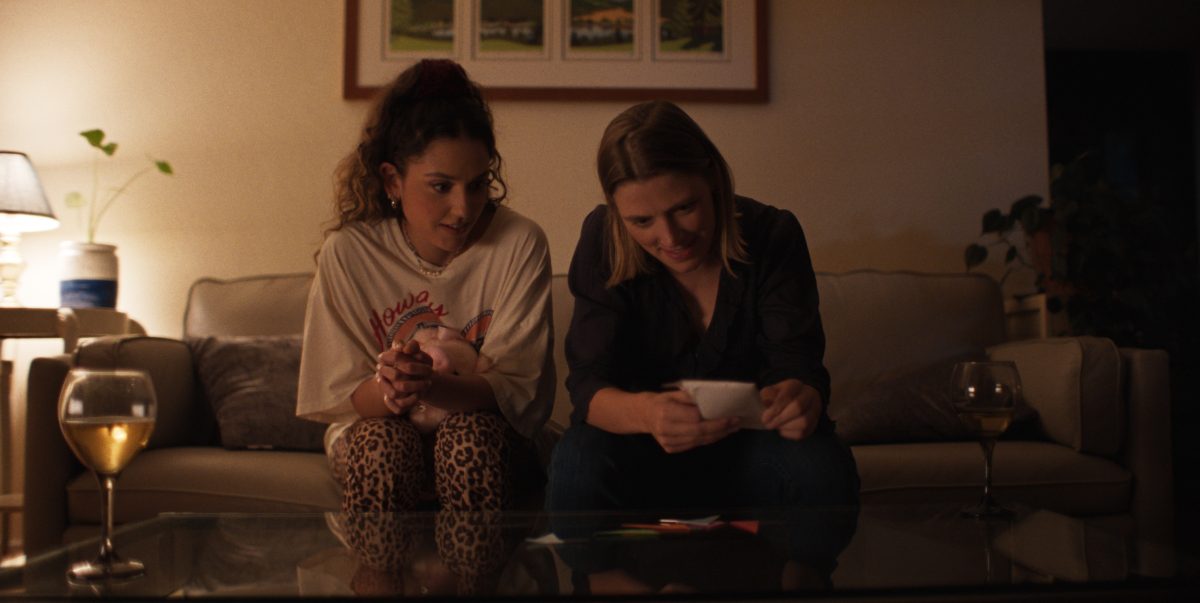
Yet, on a script level, it fails to make some of its moments seem natural or believable. There’s a moment in its first half that propels Amy to reevaluate her romantic life through a possibility she never opened herself up to. Yet, it feels jarring because the dynamic between the characters in question is barely developed until that point.
Even some moments from Amy’s learning curve feel overlong but underanalyzed within the scope of its narrative. We see external manifestations of her despair, but they don’t quite convey the depths of her ennui. The film reveals little beyond what the plot does about her fears or anything beyond them in her emotional landscape. That makes the film gloomy and monotonous with little room for even a flicker of joy.
While escaping the same monotony is Amy’s goal (and the point of Coulter’s script), letting the film be consumed in it makes it staid and a bit redundant. A wider emotional canvas could have offered it a much-needed levity, as the presence of characters like Claire feels insufficient in that regard.
Of course, that doesn’t negate the film’s positives, especially the careful handling of an unfortunate part of Amy’s life. Yet, it does dampen the impact of some of its crucial moments. We feel for her character because we understand the intensity of trauma she endures every waking minute, but the script leaves you wanting more about the intricate details of her life in this state beyond its monotony.
Yet, the reason “Road To L’Etape Du Tour” manages to affect in parts is Coulter’s dedicated central performance, which offers a keener understanding of the intensity of Amy’s struggles, even if it falls short in its lighthearted scenes. Seth Macmillan’s competent camerawork maintains a tone that works in tandem with the directorial approach, which helps this well-intentioned and personal, if inconsistent, film.



![Gone Girl [2014] Review: Our Quiet Secret](https://www.highonfilms.com/wp-content/uploads/2019/07/Gone-Girl-Rosamund-Pike-1-768x320.jpg)
![The Beasts [2022]: ‘IFFK’ Review – A Pensive Rural Thriller that Unveils Xenophobia and Class war Lurking in Western Europe](https://www.highonfilms.com/wp-content/uploads/2022/12/The-Beasts-As-bestas-Movie-Review-768x528.png)
![Recovery [2021]: ‘SXSW’ Review – A Charming, Clever COVID Comedy](https://www.highonfilms.com/wp-content/uploads/2021/04/Recovery-2-768x327.jpg)