What is it about Richard Linklater’s “Before” trilogy that captivates us time and again? These films map the intimacy shared between Celine (Julie Delpy) and Jesse (Ethan Hawke), who meet as hopeful youth and grow into more jaded versions of themselves over the years. As love transforms, priorities shift. Reality comes knocking at the door, shattering our sense of romanticism even when the heart yearns for something real.
Linklater imbues this love story with a brand of everyday mundanity that makes it feel incredibly lived-in: When Celine and Jesse share a charged look, it feels tangible, electrifying. Such is the power of boundary-pushing filmmaking, which uses everyday conversation to dig through the recesses of love. We’re charmed, invested, and hooked into this relationship even when turmoil simmers beneath the surface.
Carter Ward’s “Step Back, Doors Closing” wears its Linklater influence on its sleeve. To Ward’s credit, there’s a deliberate mimicking of the “Before” films without attempts to mindlessly mirror its strengths, as our understanding of love gets recontextualized for a postmodern world. Two strangers cross paths during a chance encounter, and the contrivance of such a serendipitous meet-cute feels tacked-on, despite being serviceable.
Julisa (Carmen Berkeley) accidentally drops her phone into the airport toilet (perfectly plausible), and then proceeds to clumsily smash her iPad minutes later (a bit ludicrous, if you ask me). If she is a clumsy individual, this should’ve been a recurring quirk throughout the film, but she seems perfectly poised after these baffling opening moments.
Anyhow, Julisa meets Ryan (Reilly Walters) on the train, and he immediately offers to DM her friend from his personal Instagram. After making some polite conversation, the two decide to find a place to stash their luggage, but end up spending more time teasing and bantering with each other. Their chemistry is pretty easy-going from the get-go, and there’s a subtle intimacy to their gradual unraveling as they walk through the streets of Washington, D.C. There’s a palpable sense of mutual attraction here, and the two hop from one location to the next, doing everything to prolong their time together.
The naturalistic dialogue would’ve fallen flat without the leads immersing themselves in the authenticity of their respective characters. Both Ryan and Julisa feel pretty fleshed out, even though we get to know them as long as they get to know each other. Even so, there’s only so much you can pack into such a limited premise — Julisa and Ryan don’t boast any robust interiority, and their depth feels confined to their perception of each other.
We are drip-fed aspects about their life: Ryan is recovering from a recent breakup, while Julisa is finally finding her footing as a woman exploring her autonomy. These details fill in some blanks, but don’t necessarily add anything to our understanding of who they are. Is this fleeting connection enough to nourish them? What are these people like when they’re not trying to impress someone they like?
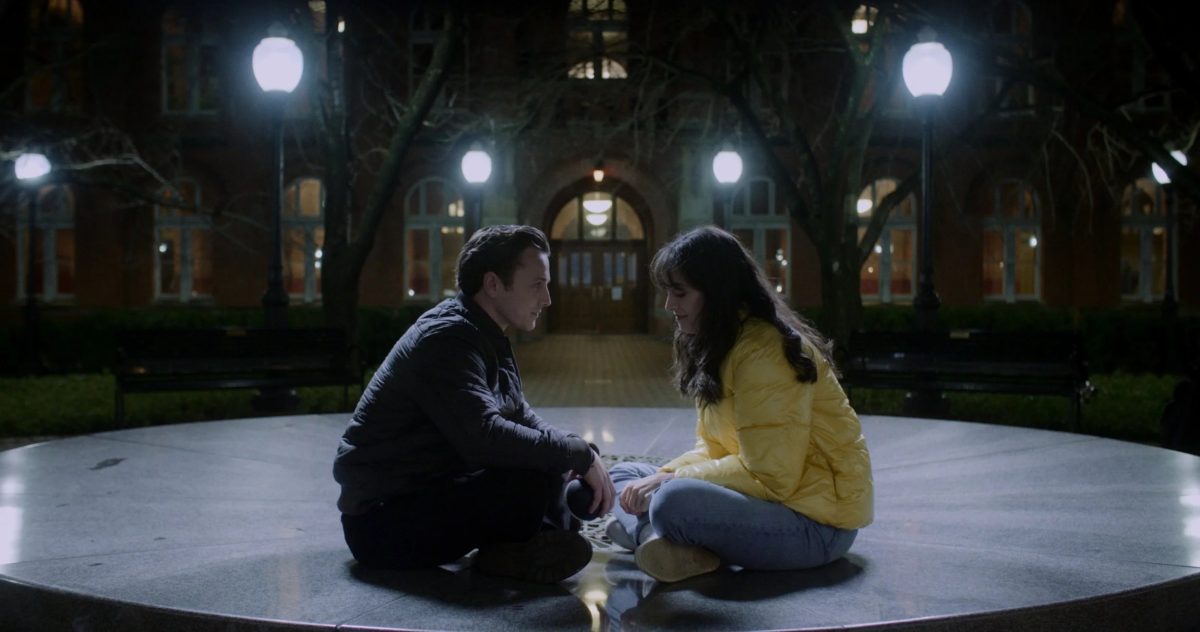
There’s some uneasy tension after things get to a head, with doubts and jealousy rearing their ugly heads as soon as the duo realizes what little time they have together. This is where some of Ryan’s personal quirks start to feel grating: This is a heteronormative man navigating a heterosexual fling/attraction through a subtly misogynistic lens, even when he appears to be perfectly respectable on the outside.
There’s a flippant undercurrent to his character, a vapidity that doesn’t match the sincere words that spill out of his mouth. In contrast, Julisa feels genuine even in her flaws, refreshingly honest about her insecurities, even when Ryan tries to underplay his callous nature and crack a joke only someone like him can make. It sours the sweet and tender moments, and acts as an uncomfortable reminder of the fact that not everything is as dreamy as it seems.
For all the sweetness and charm “Step Back, Doors Closing” exudes, it isn’t interested in tackling real emotional depth beyond a few conversations that feel intriguing enough. Ryan and Julisa appear too busy exchanging pretty words without realizing that they haven’t challenged themselves or each other at all, and they soon fall back into their default worldviews. There’s some back-and-forth about wanting to take a risk for something that feels meaningful (mostly on Julisa’s part), but it abruptly boils down to a mutual agreement of making the best out of the limited time they have.
Uprooting one’s own life for someone you barely know isn’t a logical step by any means, but what’s the point of framing a relationship as “worth the risk” if no risks are taken? This dissonance between uttered sweet nothings (spoken without thought or awareness of consequence) and actions recontextualizes everything Julisa and Ryan experience on that fateful night.
“Nobody can say that we didn’t give it our best,” Ryan muses, trying to convince himself more than the woman he’s talking to. These words ring hollow, as neither of them makes any attempt to make this relationship work. This fleeting connection isn’t meaty or intense enough to haunt either of them, which extends to the viewer by the time the credits roll. If the so-called lovers do not care about each other beyond their charged one-night encounter, why should we?