Some films gesture toward social rupture with visible urgency, and then there are those that operate with a quieter incision, drawing the viewer into the layered contradictions that structure an entire way of living. “Tehran Taboo” (Original title: Teheran Tabu, 2018) situates itself firmly within this latter sensibility with the refusal of a spectacle in favour of slow revelation, making contemporary Tehran emerge as a living organism whose rhythms are shaped by negotiation, concealment, and adaptation. What unfolds is less an exposé and more an anatomy of survival, where morality stands tall in public discourse that is codified through law, ritual, and visible propriety, while in private, it becomes continuously stretched to accommodate economic necessity and bodily reality.
The film’s attention to what might be called “intimate economies” becomes especially significant here, because transactions are rarely limited to money alone, instead involving signatures, permissions, silence, reputation, and even the management of memory, suggesting that desire itself circulates within regulated channels that both condemn and sustain it. Within such a framework, the disciplining of female bodies coexists paradoxically with a covert reliance on the very desires being policed, so that prohibition and dependency form a single mechanism.
Through this lens, the city reveals how systems of control embed themselves in everyday gestures, in the architecture of apartments, in bureaucratic corridors, and in the cautious choreography of conversation. Directed by Ali Soozandeh, the film employs rotoscope animation as an aesthetic gimmick and more specifically as a necessary veil, a fragile membrane that both protects and exposes, allowing the city’s forbidden transactions to surface with a candour that live-action might have rendered either sensational or impossible.
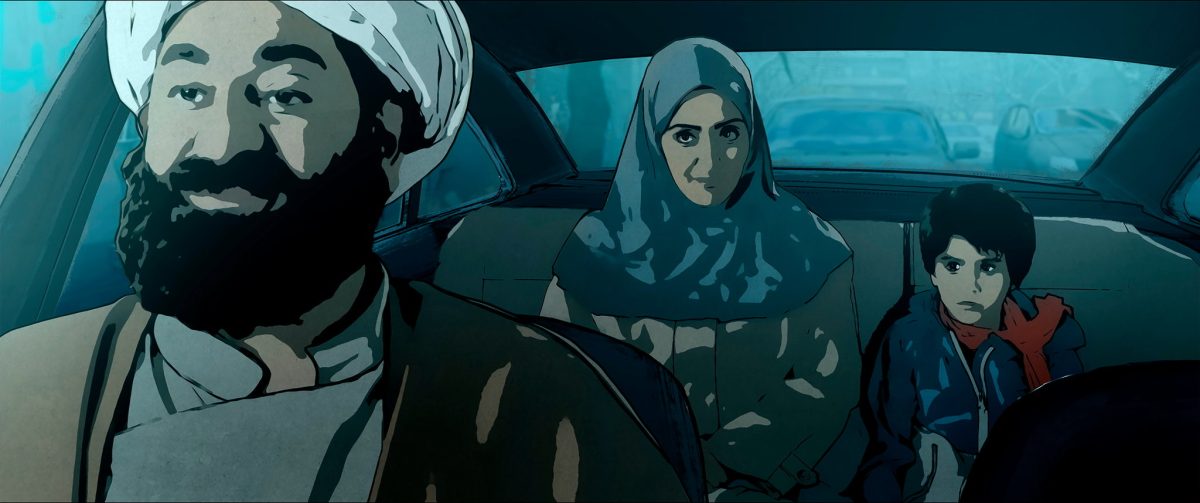
Through this stylised realism, the narrative follows interconnected characters whose stories braid into one another with an inevitability that feels less like coincidence and more like structure, as though each person’s predicament has already been drafted by invisible laws long before individual choice arrives to claim responsibility. Pari, navigating the city with her young son in tow, becomes emblematic of a motherhood forced into negotiation with power, her body converted into currency within a legal and religious framework that simultaneously sanctifies and punishes female sexuality, and yet the film refrains from turning her into a martyr or a spectacle, instead situating her within a continuum of constrained decisions where survival itself carries moral ambiguity.
Babak, burdened by a bureaucratic impasse that transforms his fiancée’s premarital sexuality into a legal obstacle requiring surgical correction, embodies a masculinity shaped less by cruelty than by compliance, his anxiety revealing how patriarchy imprisons men within its expectations even as it privileges them. The clinical absurdity of hymen reconstruction becomes a chilling metaphor for a society that invests in restoring the symbol of purity while remaining indifferent to the emotional and ethical fractures such restoration conceals.
Donya, working at a beauty salon, performs cosmetic alterations that promise reinvention. In doing so participates in a parallel economy of appearances, where surfaces are endlessly curated to meet standards that official morality claims to transcend. Yet her own vulnerability underscores how limited such reinventions remain when the state regulates intimacy with forensic precision. And there is the child, whose inadvertent involvement in adult transgressions disrupts any illusion that innocence can exist untouched within such a landscape, presenting how secrecy itself becomes hereditary, absorbed into daily life as naturally as language.
What renders “Tehran Taboo” particularly compelling from a critical standpoint is its deliberate avoidance of overt dramatisation when addressing systemic oppression, choosing instead to trace how authority embeds itself within mundane structures and everyday procedures in contemporary Tehran. The film reveals how power circulates through architecture, documentation, and institutional rituals that appear routine on the surface yet carry profound consequences. A signature on an official form determines whether a child can possess a legitimate identity. A marriage certificate retrospectively sanctifies intimacy that would otherwise be criminalised. The absence of a specific document can sever a mother’s legal claim to her own child.
Through such details, the narrative illustrates that authority frequently operates through procedural indifference rather than visible coercion. Bureaucracy becomes a mechanism of moral enforcement, and its impersonal nature intensifies its force because decisions are framed as administrative necessities. This emphasis on paperwork and institutional corridors shifts the locus of control away from identifiable antagonists and toward systems that function autonomously. Hospitals, courtrooms, and apartment complexes emerge as sites where private life is evaluated and categorised, and the design of these spaces reflects an underlying logic of surveillance and segmentation. The domestic interior may appear intimate, yet it remains vulnerable to external validation, while public spaces demand conformity to codified norms.
The film’s rotoscope animation deepens this analytical framework by producing a subtle estrangement effect. The bodies onscreen move with a slight rigidity, their gestures appearing almost natural yet faintly dislocated, which mirrors the moral dissonance embedded within the social order. This aesthetic choice encourages the viewer to consume the narrative at a reflective distance. The hyperreal texture of the cityscape underscores its paradoxical nature. It is recognisable and concrete, yet it carries a sense of abstraction that signals structural critique rather than documentary representation.
The most unsettling dimension of contemporary Tehran arises from the calm efficiency with which its shape limits the private life, and this quietness becomes central to the film’s critical force. The authority appears woven into the ordinary textures of existence, into hospital desks, legal offices, apartment corridors, and the subtle choreography of conversations conducted in lowered voices. These events proceed through procedure, through clerical routines that present themselves as neutral and necessary. Such neutrality carries a particular weight, because it reframes moral judgment as administrative compliance, thereby dispersing responsibility across a system.
The film’s approach suggests that regulation becomes most effective when it feels ordinary. Public morality stands articulated in law and ritual, yet private arrangements develop alongside it, adapting to its demands without directly challenging its language. This coexistence does not appear as simple hypocrisy. It resembles a structure sustained by contradiction, where prohibition and dependence operate together.
The spaces within the city reflect this dynamic. Interiors offer moments of intimacy, but they remain vulnerable to external validation, while public spaces demand adherence to visible codes of respectability. The film’s engagement with sexuality emerges with particular clarity in the sequence involving Babak and his fiancée as they confront the requirement of a hymen reconstruction certificate before marriage.
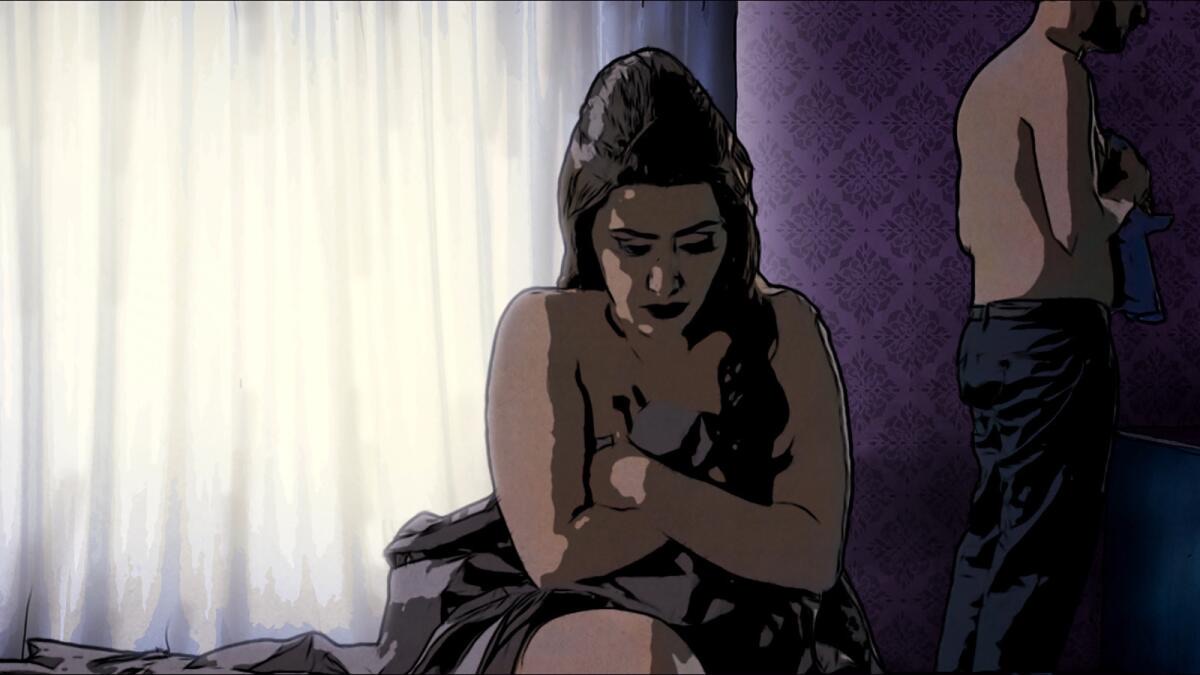
In “Tehran Taboo,” this moment unfolds within a clinical and administrative environment that frames intimacy as a matter of regulation and verification. The couple approaches the situation with visible anxiety, yet their concern centers on the practical implications of social legitimacy rather than on abstract moral guilt. The idea of marriage promises stability, housing, and familial approval, and each of these aspirations depends upon conformity to a codified expectation of virginity. The medical consultation transforms the concept of purity into a procedural matter, where surgical intervention offers a pathway to restoring the symbolic value attached to the female body.
Through this scene, sexuality appears shaped by intersecting forces that extend beyond private desire. Legal norms, religious codes, and economic aspirations converge within the space of the clinic, where the body becomes the site upon which these pressures materialise. The prospect of reconstruction carries the weight of future security, and the conversation surrounding it unfolds with a tone of pragmatic calculation.
The sense of affection between the couple coexists with their shared recognition of the social script they must satisfy. In this way, the film situates sexual politics within tangible realities such as employment prospects, domestic stability, and community standing. The restoration procedure acquires meaning as a strategy for preserving opportunity and social coherence. The scene presents adaptation as a rational response to structural expectations, and it reveals how individuals participate in maintaining the codes that organise their lives.
Moreover, the choice to tell these stories through animation allows for a certain universality, as the slightly abstracted faces prevent the viewer from collapsing the narrative into voyeuristic consumption of specific bodies, encouraging attention to patterns rather than personalities. In doing so, the film achieves a delicate balance between specificity and resonance, portraying Tehran as distinctly itself while also gesturing toward broader questions about how societies police intimacy.
“Tehran Taboo” unfolds with a contemplative spaciousness that extends beyond narrative closure and opens instead into a sustained field of inquiry. The final movements of the film do not assemble events into a consoling resolution. Rather, they allow the trajectories of the characters to linger in their complexity, preserving the tensions that have shaped their choices.
Such an ending grants dignity to ambiguity. Each circumstance retains its layered motivations, and each outcome reflects the intricate convergence of affection, fear, aspiration, and institutional pressure that has guided it. The ideas of sexuality, legality, and survival appear interwoven in a continuous process of negotiation, where personal intention interacts with inherited codes and administrative frameworks. This interdependence forms the quiet architecture of the film’s argument.
The portrayal of Tehran remains grounded in its particular social and legal textures, yet the resonance of the narrative extends outward. The structures that classify bodies, authorise relationships, and assign legitimacy do not belong to one geography alone. They echo within diverse cultural landscapes where intimacy encounters regulation. By illuminating these mechanisms with measured attention rather than dramatic proclamation, the film cultivates a reflective atmosphere that invites careful consideration. The elements of virtue and vulnerability emerge as categories shaped through collective participation, sustained by habits of compliance as well as by shared aspirations for security and recognition.