Yuqing Lai’s “Whisperings of the Moon” (2026) reminded me of my experience of watching Charlotte Wells’ “Aftersun” the first time. Wells’s film didn’t click with me immediately in the first half. Yet, after getting used to her soothing lyrical style, it felt like a hypnotic chapter of a life I had lived. Somehow, she found a way of making it all feel abundantly personal. Lai’s debut feature manages to evoke something similar, which feels simultaneously tangible and indescribable, yet equally intimate, wistful, and melancholy. There’s a strong voice underneath her style that makes her choices lead to a similarly stirring alchemy.
In “Aftersun,” Wells employed hazy camcorder clips, interspersed throughout the duration. Yet, it wasn’t a shallow aesthetic choice to evoke nostalgia. Her camera moved in spaces as if it were trying to reveal its characters when they were hiding, shielding themselves from someone’s gaze, reluctant to share a part of themselves they hadn’t quite figured out.
Lai approaches her cinematography to find similar emotional truth. At times, the camera seems almost struggling to find its characters within the frame, maintaining a distance, yet revealing them at their most primal or vulnerable. Plenty of scenes feature a mix of shaky camerawork and intense close-ups that achieve this poetic contradiction.
While hopping between its moments, she also utilizes superimposed shots, melting different parts of their reality together to capture the hazy dreaminess of its central romance. They contrast with its overarching gloomier, underexposed visual approach, which feels eerily close to life, revealing the kind of urban grittiness that defines Tsai Ming-liang’s bleakest films.
While all these flourishes are evocative on their own, they would have been immaterial without a strong script or performances. “Whisperings” excels in both regards, backing its visual style with a thematically dense writing that invites reflection and evocative performances that bring emotional weight to the whole affair. That makes it the kind of film that’s better experienced than explained. All you can do is describe the plot or choices that you observe, but it won’t suffice to convey the raw, bittersweet beauty of its transitory moments.
Transience is the central theme, plaguing and defining the lives of its central characters. Nisay (Sopheanith Thong), a 20-something theater actress, returns to Cambodia from New York for her father’s funeral. That’s where she crosses paths with Thida (Deka Nine), an old flame, who got married to a man while she was away. They return to the stage for another play, while rekindling their secret romance, not knowing how it would end this time.
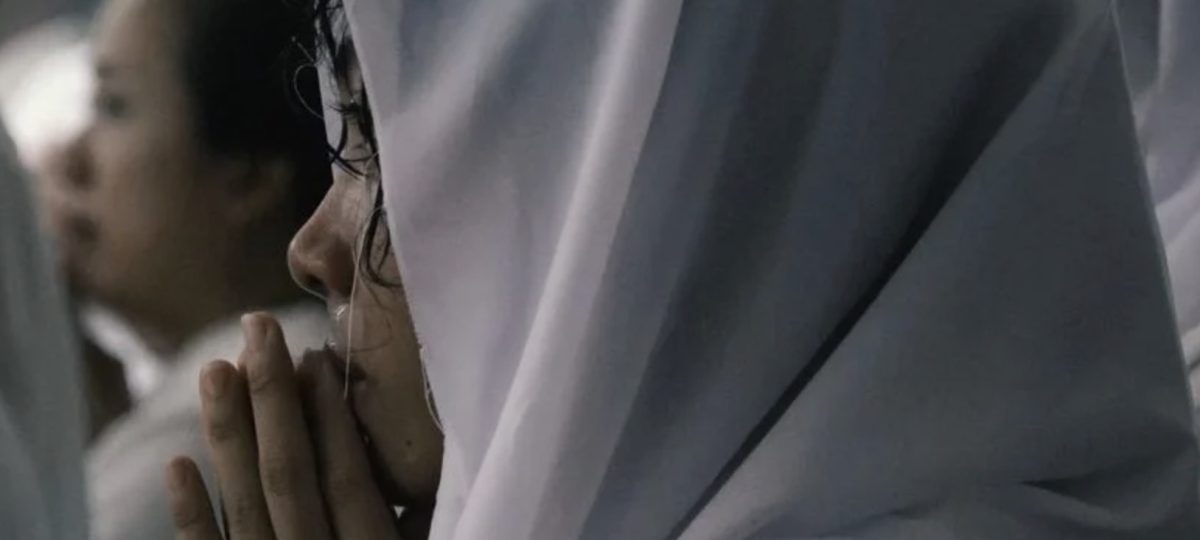
Their past keeps intersecting with their present, prompting them to seek what they missed while confronting societal constraints. Unlike before, Thida is responsible for her young daughter, Malika, while Nisay grapples with the burden of her family’s traditional expectations for a woman her age. While they get crushed under its overbearing weight, the men in their lives feel woefully entitled to staying eternally absent or ignorant without a shred of shame or remorse.
The film justifiably keeps those characters vastly absent in the script, instead focusing on Nisay and Thida’s lives affected by or, irrespective of them. It swings between their intense moments of catharsis and gentle, casual moments of carefree co-existence, occasionally intersected by painful situations with their families. The film reveals their rage or revolt, even through their silent gazes, when their presence is taken for granted, offering them no warmth or respect.
While this emotional labor remains an omnipresent undercurrent, the film focuses on their lives without them. It makes you feel their joy as intensely as their longing. Thong and Nine’s passionate performances are central to making their emotional shifts land as effectively as they do. The film’s charm lies in the moments when they realize what their presence means to one another. The fleeting, but overwhelming beauty of those beats makes their pain reverberate even louder.
Theater emerges as a means of emotional release while their voices are otherwise silenced by systems for their gender, sexuality, or political beliefs. It leads to some potent moments, where art emulates the essence of life and vice versa. The script, written by Lai, Xinyi Cao, and Jatla Siddartha, could have explored this poetic interconnectedness of art and life even further, like how Ryusuke Hamaguchi does in “Drive My Car.” Yet its absence doesn’t hurt the film, as we realize the gravity of its emotional effect. In fact, the script’s unmitigated focus on the central relationship becomes one of its strongest suits.
Despite being structured like a collection of fragments, the film remains both coherent and cohesive, backed by a strong psychological thread, while packing a punch that’s enough to leave you a wreck for days. Instead of relying on heated confrontations or debates, the film conveys their pain through memories that sneak up on them or through realities they expected to make peace with, while being surrounded by hollow, familiar gestures.
That’s why, even a moment of uninterrupted joy seems laced with foreboding, as their autonomy is rarely honoured but often questioned, while their resistance is often considered an affront rather than a call for an open dialogue. Capturing those nuances is not an easy feat, let alone in a debut, which makes Lai’s work all the more indelible.