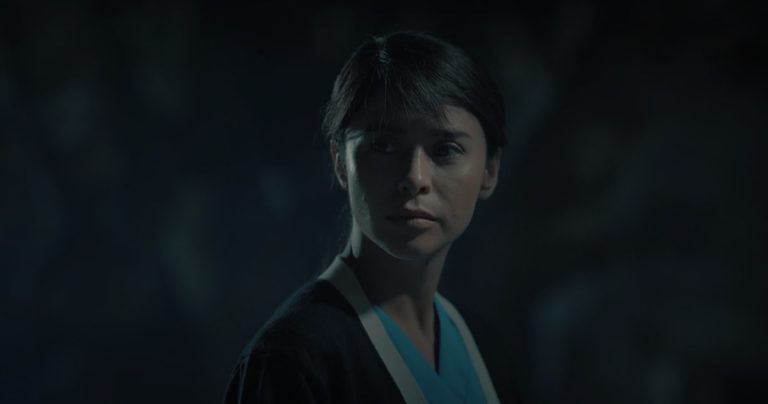
Syrian filmmaker Rand Abou Fakher’s debut feature, “Why Do I See You In Everything?” (2026), is a uniquely challenging experience. It’s provocative, seething, deceptively repressed, a gamut that isn’t shy or reluctant to be rudderless and unbound. Hence, approximation or articulation of its precise rhythms also becomes a difficult ask. To capture how the film evokes dislocation and resistance in a whisper, nevertheless teeming with moral clarity and force, is to strain at a regular grammar with which we document protest. What’s tapped here instead is a spirit, shaken but unflinching in what it reaffirms in recollection and defiant reiteration.
Qusay and Nabil, friends since the age of five, document their lives as they are shaped and fractured by the Syrian revolution. They have been in protest together, not just in their homeland but also in Berlin, raising their voice for Palestine. Their intimate memories fold, by turns gently and abruptly, into archival sights, often without cue or guiding signs. It’s mostly allusive, bypassing affixed notions of shifting between one sequence and the next.
The film moves in the shape of inchoate fragments. It has these darting slivers, moving across archival registers to dredge up something deeply tender, precious, and plangent. It keeps cutting back to the men wrapped up as if nurturing and nourishing the body to withstand all the private and collective history it carries. Their caressing hands seem to hold all that the endless violence is determined to annihilate. It has this vitality that’s poised to outlast the brutality and negation. Amidst erasures, how is sustenance put together? The space is sanctified and cradled after a long battering series of indignities.
The intimacy itself becomes a vital act of restitution and remembrance, forging against violence witnessed and endured. In dreamlike refrains, the film wells up only to be frequently spliced apart. It peculiarly swings between revealing and withholding, a delicate balance of summoning and information. Fakher mostly sticks to a loose, rambling approach, wherein a subtle, slippery texture gains foothold. We follow little nuggets scattered along the way without the guise of something comprehensive and easily reducible.
At times, this particular slant threatens to dissolve interest and engagement. You could easily get lost. In the absence of cohesive, coherent pinpoints, the film dares to flow in a manner that’s too uncharted. There are no clear markers to clutch onto besides occasional context. But Fakher bids you to wait, linger, connect the dots. The promise of the olive groves flashes again and again, a visual motif hemming the disparate pieces together. It’s what anchors and keeps drawing the men, as well as us, back to the site, perpetually skidding out of grasp.
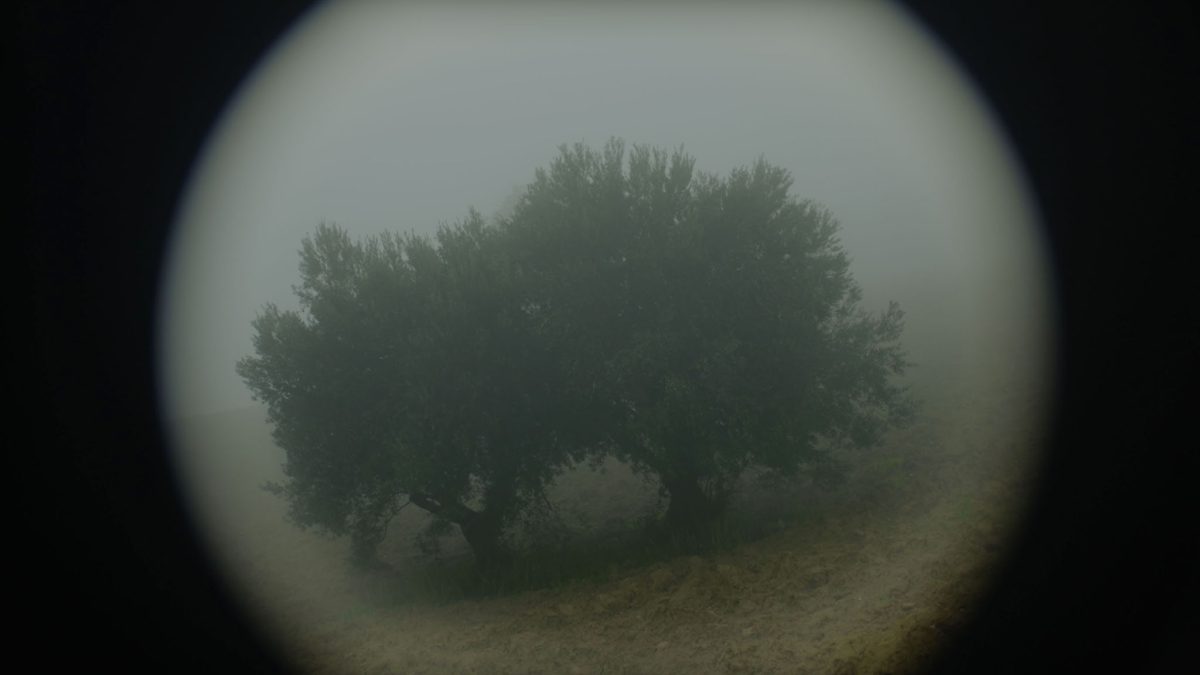
It’s a work of high mystery and elegant interruption. It’s not so much evasive as it is purposefully elusive, a distinction worth considering. The film splinters and reassembles and keeps doing this in a disconcerting fashion. You look for pegs, but it splays out, untethered and messy and unwieldy. In this, the film turns nearly stubborn in insisting you step up to align in empathy and acute attention.
The friends are trusting you in private, putting faith that their stories and accounts won’t be invalidated, appropriated, or mangled. Gradually, the chaos that the men have seen and suffered settles into a calm that nonetheless remains perched on the cusp of collapse. Peace is borrowed, faint only until the truth is reinstated with dignity and justice.
The lyrical sits with spurts of violence and coercion. At its heart, the hybrid film contains shocking criminal seizures and attacks. Protest always courts heightened danger. It’s the inviolable facet of the conversation, one inextricable from the other. Scars persist, residual voices retell the harrowing episodes, most of which haven’t faced accountability. Writing about this film constantly runs into the peril of being too opaque and sideways. A frontal rendition is dislodged on account of deliberate ambiguity and obfuscation.
In the oscillations between locations, temporalities, and moods, “Why Do I See You In Everything?” quietly claims our notice. It wages its political undertaking through the oblique. Between remembrance and care, Fakher shows a way to undercut and push out the horror of war, occupations, and barbarity. Within the onslaught, hope can sneak out and build tiny, effective bases of fighting back, asserting that change can exist.
This is a peculiar film bouncing off tangents without sharp direction. You’re left in the deep end, bereft of grip. Its refusal of direct signifiers can produce restlessness, well-hewn to the rebellion embedded in the friendship. Its values and ethos pierce and rally urgent wake-up calls, asking us to rise and band together.