Inspired by real-life Melbourne crime, “Animal Kingdom” delivers one bruising blow after another as it heads toward its chilling final moments. David Michôd’s directorial debut stays relentlessly meditative and grounded, only to culminate in a death that hangs in the air long after the credits roll. When Joshua (James Frecheville) returns to his grandmother Smurf’s (Jacki Weaver) home, everything suddenly seems to click into place, until the film unleashes its most devastating twist. It is an ending that leaves you unsettled, questioning every quiet glance and gesture that came before. SPOILERS AHEAD.
Animal Kingdom (2010) Plot Summary & Movie Synopsis
“Animal Kingdom” opens in a way that sets it apart from familiar crime dramas. The film begins with the quiet, almost unsettling death of Joshua “J” Cody’s mother. Rather than showing visible grief, J sits blankly in front of the television, watching “Deal or No Deal,” as if numbness has already settled into his bones. Soon after, he alerts his grandmother, Janine “Smurf” Cody, and moves into her home, a place that immediately feels charged with an unnerving mix of warmth and danger.
Once inside the Cody household, J becomes surrounded by his uncles, each of whom carries a long, complicated history with armed robbery. Baz, Craig, Darren, and Andrew “Pope” Cody operate like their own volatile ecosystem, and the police are already circling them. The tension escalates further when the authorities shoot and kill Baz, creating a shift in the family that throws every member off balance.
How does the Codys Avenge Baz’s death?
As the pressure mounts, the Codys start pulling J into their world. They involve him in a simple errand that quickly reveals larger intentions. After J helps provide a getaway car, Craig, Darren, and Pope use the opportunity to take revenge for Baz’s death. They target the involved police officers, setting off a chain reaction that tightens the noose around the family.
Following this, the Codys begin to fracture under fear and suspicion. Craig becomes increasingly desperate and tries seeking refuge with a friend, Rich, only to meet a tragic fate soon afterward. Meanwhile, Pope’s paranoia grows to dangerous levels. His sense of control completely deteriorates when he convinces himself that J’s girlfriend, Nicole, poses a threat. This results in one of the film’s most disturbing turns, showing just how far Pope is willing to go to preserve the family’s secrets.
Who is Nathan Leckie?
At this point, J realizes the danger he is truly in. As Pope’s attention turns toward him, Detective Nathan Leckie steps in and pushes J to consider cooperating with the police. J eventually agrees, leading to Pope’s arrest, although this only places him in deeper trouble with the Cody network. Smurf refuses to let go of her grandson and uses her influence to orchestrate a raid while J is under protection, reminding him that the family’s reach extends far beyond their home.
Feeling cornered on all sides, J makes a decision that shifts the momentum once again and brings the story closer to its haunting finale. The final turn reflects the film’s core ideas of survival, loyalty, and the unspoken rules that govern the Cody family.
Animal Kingdom (2010) Movie Ending Explained:
Why Does J Kill Pope?
The ending of “Animal Kingdom” is placed within the film’s emotional and thematic structure. J’s choice to kill Pope becomes the most logical conclusion the story could reach. Throughout the film, Josh Cody exists as an outsider who is slowly pulled into the gravitational field of the Cody family. He enters their home as a quiet, detached teenager, although the environment around him is already shaped by fear, suspicion, and a long legacy of crime. Pope becomes the embodiment of that world’s strength. He is someone who operates with a chilling blend of unpredictability and control.
As the story progresses, J becomes increasingly aware that Pope views him as a potential liability. This shift intensifies after the murder of J’s girlfriend, Nicole. Although J never outwardly reacts with rage, he carries that trauma throughout the remainder of the film. The murder reveals two crucial truths to him. First, Pope is willing to eliminate anyone who threatens the family’s secrecy. Second, J himself is now firmly on Pope’s radar. This makes Cole completely unavoidable to J. Now, J senses that he has to be cautious around him at every point.
Following this, J’s decision to cooperate with Detective Nathan Leckie marks the moment when he tries to break away from the Codys. However, Smurf’s influence, along with the family’s ability to strike even under police supervision, shows him that traditional escape routes are closed. The Codys are too entrenched, too interconnected, and too willing to use violence to keep their world intact. So, when J testifies in favor of the uncles, it appears he is under pressure. The movie suggests that he is choosing short-term survival, knowing that his problems are not yet solved.
Once Pope is released, J recognizes that he has entered a decisive moment. He understands Pope’s patterns. He knows that Pope eliminates threats quietly, patiently, and without hesitation. If J waits, Pope will eventually strike. Acting impulsively would place him at a disadvantage, so he returns to the family home calmly, giving Pope no reason to suspect an immediate confrontation.
When he finally kills Pope, he does it with complete clarity about the stakes. This is the only way he frees himself from the cycle of looming danger. The killing also reflects the film’s core theme. In the final stretch, J has absorbed the logic of the Codys’s world. Violence is calculated, organized, and performed without emotional display. His final act mirrors the family’s method, suggesting that survival in this “animal kingdom” requires becoming a predator rather than remaining prey.
Why does J testify in Pope’s Favour?
J’s decision to testify in favour of his uncles initially appears contradictory. Pope is already hunting him. He has already seen Nicole killed because Pope feared she might talk, and he has already reached out to Leckie for protection. Up to this point, each action J takes is aligned with survival. He knows the Codys are unstable, and he knows Pope is now actively trying to eliminate him. So when J cooperates with the police and allows them to arrest Pope and the others, that part feels straightforward. He is trying to escape a family that has become lethal.
However, everything shifts after Smurf orchestrates a raid on the safe house where J is supposed to be protected. This raid makes something clear to him. He learns that Codys can reach him anywhere. Smurf’s network, her influence, and her strategic thinking extend far beyond their home. She can bend systems, spark raids, and pull strings in ways J couldn’t imagine. Under that realisation, J begins to understand that running or hiding will never be enough. The Codys will always find him, and Pope will always remain a threat if someone else handles him.
This is where J’s testimony becomes something entirely different. His decision to free the uncles is rooted in a quiet but controlled sense of vengeance. J wants Pope directly within his reach. He recognises that, as long as Pope remains in the system, Smurf will eventually engineer his release. If that happens, Pope will return to the family ecosystem where J has no power.
So J makes a calculated move. Testifying in their favour, he ensures Pope is released on his terms and not Smurf’s. He removes the distance between them and brings Pope back into a space where he can confront him without interference. This is Michôd’s deliberate alignment with the film’s core logic: survival in this world requires acting with clarity instead of emotion. J knows Pope will never stop hunting him, and he knows the legal system cannot protect him from the Codys.
Therefore, testifying becomes his strategy to isolate Pope. Once Pope is free, J returns to the family home calmly, fully aware of what he intends to do. When he kills Pope, the act completes the plan he set into motion during his testimony. The decision to free the uncles was the step he needed to take to ensure that he and Pope would eventually be alone, making the final confrontation unavoidable and entirely in J’s control.
Why does Pope kill Nicole?
Pope’s decision to kill Nicole is one of the most disturbing and defining moments in “Animal Kingdom.” It is the moment that strips away any remaining illusion about who Pope is and how the Cody family’s world operates. Nicole enters the house simply looking for J, unaware of the danger she has stepped into. Pope intercepts her, pressures her into taking heroin, and, once she is incapacitated, quietly strangles her. The brutality of the act is matched only by its cold logic in Pope’s mind.
Pope kills Nicole because he is convinced she knows too much. In his worldview, any vulnerability is an invitation for disaster. After the murder of the two police officers, the family is under severe pressure, and Pope grows increasingly suspicious. He assumes that J has confided in Nicole, or that she might talk if questioned by the police. To Pope, risk is intolerable, and removing Nicole becomes another step in protecting the family. His reasoning is simple, although horrifying: if anyone might expose them, they must be eliminated.
However, the film’s final act reveals a deeper layer of tragedy. J had already broken up with Nicole before her death. She had no information, no involvement, and no understanding of the Cody world. She was the film’s purest presence, someone living outside the animalistic survivalism that defines the Codys. Her death exposes how far gone Pope is, operating at a level of suspicion where logic and morality no longer exist.
For J, Nicole’s murder becomes the emotional pivot of the film. Until this point, he moves through the story in a kind of numb detachment. He barely reacts to his mother’s death, barely registers the chaos unfolding around him, and rarely allows emotion to surface. Nicole’s death breaks through that numbness. It is the only moment where he cries, the only moment where he visibly feels the weight of what has been taken from him.
This is where the fire of vengeance begins to form inside J. Nicole’s death is not just another casualty. It is the moment that severs any remaining connection he has to the Cody family. It teaches him a brutal truth that innocence does not protect this world. Once Pope kills Nicole, J understands that collateral damage is inevitable and that survival requires action. Her death becomes the catalyst that pushes him toward the decision he makes in the film’s final moments, shaping the haunting ending that follows.

What Happens to J and Nathan Leckie?
The final moments of “Animal Kingdom” leave J in a deeply unsettling position. After killing Pope, he returns to Smurf and embraces her, creating one of the film’s most disturbing images. Throughout the story, J has been surrounded by violent men, yet he himself never commits harm. Even when he becomes entangled in the aftermath of the police killings, his involvement remains passive and rooted in pressure. However, the moment he kills Pope, that passivity ends. He crosses a line that marks him as part of the very world he wanted to escape.
Now, by hugging Smurf after the murder, J appears to be stepping fully into the Cody system. The embrace is a recognition that he has used the family’s logic, calculation, ruthlessness, and controlled violence to ensure his own survival. This does not mean he is destined to become Pope, yet it does suggest that he is no longer outside their world. His future feels bleak because he has now learned that in this environment, survival often requires becoming what you fear. The battle he wins is one he should never have had to fight, and the film ends with the weight of that truth sitting heavily on him.
Nathan Leckie, on the other hand, ends the film in a state of frustration and resignation. He fought hard to pull J out of the Codys’ orbit, offering him protection, guidance, and an alternative path. J was the only Cody he believed could be saved. When J reverses his testimony and frees the uncles, Leckie loses what he worked for, and by the time Pope is killed, the situation has slipped beyond his control.
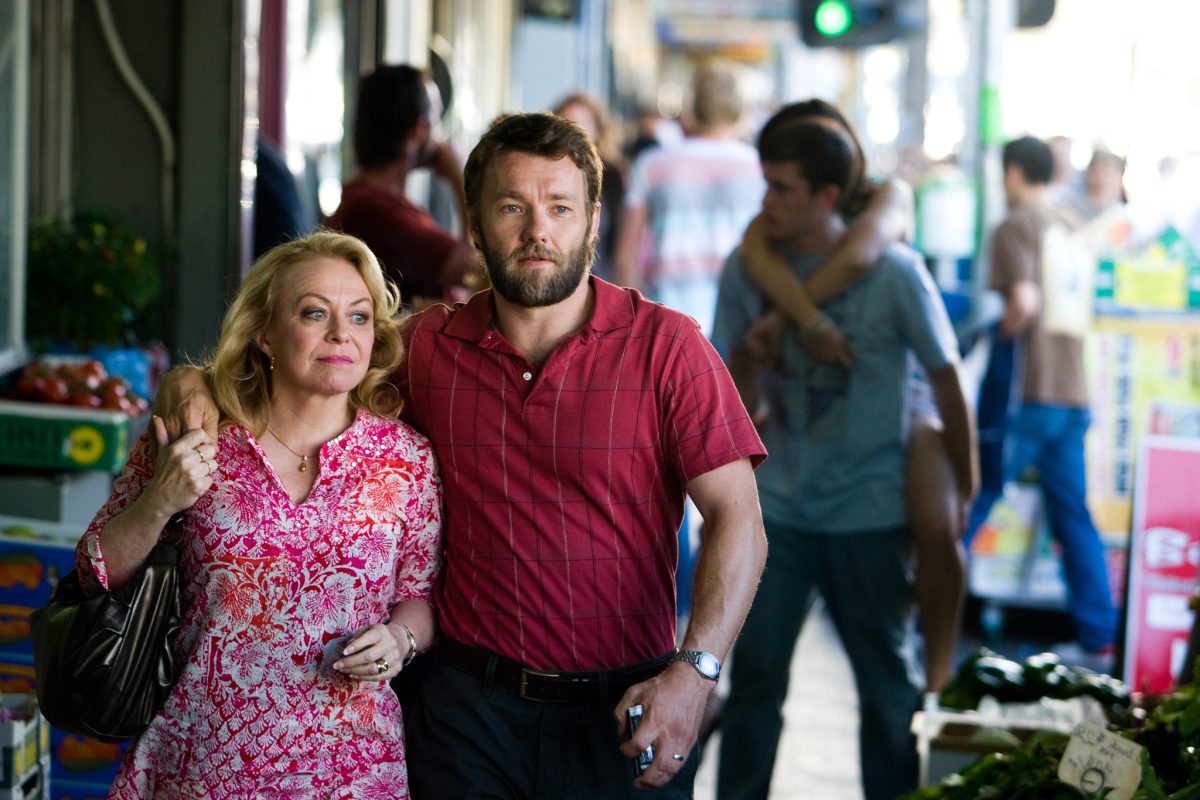
The brief moment when Leckie crosses paths with Smurf in the store carries a quiet yet powerful message that this battle between law enforcement and the Codys will continue indefinitely. He will always be watching them, always trying to dismantle their influence, even as they find new ways to slip through the cracks. The tragedy is that J, whom Leckie tried to pull into safety, may now stand on the opposite side. Rather than being rescued, J has been absorbed into the very world Leckie was attempting to shield him from.
Animal Kingdom (2010) Theme Analyzed:
The Brutal Logic of Survival in a Dog-Eat-Dog World
The central theme of “Animal Kingdom” is the harsh reality of a dog-eat-dog world, where survival is governed by instinct, calculation, and the willingness to strike first. The Cody family embodies this environment completely. On the surface, they function like any ordinary family, eating together, joking, and maintaining a sense of domestic closeness. However, beneath that veneer is a deep-rooted engagement with crime, something treated almost casually because it has been part of their lives for so long. Violence, for them, is just a means of existence.
Into this world steps J, someone who has never been shaped by the Codys’ criminal instincts. The moment he moves into Smurf’s house, he becomes part of an ecosystem where loyalty, suspicion, and brutality operate in a constant cycle. The tragedy is that J never seeks this life. He is merely caught in its gravitational pull, and from the moment he steps in, the film makes it clear that escape is nearly impossible. Every choice he makes, whether passive or active, pushes him deeper into the family’s structure.
One of the film’s most painful elements is the loss of innocent individuals like Nicole. Her death is a stark reminder that the consequences of this world extend far beyond the people who choose to live in it. Innocent lives are consumed simply for being adjacent to danger. And even when figures like Pope finally meet their end, there is no feeling of triumph. The violence that removes a monster does not repair the damage he caused. It simply leaves another scar behind. “Animal Kingdom” shows that in this hierarchy, no one truly wins. Everyone is trapped in a cycle where survival is possible, yet peace is not.