Quentin Dupieux’s new film, “The Piano Accident” (Original title: L’Accident de piano), centers around an online celebrity with little to no self-awareness. On paper, she is your everyday social media star, capitalizing on our endless appetite for dopamine by providing a readily available, easily digestible quick fix.
Dig beneath her pretense, and you’ll find you, me, and a lot of us, who are painfully addicted to a similar form of pleasure that offers escape without effort. It begins as a passive form of validation for our desires, often embarrassing to admit otherwise, leaving us with no guilt of having them, thus offering an indirect emotional release. Yet, it eventually leads us to an incessant loop of stimulation that becomes increasingly difficult to escape.
Dupieux’s film decodes our social media addiction through Magalie (Adèle Exarchopoulos), a young celebrity who’s a veteran in her field. She began posting shocking videos of herself online and continued doing so until the titular ‘accident’ that made her take a step back. It put her in a delicate situation that would usually compel someone to reconsider their choices and make amends in some shape or form. Well, that’s not her. The film takes no time in showing that introspection isn’t her strongest suit. All we see is what she presents to the world, and her image means everything to her, even if it never conveys what she truly feels.
The script highlights her detachment and cognitive dissonance, while hinting at their emotional source. However, it doesn’t use that pathos to turn her tale into a tragic, cautionary tale. Instead, it stays committed to its black comedic roots, without diluting that essence. We meet her as a painfully self-absorbed celebrity who expects everyone around her to behave according to her whims.
That keeps her manager, Patrick (Jérôme Commandeur), devoted to her service, without worrying about its effect on his personal life. He becomes her ride-or-die companion at the cost of his dignity. Yet, his disposition seems prudent. In a world that relies on social media perceptions, he remains content in being just another cog in the wheel due to a desperate need for self-preservation.
Watch The Trailer:
What feels absurd is Magalie’s level of investment in her work. She takes pride in her stunts, even if they are sensationalist. Rather, the lack of effort in making them leads her to identify herself as an artist. Her work involves gratuitous violence, which leads to conversations about pain and pleasure. Dupieux uses CIP as a narrative tool to differentiate between her emotional and physical pain, thus broadening the scope of his thematic exploration beyond what’s obvious. So, as we see someone hurting themselves, we are left contemplating the corrosive influence of social media and the internet at large, which accelerates their worst impulses.
Also Check: The 10 Best Comedy Movies of 2025
Dupieux uses Magalie’s work to critique sensationalism paraded as art and the culture that sustains it. After all, Magalie becomes famous because there’s a constant demand for what she offers. She scratches an itch that action movies do: thrill without consequences. A character feels pain, and you can leave with its catharsis. It doesn’t need to have depth or logic to be effective. Even a gratuitous display of violence can get your blood pumping, but you won’t feel a thing. Social media has made access to this form of catharsis easier than ever. The worst part is that it can be bite-sized, which leaves you with an endless supply of stimulus.
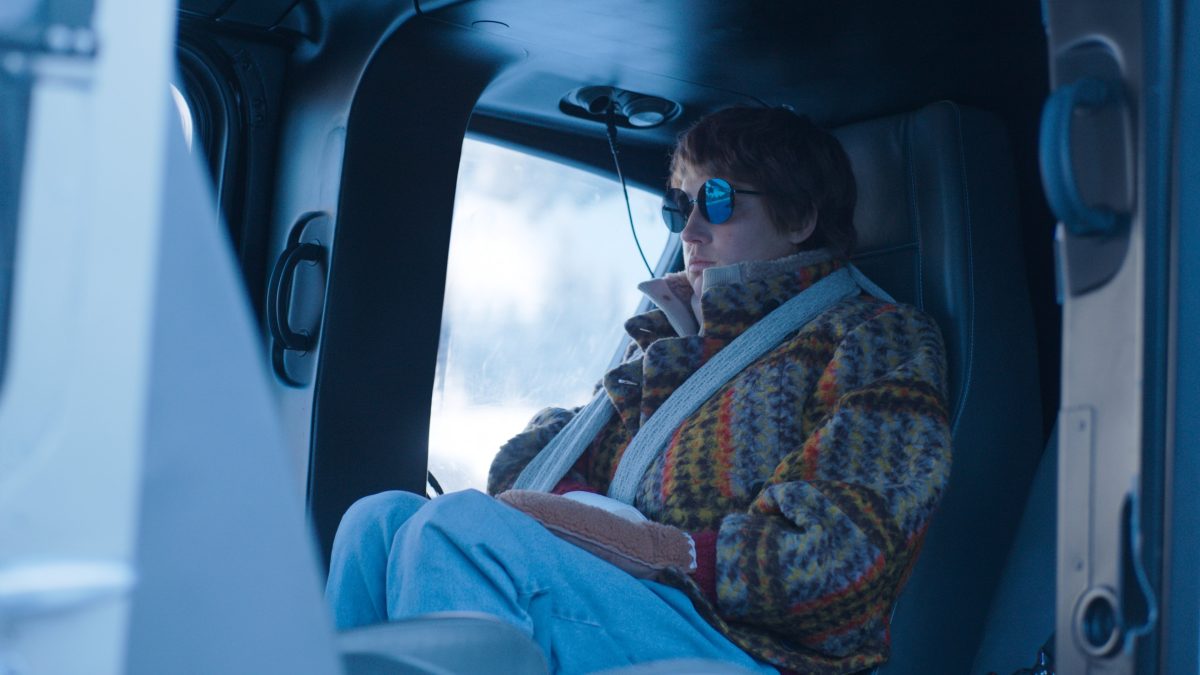
It has made fame easier to attain but far more challenging to maintain. So, much like any other present-day celebrity, Magalie churns out an unseemly amount of content to stay in a cycle of manufactured relevance. It feeds those like Romeo (Karim Leklou), who remain obsessed until she remains a version of herself they approve of. Dupieux interrogates this duality through Magalie’s persona, which makes her impenetrable even to her well-wishers. He introduces Simone (Sandrine Kiberlain) for the same reason. She hopes to break through the walls Magalie has built around herself, wanting to know the human behind the orchestrated madness.
Despite occasional glimpses into Magalie’s past, Dupieux doesn’t go out of his way to build a sympathetic arc, which works in the film’s favor. It sharpens the edge of his satire, making the conclusion sting harder. We meet a character whose reluctance to look inward becomes her bane. Through her, Dupieux illustrates our attention-hungry culture in a script devoid of any fluff that doesn’t concern her small world.
Overall, his watertight script becomes the film’s strongest suit, which clues us in on her teenage maladies without losing track of its satire. Exarchopoulos elevates it further by revealing Magalie’s eternal urge to be in complete charge of her life, while online vultures prey on that weakness. She plays Magalie as an icy, smug celebrity, whose caricaturish act reveals her pain the more she tries to hide it. She effectively becomes a mirror to a world that uses online presence as a shield, only to realize that it is simply an elaborate act with an expiration date.



![Tantura [2022] ‘Sundance’ Review: A Well-Crafted Documentary of Brutality Gone Unpunished](https://www.highonfilms.com/wp-content/uploads/2022/01/Tantura-Sundance-Film-Festival-768x494.jpeg)