“Laalo: Krishna Sada Sahaayate” is the directorial debut from filmmaker Ankit Sakhiya and has managed to become this year’s underdog of regional india cinema. Slowly but surely generating higher acclaim and bigger crowds, the film has become the highest-grossing Gujarati language film in history. Due to its mass appeal, devotional-based text, and incredibly strong word of mouth on release, it quickly got an international rollout, going as far as being the first Gujarati film to be released in Poland and other countries in Europe.
The intensity of the positive word of mouth, paired with its critical and box office sweep, piqued my interest in a way no other Gujarati film has. This was something I had to go see, so that’s what I did. An hour and a half commute into Wembley, London’s biggest Gujarati neighborhood, braving awful rain and wind to finally see what all the hype was about. Two and a half hours later, I found myself leaving the cinema a little confused by what I had watched.
Mainstream Gujarati cinema hasn’t exactly been pushing boundaries over the last few years; it very much feels like an industry doing the same thing with tiny variations. From what I’ve seen, a lot of Gujarati cinema sticks to a familiar formula: mass-appeal dramedies built around tidy moral lessons and neatly packaged social messages. The stories tend to feel rigid and repetitive, often taking the shape of road-trip–style “fish out of water” narratives, where a character is bluntly confronted with their flaws and the consequences of their actions.
These films often feature pretty below-average filmmaking, a passable script more focused on an underlying message or allegory as opposed to story, characters, or interesting storytelling. This results in passable yet sincere forms of entertainment that very much feel created to appeal to as many people as possible while taking virtually no risks.
Quite frankly, I was expecting “Laalo: Krishna Sada Sahaayate” to be another case of the aforementioned Gujarati cinema formula, but with a stronger emphasis on the devotional elements (it is named Krishna Sada after all). Ankit Sakhiya’s debut does a lot of things that feel like a breath of fresh air within the context of Gujarati cinema, while in equal measure embodying so much of what I find frustrating about these films.
“Laalo: Krishna Sada Sahaayate” is about the titular Laalo, a rickshaw driver from Junagadh battling many struggles. He owes a lot of money to local loan sharks, he can’t pay his daughter’s school fees, and is constantly struggling to make ends meet. The man turns to alcohol to cope with this and becomes an abusive alcoholic, deadbeat towards his daughter and wife. Laalo is at rock bottom yet somehow only keeps digging deeper.
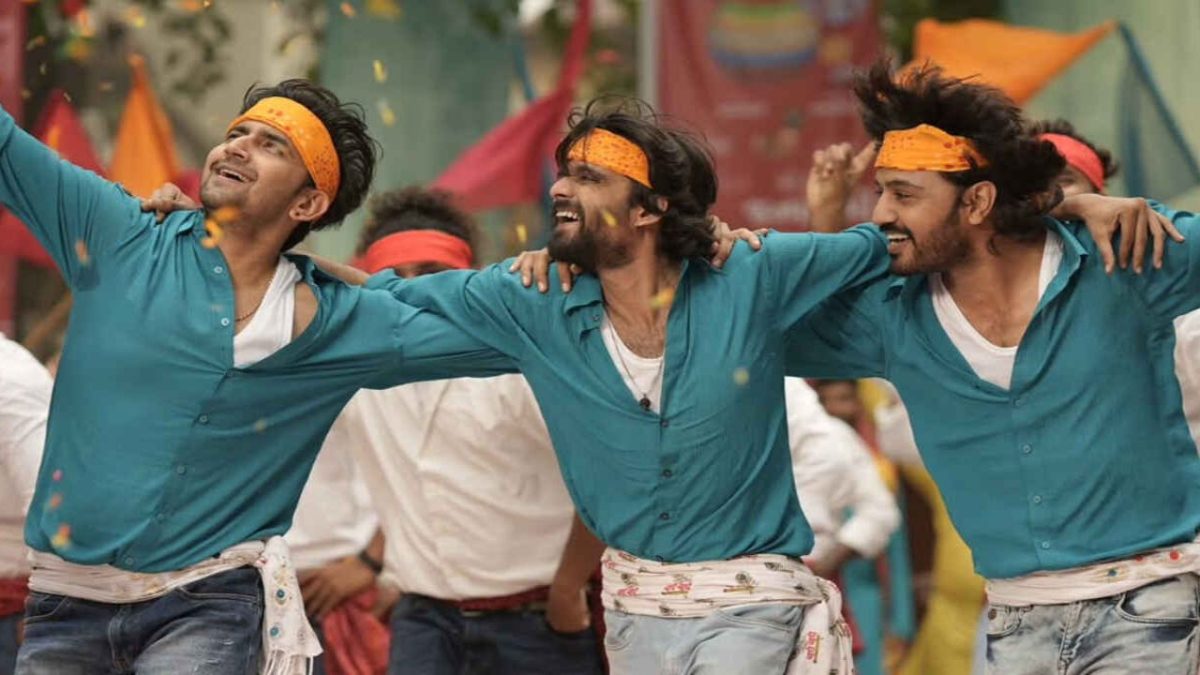
The film makes it clear early on that Laalo isn’t an inherently bad person, but the circumstances he’s facing have turned him into someone he and his loved ones can’t recognise. In the early moments of the film, he meets a stylish tourist who offers him a decent bit of change for a full tour of Junagadh, and we do get an insight into the warmer, kinder side of our protagonist. He very warmly shows this kind tourist around the city, and we see a nice friendship start to blossom between the two.
When he gets back to his family, the crushing reality sets in. He’s in debt, he’s failing as a father, and is actively hurting the future of his wife and daughter. The next day, he picks up a wealthy customer transporting a large amount of money. Laalo decides that it’s time for him to get back on top. He breaks into the farmhouse where the money is being kept. He doesn’t realise that not only has it been abandoned, but it’s locked from the outside with an electric gate. Days pass as he’s trapped in this house without food and water, and he starts to pray and pray as the rains fall upon him.
Also Related: World Beckons “Shunya”: Gujarati Folk Bhavai Takes Center Stage in Indie Film Debut
The very next day, his prayers get answered. The wonderful tourist he met days ago (also named Laalo) magically reappears at the farm, revealing to him that he is, in fact, an incarnation of the Hindu god Krishna, and he will help Laalo if he is willing to find change in his heart. All of this is intercut with his wife and neighbour trying to find him. What follows is an “It’s A Wonderful Life”-esque second half that hits every familiar narrative beat in a way that’s only slightly satisfying.
What took me by surprise is the willingness to engage in the thorniness of the film’s subject matter so directly and so early on. Gujarati cinema, in particular, often shows a heavy restraint when showcasing anything that might ruffle some feathers, whether that be morally gray characters, violence, swearing, etc.
So, the decision to have such a rough and almost abrasive lead character in Laalo felt like a breath of fresh air. Going further, in the film’s first act, director Ankit Sakhiya and actor Karan Joshi really allow us to take in what this man’s lowest point is. He’s a cruel and mean alcoholic who is downright abusive to those who care about him. While the events that transpire aren’t graphic per se, they are certainly emotionally punishing.
Sakihya employs these long, roving takes in tight and dimly lit domestic spaces to put the audience right into chaos. We are stuck in there with the characters as the situation escalates, and tempers start to rise and rise. It gives the film a very grounded feeling that is so rarely seen in Gujarati cinema. These scenes can feel downright unpleasant in an authentic manner that does avoid easy melodrama.
There’s a refreshing sense of formal restraint in these moments, where it’s clear the trust is placed on the actors to convey the weight of the scene without over-the-top flourishes, as well as a trust placed on the audience to take in these dramatic beats without the training wheels that are often used in similar films.
While the first act of the film has some really exciting filmmaking on display, such as harsher and more intentional colour schemes, the aforementioned long takes have a rarely seen use of more aggressive handheld cinematography. I found the visual language throughout to be quite inconsistent after the first act concludes. For every well-composed visual moment that feels like it’s pushing mainstream Gujarati cinema forward, there’s a big handful of clumsily shot moments that feel bland and something I’d expect from a Colours TV soap opera.
The film comes across as hesitant about its bolder artistic instincts, as if it’s constantly second-guessing how far it can push itself. There’s a sense that it doesn’t fully trust its daring choices, worrying that going any further might distance mainstream audiences and disrupt the safe, devotional tone it wants to protect. The film is at its best when it’s committing to its unconventional character work and filmmaking choices, trusting its audience to invest in something a bit thornier than your usual piece of mass appeal entertainment.
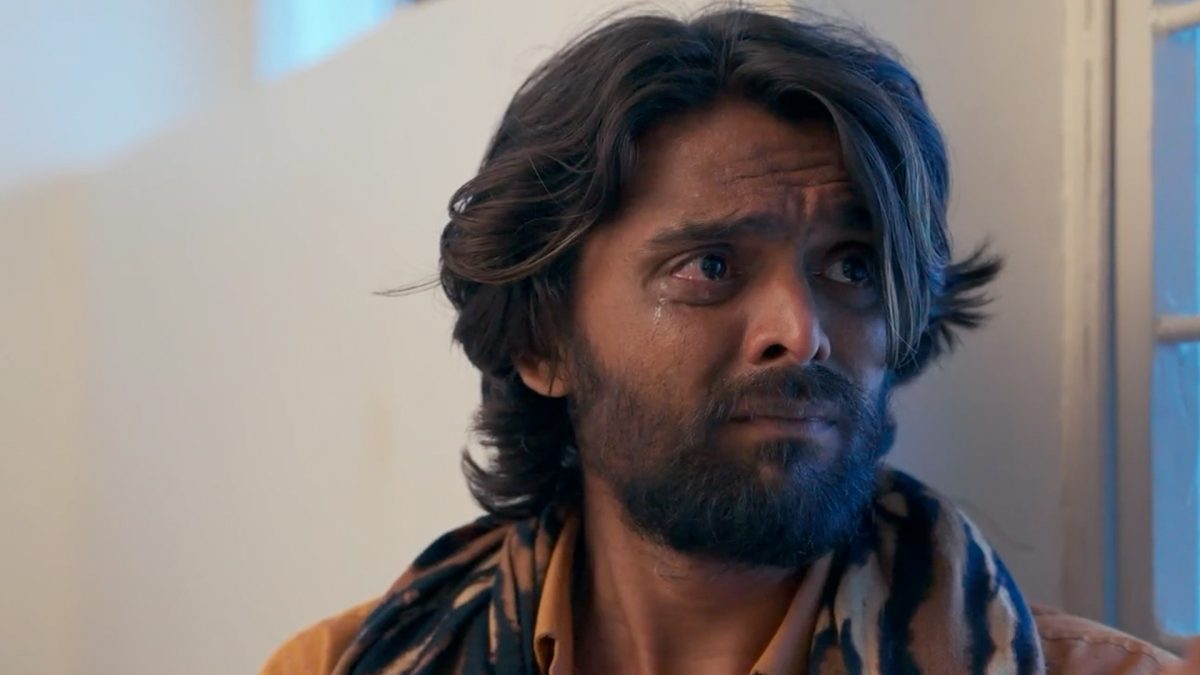
My frustrations with the film don’t stop there. Its pacing makes matters worse. The core premise really kicks in only at the intermission, when Krishna finally appears to Laalo in human form to guide him. Until then, the film stretches its buildup across an entire hour, creating what feels like an endlessly extended first act with strangely uneven momentum. Once Laalo is trapped inside the house, the narrative almost stalls completely, and it seems to take forever before Shruhad Goswami’s Krishna enters the frame—after which the whole story rushes through what essentially becomes the second and third acts in the remaining half.
The constant flashbacks and intercutting with the wife’s search for him do cause the film to feel a little unfocused and bloated at times. Most of the flashbacks work on an emotional level, but feel consistently redundant, i.e., over-explaining character backstory and spoon-feeding the audience emotional beats.
The plot with the wife is crucial to the film, but it feels like a struggle to get through due to the supporting performances being incredibly melodramatic. The screenplay has the same inconsistencies as the film’s form. Its odd structure hurts the emotional momentum that is being built. The dialogue, for the most part, is very compelling when it doesn’t go full-on devotional sermon, but that is to be expected, unfortunately.
The film’s heart is undeniably in the right place, and it deserves credit for acknowledging the harsher truths of working-class life. The problem is that it simplifies complex issues like addiction, domestic abuse, and debt to the point of misrepresentation. Through its devotional lens, these struggles are framed as problems that faith alone can resolve, rather than conditions that require real-world support, community care, and systemic change.
Belief isn’t a magic cure, and it’s troubling to see the film reduce something like addiction to a matter of spiritual correction. It’s especially frustrating that one of the most successful Gujarati films in recent memory handles such issues so simplistically, even while offering genuinely refreshing ideas elsewhere.
Where the film truly shines is in its performances. Karan Joshi is extraordinary, allowing us to fear Laalo’s cruelty while still understanding his pain. He captures a man worn down by circumstance, someone once kind who has become something far darker, and he anchors the film even through its duller stretches. It may genuinely be one of the finest performances I’ve seen in a Gujarati film.
Shruhad Goswami complements him beautifully, playing the mysterious tourist—later revealed as Krishna—with warmth, restraint, and a gentle charisma that never tips into sermonizing. Together, Joshi and Goswami create the film’s most affecting moments, including a late exchange in the mountains that’s so quietly sincere it nearly moved me to tears.
As a debut, Ankit Sakhiya’s “Laalo: Krishna Sada Sahaayate” is a perplexing blend of progress and hesitation. Its bold ideas and exceptional leads push mainstream Gujarati cinema forward, but they’re undermined by reductive handling of serious issues, uneven supporting performances, and a tendency to over-explain.
I’d like to hope the industry learns from its successes and aspires to do better. The cynic in me worries instead that we’ll simply see more devotional crowd-pleasers chasing the same commercial high. Even so, Joshi and Goswami leave such a lasting impression that they keep my feelings toward the film warmer than they might have been.



![The Kid Detective [2020] Review – Sleuthing in a Notably Darker and Self-Aware World](https://www.highonfilms.com/wp-content/uploads/2021/02/The-Kid-Detective-2020-768x512.jpeg)