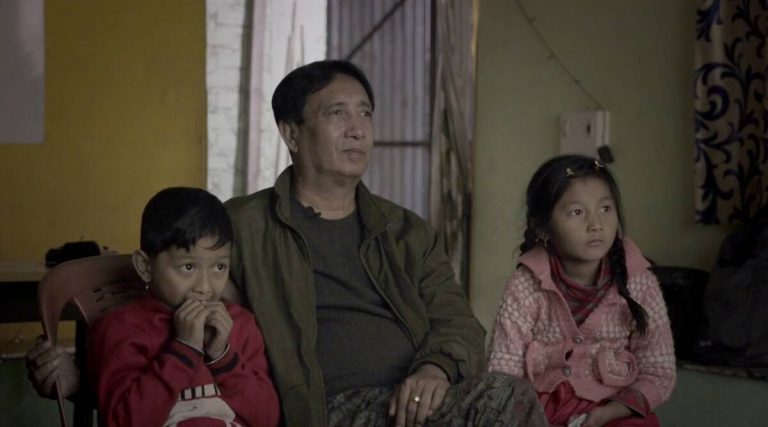
Kanu Behl’s “Titli” (2014) initially plays like a gritty crime drama about a small-time car-jacking family in Delhi. But beneath the bruises, desperation, and petty violence sits a far more unsettling question: how do you escape when family itself is the cage? This isn’t a downward spiral of ambition gone wrong.
It’s the story of a young man who wants something painfully ordinary, only to discover that even that might be impossible. Set in the raw underbelly of East Delhi, “Titli” drains crime of any sheen. Every robbery is awkward. Every hope is bargained with. And the film doesn’t watch its characters to redeem them — it watches to reveal how violence turns into inheritance, generation after generation.
Spoilers Ahead
Titli (2014) Plot Summary & Movie Synopsis:
Why Does Titli Want to Buy a Parking Lot?
The film opens with Titli surveying an unfinished mall parking lot, not with excitement but with quiet calculation. This space represents escape. For Titli, the youngest brother in a brutal car-jacking gang, the parking lot is not a business dream but a moral one. It is clean money, predictable income, and distance from the nightly violence his brothers normalize. Pintu’s optimism feeds this belief. ₹3,00,000 seems like a small price for freedom. But Titli’s problem is not a lack of ambition. It is timing. He wants out before the family is ready to let him go. And in this family, exit is treated as betrayal.
What Goes Wrong During Titli’s Attempt to Run Away?
Titli’s first attempt at escape collapses under the weight of panic and bad luck. After a carjacking operation, he steals the money and tries to flee, but crashes the stolen car just before a police checkpoint. This accident is symbolic. Titli doesn’t lack intent. He lacks control. Pradeep, dragged into the mess, is arrested alongside him. When they are released, the money is gone. The police have quietly taken it. Titli’s confession to his brothers is fatal. By admitting he wanted to leave, he confirms Vikram’s deepest fear: that Titli is slipping out of his grip. From this moment, punishment becomes a strategy.
Why Does Vikram Force Titli to Marry Neelu?
Vikram doesn’t believe in emotional reform. He believes in containment. Marriage, for him, is a leash. By forcing Titli to marry Neelu, he ensures three things at once. Titli is trapped by responsibility. A woman is introduced into the gang as bait and cover. And Titli’s desire to run is turned into a domestic obligation. Neelu is not chosen for compatibility. She is chosen for convenience. The marriage is loveless, abrupt, and transactional. It mirrors every other relationship in the household.
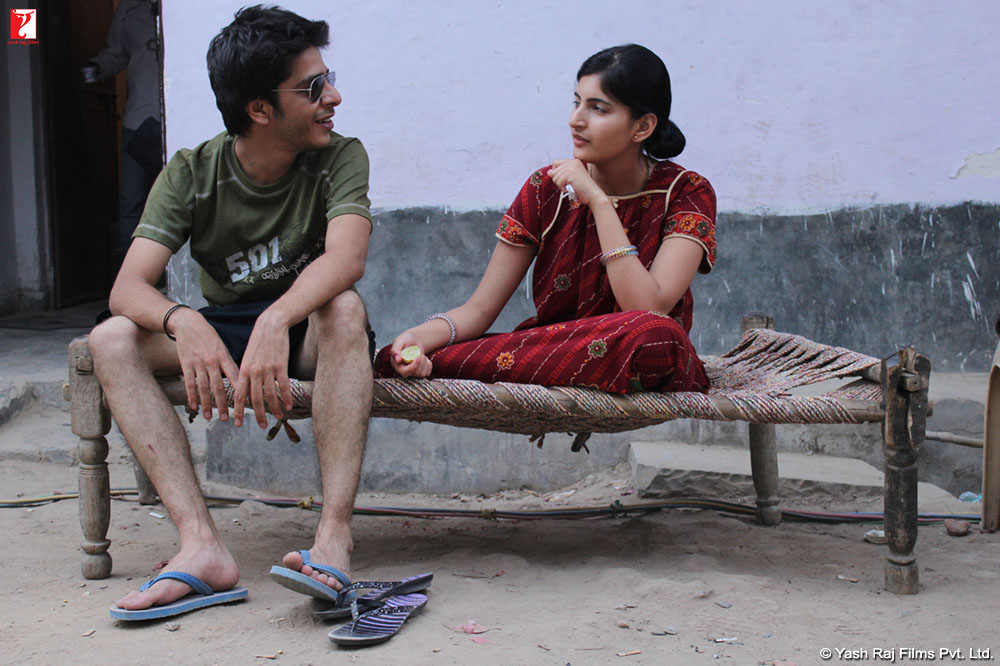
Power flows downward. Consent is irrelevant. Neelu enters the family already looking for escape. She is emotionally invested in Prince, a wealthy married man who promises her a future without violence. Her marriage to Titli is a cage, not a commitment. When she witnesses the raw brutality of the gang’s operations, fear pushes her toward action. Neelu’s desire to leave isn’t romantic. It’s survival-driven. She wants out of this house, these men, and this life. When Titli catches her trying to escape, their relationship shifts. They recognize something familiar in each other. Not love yet, but mutual desperation.
Why Does Titli Agree to Help Neelu Leave Him?
Also Read: Titli (2015) Movie Review: A Terrifying Investigation of the Dog-eat-Dog World
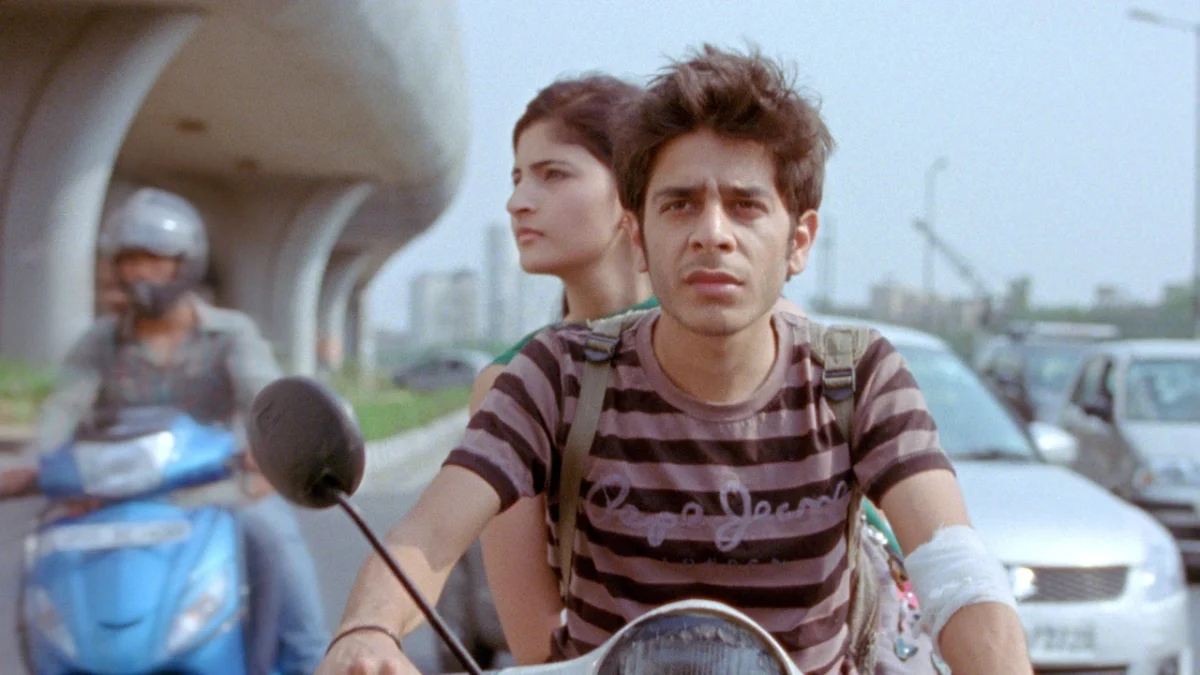
Titli’s deal with Neelu is cold but honest. If she gives him ₹2,50,000 from her account, he will help her leave him for Prince. This is not generosity. It is alignment. Titli doesn’t want Neelu. He wants the capital to restart his escape plan. Their visit to Prince is crucial. Titli sees firsthand that Prince’s promises are hollow.
Prince enjoys Neelu’s devotion but has no intention of dismantling his comfortable life. When confronted, he flips the power dynamic, blackmailing Titli instead. In this world, wealth always wins arguments. Sangeeta’s return exposes Vikram’s vulnerability. She brings proof of domestic abuse and demands a divorce along with ₹5,00,000 in alimony.
For the first time, Vikram is cornered by a system he can’t intimidate. His refusal to use Neelu’s fixed deposit shows hypocrisy. He exploits women violently but resists touching money that isn’t “his.” Sangeeta’s refusal to grant an extension further tightens the noose. The family needs money fast, and legality is no longer optional.
Why Do Titli and Neelu Consider Murder as a Way Out?
When a politically connected cop offers ₹20,00,000 for killing an industrialist, the offer lands not as a shock but as inevitability. Violence has always been currency in this household. This job simply formalizes it. Titli, however, chooses this moment to disappear again. He drops Neelu at her parents’ house, takes the money she trusted him with, and vanishes. Simultaneously, he anonymously tips off the police about his brothers. This is not bravery. It is exhaustion. Titli wants the family destroyed without having to watch it happen.
Titli reaches the edge of his dream and pulls back. After approving the parking lot deal, fear overtakes him. Clean businesses still involve power, hierarchy, and risk. So he demands his money back, threatening Pintu’s boss with a stolen gun. This moment reveals Titli’s deepest flaw. He doesn’t know how to live without violence yet. Even when chasing freedom, he uses the tools of the life he claims to reject. Escape, for him, is still shaped like crime.
Titli (2014) Movie Ending Explained:
Why Does Titli Return Home?
Titli’s return is not reconciliation. It is closure. He collects his belongings, confronts his father, and severs ties without drama. There is no forgiveness, no explosion. Just withdrawal. The quiet exit matters more than his earlier failures. This time, he leaves without stealing, crashing, or begging. Neelu’s illusion shatters at the same time.
She learns that Prince was never going to leave his wife. Her escape route was a lie. When she and Titli come back together, it isn’t romance. It’s recognition. Both have seen the truth behind their chosen exits. They don’t walk into a better life, but walk away from worse ones. Titli doesn’t promise redemption. It suggests something smaller and more honest. Sometimes freedom isn’t success. It’s simply refusing to continue.
Titli (2014) Movie Theme Analyzed:
Violence as Inheritance and the Illusion of Escape
Kanu Behl’s “Titli” is not a crime film about ambition or a rebellious coming-of-age story. It is a bleak examination of how violence, patriarchy, and poverty operate like a closed ecosystem, where escape is imagined constantly but rarely achieved. The film’s central theme revolves around inheritance, not of wealth or tradition, but of brutality. Titli is born into a family where crime is not a deviation but a profession, and masculinity is defined by control, intimidation, and silence.
Also Related: 15 Indian Movies About Dysfunctional Family
The family functions as a micro-state governed by fear. Vikram, the eldest brother, enforces order through physical and psychological violence. His authority does not come from intelligence or leadership, but from his willingness to hurt without hesitation. Pradeep, volatile and impulsive, mirrors this behavior, showing how violence reproduces itself without reflection. Titli, the youngest, initially appears different, but the film steadily reveals that he is not morally separate from his brothers, only more self-aware. His desire to escape is not rooted in ethical awakening, but in exhaustion.
Freedom in “Titli” is repeatedly framed as a transaction. The parking lot represents clean money and a predictable life, yet it is still accessed through stolen cash. Neelu’s affair with Prince mirrors this logic. She believes love can function as a ladder out of her circumstances, but Prince treats her as a convenience, not a commitment. His wealth gives him the luxury of deception, while Neelu bears the cost of belief. The film suggests that escape routes offered by money or romance are illusions designed to preserve existing power structures.
Marriage in “Titli” is stripped of intimacy and turned into a tool of containment. Vikram forces Titli to marry Neelu not to stabilize him emotionally, but to trap him socially. Women in the film are consistently positioned as currency, used to secure obedience, cover crimes, or absorb violence. Sangeeta’s demand for divorce and alimony briefly disrupts this system, not because she is empowered, but because legal evidence forces accountability where morality never did. Even then, her victory is limited and transactional.
The police, traditionally symbols of order, operate as facilitators of violence. They steal Titli’s money, extort criminals, and commission murders through intermediaries. This erases the boundary between law and crime, reinforcing the film’s grim assertion that systems meant to offer exit routes are often just alternate traps. Titli’s final act, cutting ties with his family and leaving without confrontation, is not heroic. It is deliberately muted. The film refuses catharsis because it understands that survival in such spaces is not dramatic.
It is quiet, uncertain, and morally compromised. Titli does not transform into a better man. He simply chooses to stop participating. Ultimately, “Titli” argues that in a world structured by inherited violence, escape is not a destination but a fragile decision. And even that decision carries the weight of everything one is trying to leave behind.


![Rim of the World Netflix [2019] Review – A childish throwback to the 80s](https://www.highonfilms.com/wp-content/uploads/2019/05/Rim-of-the-World-Netflix-Original-2019-768x432.jpg)
![Café Society [2016] : Of Unfulfilled Romances and Regrettable Life Choices](https://www.highonfilms.com/wp-content/uploads/2016/10/cafe-society2.jpg)