
Ángel Manuel Soto deserves far better than the treatment he’s been getting this decade. After the intended breakthrough indie feature in the street-bound “Charm City Kings” was mostly snuffed by the COVID pandemic, Soto’s next chance to introduce himself to wider audiences came in the form of a DC adaptation of a comic book character nobody’s heard of, for a film that was announced ahead of time as one of the last vestiges of its cinematic universe; essentially, the film was its own free pass for audiences to ignore it altogether.
Now comes “The Wrecking Crew,” which essentially stands as Soto’s decade-late audition tape to direct a “Fast & Furious” film. It’s loud, it’s violent, it’s surprisingly capable in its focus on comedic familial chemistry (in reasonable doses), and it demands the collective whooping of an able crowd… and naturally, it’s been relegated to the doldrums of direct-to-streaming content.
Rather than resign himself to this fate and cash in that Amazon cheque, however, Soto has taken this opportunity to hit the gas full-throttle and make the best case possible for why he’s above such a half-hearted release strategy. Like the estranged brothers of his latest buddy-cop action-comedy, Soto is well beyond the point of being underestimated.
Not that Soto’s chosen route to prove that point comes with any hope for novelty, as “The Wrecking Crew” submits just about as formulaic a premise as you can get in its selected sub-genre. It all starts with two half-brothers who can’t stand each other. James (Dave Bautista) and Jonny Hale (Jason Momoa) haven’t spoken in a solid decade.
Connected biologically by a father who was never a committed presence in either of their lives, James holds a stable family life as a Navy SEAL in the family’s native Hawaii, while Jonny has taken his exile as far away as possible—that being life as a drunken, deadbeat cop living in a beaten-down bungalow in Oklahoma.
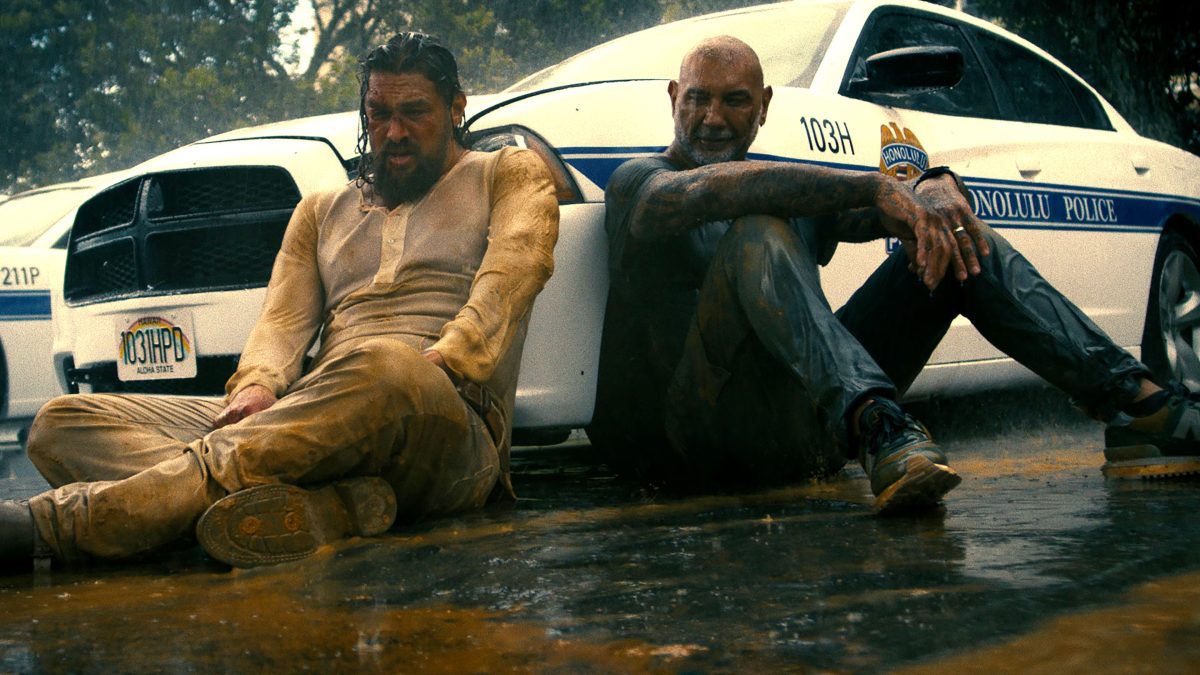
The brothers are content to go on pretending the other doesn’t exist, even as their father, a low-level private investigator, is violently run down in a hit-and-run that nobody seems keen to investigate. That is, until Jonny is approached back home by some yakuza goons who claim he has a package sent by his now-late father that they want. Convinced that this run-in goes deeper, Jonny heads back towards the Pacific to put the pieces together; James, the self-described “methodical” brother, more partial to the theory of an accidental death, finds himself reluctantly tagging along, quickly proven to be dead wrong in his assumptions.
Once the wheels are set in motion, you’re unlikely to be surprised by just about anything “The Wrecking Crew” has to offer. If you wanted a twist villain whose status as such isn’t abundantly clear the moment they first step into the frame, then you’ve stepped onto the wrong beach. If, on the other hand, you’re partial to a precisely executed callback to the famed hallway fight from “Oldboy” soundtracked by a beat-knocking new RZA song, then you might be inclined to stick around for the barbecue.
In that sense, the only real surprise to come from the film is, again, just how genuinely engaging it manages to be despite squeezing itself into a blueprint that likely had to sand down any real edges to make it past the boardroom suits. Soto’s wholehearted commitment to the grimy garnishing of his gnarly set-pieces—so many limbs shredded by everything from concrete to literal cheese graters—almost lets you forget that that grime is being diluted at every second by a larger distribution mode intent on letting the film fall to the bottom of the algorithm before you’ve even finished reading this sentence.
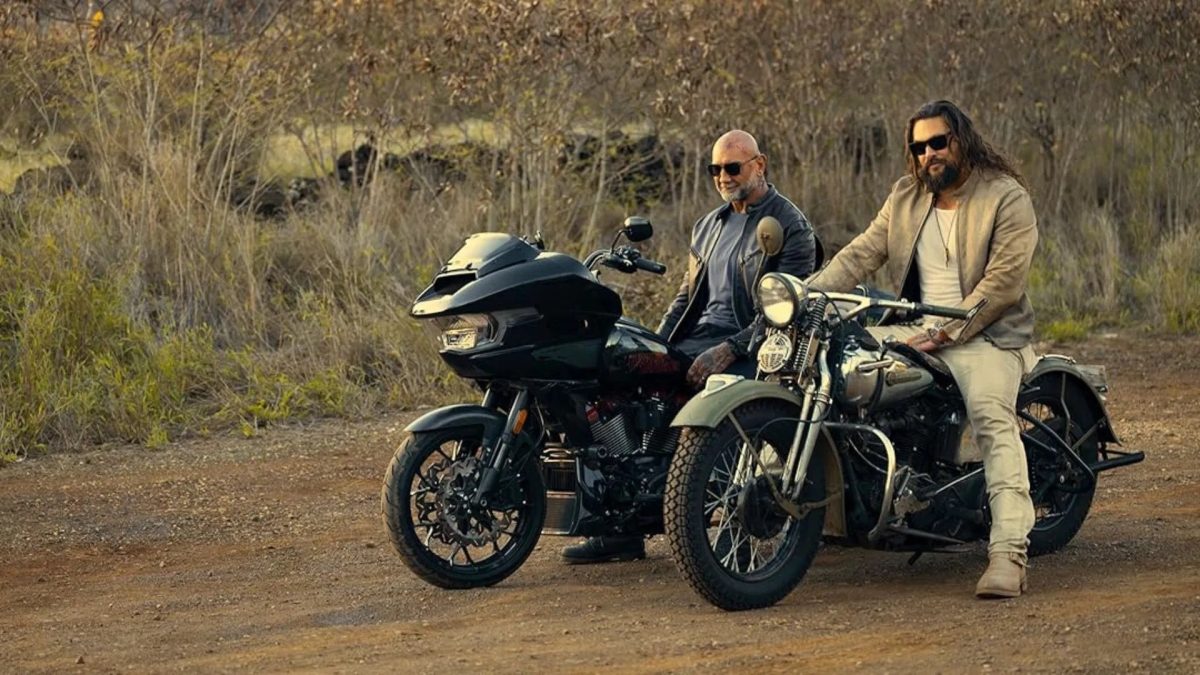
In fairness, “The Wrecking Crew” does make a concerted effort to complement that ferocity with an ingrained sense of place within its Hawaiian environment. If “Charm City Kings” demonstrated Soto’s ability to capture the lived-in essence of Baltimore as its own breathing metropolis, then his latest shows an equal desire to give the impression that the people inhabiting its space have actually been there before.
Most commendable, in that respect, is the film’s refusal to oversimplify any of its Hawaiian parlance for a focus-grouped crowd. Soto seems aware that the Haole watching the film have seen “Lilo & Stitch” enough times to know what “ohana” means without having Momoa turn to the camera and explain it.
On that front, Momoa and Bautista’s chemistry, while not an incendiary Shane Black-level pairing that would inspire decades of sequel-hoping, is a dynamic that plays off the actors’ overt similarities—both physical and personality-wise—to emphasize the differences that make their brotherly friction shoot sparks as a burning minivan dragged against asphalt.
If “The Wrecking Crew” makes it believable within seconds that these two want nothing to do with one another, then the film finds the equally believable pocket where they’re willing to go to bat for one another on the receiving end of a yakuza-led beatdown—and, inevitably, the beatdown that comes when they finally face their resentments towards one another.
Whether lamenting the tactlessness of each other’s investigative skills, rattling off requisite one-liners, or getting collectively side-tracked by how hot Morena Baccarin is (who says muscle-headed Harley-riders can’t be relatable?), Bautista and Momoa carry “The Wrecking Crew” on their tattooed shoulders, and find that task easiest when holding that weight together. Ángel Manuel Soto stands back and gives them the space to carry that weight, but not without throwing a few pounds on every once in a while for them to break a needed sweat.




![Nirmal Pathak Ki Ghar Wapsi [2022] Review: The Tale of a Man’s Homecoming Is Shoddy & Pretentious](https://www.highonfilms.com/wp-content/uploads/2022/06/nirmal-pathak-ki-ghar-wapsi-768x427.jpg)

![The Quiet Family [1998]: One of South Korean Cinema’s Funniest Offerings](https://www.highonfilms.com/wp-content/uploads/2018/08/The-Quiet-Family-768x467.jpg)