The conversation around queer relationality, particularly from a Western pulpit, has long been shackled to a single, tiresome narrative: the moment of Disclosure. It’s the grand, often painful, pronouncement of identity—the verbal stepping “out” of the closet. This article proposes that this disclosure-centric model is not just culturally specific but a profound misrepresentation of how true intimacy, especially in non-normative contexts, is actually forged. It imposes a linguistic, declarative burden where life, in its quiet, material density, has already done the work. The 2010 film “Memories in March,” directed by Sanjoy Nag and brilliantly scripted by the late Rituparno Ghosh (who also stars), offers a powerful counter-cinematography to this Western fixation.
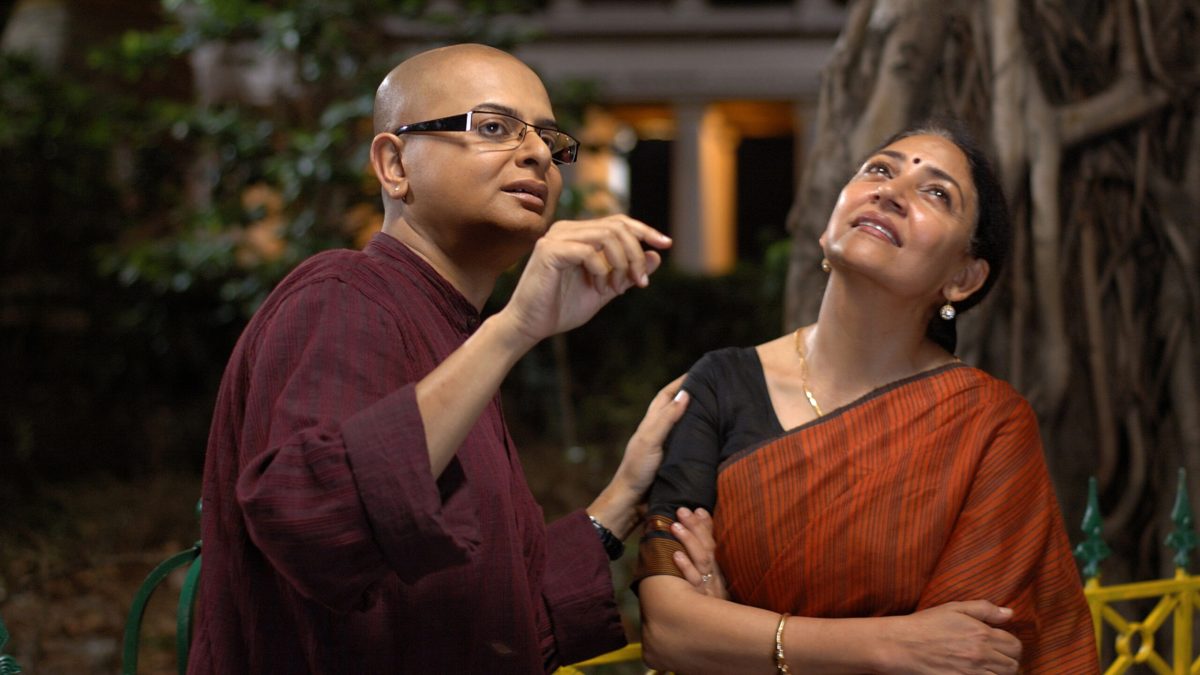
The film does not pivot on the shock of a ‘reveal,’ but on the slow, somatic, and material unfolding of a relationship between Aarti (Deepti Naval), a mother mourning her son Siddharth, and Ornab (Rituparno Ghosh), Siddharth’s lover and colleague. This is a story where the ‘truth’ is found not in a confession, but in the residual warmth of a domestic space. The film’s setting—Siddharth’s Calcutta (Kolkata) apartment—is the first, and most crucial, character. It is a laboratory of affective entanglement. Aarti arrives to manage her son’s affairs, a temporal void dictated by sudden death, and immediately encounters Ornab. The conventional narrative arc—the parent discovering their child’s ‘secret’ through a diary or a letter—is deliberately and strategically subverted.
Instead of a linguistic confrontation, the truth is delivered through the materiality of shared life. Aarti handles Siddharth’s possessions: his shirts, his books, the specific placement of a mug. Ornab moves through this same space, his grief unspoken but palpable. The intimacy that begins to bloom between the mother and the lover is not about Ornab articulating their history. It is about both of them experiencing Siddharth’s absence together within the highly personalized environment he left behind.
This is where a materialist critique, borrowing from theorists like DeLanda, becomes vital. Social relations, even queer intimacy, are best understood as assemblages—a dynamic structure where the components are not just the psychological identities of the individuals, but also the apartment, the residual objects, and the shared atmosphere of loss. Ornab’s proprietary presence, his instinctive knowledge of where things are, becomes a sign of a deep, pre-existing entanglement. The queer relationality is not an attribute of Ornab’s identity that must be disclosed. It’s a relation of exteriority that inheres in the material organization of their shared space.
The central force binding Aarti and Ornab is diffraction, a concept borrowed from physics and critical theory describing the non-linear, interpenetrating meeting of phenomena. Their bodies and affects, much like light waves, bend and interfere with each other in complex patterns, blurring the distinction between them.
Their shared meals, the silent glances, the careful choreography of moving around each other in the narrow corridors—their bodies become the primary medium of communication, operating through somaesthetics. As Shusterman might suggest, the body is the locus of knowledge. Ornab’s entire being in the apartment—the slump of his shoulders, the ritualistic handling of Siddharth’s belongings—is a somatic articulation of his loss, a material practice that embodies the queer relationality.
Also Read: 20 Great Drama Movies of World Cinema
The unsaid is thus not a lack of communication; it is a material force that occupies and restructures the sensorium. Aarti, by reading these somatic signals, enters the relationality without needing a word. She doesn’t need to hear “I loved your son” to know the gravity of his loss for Ornab. She feels it through the negotiation of the residual objects—the specific mug, the piece of music, the inside joke implicitly referenced. These objects are the material archives of the queer life lived, forcing both the mother and the lover into a shared custodianship that requires only somatic presence, not linguistic confession.
The film’s greatest political move is the establishment of a radical plurality in relationality. The bond that forms between Aarti and Ornab is neither strictly parental, nor romantic, nor professional. It is a coalition of grief, a mutual recognition of a life lived outside of normative legibility. It resists reduction to a singular social category.
This relationality can be understood through a neo-Marxist lens applied to social ontology. The intimacy is not just a personal feeling; it is a productive force. Their shared labor of sorting through Siddharth’s life produces a new form of knowledge—a situated, embodied understanding of queer life that is distinct from a mere, abstract social category. This labor of grief is the material practice that binds them.
Must Check Out: A Decade of Contemporary Bengali Cinema (2015 – 2025)

Their non-disclosive, somatic intimacy acts as a tactical refusal of the cultural expectation to categorize and pathologize. Formed in the shadow of a deeply conservative society that demands queer self-erasure, this intimate public of two is a subtle yet profound resistance to oppressive binaries. The intimacy itself is the affective residue of this resistance.
“Memories in March” offers a profound cinematic argument for dismantling the binary of “out/in” and the inherent limitations of identity politics. Sanjoy Nag’s debut feature, written with the quiet, devastating precision of Rituparno Ghosh, channels the weight of the “unsaid” into a palpable, material structure.
The film teaches us that queer relationality does not require a foundational declaration to be real, valid, or politically potent. The knowledge of Siddharth’s life is not discovered by Aarti. It is materially produced in her shared environment with Ornab, a knowledge that is situated, embodied, and non-essentialist.
In “Memories in March,” the “unsaid” is not a hollow silence or a repressive tactic. It’s a dense, physical infrastructure that supports the weight of a forbidden history. By pivoting away from the Western preoccupation with the “Coming Out” narrative, Sanjoy Nag and Rituparno Ghosh relocate the site of queer truth from the tongue to the touch. This shift dismantles the colonial and heteronormative demand for a verbal “confession,” suggesting instead that intimacy is a material state of being—a “becoming” that occurs through the shared navigation of a physical world.
The film operates through what could be termed a somatic archive. Siddharth’s apartment functions as a living museum where the exhibits are not static, but active participants in the grieving process. When Ornab moves through the space, his body acts as a map of Siddharth’s habits. His familiarity with the shelf’s height or the kettle’s temperament serves as a non-verbal testimony of domesticity. For Aarti, the mother, the realization of her son’s queer life does not arrive as a slow, gravitational pull rather than a shocking headline. She “reads” Ornab not through his words, but through his proprioception—his instinctive, bodily belonging within her son’s private sanctuary.
This materialist intimacy bypasses the “In/Out” binary entirely. In a traditional disclosure model, power rests with the one who hears the secret. In the materialist model of “Memories in March,” power is decentralized into the assemblage of the room, the objects, and the two grieving bodies. The “truth” is found in the residual warmth of a shared coffee mug or the specific curation of a bookshelf. These are “relations of exteriority”—connections that exist in the world rather than just in the mind.
Ultimately, the film argues that the most radical queer politics are often the quietest. By refusing the grand oratorical moment of disclosure, Ornab and Aarti engage in a tactical invisibility that is far more durable than a public declaration. They form a coalition of the bereaved, a “public of two” that produces a new form of social ontology. Their intimacy is a productive force, generating a situated knowledge that honors the dead not through labels, but through the labor of shared presence. The “unsaid” thus becomes a sanctuary—a thick, material atmosphere where love survives precisely because it refuses to be reduced to a definition.