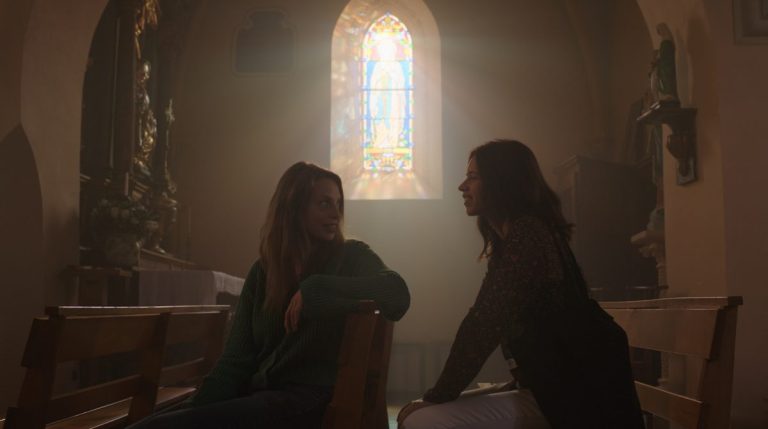
Visar Morina’s “Shame and Money” begins in an idyllic setting with a pace that feels quiet and comforting. It introduces us to a family living in an Eastern European village, offering a glimpse into their humdrum routine. There’s a hint of tension lurking underneath that calm, but nothing feels oppressive to the point that it would crush their spirits and transform their lives to the point of no return.
That charming introduction doesn’t exactly prepare us for the sheer burden they would find themselves under, where their entire existence would seem muted to a fault. Morina cleverly creates that contrast, starkly transitioning from the tone of a lighthearted drama to a modern-day tragedy, where he prompts them to confront their relationship with shame and money.
In the wake of Bong Joon Ho’s “Parasite,” a slew of projects have emerged, telling stories through a similar lens, narrating the flaws of capitalism and the vices of the ultra-rich. Fortunately, Morina’s film doesn’t seem intent on capitalizing on that thematic relevance and its cultural cache, even if it does navigate the characters’ tragic relationship with that inhumane economic system. It concerns itself more with the effect of titular elements on them and how it reshapes their personalities. The conflict likely brings some elements to the surface that they might not have felt the need to present or confront in their idyllic past.
The story is set in motion after the family faces a financial tragedy, forcing them to move out of their village to a big city in a desperate attempt to survive. The troubles begin as soon as they step into this place, where they will need to rent an apartment. Someone offers them help to cover at least the initial costs, but the grandmother (Kumrije Hoxha) quickly steps in, refusing the aid and paying with something that feels like an heirloom. Shaban (Astrit Kabashi), the family patriarch, is forced to accept a menial job, while his wife, Hatixze (Flonja Kodheli), who earlier seemed like an almost-equal partner in their family’s affairs, is reduced largely to her motherly duties.
Hatixze also accepts a job, but as a caregiver, which falls in a similar lane as what she is expected to do as a mother. While her life gets muted, so does Shaban’s. He starts working for Alban (Alban Ukaj), a close family relative, at his business. Although related, they seem miles away when it comes to their financial situation.
It becomes instrumental in their relationship, with Shaban seeing the world through a simpler lens, believing people lead their lives humanely, caring for others’ needs as much as their own, and where their actions don’t contradict their appearances. Alban, a city-dweller, seems practical and pragmatic, but cold in his approach to supporting others.
Their employer-employee relationship becomes crucial in understanding the nuances in Morina and Doruntina Basha’s script. Shaban and Alban’s pride is inherently different, since one can express it without any shame, while the other ought to feel embarrassed about expressing it as a family man.
Something similar applies in the dynamic between Hatixhe and Alban’s wife, Adelina (Fiona Gllavica), who seeks Hatixhe’s help in caring for her ageing in-laws. There’s also a delicate, if invisible, thread of women doing these conventional domestic chores even in urban spaces, showing how these societal norms are transferred even in non-traditional spaces. That keeps both women seeming like silent partners in all the ego battles that their partners engage in.
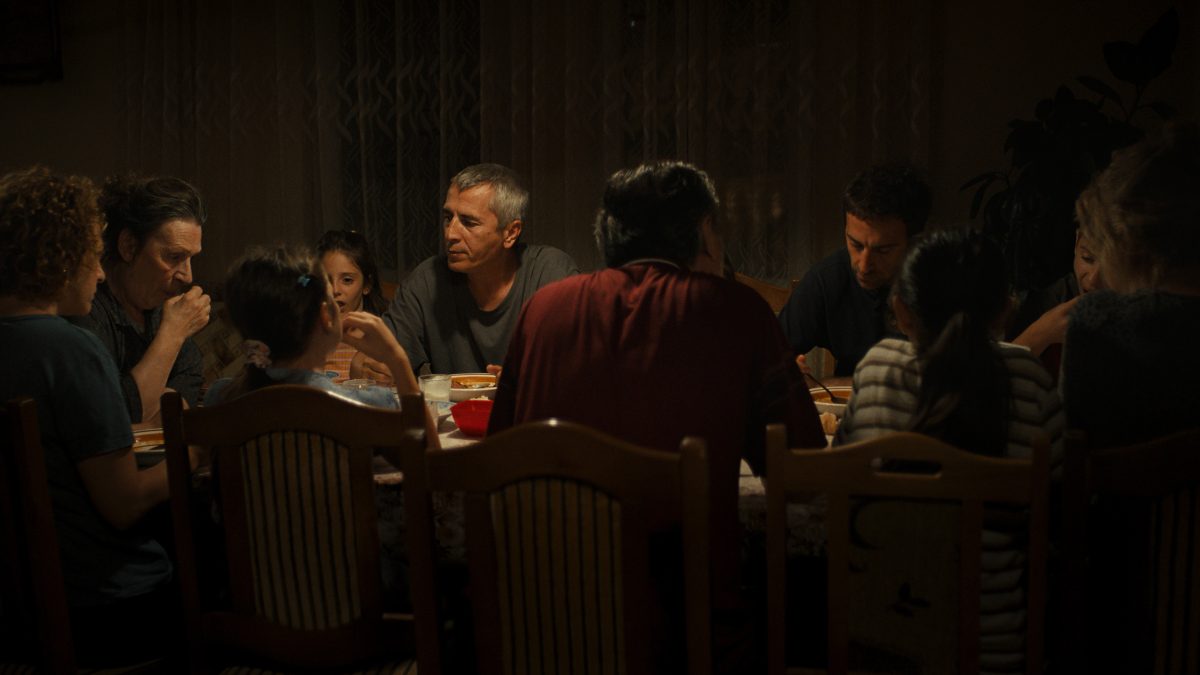
It was also the case with Morina’s previous film, “Exile,” where he followed the maladies of a Kosovar immigrant working in Germany. Yet, unlike “Exile,” “Shame and Money” lacks a narrative momentum when it follows Hatixhe’s side of the story. Sandra Hüller’s Nora may have a different dynamic with him, owing to an added dimension of her being a resident, but her layered depiction introduces a dramatic flair, which feels missing in the new film.
Hatixhe shows hardly any resistance to her husband’s behavior, even though it seems warranted at times. It occasionally dampens the drama, especially when the film deals with her relationship with Shaban. The intention might be to offer a faithful depiction of the gender dynamic in this part of the world (as opposed to countries like Germany), but it leaves you with very little understanding of her psyche. Beyond fleeting glimpses of her life as an individual, her presence doesn’t register as firmly as Shaban and Alban’s.
It leaves us the whole affair feeling like an exploration of Shaban’s bruised male psyche more than about a family in crisis. Regardless, the film cleverly uses elliptical storytelling, using narrative gaps to make us reflect on things left unsaid. That creative choice heightens a sense of horror related to Shaban’s aimlessness and ennui. Oftentimes, the glimpses into his interiority make the film quietly chilling.
The writing and direction fleshes it out remarkably well, and Astrit Kabashi echoes Shaban’s trauma with exceptional care and restraint. Fiona Gllavica and Flonja Kodheli are also amazing in capturing the delicate balance in presenting their class differences, but making us register the commonality in their bond as women in the throes of marital constraints through an oft-invisible solidarity.
In the end, you leave with the memory of a taut and bleak socially conscious drama, which could have worked with greater dramatic momentum, but remains a compelling investigation of minds oppressed by the survival-driven drivel of capitalism.




![Prizefighter: The Life of Jem Belcher [2022] Review: Too Less Life in a Film Portraying Life of a Man](https://www.highonfilms.com/wp-content/uploads/2022/07/Prizefighter-The-Life-of-Jem-Belcher-Movie-Review-1-768x508.webp)

![The Glint of Darkness: Revolution [2021] Review: Clone wars erupt in this mid-length feature debacle](https://www.highonfilms.com/wp-content/uploads/2021/05/The-Glint-of-Darkness-Revolution-2-highonfilms-768x432.jpeg)