There’s been no shortage of documentaries about the Beatles in recent years, as the momentous restoration of the legendary “Get Back” footage from Peter Jackson indicated that interest in the band had not waned in the slightest. However, the cultural assessment of Paul McCartney has always remained somewhat one-note, as the brilliant songwriter has been an accepted icon for so long that it’s easy to forget how many different eras his career has had.
While John Lennon and George Harrison were both enigmatic figures whose tragically early deaths led to greater introspection about their under-the-radar work, Ringo Starr has always been a larger-than-life character whose quirky activities have attracted attention. McCartney is often thought of as the unofficial leader of the Beatles, but his consistency has surprisingly not been subjected to deep analysis.
Morgan Neville’s documentary “Man on the Run” isn’t another run-through of the Beatles’ origins, as there is already a plethora of content exploring how the “four lads from Liverpool” became an overnight success and took the world by storm. Last year saw the restoration of the multi-part docuseries “The Beatles Anthology,” which offered as thorough and complete an encapsulation of their decade in the spotlight as could be imagined.
The previous year, “Beatles ‘64” focused on the most defining twelve-month span in their history. “A Man on the Run” opens with the incident in which McCartney’s career was forever altered. While it was Lennon who first called it quits on the band, McCartney often received public blowback for having split up the Beatles.
“A Man on the Run” explores how unusual it was for McCartney, who had accomplished multiple lifetimes of work before he was 30, to begin again and reconnect with his love of performing. The most notable revelation that McCartney gives in the film is regarding his alleged workaholism. His response that he never viewed performing as “work” is illuminating because it shows the haziness in which McCarney’s obsession has dominated his life.
The relentless work put into trying new mediums, experimenting with new genres, and selecting new collaborators wasn’t a veiled attempt at fame, as McCartney is more than willing to admit how challenging it’s been to avoid being in public out of fear of being recognized. What’s more telling is that he’d been doing the same thing since he was a teenager, and for the first time, he was forced to do it alone.
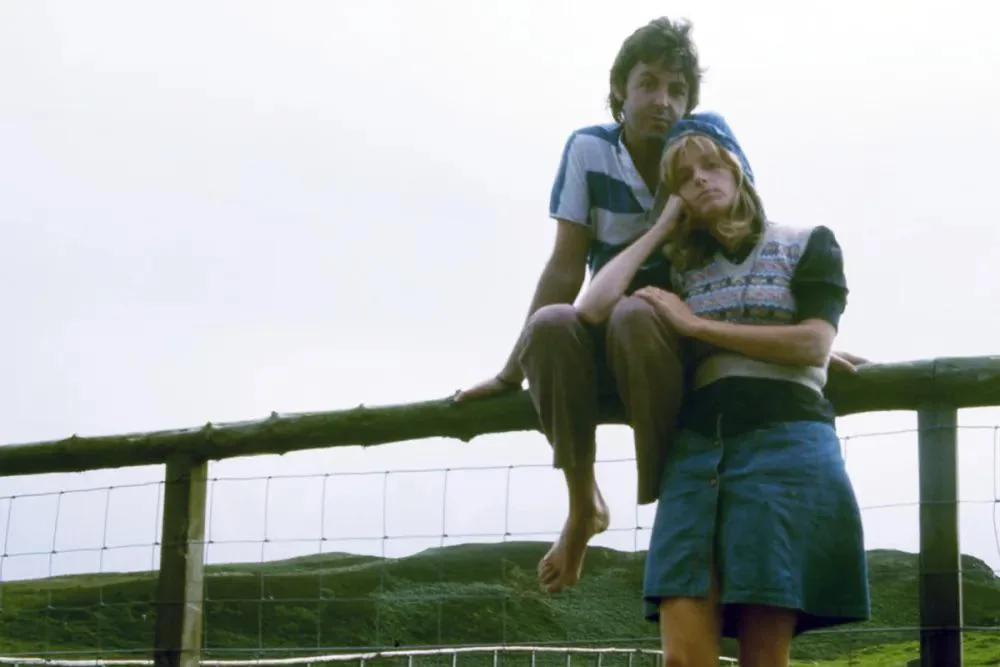
Although “Man on the Run” has a title that references one of the standout performances from McCartney’s second band, Wings, the film is more than just a track-by-track recounting of another history of records. It’s a surprisingly candid admittance on McCartney’s part about how his deliberate attempts to discover what “normal” meant taught him how much he had come to rely on his collaborators.
His disputes with Lennon, which are largely mollified by Neville, are explained as little more than childish arguments between playground friends. Even if they developed into more public feuds as a result of the increased media attention, McCartney’s real struggle came when he had to rework his public persona and risk not being beloved in the same way.
“Man on the Run” is not an idealized portrayal of his post-Beatles trajectory. It’s surprisingly critical of the first tracks released by Wings, even if the negativity is attributed to zealous pundits and fans who were expecting another Beatles album. Instead of making the obviously ludicrous suggestion that McCartney was in any way able to completely set the Beatles behind, it noted a step of maturity within his relationship with fellow bandmates Denny Laine, Denny Seiwell, and Henry McCullough.
While nothing would ever surpass the legendary collaboration that McCartney shared with Lennon, the dynamic he cultivated with Wings was one of reverence. Even if they didn’t share a lifetime of friendship with one another, a more mature and less tempestuous working relationship was what allowed McCartney to take some of his wilder swings.
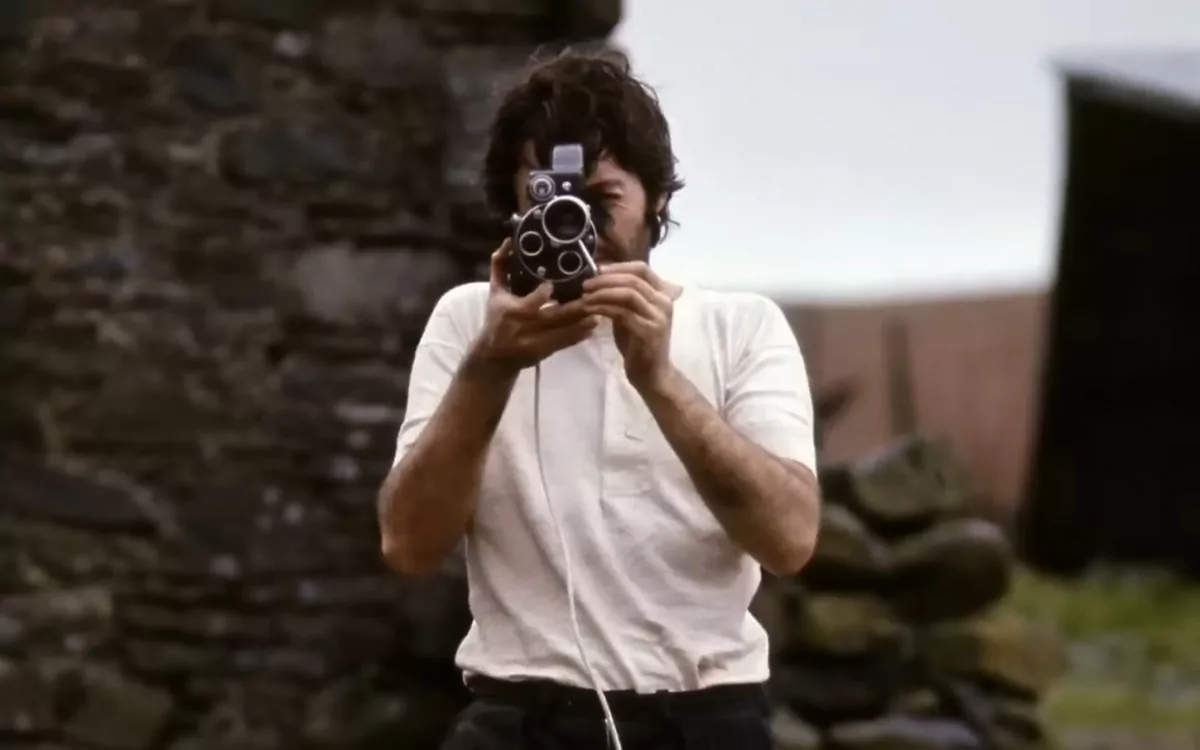
It’s remarkable that only shortly after being declared a flop, Wings pursued McCartney’s absurdist music video ideas, using his fame to produce ambitious efforts that dared to divert from commercial viability.
The irony is that Wings ended up becoming the type of success that McCartney had once willfully escaped from, as he reached another point in which anything he was involved in seemingly turned to gold. “Mull of Kintyre” was an impromptu exploration of Scottish traditionalism (albeit one made with little actual research), and “Live and Let Die” became a phenomenon that reached heights unprecedented for a James Bond film.
The ghost of the Beatles is never forgotten, particularly in the sobering final moments that look at the way McCartney’s reaction to Lennon’s death was analyzed by the media. While the constant speculation before 1980 about a potential revival of the Beatles seemed to hang over all of McCartney’s public appearances, “Man on the Run” suggested that it was the pressure that prevented the four friends, who remained in contact with one another, from reuniting out of fear of inspiring false hope.
The film is frequently insightful about how little has changed about entertainment media, and how easy it has become to reduce celebrities to a summation of their awards and records. In McCartney’s case, the presumption that he was untouchable led more reports to make gross assumptions that negated his individuality.
“Man on the Run” doesn’t aim to explore the entirety of McCartney’s career after the breakup of the Beatles, as it’s still unfolding. However, the film’s focus is rightfully about the end of one family and the start of another, as Neville pays close attention to the profound effect that his wife Linda has as a cofounder of Wings.
“Man on the Run” is a love story that shows McCartney’s sincerity is his greatest strength, but Neville reflects his subject’s versatility and good humor with an eclectic compilation of footage strung together by playful animation and amusing anecdotes. Even if any sincere documentary should strive to be factual, “Man on the Run” is profound in a way that feels truthful.