
Enough time has passed since the end of Pixar’s undisputed heyday to assess, with the benefit of hindsight, just how odd it may have been to have ever attributed to a single studio the creative resurgence of animation as a thoughtful, viable medium of storytelling for all ages. With that hindsight, though, comes the understanding that this reputation largely came about from the reciprocal artistic flow weaving its way through that tight-knit crew of once-upstart animators sharing that famed CalArts room A113—John Lasseter, Andrew Stanton, Brad Bird—towards a unified vision of animation as a gateway to a more mature emotional register that most young viewers simply lack the experience to articulate on their own. (That, and the occasional “Cars” to help keep the lights on.)
In that sense, while the powerhouse studio has recently relinquished that mostly bulletproof reputation with a series of mildly revered offerings—most of that reverence stemming from residual politeness honouring that aforementioned notoriety—Daniel Chong’s “Hoppers,” his debut with the studio, touches on perhaps the most universal sentiment since the days when a coterie of ragged toys or a rat with culinary dreams were the vessels for disarmingly shattering introspection.
In our current socio-political climate—where forests make way for parking lots and wars are started on the whim of a megalomaniacal orange tyrant and the equivocate opposition forces armed with nothing but strongly worded letters—what’s more relatable than looking around at a natural world on the cusp of complete obliteration, with a gaze of total paralysis at the realization that we, as individuals, are powerless to put an end to the greed of the 1% bleeding our planet dry?
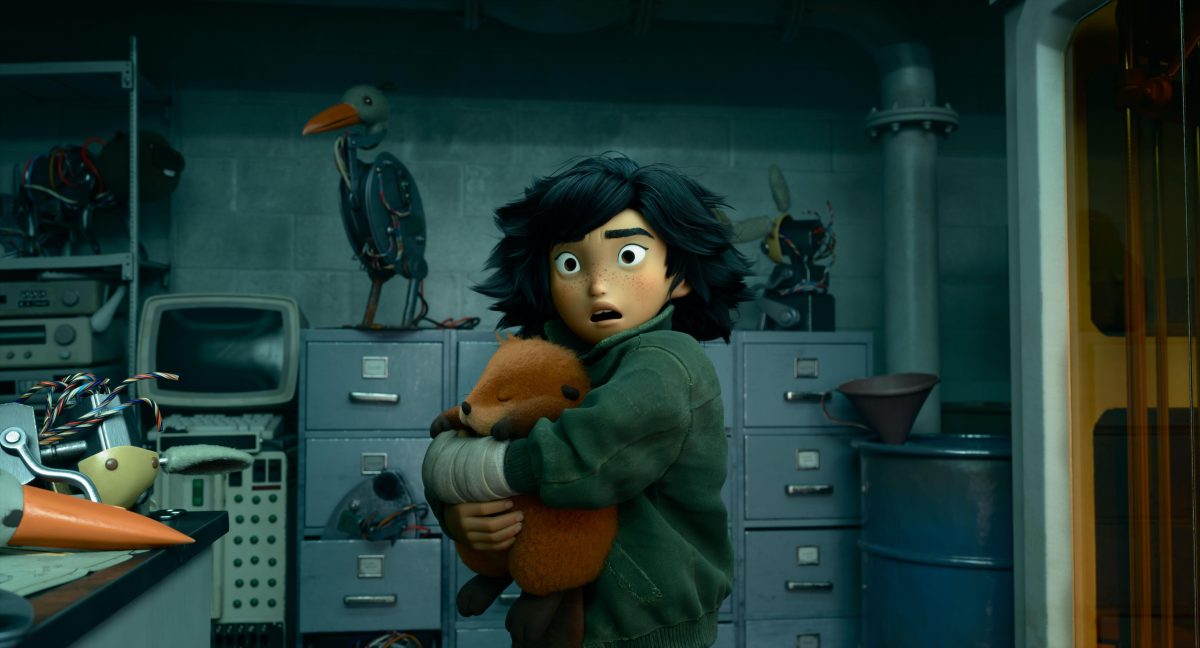
This is the realization that slowly reaches Mabel Tanaka (Piper Curda), a 19-year-old borderline-flunkie who’d rather spend her days fighting the smarmy and conceited Mayor Jerry Generazzo (Jon Hamm) on his various developmental projects than work her way to a feasible post-collegial life plan. (Those still exist?)
All Mabel has is the boreal glade behind her late grandmother’s house, which served as both an ecosystem teeming with wildlife and a testament to the wondrous silence of a world beyond the reach of man’s hubris. But the animals seem to have disappeared, leaving Jerry with enough legal recourse to blow up the dammed lake and clear the path for a freeway.
Determined to halt the mayor’s plans, Mabel stumbles upon a program at her university in which her supervisor, Dr. Sam Fairfax (Kathy Najimy), has found a way to transport human consciousness into small, robotic animals to observe nature much more closely. As Mabel points out, “This is just like ‘Avatar’”—possibly the first and only time James Cameron’s pet project has been the target of shameless plagiarism rather than the perpetrator—and seizing the opportunity to go out and find a beaver firsthand to help restore balance to the glade’s ecosystem, she enters one of these rodent-shaped shells and makes her way into the wild.
If “Avatar” is the only point of derivative echoing that “Hoppers” will willingly admit to in the text, then Chong’s film exists in very much the same mould of basic narrative work that has left much of Pixar’s recent output so anonymous in an increasingly homogenized family film market. With an amusing but ultimately hollow climactic car chase right out of “Finding Dory” and the same sort of villainous heart-to-heart of any number of animated projects (but since the studio dusted this trope off just last year with “Elio,” they get the blame for doubling down), “Hoppers” is far from evoking the revolutionary spirit that lights a fire in Mabel’s stomach and sends her on this quest in the first place.
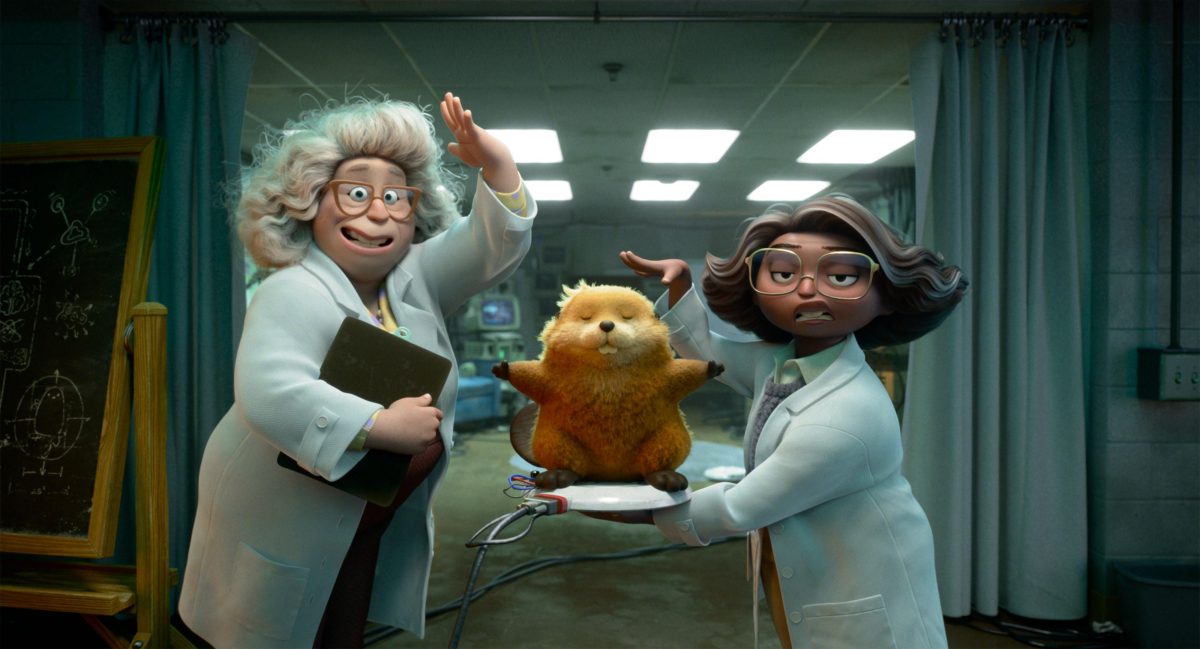
This lack of real “revolutionary environmentalist verve” is not necessarily the film’s fault—we are, let’s not forget, watching a family film aimed primarily at young children—but the gateway value of “Hoppers” for these increasingly curious viewers feels somewhat drowned in the empty spectacle of too many rushed climactic checkpoints, alleviated at least by the tonal consistency within the film’s somewhat-elastic style of animation.
Chong has, in that regard, taken cues from the new Pixar standard of exceedingly synthetic, rubbery character design to sell the more intimate scale, in much the same way as the studio’s preceding “Luca” and “Turning Red”. Here, however, he finds himself somewhat lacking in the same cozy chumminess when the time comes to start avoiding giant sharks or shooing away Meryl Streep butterflies—her first (and likely shortest) role in nearly half a decade, folks!
The resulting realism of Mabel’s dilemma, rooted in the the quaintness of a quasi-rural human space, is often quashed by the excessive ridiculousness of her circumstances, a reality that’s harder to wave away with an “It’s just a cartoon for kids” when so many of the studio’s prior works anchored their narrative pageantry within considered creations—like a monster city, a microscopic insect utopia or, at the very least, a human timeline fully cognizant of superheroes—to communicate an emotional depth made all the richer by those unexpected avenues. Rather than a fantasized world rooted in layered human sentiment, “Hoppers” finds in its realistic world the thinnest avenues for affective reflection.
So while it seems odd to have ever held a single studio on any kind of pedestal for creative ambition (let alone one so high), Pixar’s golden age truly did sell the notion that no idea was too small for adults, or too unreachable for kids. Nowadays, the most we can hope for seems to be the same sort of passable distraction floating downstream from just about anywhere else. If we’re all, as “Hoppers” professes, part of something bigger, then its own status in that cycle registers as little more than a single, instantly assimilated drop in the quiet vastness of the lake.



![Tristana [1970]: Shifting Power Dynamics in Human Relationship](https://www.highonfilms.com/wp-content/uploads/2018/08/tristana-and-don-lope-outside-church_630x330_4cda94b9-984d-e311-bba7-d4ae527c3b65_lg.jpg)

![For Your Consideration: Bone Tomahawk [2015]](https://www.highonfilms.com/wp-content/uploads/2016/12/Bone-Tomahawk-008-768x322.jpg)