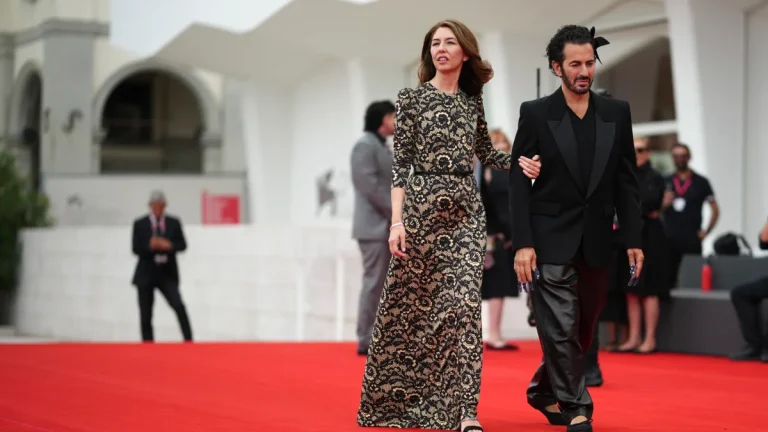
The first fictional feature by Mariana Brennand, “Manas” (2025), confirms a filmmaker whose gaze had long matured within documentary practice and now transitions into fiction with formal rigor and ethical responsibility. Screened at the Travessias Brazilian Film Festival 2026 and included on Brazil’s shortlist for the Academy Award for Best International Feature, the film establishes itself as a work that articulates social denunciation and aesthetic sophistication without ever turning trauma into spectacle.
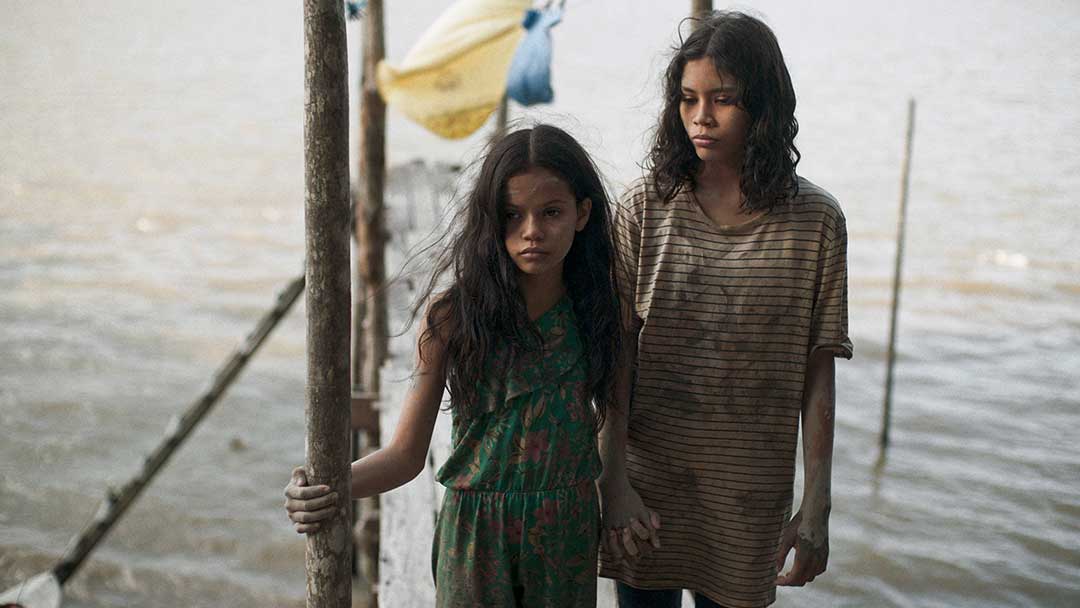
The narrative follows Marcielle (Jamilli Correa), a 13-year-old girl living in a riverside community on Marajó Island, in the state of Pará, in the Amazon Forest. The film’s opening movement is constructed with structural precision. Childhood is presented in its everyday dimension, through family, school, and religious life, in scenes that breathe naturalness and belonging. The découpage privileges wide shots and horizontal compositions that integrate body and landscape, emphasizing the organic bond between character and territory. The spectator is invited to experience a sense of equilibrium before any fracture announces itself. This initial construction is essential, as it organizes expectations so that the later rupture resonates not only thematically, but structurally.
When the drama emerges, the film transforms not only its narrative trajectory but its entire visual grammar. The cinematography undergoes a process of chromatic withdrawal. The warm tones and diffuse luminosity of the beginning give way to a more desaturated palette marked by muted grays and faded greens. Light, once expansive, begins to delimit zones of shadow that suggest more than they reveal. The director’s ethical choice to keep violence within the realm of suggestion is reinforced by lighting that fragments space and generates invisible tensions.
Framing choices mirror this internal shift. The scale of the shots tightens, the camera moves closer to the protagonist’s face, and the sensation of psychological confinement intensifies. At certain moments, angles that place Marcielle in perceptual inferiority produce a sensory experience of oppression, reinforcing the asymmetry of power inscribed in the narrative. This is not a gratuitous stylistic flourish, but a decision coherent with the dramatic arc. Audiovisual language, as a system of shared conventions, is mobilized here so that form and content continuously inform one another.
Editing avoids excessive fragmentation, and the rhythm remains restrained, respecting the duration of silences and allowing the viewer to remain within discomfort. Meaning emerges from the articulation between shots and from the tension sustained in the interval between them. Rather than accelerating toward catharsis, the film insists on endurance. This choice may unsettle audiences accustomed to rapid resolution, yet it is precisely this refusal that sustains the film’s ethical coherence. There are no easy solutions, no redemptive intervention by the State, no institutional closure to provide narrative comfort. The absence of a visible way out is not a dramaturgical flaw, but a political affirmation.
The screenplay refuses to simplify the complexity of its subject. Child sexual abuse is not treated as an isolated event, but as a symptom of a broader social structure marked by the absence of public policy, economic vulnerability, and communal silence. The film interrogates the normalization of violence and exposes the cruel mechanism through which guilt is displaced onto victims.
When evil takes root within the home, the paternal figure undergoes a symbolic death. The space that should offer protection becomes a site of threat. Childhood is not concluded through a rite of passage, but through a traumatic rupture that permanently alters the protagonist’s perception of the world.
There is a clear inheritance of Brennand’s documentary sensibility. The mise-en-scène privileges the naturalness of performances and the material texture of environments. Cinematography conceives the final image in alignment with the dramatic objectives, demonstrating how every technical decision carries narrative implications. Marajó Island is not rendered as an exotic backdrop, but as a lived space, traversed by historical and social contradictions.
Manas does not seek to please. It seeks to expose, to question, and to unsettle. Its strength lies in the coherence between ethics and aesthetics, in its capacity to transform silence into denunciation and suggestion into an act of respect. It is a film that understands violence does not need to be explicitly shown in order to be devastating. By turning cinematic form into an instrument of listening and reflection, Mariana Brennand delivers a mature, sensitive, and politically urgent work, firmly inscribed within the contemporary landscape of Brazilian cinema.


![Blowback [2022] Review : A Generic action thriller that occasionally thrills](https://www.highonfilms.com/wp-content/uploads/2022/06/Blowback-2022-Movie-Review-1-768x512.jpg)
![Memory House [2020] Review – A Surrealistic Tale About Violence](https://www.highonfilms.com/wp-content/uploads/2020/11/Memory-House-highonfilms-2.jpeg)

![The Parcel [2021]: ‘NYIFF’ Review- A profoundly awful Rituparna Sengupta brings this inelegant slow burn crashing down](https://www.highonfilms.com/wp-content/uploads/2021/06/The-Parcel-2.jpg)