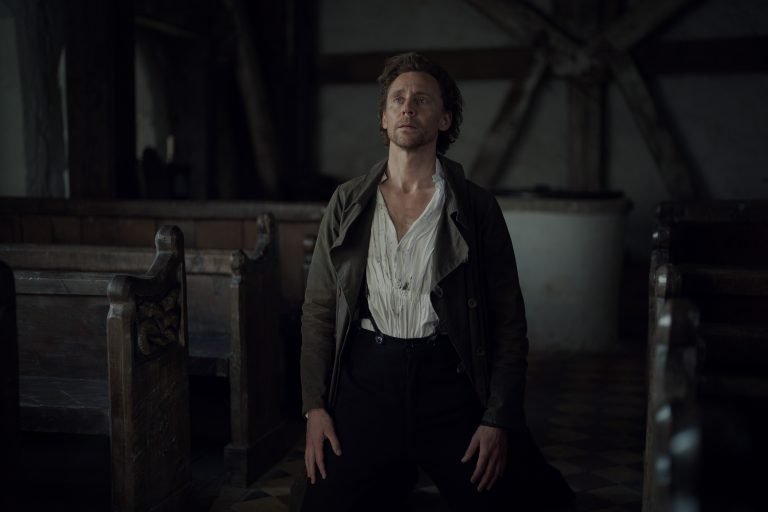
Something is revealing in contemporary cinema’s recurring fixation on the fantasy of defeating death. Technology now sells longevity as an aspirational horizon, while modern culture seems increasingly unable to accept limits, decay, silence, or finitude. Dāvis Sīmanis’ “Death of Death” (2025) steps directly into that fault line, taking on the contemporary obsession with immortality, transhumanism, cryonics, and the indefinite postponement of aging. It is, in theory, a rich and urgent subject. Yet the movie never rises to meet it, settling into a loose, repetitive, and formally underpowered documentary that falls well short of its material.
What might have been a sharp study of a culture replacing metaphysical questions with biomedical protocols and fantasies of control becomes a lukewarm assemblage of interviews, eccentrics, and bizarre scenarios. The problem is not simply emphasis, but form. The film approaches a large subject with too little rigor, invention, or pressure.
The world Sīmanis explores is immediately fascinating. “Death of Death” introduces figures who treat mortality as a technical malfunction, something to be solved by startups, laboratories, biohacking evangelists, and futurists armored in scientific jargon. Yet the people onscreen rarely emerge as more than surfaces.
Many register less as fully realized subjects than as self-caricatures: individuals estranged from ordinary reality, enclosed within self-validating systems of belief, often marked by grief, fear, or unresolved loss. Their pain has curdled into ideology, into a technocratic faith. The documentary records this, but rarely presses far enough to show what sustains it.
That weakness is visible in one of the film’s most striking episodes: its encounter with a representative of the Transhumanist Party, who argues that immortality should be recognized as a fundamental human right while driving a coffin-shaped truck. It is a gift of an image, grotesque, funny, and oddly perfect in its symbolism. Political rhetoric, death denial, and public spectacle collapse into the same frame.
Yet Sīmanis does little with it beyond presenting its obvious eccentricity. A sharper film might have used the scene to probe technological messianism, self-parody, or the theatrical logic of movements that can only sell themselves through spectacle. Here, it remains an oddity in search of interpretation.
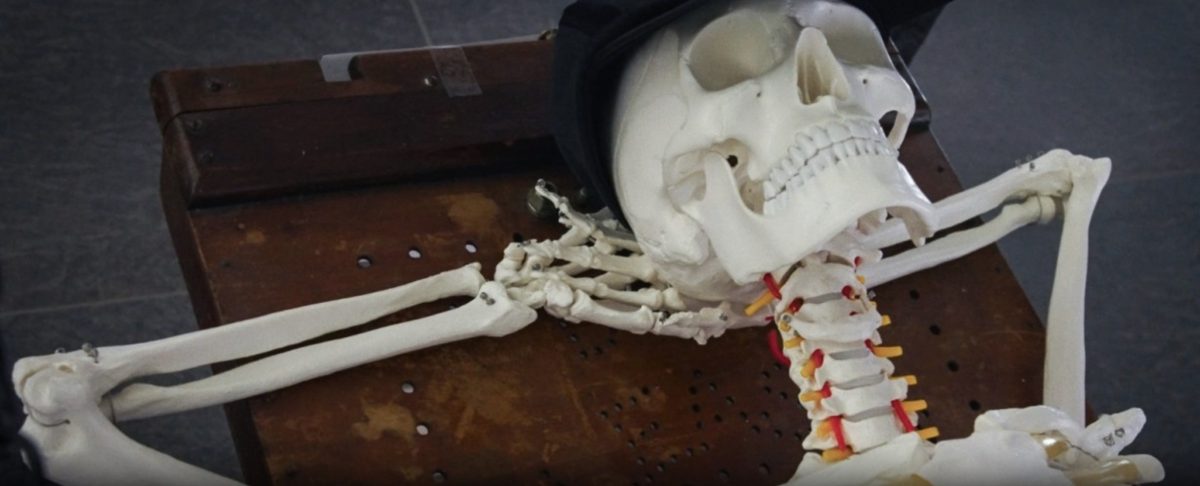
The same limitation surfaces in the film’s repeated visits to a Russian death festival where participants are invited to try out their own coffins. The setup is rich with possibilities: ritual repackaged as event culture, mortality aestheticized into performance, death turned into an experience to be sampled.
The return to the festival suggests that Sīmanis wants these scenes to do more than register as surreal. But repetition does not produce accumulation. Watching people rehearse their own burial should be unsettling, revealing, perhaps even philosophically charged. Instead, the sequence lands as curated weirdness.
This is the film’s central problem. It is too captivated by the eccentricity of its material to maintain the distance needed to interpret it. The bizarre remains merely bizarre; strangeness is displayed, never converted into insight. That becomes clearest when researchers, experts, and commentators enter the frame, the very people who should give the film some intellectual ballast.
Also Read: The Many Faces Of Mortality: 15 Great Movies About Death
Rather than building tension between hypothesis, evidence, belief, ideology, and market logic, the documentary falls back on scattered opinions and speculative remarks. It gestures toward science without treating it as a discipline of inquiry. It brushes against philosophy without rigor. And although it repeatedly approaches questions theological in shape, it shows little interest in confronting them directly.
The problem extends to rhythm. The editing never establishes genuine momentum: no dramatic progression, no conceptual escalation, no cumulative sense that the documentary is moving deeper into its inquiry. Instead, it circles familiar intuitions in a flat, near-lethargic cadence. Slowness is not the issue. Many essay films depend on duration to generate thought. But duration without pressure is not contemplation; it is inertia.
“Death of Death” too often mistakes one for the other. Formally, the film is no longer persuasive. For a documentary about bodies, obsolescence, transcendence, and fantasies of overcoming the human condition, its visual language is strikingly bland. The compositions lack invention, the imagery lacks tension, and the film never develops a visual logic equal to its subject. Too often, it settles for a merely functional image, when what it needs is a cinematic strategy capable of registering the gulf between human fragility and the technological arrogance that seeks to erase it.
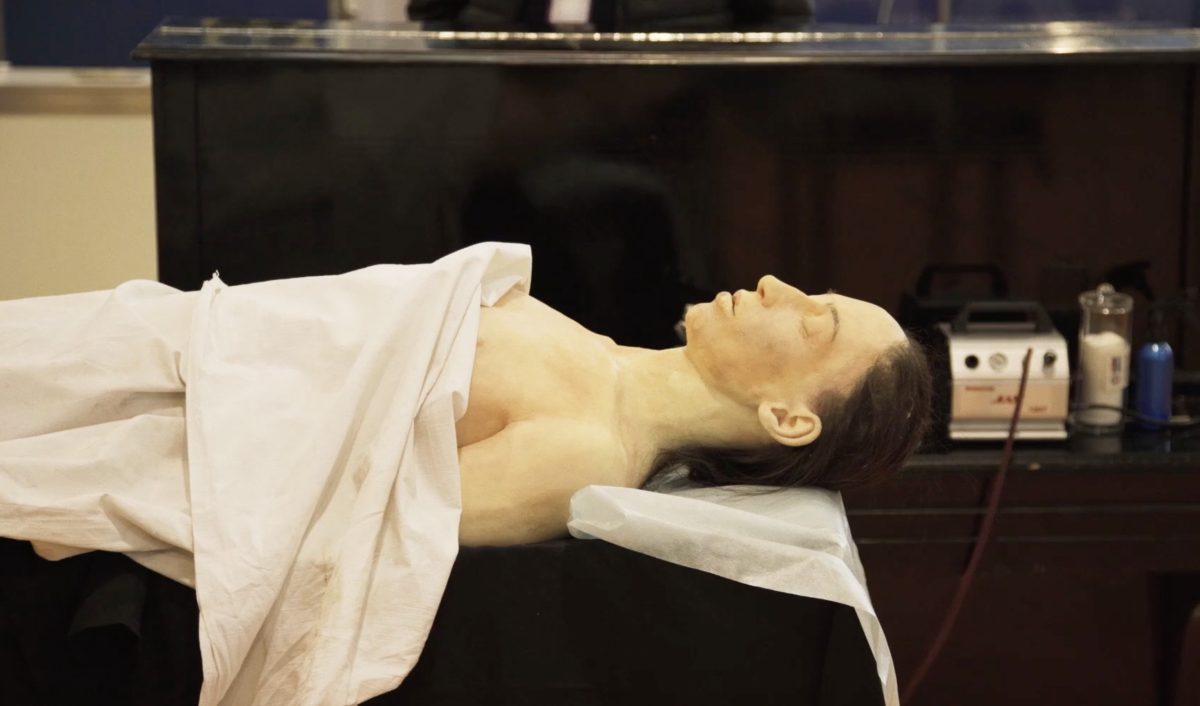
That flatness is especially limiting in scenes that should carry a strong symbolic charge. The coffin-truck episode calls for more pointed framing and tonal control. The Russian death festival, with its staged intimacy between living bodies and their future containers, calls for an eye attuned to ritual, theatricality, and unease. Yet Sīmanis films these moments with frustrating neutrality.
“Death of Death” repeatedly encounters potent visual material without finding the formal means to unlock it. The lighting and overall visual design do little to create a distinctive atmosphere. There is no expressive use of contrast, texture, or color to intensify the uncanny quality of this world, and that matters. Documentary form becomes powerful when the image apprehends something that discourse alone cannot. “Death of Death” never reaches that threshold. Its style feels procedural, almost televisual, and disconnected from the unease at the center of its subject.
What makes the film especially frustrating is how clearly one can sense the stronger work latent within it. This is not merely a timely topic; it is one of the defining anxieties of the century. The obsession with slowing aging and domesticating death reveals a culture that no longer knows how to age with dignity or die without resentment, and that has begun to experience finitude itself as a narcissistic insult.
It also reveals a world in which technique no longer functions merely as a tool, but has assumed an almost theological role. The laboratory replaces the temple. Protocol replaces mystery. Longevity becomes a moral commodity. “Death of Death” circles these ideas, but never quite finds the lucidity to name them.
What remains is a documentary with access to extraordinary material and no clear way of shaping it. A film about the refusal of death that ends up flattened by its own lack of urgency, curiosity, and form. There was material here for a devastating portrait of fear, vanity, grief, disbelief, and technological delusion. What Dāvis Sīmanis delivers instead is something far thinner: a documentary that keeps approaching a vital subject without ever discovering the language to confront it.





![Evergreen [2019] Review: A Poignant Depiction of Love and Relationship](https://www.highonfilms.com/wp-content/uploads/2019/05/MV5BYjJhZDQ3MGMtOTYzNS00YTkwLWE0ZWUtNGNmMTk2ODc0YWQ1XkEyXkFqcGdeQXVyNTA4MjU3NTU@._V1_QL50_SX1777_CR001777960_AL_-768x415.jpg)
![The Hating Game [2021] Review: Promise Turns into Pity Sooner Than You’d Expect](https://www.highonfilms.com/wp-content/uploads/2021/12/The-Hating-Game-2-768x432.jpg)