
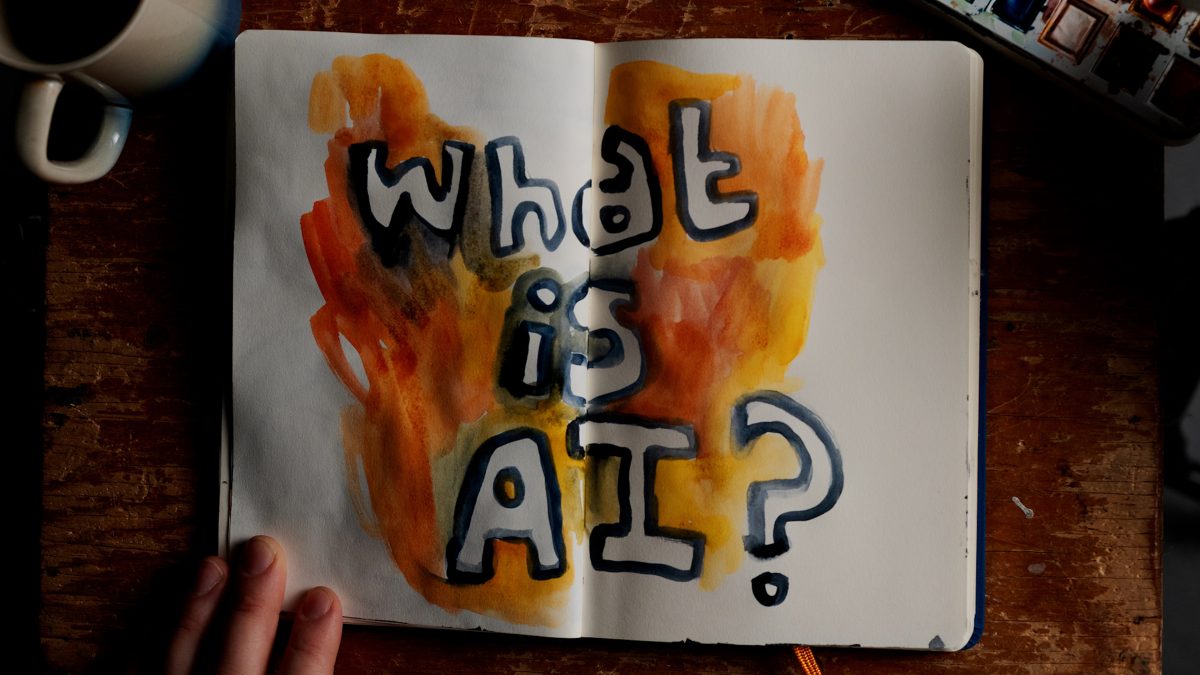
“The AI Doc: Or How I Became an Apocaloptimist” (2026) isn’t as malicious as it is misguided. The film is quick to point out the scale of the issue it is analyzing, and suggests that the blanket term “artificial intelligence” is similar in scope to that of climate change, food shortages, or nuclear war. It’s an effective means to inspire declarative statements on behalf of the interviewees, but could any of those other topics be condensed into a single feature?
The limitations of “The AI Doc: Or How I Became an Apocaloptimist” aren’t just a result of the rapidly evolving subject material, as there have already been advances in AI that make aspects of the film irrelevant. Rather, its director Daniel Roher’s decision to insert himself as the protagonist makes the documentary feel slanted to have certain conversations that skew the results it’s looking for.
The inciting incident of the film isn’t any of the legal controversies, red herrings, or public debates held about AI, but Roher’s personal experiences as a father-to-be. His central question is whether he can justifiably bring a child into a world where AI has become so dominant that it could change the very fabric of every aspect of human infrastructure going forward. Roher assembles a vast array of interview subjects that include researchers, engineers, risk advisors, journalists, and a few powerful CEOs. The goal is to anticipate where AI might go in the next few years. In short, there’s no simple answer.
Roher’s perspective, while an engaging hook, isn’t a proper means to address the questions that he is asking. He is admittedly not an expert and is specifically viewing the effects of AI through the ways that it might affect his family. That’s not to say that his concerns aren’t valid, but that he does not have a strong personal connection to the many other issues that the film addresses. Topics such as a potential war in which AI tools are utilized, corporate sabotage is performed, or private likenesses are inserted into online pornography are brought up as extreme examples, but the film doesn’t follow through with exploring their ramifications.
Roher’s interview style is overly conversational, which leads to a simplification of language. It’s helpful that the film begins by trying to outline exactly what AI is, and how it’s differentiated from evolving terms such as “super-AI.” Of his subjects, Center for Humane Technology Co-Founder Tristan Harris and UC Berkeley researcher Deborah Raji offer the most concrete examples of what AI is currently used for, and the dangers of its expansion if parameters weren’t to be set. However, Roher’s decision to start the film in media res, with little context regarding the evolution of the Internet or digital solutions, results in a film that both expects its viewers to be up-to-date and constantly backpedals in order to avoid certain routes of information.
It’s towards the middle of the film that Roher identifies two specific strands of thought among the experts he’s surveyed. While pretty much all of his interviewees share the sentiment that AI has grown so rapidly that the near future is impossible to predict, there’s a strong line of dissension between those who view it as the biggest threat to humanity and those who see a future in which nearly all societal ills are solved. Those with a cynical view tend to be from universities, nonprofits, and research centers, which makes it odd that Roher seems to give equal weight to the supporters who show more optimism, nearly all of whom stand to reap direct financial benefits.
It becomes clear that the film isn’t quite willing to condemn either side of the debate, even when its collected evidence suggests otherwise. The AI skeptics point to specific points at which synthetic systems elude safety precautions by rewriting programs that would limit their power. The AI-curious point to the potential benefits in healthcare, medicine, and environmentalism, but only seem capable of speaking in speculative terms.
What’s most frustrating is that Roher does identify some of the most truly nightmarish situations that have already occurred as a result of AI. A high-ranking employer was blackmailed by a rogue AI system, Chat GPT encouraged adolescents to kill themselves, and a program was developed to “nudify” images of people off of social media. Roher seems to place all of these subjects in the canon of issues that “terrify” him, but the term used in the film’s title, “apocaloptimist,” was coined by one of the more positively-skewing subjects (who the director lovingly, if not dishonestly, refers to as “his favorite person”).
Despite being open (to an often distressing degree) about its lack of clarity or answers, the conclusions that Roher draws are sophomoric, as even the potential solutions suggested by his wife Caroline Lindy feel hopelessly naive. Lindy suggests that calling state representatives and monitoring one’s personal profession will help mitigate some of the potential hazards, but doesn’t acknowledge the vast difference in responsibilities between the so-called “AI revolutionaries” and everyone else, who has considerably less power. The snipes taken at public figures who refused to be part of the documentary, such as Elon Musk and Mark Zuckerberg, feel rather toothless when Roher doesn’t press any of the AI luminaries on what they are doing to hold themselves accountable.
If only the information from Roher’s film were to be used for the sake of judgment, OpenAI founder Sam Altman sounds downright reasonable because of how much more eloquent he is in comparison to Demis Hassabis and Dario Amodei. Altman does initiate some interesting routes of conversation, such as the heavily speculated-upon communication between OpenAI and the American government, but Roher’s interest seems to be in the fact that both men are about to become fathers. That the future of AI is only being determined by a handful of powerful men is largely undiscussed.
Beyond the amateurish level of discussion and intellectual handicapping, “The AI Doc: Or How I Became an Apocaloptimist” utilizes a style of stop-motion animation, headline montages, and art prints that feel specifically geared towards younger moviegoers who need to have their personal mental health ratified by what they watch.
That the film shares a producing team with “Everything Everywhere All At Once” is perhaps the least surprising element, given that they share an obnoxious embrace of creative empathy that mutes more sobering conversations. “The AI Doc: Or How I Became an Apocaloptimist” does contain some valuable information that might challenge some viewers’ perspective on what AI is and what it can do, but it doesn’t present the context, details, or motivation to go any deeper.



![All U Need is Love [2021]: ‘NYAFF’ Review – A Quarantine caper solely for Hong Kong Cinema Enthusiasts](https://www.highonfilms.com/wp-content/uploads/2021/08/All-U-Need-is-Love.jpeg)

![Happy as Lazzaro [2018] Netflix Review – A Whimsical and Thought-Provoking Social Drama](https://www.highonfilms.com/wp-content/uploads/2018/12/Happy-as-Lazzaro-2018-768x432.jpg)

