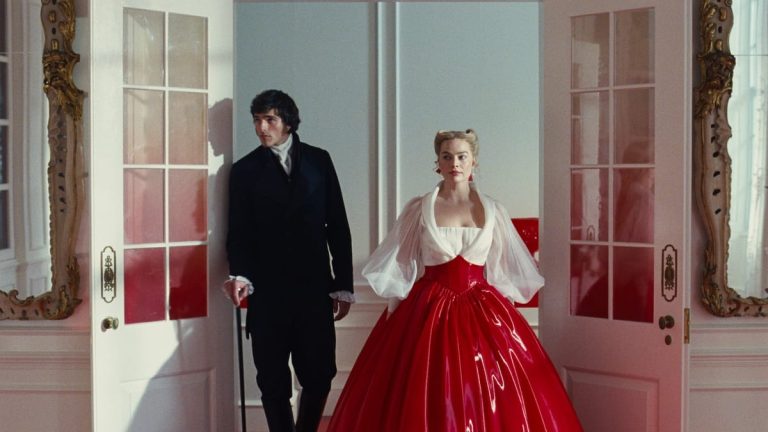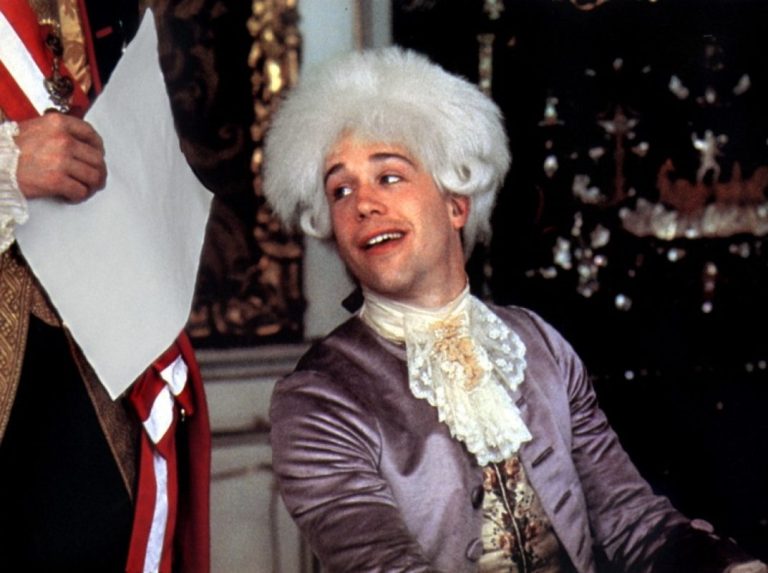
If the raison d’être behind the modern instability of democracy in the Middle East and Global South is a desperation for imperialistic attempts at regime change, then the lack of global solidarity against the recent military operations could, partially and hypothetically, be described as the result of a failure of the collective coterie of art and culture coming from the concerned nations to channel a revolutionary impulse in the global mass. Political unity of disparate units, formed envisioning a long-term movement through mobilization, dwindles in the absence of a substantive cohort of diverse art with a global outlook to function as the de facto reason behind uniting the mass psyche.
Coups and juntas orchestrated in one region of the Global South have historically found a mirror image in each other. Creative annals of such events have not only taken no time to be recognized through simple leisure readings, but they have also been provincialized politically by means of simplified teleological narratives among the political cadres to create solidarity with a foreign land (e.g., the misdeeds of the United Fruit Company in South America, referred to in the works of Pablo Neruda and Gabriel García Márquez, have remained significantly popular among the Left-ruled states of India).
Anything like this is difficult to trace in the Middle East, as the disputes among the nations have historically overwhelmed their efforts to join hands both politically and creatively, and Iran, in the middle of all this, stands alone with a plate full of rich Persian poetry and cinema to offer the world, while the creators half-died and half were expelled to exile.
If I’m not misguided by an untimely zeal in this war-ridden juncture to celebrate Iranian cinema, as an elite connoisseur of art would have done otherwise, then I’d like to reiterate the unparalleled passion and heroic sacrifices of Iranian literati for cinema vis-à-vis the developmental arc of celluloid in Iran as caught in the two video essay-like documentaries of the 45-year-old Iranian expatriate Ehsan Khoshbakht, who is a film historian and the co-director of the Il Cinema Ritrovato Festival in Bologna.
What can be denoted as the driving force behind writing this piece on cinema, of a particular country plagued by religious repressions and economic impoverishment, is an eye-opening statement delivered lucidly by Khoshbakht in one of his films on the formulation of celluloid: which comes from nature, as it is formulated through an organic processing of cotton, camphor, nitric acid, and alcohol, and it must go back to nature.
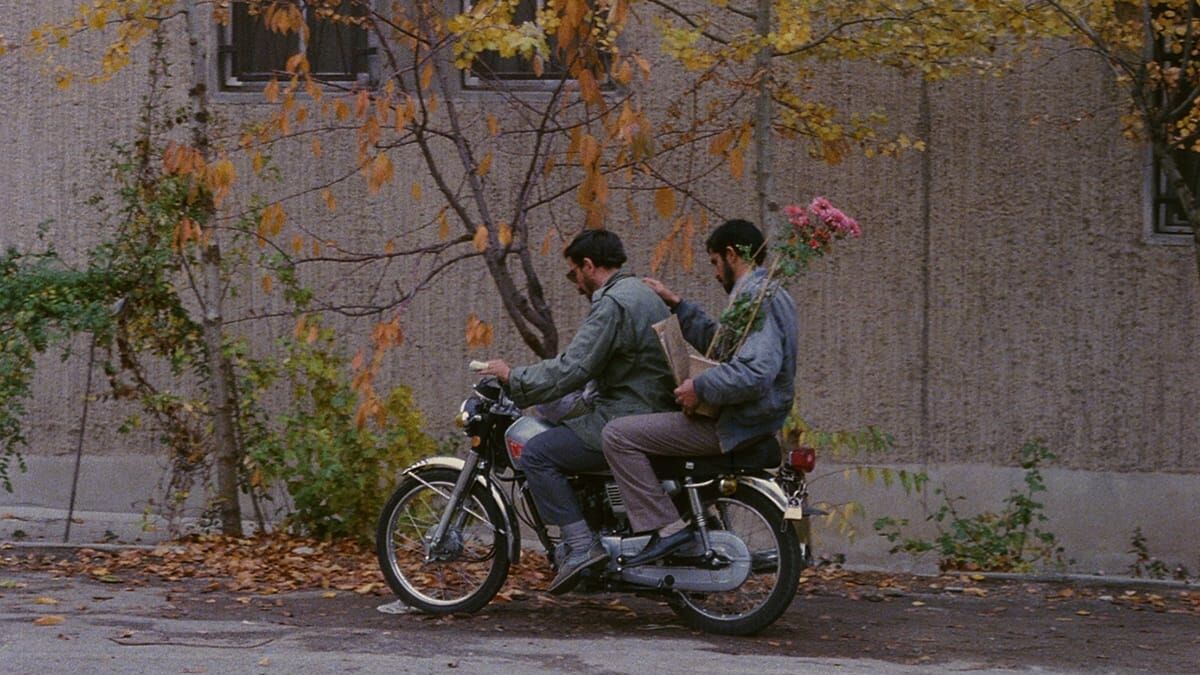
Thus, celluloid in its most refined form as cinema has largely remained stuck, isolated, as a pleasure toy in the lavish pigeonholes of society. Hence, attempts to liberate it from the hegemony of a certain class, just like Khoshbakht’s visual attempts, are a generational task and become necessary in a vulnerable time like this, for cinema belongs to people, to nature!
Came in 2023, “Celluloid Underground” is an attempt at recuperation, on the director’s part, from the state-imposed trauma on Khoshbakht and his generation for rendezvousing with celluloid. If the year 1990, with the emergence of Kiarostami’s “Close-Up,” can be referred to as the genesis of a neo-cinephilia—infusing traditional genre film enthusiasts with Iranian gritty docu-fictions encapsulating the nation’s political status quo enmeshed with visual poetry—then it comes full circle with “Celluloid Underground,” for its being the most complete projection of the poignantly real Iranian cinephilia’s one battle after another with the state.
The film embarks on its voyage from Khoshbakht’s abode in the neighbourhood of Alfred Hitchcock, where the opulence of aromatic black coffee permeates the desk strewn with Ebrahim Golestan’s tome, to reiterate the political through the personal. A documentation encompassing an arc orbiting Khoshbakht’s efforts—from organizing a film community to discovering a clandestine rescuer of 35mm films called Ahmad Jorghanian (a messiah for cinephiles, unlike the sad, grief-stricken Hossain Sabzian.
Also Read: One Battle After Another’s Fight in the Graveyard of the Western
This man has been compared with Henri Langlois, who has encashed his blood for rescuing thousands of films from the repressive state machinery. The film progresses through a medley of the maker’s personal emotions—from the tragi-comic comparison of television colour test cards with MGM musicals, to his first encounter with Chaplin, where he notices the actual grime on the legend’s clothes; from being castigated as a Marxist infidel for screening Mehrjui’s “The Cow” (1969), to later mourning silently upon hearing of Jorghanian’s passing.
Being a spiritual successor of “Close-Up” (1990) and, arguably, a radical successor to “Cinema Paradiso” (1988), “Celluloid Underground” largely undertook the work of essaying an indomitable cinephilia, draped in nostalgia, to the fore, albeit occasionally sneaking into the timeworn relics of early Iranian film prints. An enlarged picturization of the Bildungsroman of celluloid in Iran had been exercised by Khoshbakht in Filmfarsi (2019). A term – Filmfarsi – to describe the sloppiness of mainstream Iranian cinema, which envisaged crystallizing into national cinema but ended up as a mockery of it, was coined by the filmmaker Amir Houshang Kavousai.
Initially introduced by the Qajar Kings, for whom it was a plaything, cinema in Iran thrived in the hands of mostly untrained makers who leaped into the task of westernizing an Iranian pseudo-reality through visuals, thus introducing cabaret numbers, its own provincialized gangster genre called “Jaheli,” and materializing (or capitalizing on) the female body to feed a hungry voyeur—as is seen in Hessami’s “Resurrection of Love” (1973)—which also, antithetically, provided a space of freedom to women.
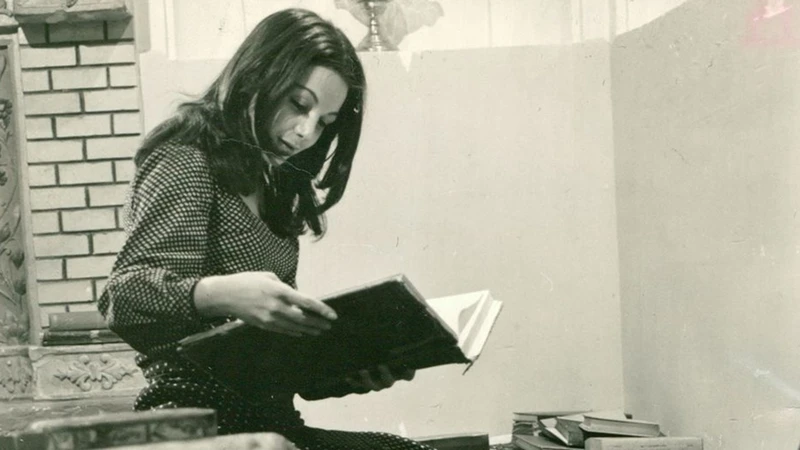
A simultaneous undercurrent of raw imagery chronicling political key episodes, in contestation with the primary narrative concerned with documenting the historical evolution of Filmfarsi, often breaks the monotony of parchment-like film reels and constructs the essential political backdrop only against which the metamorphosis of early Iranian films could be completely digested.
While visceral images—such as the ailing Mosaddegh’s court trial and a boasting thug during the coup claiming he cannot sleep unless he eliminates five communists a day—help lay the foundational ground for early political Iranian cinema, a parallel shift unfolds. Iranian actors begin appearing in Italian Maciste films, and Soraya (the Shah’s second queen) features in Antonioni’s “I Tre Volti,” marking a decisive turn toward the assimilation of Western values.
This tension reaches its peak when the Shah’s army opens fire during a screening of Masoud Kimiai’s “The Deer” (1974). The incident not only brings this initial phase of organized Iranian cinema to an end but also, paradoxically, paves the way for filmmakers like Kiarostami and the clandestine works of Panahi. While this later movement achieves an unparalleled refinement of cinematic language, it does so under increasingly dire filmmaking conditions within the country.
The history of Iranian cinema, which predates the 90s auteurs, is sad. Celluloid Underground and Filmfarsi testify to that with a gloom that oozes through Khoshbakht’s narration, signifying the collective trauma one carries even while living far away from the centre.
Interestingly, Khoshbakht also pinpoints the moments containing Indo-Iran cultural transactions, be it the first Persian sound film – “Lor Girl” (1933) – which was born in India, or a magical glimpse of Raj Kapoor in Khachikian & Savari’s “A Party in Hell” (1956), which marks the age-old kinship between the two nations, a kinship some people are working hard to make us oblivious to and which, if not rechurned from memory, could soon be at stake.