Hulu’s Dear Killer Nannies (2026) might sound like another story about the rise and fall of Pablo Escobar, but it takes a very different route. Instead of focusing on crime and action, the show tells a deeply personal story through the eyes of his young son, Juan. Tthe series works more as a coming-of-age drama than a typical cartel story, exploring how a child grows up in a world filled with violence, fear, and confusion.
In this article, we dig deep into the series’ plot summary and how it ends. Spoiler ahead!
Dear Killer Nannies (2026) Recap:
Dear Killer Nannies (2026) begins with Juan, the son of Pablo Escobar, as he talks about his life and how his father’s work shaped him from a very young age. He says that growing up in such an environment affected him deeply, both as a child and later as an adult. The story then moves back to the 1980s, when Juan is only seven years old. He grows up around dangerous men who come from poor farming families, and Pablo brings them into his world with promises of a better life. These men drink and take drugs openly in front of Juan without any concern.
One day, while driving under the influence, they hit a deer with their car. The animal is still alive, and Juan asks them to call a vet so it can be saved. Instead, they hand him a gun and ask him to end its suffering. Juan becomes scared and cannot do it, so a young woman named Angie steps in and kills the deer. After this, they take him back to the Hacienda. There, Juan asks the bodyguard El Dorado to take him to his father, but he is told Pablo is busy. Later, his mother Victoria notices marks on his face, but Juan lies to protect the men because he is afraid of them.
During dinner, Juan asks about his father again, and Victoria speaks kindly about him, while Juan jokingly calls the men his nannies. That night, he goes to the game room where they are smoking, drinking, and spending time with women. He asks Kiss to play with him, showing how much he wants attention. Even though he is told to go to bed, Juan goes to Pablo’s office instead and explains how his father’s political work keeps him away from the family. At school, Juan struggles to make friends because armed guards are always around him, so he often visits his father’s office just to spend some time with him.
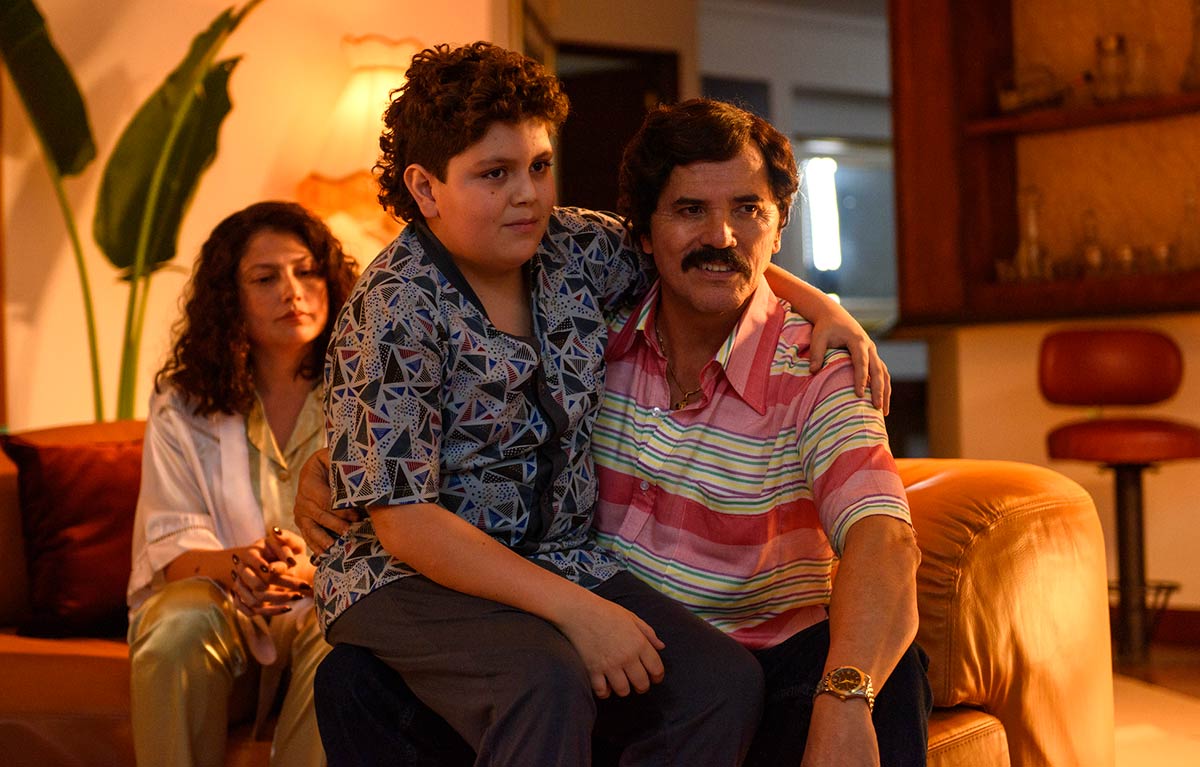
During one visit, Juan meets Rodrigo, a 17-year-old boy who comes looking for work. Rodrigo becomes his closest friend and later joins the group protecting the family. Around this time, Juan hears that the Minister of Justice has evidence against his father, which worries him, but Victoria tries to calm him.
Juan even tells Rodrigo that he would kill anyone who tries to harm his father. Soon after, he unknowingly helps the nannies trap a man. They beat him badly, and that night, Juan watches as Lagaña and Tina torture the man while Pablo burns him alive. Rodrigo tries to comfort Juan, but the moment leaves a deep impact.
The story then moves to 1993, where Juan is older and the family is in danger. Victoria tries to send Juan, his sister Manuela, and his girlfriend Andrea out of the country, but they are stopped at the airport. Juan calls his cousin to bring the media, and although he is allowed to leave by helicopter, Andrea and Manuela are left behind. While hiding, Pablo calls during a shootout and asks Juan to admit his guilt publicly and request protection. The call ends suddenly, and later, Juan and Victoria watch the news confirming Pablo’s death.
After the earlier trauma, young Juan struggles to sleep and begins to lose respect for his father. He remembers family gatherings where Pablo is praised and others are criticized. A trainer named Isaias is brought in to teach the nannies, and Rodrigo shows skill but hides it. Juan continues to have nightmares and asks Rodrigo to keep the murder a secret.
Victoria becomes concerned and argues with Pablo about keeping the nannies away from him. At a party, Juan meets Andrea and realizes that a missing man in a photograph is the same person Pablo killed. He panics and is taken to a nightclub, where he is exposed to things he should not see.
Pablo later warns the nannies and assigns Rodrigo as Juan’s bodyguard. The story then moves forward and shows more violence, including the assassination of the Minister of Justice. Juan and Manuela are sent to Panamá, and Rodrigo later returns with Franca. At a party, Juan reacts badly to her, but Kiss encourages him to write to Andrea. Before they can meet, the police raid the estate, and the nannies go into hiding. During a shootout with the Cali Cartel, Kiss is killed, and Rodrigo later learns that Franca was responsible and kills her.
In 1994, the family is under constant threat. Victoria tries to make peace with the cartel, but they want Juan dead. Juan also learns about a plan involving Michael Jackson, which frightens him, and he refuses to support it. Victoria gives away their money to protect the family, and Juan insists on keeping one artwork. The cartel allows him to leave but warns him not to return to crime.
The story also shows earlier events from 1988, including a failed mission against a man named Garcia and a bomb attack that the family survives. Later, in 1994, many countries refuse to accept them, and a lawyer suggests changing their identities. Mozambique finally agrees to take Juan in.
As time passes, Juan becomes distant and turns to alcohol. He lives in a new apartment where trust is limited, and the nannies face more problems. Margaret, Victoria’s assistant, is forced into silence after learning too much. Angie is asked to betray Pablo, while Rodrigo is arrested after defending Juan. In Mozambique, Juan and his family struggle to live without their former wealth. Frustrated, Juan confronts the lawyer and demands answers, while Victoria stands by him as they try to deal with their uncertain future.
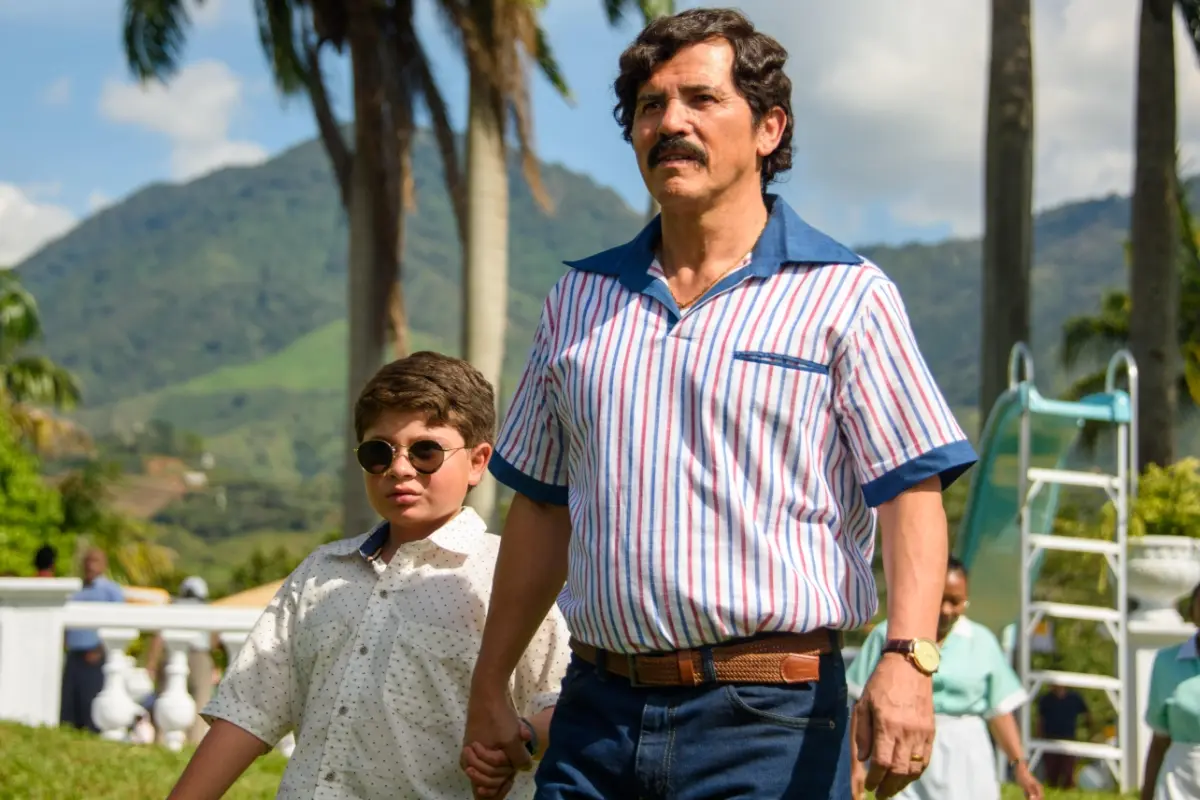
In the final episodes of Dear Killer Nannies, Juan reaches a turning point as the emotional weight of his past finally catches up with him. He is surrounded by growing tension, distrust, and fear, as the consequences of his father’s actions continue to affect his life.
At the same time, he starts to reflect more deeply on his childhood and the people who shaped him, trying to understand his place in all of it. Things become even more intense as painful truths begin to surface. Juan is forced to face the reality of who his father truly was and what that legacy means for him. The losses he experiences and the memories he carries make it impossible for him to ignore the past any longer.
In the end, Juan comes to an emotional realization. He understands that he cannot change where he comes from, but he can choose what kind of person he wants to be. The series closes with him confronting his past honestly and taking the first step toward building a life that is not defined by his father’s actions.
Dear Killer Nannies (2026) True Story Explained:
Is the series about Pablo Escobar’s rise and fall?
Dear Killer Nannies (2026) is inspired by the real life of Juan Pablo Escobar, who later changed his name to Sebastián Marroquín. He is the son of Pablo Escobar, one of the most powerful and feared criminals in history. The series draws from Juan’s own memories and the stories he has shared about growing up inside his father’s world.
Juan Pablo was born in 1977 in Medellín, Colombia, and his childhood was very different from that of an ordinary child. He lived in extreme wealth because of his father’s drug empire, but at the same time, his life was always surrounded by danger. Armed men were always present around him, and many of them acted like protectors and caretakers. These men, who were involved in violent crimes, played a big role in his upbringing, which is why the show focuses on the idea of “killer nannies.”
As Juan grew older, he began to understand the reality of his father’s actions and the violence connected to it. Despite the wealth and comfort, his life was shaped by fear, isolation, and the constant threat from enemies of his father. After Pablo Escobar was killed in 1993, everything changed for the family. Juan, along with his mother and sister, had to leave Colombia because their lives were at risk.
Many countries refused to accept them due to their connection to Pablo. Eventually, the family found a way to settle in Argentina, where they started a new life under different identities. Juan Pablo took the name Sebastián Marroquín in order to leave his past behind and live more safely. As an adult, he chose not to follow in his father’s footsteps. Instead, he built a life as an architect and became a public speaker.
He has openly spoken about the impact of his father’s actions and has shared his experiences through books and interviews. He often talks about the pain, confusion, and moral struggle he faced while growing up in such an environment. His story is not about crime, but about living with the consequences of it and trying to move forward in a different way. The series takes inspiration from these real experiences and presents them through a dramatic retelling of his childhood and youth.

![Kaun Pravin Tambe? [2022] Review: Hard Not to Be Swayed by the Hopefulness of This Well Told Story](https://www.highonfilms.com/wp-content/uploads/2022/04/Kaun-Pravin-Tambe--768x427.jpeg)
![I Don’t Feel at Home in This World Anymore [2017]: Sundance Film Festival Review](https://www.highonfilms.com/wp-content/uploads/2017/01/I-dont-feel-at-home-in-this-world-anymore-1-768x489.jpg)