I do not believe that anything exists without love inside – what we see or touch can be a vessel of feelings, and if it is like that, it is real then. The question is: who can see through the objects? Who is able to send a ray from their heart and create a segment?
I think it is the one who feels the same, since only those who speak the same way can understand each other. There are many ways to realize that you are not the person you were before a certain moment – and this is how cinema and I started talking. It was a moment of realization that we both were alive.
The result of realization is something that becomes deeply personal – but of course, you cannot always identify which specific thought is ‘The Thing’; the heart and brain often work on their own. Martin Scorsese once said, ‘The most personal is the most creative,’ but I would say that the most personal is the most real – moreover, it is the only truth.
A personally important thing is what I call a bridge to cinema; this is the unbroken connection I want to talk about. What are the most personal films for me? They are the ones who express sympathy with me. The movies I will mention in this article are representations of myself – they are guides into my inner world, so let’s explore both sides together.
The first time I did not feel alone was when I watched “La La Land.” It is the best example of the 60-30-10 color rule, featuring one of the best soundtracks, great dance scenes, and powerful performances. Most importantly, it possesses an unrepeatable simplicity in its shots—where one look says it all, and where everything valuable is hidden.
I always say that, for me, “La La Land” holds more value than, for instance, “Interstellar.” The reaction of others makes me think they overlook the simple fact I mentioned earlier: the power of sympathy is what makes a movie great for you, not the budget or anything else. What part of me is in “La La Land”? Love is the most important thing for me, even when it is sad. When love and sadness cover your soul, you start creating art—everyone who can feel deeply is an artist too.
The next step I took toward the truth was through watching the film “Paterson,” the story of an ordinary poet. As we know, Paterson is a city of famous people whose names are like large, looming shadows for young artists. Like Adam Driver’s character, I grew up in a city famous for its great names. When I walked through the rainy streets, I knew I was treading the same ground where Galaktion and Titsian Tabidze, Paolo Iashvili, and other geniuses once walked.
After I started writing, I realized I was afraid of failing. However, after watching the scene where the Japanese poet talks to Paterson, I understood one simple fact: being a poet is not a choice; it is the result of being real. When you feel you must write, it means you have no other way but to be who you truly are. What part of me is in Paterson? Perhaps it is the worldview we both share.
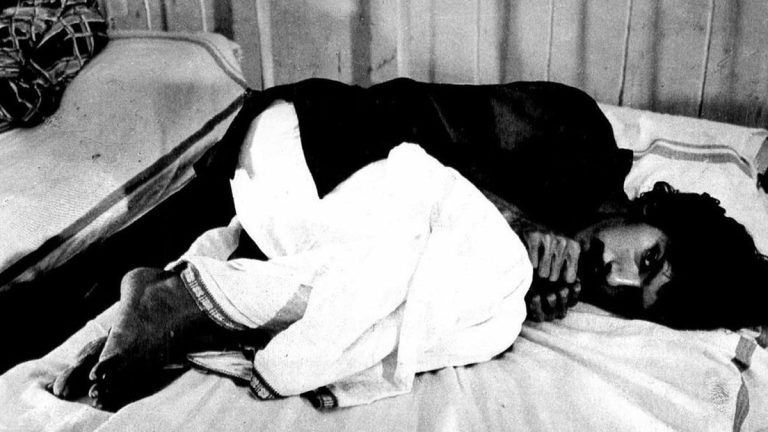
What value can my write-up have without talking about Georgian cinema? I believe it would have none. Hence, let’s talk about me in general—about the “Unserious Man.” This film shows us the life of an ordinary man who has apparently lost everything: his lover, parents, job, and friends. It happened because of the dark environment surrounding him—conditions familiar to every human being, including me. But the most important thing is that he did not lose heart.
This inner state is expressed in his attitude toward everyone. He is the interpretation of pure love. He always feeds animals and takes care of them, he cares for his father, and he plays with children, acting like a child who has grown up and feels sadness. Inside, he is alone—alone with his thoughts. The simplicity of kindness and the depth of his feelings are what make Niko real. To put it in a nutshell, this film possesses one vitally important thing: a soul. What part of myself is in the “Unserious Man”? I am a child who carries loneliness in his heart, too.
After mentioning the “Unserious Man,” I could not help but draw a parallel to the brilliant film by the director of “Bicycle Thieves,” Vittorio De Sica—”Umberto D.” If you think for a moment about what kind of life Niko might have had years later, you would imagine a life similar to Umberto’s. The main difference, however, is that the latter’s life is much more difficult and tragic due to his age.
Despite his merits, he no longer has a home to stay in or food to eat; he remains abandoned by everyone. The only living creature he truly loves is his dog, Flick (Flag), who saves his life both literally and figuratively. You might wonder what a 20-year-old boy has in common with old Umberto. As I mentioned before, when a person experiences a defining moment of realization, they gain the ability to see themselves even in a distant paradise and express compassion for the loneliness that exists deep within everyone’s heart.
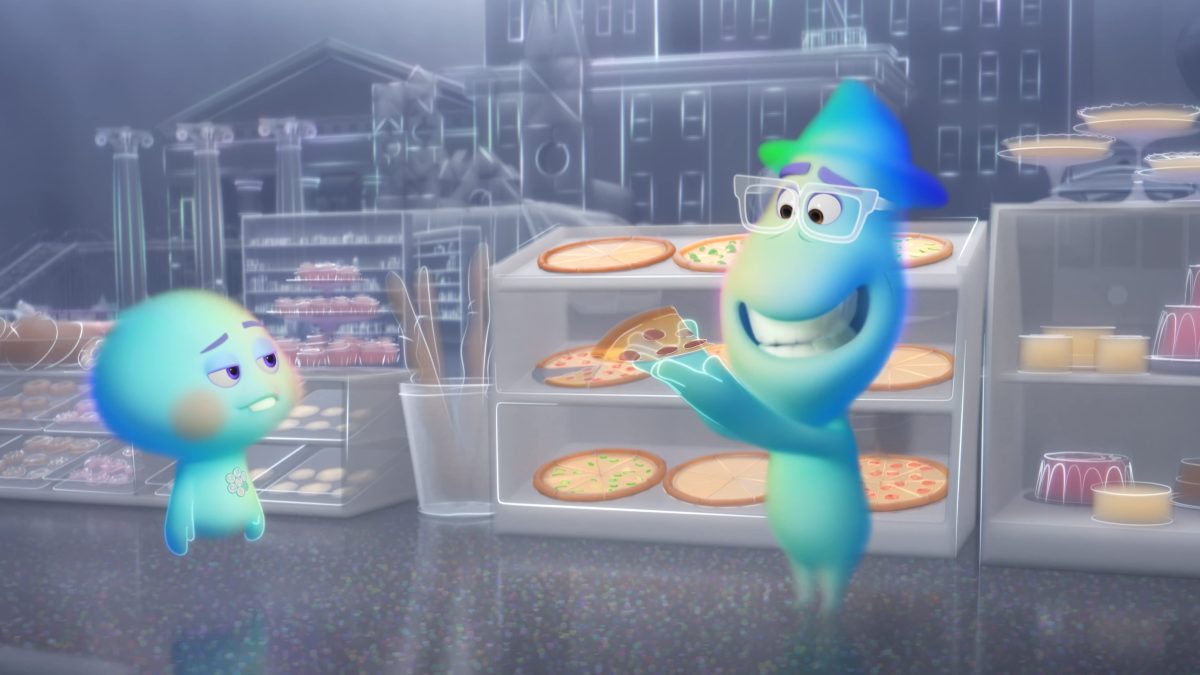
Let’s try to spread our wings further and speak boldly: I have no idea how it is possible to love cinema and not be able to love animated movies. Therefore, it is best if we talk about a special one—”Soul.” Is there any better representation of freedom than Jazz? I do not think so. The main character is a jazzman who is humbly seeking greatness. He wants to be as accomplished as his father. But is this truly the most important goal in life? Let’s find out with Joe Gardner.
Just as he is about to start his career, he falls into a manhole and enters the world of souls, which guides him into the inner world of people. After realizing that being human means being able to hear yourself—your own soul—he becomes someone else: someone real and beautiful. What part of me is in “Soul”? I am on the same path Joe was on when he finally met himself.
Finally, I prefer to include as many forms of art as I can. Why can’t we talk about anime? Is there anything more emotional than “A Silent Voice”? I am not sure. In my opinion, Ishida is a character who resonates most deeply with those who feel they are not part of society. It is not necessary to have experienced the same tragic story as Ishida; almost every human being has moments of alienation.
We grow up and change—life is no longer what it was in childhood, our friends see us differently, and as a result, we can become the loneliest people around. This is the time we need someone to talk to us, someone who will show us the kind of love that helps us open our eyes and listen—listen to that silent, lovely voice, and that’s why I grabbed my headphones, turned on Nick Drake’s music, and started sharing my feelings about cinema—my lifelong friend.