
Marcos Carnevale’s “The Giant Falls” (Original title: “El último gigante,” 2026) is a father-son drama that never reaches its intended emotional apex. Something is holding it back in design and tone, obtruding its stabs at genuine greatness. What could have been potent and moving ends up being well-intentioned, mildly effective, and only fleetingly wistful.
It’s one of those movies wherein you are constantly nagged by the thought of the things it could have accomplished rather than what it actually edges toward. It’s an anguished, bruised father-son story sans the sobering punch it imagines possessing. You can gauge its gestures for an emotionally rousing finale, but the payoff doesn’t kick in with as much impact as strainingly projected.
The Giant Falls (2026) Plot Summary & Movie Synopsis:
The film could have reached for such power and magnetism, but is smug with just the barest of all. There’s a laziness that pulls it back from achieving a real sweep. What results instead is a slovenly bundle of scenes, thinly erected characters, and an excess of silliness that tends to drive the film into a complete mess. The film wants to be an emotionally piercing experience, but it is too confused and misplaced in several dimensions to get anywhere close to its targets.
It skirts and hurtles through many subplots, genre pivots in a hasty, juvenile manner. The minute you try to rationalise a way through the slapdash plot, it’s bound to fall apart. Is it so tough to mount a simple, persuasive narrative with elements that work in tandem? The film tries to get a measure of it while collapsing repeatedly. In such a film, there’s a need for relationships to be written with a balance of levity and austerity, delight and doom. Such fluidity is sorely missing, supplanted by heavy-handed, imprecise writing content to dabble in a lot of generalisations.
You see the shape of a tortured, plaintive family narrative, but it becomes increasingly lost in the narrative commotion. The makers fling too many stabs at the wall, and most tend to spiral into complete confusion. The Argentine drama tries to ponder on male vulnerability, the silences, aches, and tensions that bind and separate family members.
The language of conflict and reconciliation is at the riven heart. Boris has been used to his absent father. The latter was gone from his life for almost three decades. Now, Boris is confronted with the sudden re-emergence of his absent father. Naturally, a gamut of conflicted feelings threatens to arise and demand due accountability. It leaves you wishing the film dealt with these jostling emotions in a more restrained, caring, attentive way instead of ramming through the beats.
How Does Boris Run Into His Father?
The film opens with Boris, a tour guide. He goes about his work with his characteristic efficiency when, as life throws sudden surprises, he meets an unexpected person. An old man constantly nudges him. Boris wants to get rid of him, but the man insists, grovels, and puts himself forth. He discovers the man is his long-lost father, Julian. The latter is looking for forgiveness and for Boris to reconsider his entry in his life. But Boris hasn’t forgotten the years of distance. He won’t pin everything down to happenstance either.
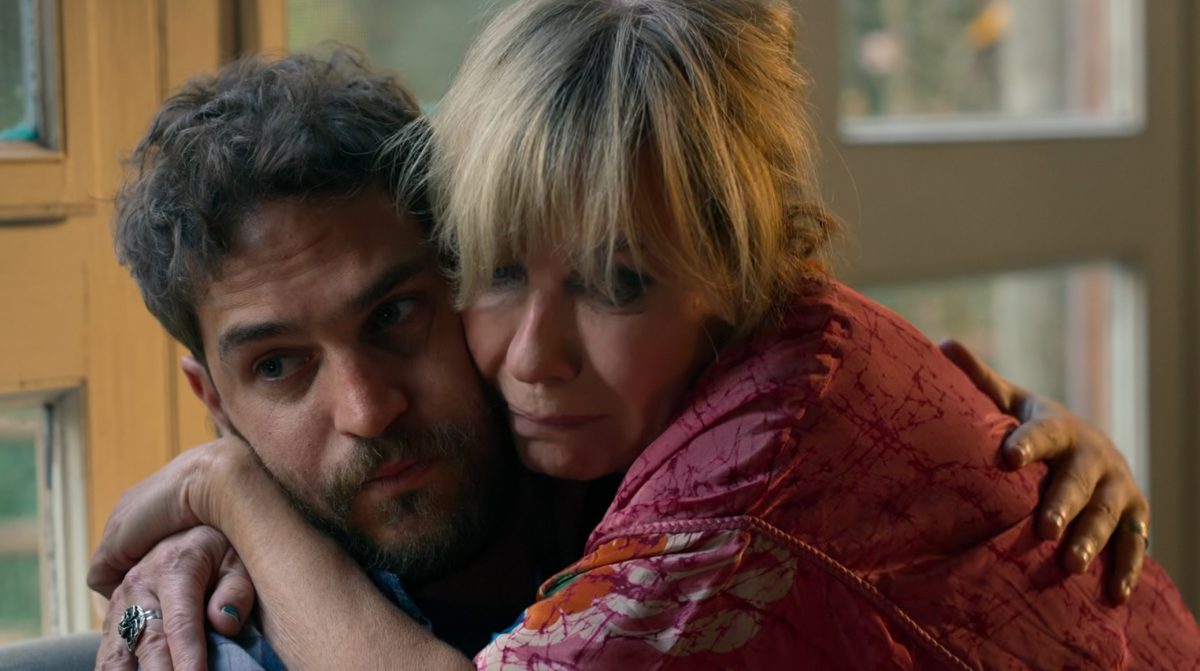
Julian had another family before he met Boris’ mother, Leticia. Julian used to be a pilot, so he would drop by every now and then. But he had a whole family back in Buenos Aires. As years went by, Julian realised he ought to go back and settle with his other family, leaving Leticia hanging with young Boris. However, Leticia has forgiven Julian. Boris isn’t so ready. He needs time and consideration to take in the situation and re-acquaint himself with his father.
Julian keeps telling Boris that Leticia was the true love of his life, that he never loved his wife. He still regrets going back to his family when his heart was with Leticia in the first place. Basically, he manipulates Boris into forgiving him while demonstrating no palpable shred of honesty. Julian has made a bundle of mistakes and suddenly expects redemption from none other than his son. Isn’t the expectation a tad too skewed? Boris might see through the act, but he is gradually convinced by his father’s impassioned appeal.
Julian could be candid, but there’s a nagging sense he’s hiding something far more pressing. Of course, the big reveal is that he’s suffering from cancer. He doesn’t have many days left. Would he even have bothered coming otherwise? It’s a question Boris ought to have grappled with far more seriously instead of showing great tenderness and softening his recalcitrant heart.
Does Boris Forgive His Father?
Before Julian’s return, Boris’ life had fallen into a routine. His days followed a predictable order. His father’s reappearance triggers unrest and volatility, sparking decisions that need to be taken at the earliest, big emotions that demand quick handling. The film circles the act of reconciliation, leaning into its inherent messiness, the thwarted questions, the discomfort, the awkwardness, the pain, and the punishment subsumed.
There’s a lot of dignity that appears deeply imperilled. The father-son duo pushes up close against the limits of reconciliation, the tether of forgiveness. There’s a lot demanded from Boris, especially given the time that’s passed. How can intimacy, loving, and caring be established in this brief span after so many years of absence?
Midway through the film, Boris tries to have a conversation with Julian. But it leads to Boris punching his father. Of course, resentment isn’t so easy to push away as much as you may think you can overcome. Julian is rushed to the hospital, bleeding and wounded. Of course, Boris has deep, thrusting feelings of animosity and spite for his parents.
He hates Julian for abandoning him and returning in a casual moment. Julian wants Boris’ help in killing himself. So, Julian has returned for purely selfish reasons, not out of some outpour of true repentance. Boris judges his mother severely, too, for not dealing with Julian as harshly as she should have. The couple’s irresponsible actions have left scars on Boris.
The Giant Falls (2026) Movie Ending Explained:
Does Julian Die?
In the climax, Boris takes his father to the falls. Boris lets his father take the plunge without him hovering. If Boris remained, he might be incriminated. Julian has chosen this end of his own accord. No one else should be dragged through the mud for it. This is what Julian had insisted on, and Boris agrees. The film ends with the finality of Julian’s implied death, bringing closure in a starkly unconvincing way.
The road to reconciliation is a long, slow one, filled with bumps and odd plunges. Over the course of the fraught journey to Julian’s death, the characters deal with the meaning and reach of reconciliation, what it takes to let go of cloistering resentments and ill will. Moving to a graceful acceptance is hard-won, demanding compassion, sensitivity, and an almost heroic presence of mind.
The Giant Falls (2026) Movie Review:
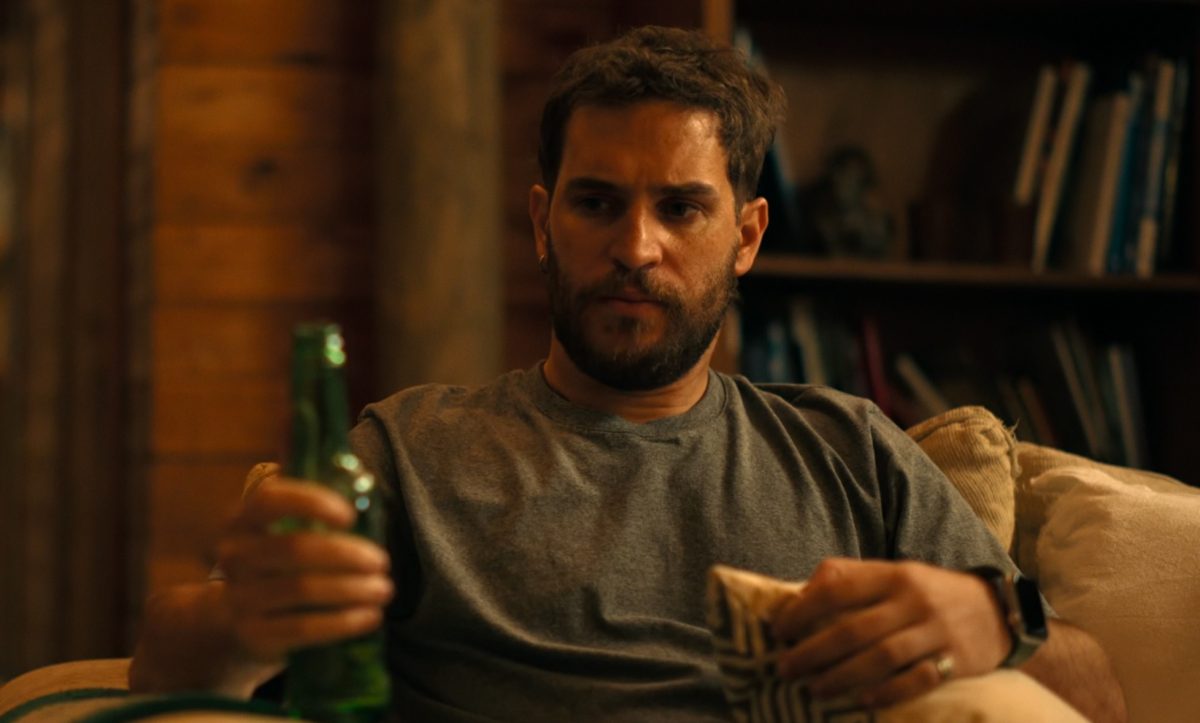
The lingering problem with the film is the lack of well-etched characterisation. A drama like this relies on characters that can invest and warrant your attention, engagement, and empathy. They ought to invoke at least a twinge of interest. What transpires instead is a broadly drawn terrain wherein characters interact and move, but not with too much emotional consequence. There may be certain momentum gathered, yet it is stunted by frequently overwrought moments, a tendency to pontificate rather than simmer in the suggestion of a moment. As a result, delicately rendered scenes remain elusive, frustrating your best efforts.
There’s a preponderance of scenes where you are bothered by characters left on the awning. You want greater texture, finer shading, but what’s delivered is a vague outline. It does help that the performances are more sincere and attuned than the scope on paper, but they are coasting through choppy waters. The odds are too extreme and intense, defeating even the subtlety that permeates a sudden reverberation in a performance. There is a clear gesture to provoke a reaction from the audience instead of an organic buildup to a particular revelation, a confession, or an epiphany.
Themes of forgiveness and moving on end up being squandered. The writing doesn’t aid the performances to blossom and thrive as they can, given the actors’ potential. It leads to a series of disappointments, compounding increasingly because you can sense the capacity for possibility tucked behind all the banal tropes. What does abandonment trigger?
What is the long shadow it casts on relationships, identity, and the sense of a personality? The film drifts through these spectres rather than plunging into the tangle and bramble of emotionally shorn people. Even when conflict props up, the film tends to brush past and not really wrestle with it. This is why it feels more sketchy than earnest, superficial than deeply involving. Just when you think it could probe and reveal a new layer, it becomes coy, hesitant, and unwilling to accept its own coiled-up emotions.
Consequently, the father-son drama turns increasingly muted instead of summoning a heave of emotional power. Stasis creeps in despite an expanse of movement. Carnevale yearns to set up a familial tale of guilt, resentment, and unacknowledged emotional detritus but displays no affinity to back them up with well-padded writing that lets a beat breathe. The film switches to contrivances galore to keep you glued to the rocky relationship that endures. The film leaves you pining for the mother’s perspective, her voice detailing how she forgave and learnt to move on. No such luck can be found here.
Things in the film turn increasingly haywire, misspent, when they could have mustered so much power and punch. The tension dips instead of accelerating. The salve that could heal the relationship finds itself spinning out of focus. Moreover, the film becomes directionless and stodgy when it could have become piercing and potent, a moving exploration of hurt, bitterness, and forgiveness. Where the father-son relationship could have gathered reserves of disappointment and dejection and despair, the film judders into an ungainly outline of hazy characters, actions, and circumstances. There should have been more detailing as to Julian’s own true emotions, Boris’ equivocal attitude.



![Fighter [2021]: ‘NYAFF’ Review – Paints a Light on the Unseen Battles](https://www.highonfilms.com/wp-content/uploads/2021/08/Fighter-2021.jpeg)
![Experimenter [2015] Review : An Unconventional and Refreshing Biopic](https://www.highonfilms.com/wp-content/uploads/2016/01/Experimenter-21.jpg)
![The Hungry Lion [2018]: ‘NYAFF’ Review](https://www.highonfilms.com/wp-content/uploads/2018/06/The_HUNGRY_LION_HOF_NYAFF_1-768x511.jpg)
![Big Night! [2022]: ‘NYAFF’ Review – A tonally shifty black comedy that rarely confronts its dark subject matter](https://www.highonfilms.com/wp-content/uploads/2022/07/BIG-NIGHT-2022-MOVIE-REVIEW-2-768x432.jpg)