
Indie filmmaking has always been an uphill battle, but it has gotten significantly worse in the past few years. It has reached a point when filmmaker Mark Duplass, who felt hope for such small projects about a decade ago and shared a detailed plan on how to go about them, isn’t as optimistic as he was then. These days, artists are often speaking about their existential battles instead of creative ones. It started happening not long after an indie film lifer won an Oscar. In this bleak environment comes “The Travel Companion,” a bittersweet indie dramedy that explores the insecurities of a young filmmaker who is struggling to find his voice.
Written by Weston Auburn, Travis Wood, and Alex Mallis, the script revolves around Simon (Tristan Turner), a documentary filmmaker living with his airline-employee friend, Bruce (Anthony Oberbeck). Bruce’s job allows him to offer a seat free of cost to a ‘travel companion.’ Simon uses that opportunity to visit different parts of the world and document whatever intrigues him. On the surface, his work feels similar to that of John Wilson’s, except he doesn’t seem to have a strong thought behind anything he is filming. Much of it seems like random footage about anything that catches his whimsy, without a strong intention.
During a screening for one of his films, he and Bruce cross paths with Beatrice (Naomi Asa), a fellow filmmaker who strikes up a conversation with them. It happens shortly after he gets painfully embarrassed in front of his peers for no fault of his. That serves as his character introduction: a wide-eyed filmmaker who feels neglected after a screening. Still, the pity we feel for him soon gets overtaken by the joy he feels with his flatmate. Since a lot of it is parsed through Simon’s perspective, their friendship seems almost unbreakable. Yet, Beatrice’s arrival in their lives ends up revealing his codependency on Bruce.
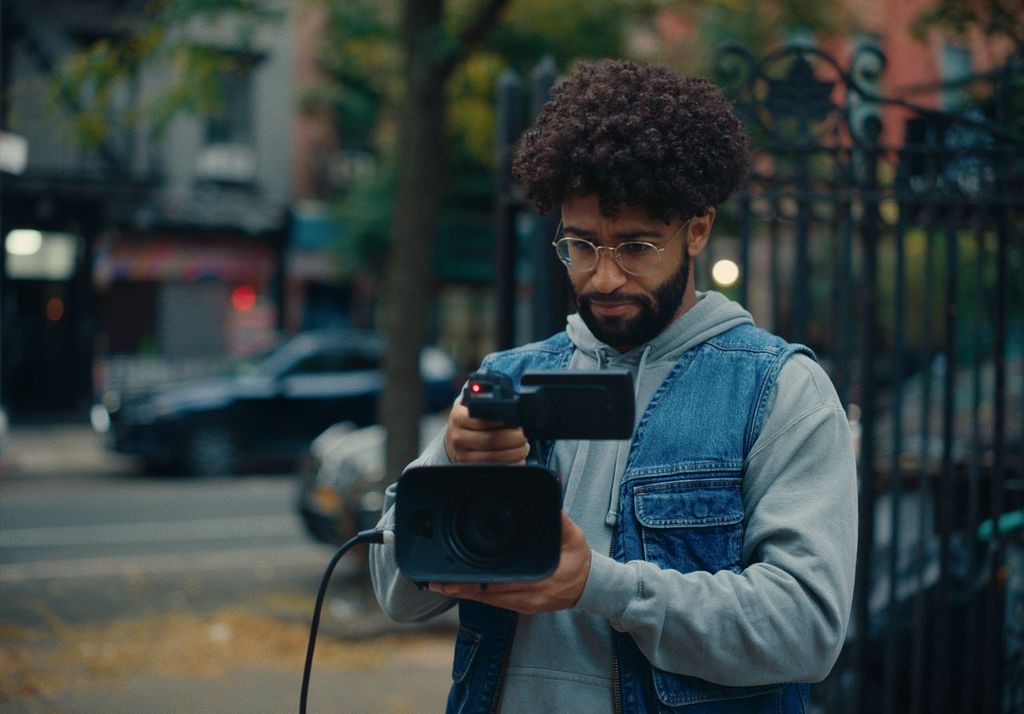
After that, Simon’s niceness gets overshadowed by the exhibition of his bruised ego. Once Bruce and Beatrice start dating, he desperately tries to secure the perks of being friends with an airline employee. It coincides with his increased exposure to a fellow filmmaker, also a woman, which leads to unintended friction on two fronts. It’s not that she goes out of her way to embarrass him or hurt him, either. Yet, the amount of insecurity Simon shows during their interactions leaves a bad taste. The worst part is how, a lot of times, he is not even aware that he is causing the pain. He’s so convinced of his smallness that he doesn’t realize how his actions affect others, even if unintentionally.
It all renders him as a solipsist, who appears almost jarringly nice. That’s why his character may seem easier to dislike than to feel invested in. Yet, the script is so well-written that we cannot just empathize but relate to his pathos. That isn’t simply because the film shows the world through his eyes, while only occasionally switching to a different perspective.
Even in his tunnel vision, the script doesn’t limit itself to a reductive moralistic analysis of a character’s emotional flaws. It highlights his lack of awareness of a world beyond himself, but also makes you aware of its undertones without scrutiny. Somehow, it handles a delicate balance between lionizing and glorifying him. It doesn’t hide his weak spots, but still finds a way to make us truly feel his smallest wins and losses.
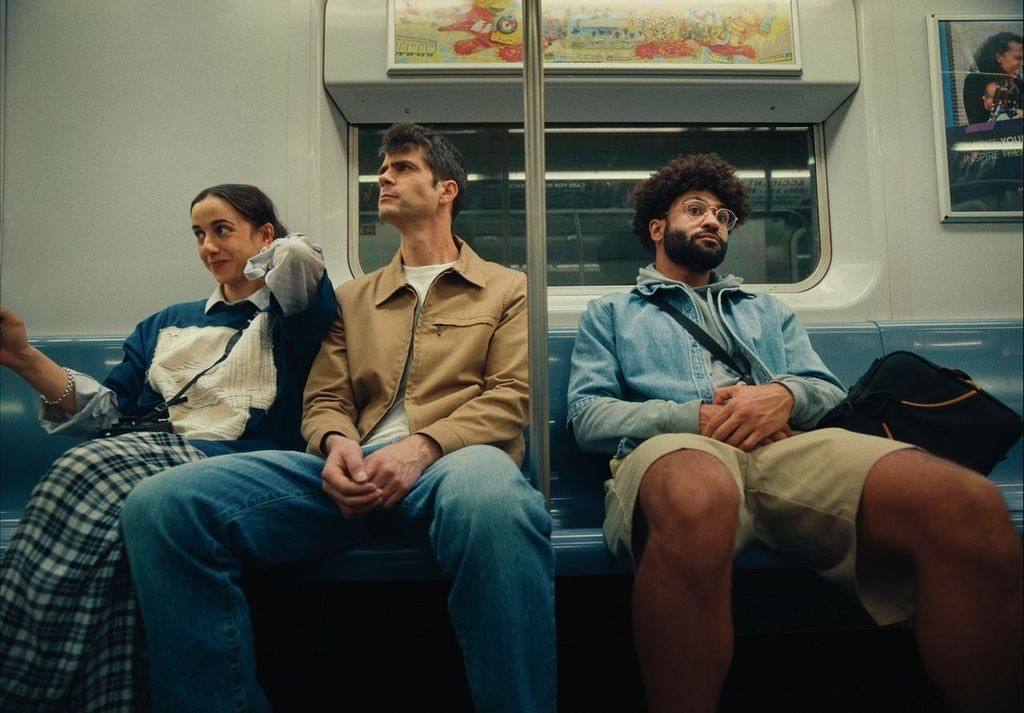
We meet a man who believes his apparent niceness or self-effacement makes him immune to criticism. Yet, we get a deeper sense of how small he must have felt in some moments or had a sudden burst of enthusiasm. The film manages to do that despite featuring plenty of scenes that do not help the plot progression in a traditional sense.
In one scene, Simon speaks with a film festival committee member about his upcoming documentary. He goes on and on, not realizing how his childlike enthusiasm is met with only polite recognition of his presence. Through similar seemingly inconsequential moments, the script offers a fuller understanding of his personhood, be it his lack of initiative or the perils of his self-absorption.
Yet, the writing leaves you wanting more when it comes to Bruce, whose passivity remains the only recognizable trait by the end. Beatrice’s relatively underwritten character still feels well-realized, thanks to Asa’s performance, whose blink-it-you-miss-it reactions are key to revealing Simon’s subtler traits beneath his despondency. It also offers a refined understanding of gender-based distinctions of niceness, which becomes one of the film’s underlying takeaways.
Mallis and Wood’s direction manages to present these complex human portraits even in a rather breezy, casual structure that rises above the usual crop of slice-of-life dramas. Jason Chiu’s cinematography deserves credit for this, who paints this world in a sunny disposition, without relying exclusively on shots with shallow depth of field. A film focusing on a grown-up man’s insecurities isn’t always this charming. “The Travel Companion” manages to do that without necessarily taking Simon’s side, and while finding an effective, understated moment to conclude this chapter of his life.



![Harakiri [1962] Review: Death Over Dishonour](https://www.highonfilms.com/wp-content/uploads/2019/09/harakiri-screenshot-1-768x432.jpeg)

![Salvador [1986] Review – An Indignant Portrayal of US-backed Brutalities in Central America](https://www.highonfilms.com/wp-content/uploads/2020/10/Salvador-1986-768x432.jpg)

![The Pact [2022] Review : A dull and disappointing adaptation of Thorkild Bjørnvig’s memoir](https://www.highonfilms.com/wp-content/uploads/2022/02/The-Pact-Pagten-1-768x480.jpg)