“Idiocracy” more or less slipped through the cracks on release. When Mike Judge premiered the film, the studio gave it a quiet rollout, almost as if they didn’t trust how audiences would take its satire. People don’t always respond well to being mocked, especially when it cuts close. These things tend to settle with time. “Citizen Kane” is a good example—famously suppressed by William Randolph Hearst, who saw it as a thinly veiled attack on himself.
Hearst prohibited any mention of” Citizen Kane” in his newspaper chain, including reviews or advertising. He tried to buy the film’s footage from RKO Pictures for nearly $1 million to burn it. He pressured Hollywood studio heads to blacklist Orson Welles and threatened to expose long-buried scandals about Hollywood elites. Hearst leveraged his influence to make sure the film did not win at the 14th Academy Awards, where it was booed.
Through blackmail and influence, he successfully forced many cinema chains to refuse to show the film, turning it into a box office failure. Although Hearst’s efforts hurt the film financially, they failed to permanently destroy the masterpiece, which later gained immense critical acclaim. When “Idiocracy” was released, the studio didn’t screen the film to any critics. But the film still resonated. It became something of a cult classic that you might discover late at night. This film has also become strangely indicative of our current time.
I just saw someone walking on the street the other day, waving a giant “Idiocracy flag.” This is a movie that pokes at existential questions through low-brow humor, delivering memorable performances and critiquing the mechanisms that lead to cultural erosion. The premise of “Idiocracy” is part of the film’s charm. An average man named Joe, played by Luke Wilson, is selected for a military hibernation program. He is forgotten due to incompetence and wakes up five centuries in the future.
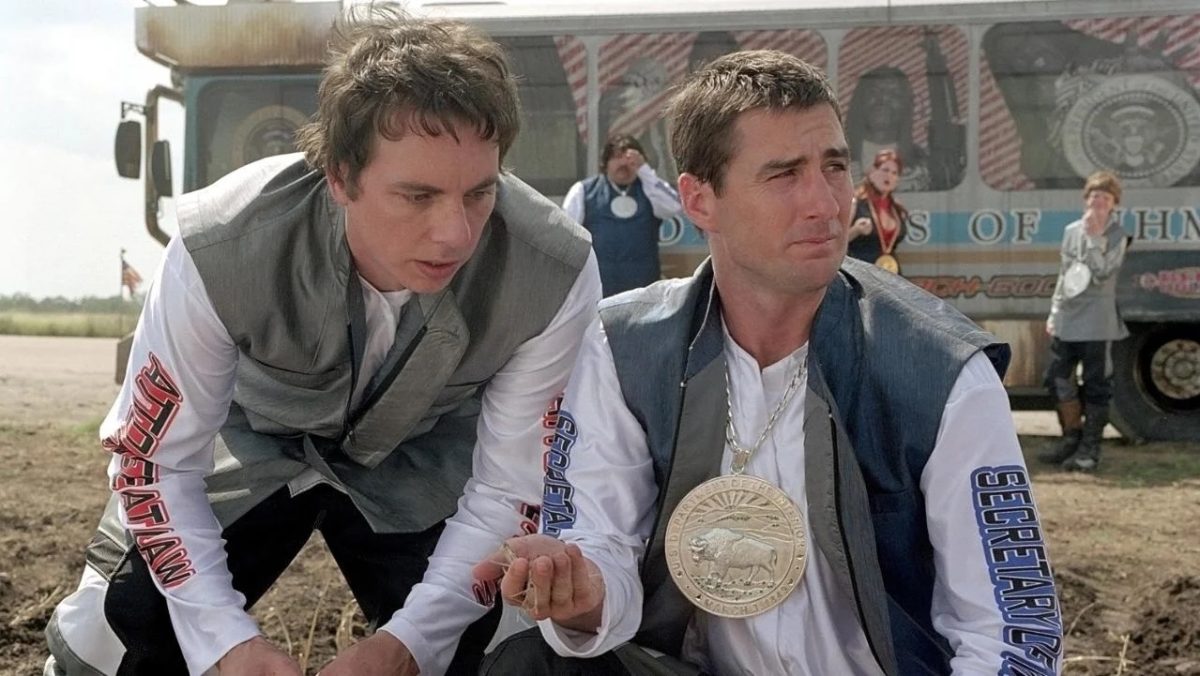
The world he returns to is far less intelligent than the one he left behind. It’s a future where language has collapsed into slogans, politics has become flattened into a spectacle, the environment is suffering due to negligence, innovation is being shunned, technology has become monetized, everything centers upon the lowest common denominator, and logic has become so rare that even the mildest application of it passes for genius.
Does any of this sound familiar? “You let me, an innocent man, go to jail,” says Joe at one point in the film. It is a line that captures how the systems built on incompetence eventually lose their ability to distinguish fairness. It hints at how these systems can be weaponized to hurt people. It also hints at how easily institutions can fail when nobody involved feels responsible for the outcomes.
There is also something refreshing about the movie’s ability to trust that the audience will connect the dots on their own. It shows a society that has allowed instant gratification to replace basic thought. The citizens of the future don’t question anything because questioning takes effort, and effort is deeply unfashionable in a culture obsessed with attention.
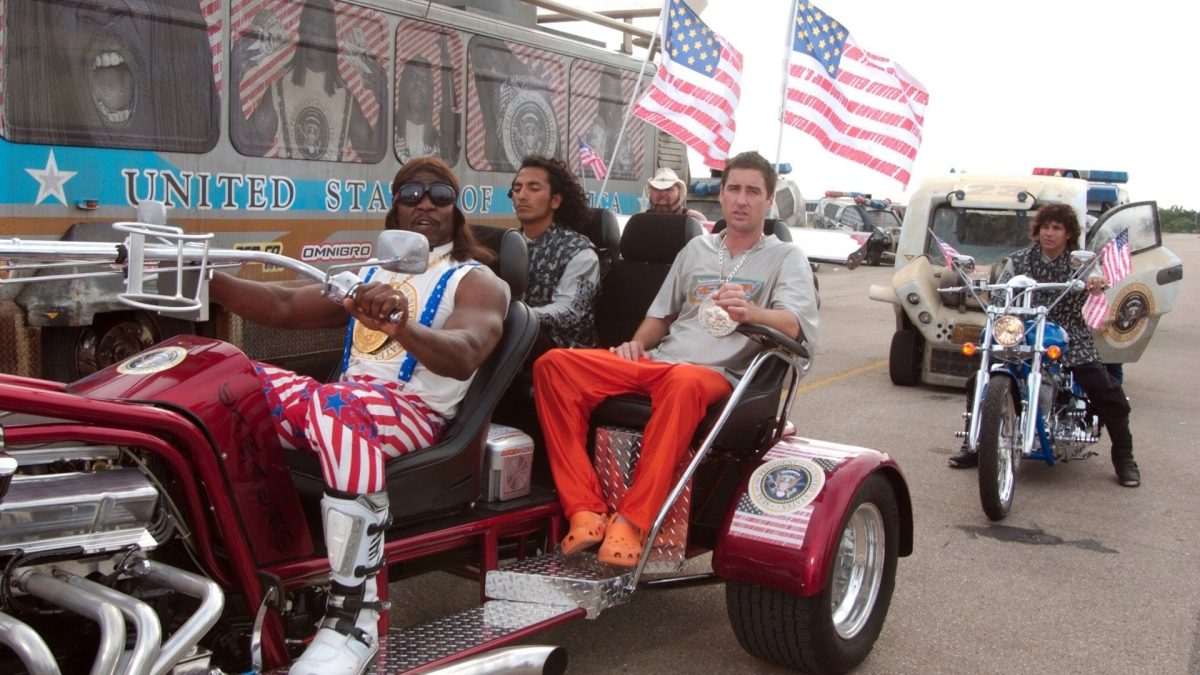
The political world in particular is heavily satirized in the film, with President Camacho, played with humor by Terry Crews. His speeches resemble pep rallies more than actual governance and policy announcements feel like entertainment segments. Ultimately, it is shown that these people are obsessed with their own vanity and image while ignoring the underlying problems that are eroding society.
The populace is on the brink of starvation. All the crops are dying. They have replaced all the water with a sports drink called Brawndo. Joe must find a solution or risk being framed and thrown in jail. While this future world is filled with people who struggle to grasp basic concepts, there’s also a sense that bloated bureaucracy helped create these conditions in the first place. I’m especially fond of Dr. Lexus—played by Justin Long—in one of his funniest performances.
Maya Rudolph brings a warm, comic ease to Rita, giving the film an emotional anchor even as everything around her slides into absurdity. She never tries to outdo the world’s ridiculousness. She plays it straight, reacting like someone stuck in a reality that no longer makes sense, and that’s what gives the satire its weight. Too many satirical works strain to sound clever and collapse under that effort, more concerned with proving their intelligence than actually saying anything.
“Idiocracy” sidesteps that trap by embracing a Comedy Central-esque irreverence. Perhaps this is why the movie resonates so strongly with viewers who feel increasingly alienated by a culture that prefers to reward artifice over substance. There is also a narrator in the film who plays an important role in shaping the tone. The narration provides context like a documentary. This contrast makes the absurdity feel strangely believable, as if the film is presenting a historical account rather than a comedy.
It is impossible to talk about “Idiocracy” without talking about the creator behind it. Mike Judge has always been interested in identifying the absurd patterns buried inside everyday American culture. Before “Idiocracy,” he created “Beavis and Butt-Head,” a show that many saw as juvenile but which functioned as a satire of media consumption and declining attention spans.
It was a viral phenomenon before the internet. He followed that show with “King of the Hill,” a series that examined suburban life with surprising empathy and realism, proving that Judge understood how to mock culture and also humanize it. Then came “Office Space,” perhaps his most widely appreciated film, which dissected corporate monotony and the quiet suffocation of modern office life.
There are parts of “Idiocracy” that feel like they predicted the current mood of social media. The future depicted in this film is obsessed with attention. Entertainment dominates every space, including politics, and nuance has no value because it doesn’t trend.
You can imagine that if the characters in the film had smartphones, they would spend most of their time recording themselves rather than solving problems. It mirrors the moment when Joe tries to explain that crops need water rather than a sports drink called Brawndo, only to be ignored by a society that trusts branding more than basic reasoning.
One of the strangest things about watching “Idiocracy” now is how closely it mirrors reality. You don’t have to look far to see versions of this world taking shape—people curating their lives for attention, truth-bending to fit narratives, and public discourse rewarding the loudest voices over the most thoughtful ones.
The film’s humor is especially sharp when viewed through the lens of “influencer culture,” where presentation outweighs intelligence. It serves as a reminder that noise often travels faster than honesty, especially in environments where spectacle is mistaken for credibility.
In the end, “Idiocracy” feels like one of those rare comedies that grows more relevant with time. It’s funny in the way good satire should be. It is sharp enough to land the joke, but pointed enough to stay with you afterward. The film’s reputation of being underrated feels earned. It’s the kind of film worth revisiting every few years. Each time, it starts to feel less like a comedy and more like a warning hiding in plain sight.